
Andrew McGregor
Terrorism Monitor 24(7)
Jamestown Foundation, Washington DC
April 17, 2026
Executive Summary:
- Iran’s marginalized ethnic minorities, who often endure state suppression, may view current U.S. and Israeli military operations as an opportunity to seize greater autonomy.
- Four minority groups—the Kurds, Balochs, Lurs, and Ahwazi Arabs—maintain armed factions. Additionally, the exiled Mujahedin-e-Khalq (MEK) aggressively pursues violent regime change, losing 100 fighters in a clash with the Iranian Revolutionary Guard Corps (IRGC) on February 25.
- Armed factions are most likely to hesitate before any action due to unclear American objectives, fears of brutal regime retaliation if abandoned, and the fact that ethnic Persian opposition figures often share the regime’s hostile view of these minority groups as separatist threats.
Iranian officials frequently refer to Iran and its 93 million people as “ethnically homogenous.” They often proclaim the unity of the Islamic Republic and obscure the existence of the country’s numerous minority groups. Many of these groups have had a contentious relationship with the Iranian state since Reza Pahlavi’s 1921 coup introduced the ideological supremacy of Persian and Twelver Shi’a identity.
Iranian leaders typically regard minority demands for greater autonomy as threats to state security. Many minority members are denied government identification, leaving them open to various abuses by administrators and security forces. Accusations of working for Israel’s Mossad or the CIA are usually enough to justify internal repression by the Iranian Revolutionary Guard Corps (IRGC) and the regime’s Basij militia. The sheer number of detainees imprisoned for alleged “collaboration” with Israel suggests the political convenience of the charges.
The current U.S. and Israeli military operations against Iran may be viewed by some minority leaders as an opportunity to seize greater autonomy. The perils of challenging a regime facing an external existential threat, however, are both clear and significant.
Iran’s Ethnic and Religious Composition
The closest Iran gets to homogeneity is in its religious makeup. Shi’ite Muslims constitute some 90 percent of Iran’s population. Sunni Muslims represent 9 percent, while the remainder consists of Christians, Baha’i, Jews, Zoroastrians, and Sabean Mandaeans (Gnostic monotheists).
Persians make up 61 percent of the Iranian population. There is wide variation regarding the numbers and percentages of minority groups represented in the population, which are perhaps best outlined in general terms:
- Larger minority groups (10-17 percent of the population): Kurds and Azeri Turks,
- Mid-sized minority groups (5-9 percent): Lurs,
- Small minority groups (2-4 percent): Ahwazi Arabs, Balochs, Turkmen,
- Very small minority groups (1 percent or less): Georgians, Qashqai, Armenians, Circassians, Assyrians (Al Jazeera, June 20, 2025).
Of the minority groups, four are known to have armed factions—the Kurds, the Balochs, the Ahwazi Arabs, and the Lurs. While most of those arrested during the 2025 protests were Persian, large numbers of Balochs, Kurds, and Ahwazi Arabs were also detained (Iran International, July 23, 2025).
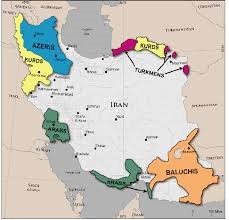 Minorities of Iran (CRS)
Many of Iran’s ethnic minorities hoped to benefit from the overthrow of the Shah following the 1979 Islamic Revolution. The new Islamic regime quickly suppressed their aspirations, except in Iranian Kurdistan, however, which continued to resist Persian rule. Marginalization—if not outright persecution—continued to be the shared experience of Iran’s minorities after the Islamic Revolution. Surveillance and detention of minorities intensified after last June’s Israeli and American bombing campaign.
The Azeris
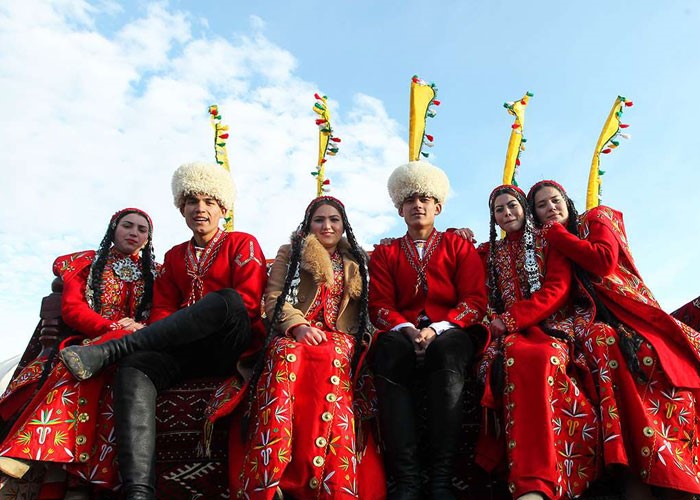 Azeri Turks (Amargi)
The Shi’ite Azeris are well-integrated into the Persian power structure; the late Ayatollah Ali Khamenei’s father was an Azeri Turk. The Azeri Turks dominated the Iranian state from 1501 to 1925, including both the Safavid dynasty—which established Twelver Shi’ism as the state religion—and the later Qajar dynasty. When the latter was brought down by the Pahlavis, Azeri influence was diminished, and the Azeri language repressed. Recently, Israeli media have encouraged “the South Azerbaijani nation [i.e., Iranian Azerbaijan] and other ethnic groups” in Iran to “wage a war of revolution” (Jerusalem Post, March 4).
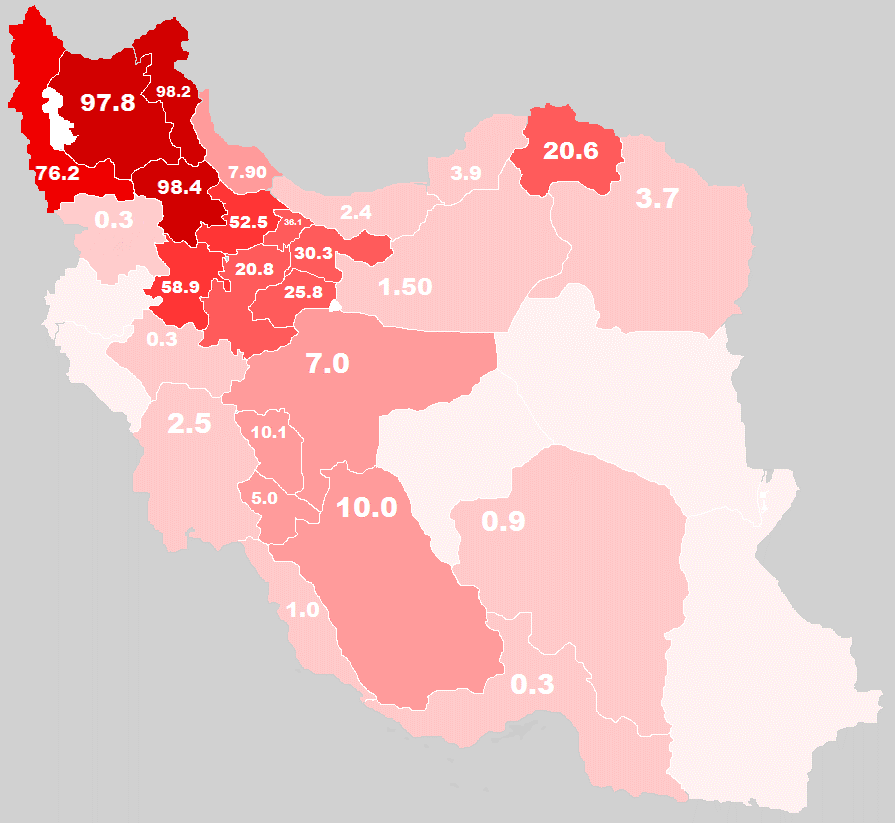 Percentage of Azeri Turks in Provinces of Iran (r/MapPorn)
The Ahwazi Arabs
Most of Iran’s Ahwazi Arab population lives in the southwestern province of Khuzestan. This province is home to Iran’s largest oil field, which accounts for 90 percent of Iranian oil production, as well as large shares of Iran’s natural gas and water resources. A mix of Arabized locals and migrant tribes from Iraq, the Ahwazi Arabs are mostly Shi’a, with a small number of Sunnis. The community’s main language is Farsi, and Arabic-language education is forbidden except for religious instruction.
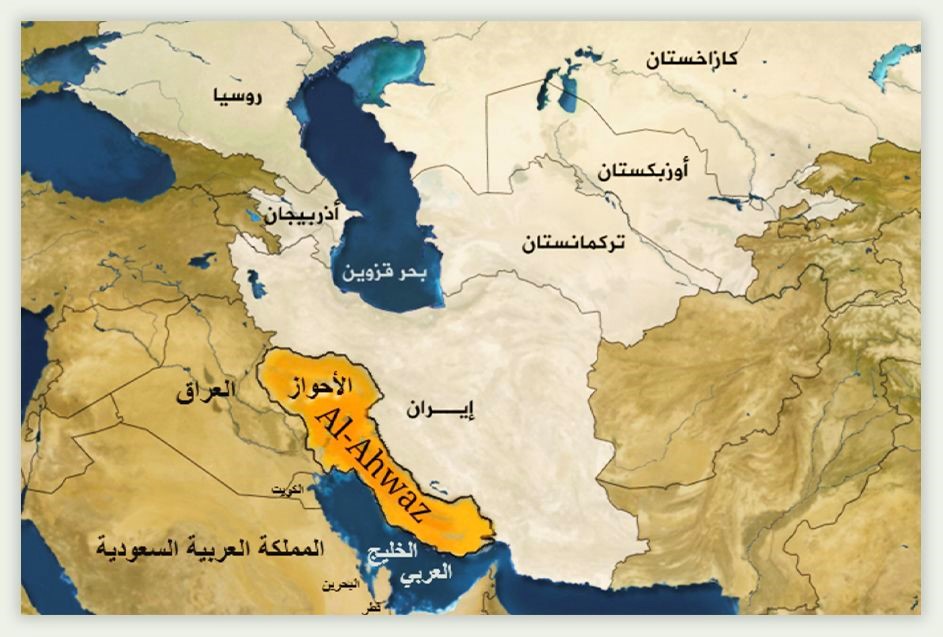 (Arab News)
Before an emerging oil industry brought in an influx of ethnic Persian workers, Khuzestan was known as Arabistan. The Persians are still favored for employment in the oil sector over the Arab population. Khuzestan’s natural resources and its strategic location on the Persian Gulf have led to a low tolerance for Arab cultural and political aspirations (New Lines Institute, February 18).
Existing as an autonomous emirate (Muhammara) since 1812, the region was fully incorporated into Iran in 1925, with its Arab ruler and his son placed in detention in Tehran. Place names were Persianized, and efforts at assimilation were first launched by Reza Shah (1925-1941) and continued under the Islamic Republic. Protests against the repression of Arab culture or expressions of Arab identity are typically met with violence (Arab News, January 7, 2022). Some residents seek independence or autonomy in a federal state.
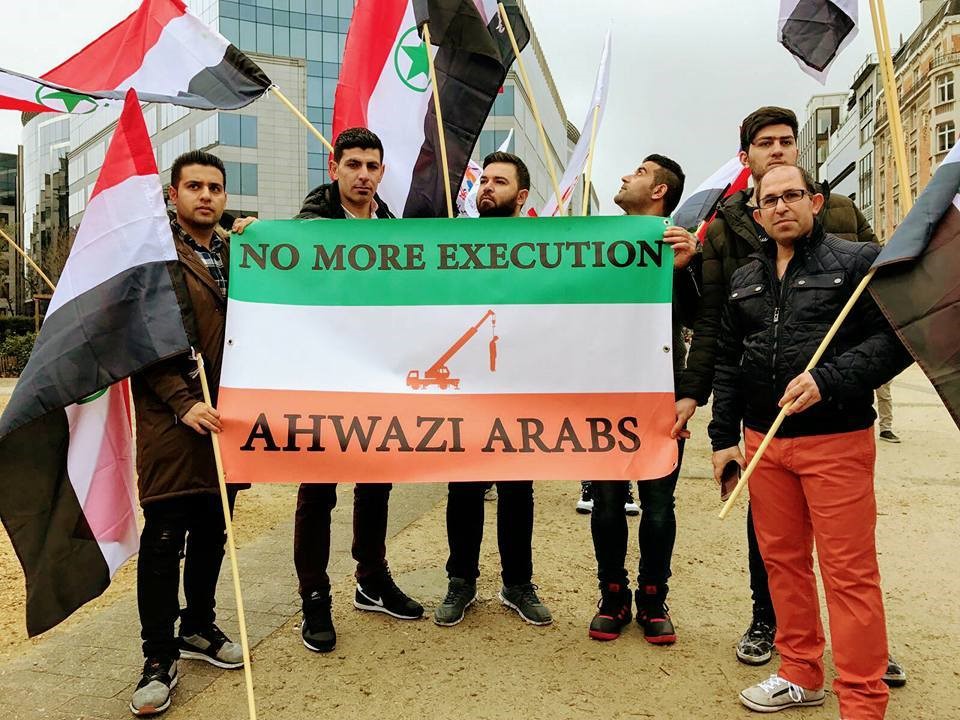 Ahwazi Protest (Jerusalem Center for Security and Foreign Affairs)
The Harakat al-Nidal al-‘Arabi li-Tahrir al-‘Ahwaz (Arab Struggle Movement for the Liberation of Ahwaz, ASMLA) is an armed group advocating the creation of an Arab state comprising Khuzestan and parts of several neighboring Iranian provinces. With rival leaderships based in Denmark and the Netherlands, the movement has carried out bombings and assassinations, leading to its designation as a terrorist group by the Iranian government.
As protests grew in Iran earlier this year, five Ahwazi political fronts agreed on February 9 to come under the authority of a single Coordinating Council of Ahwazi Organizations. The stated goals of the new umbrella group include preventing political violence, respecting human rights, and cooperating with other Iranian minorities (Middle East Online, February 24).
The Baloch
The Sunni Muslim Baloch people are spread across a region split between Iran, Pakistan, and Afghanistan. In Iran, the Baloch are concentrated in the Sistan-Baluchestan province, bordering Pakistan’s restless Balochistan province, which hosts a number of Baloch insurgent movements (there are differences between Pakistan and Iran in the official spelling of Balochistan/Baluchestan).
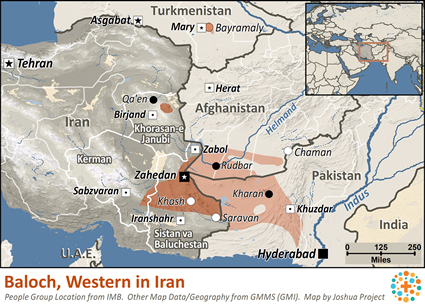 Sistan-Baluchestan has abundant resources, including oil, gas, coal, copper, uranium, and rare earth elements. Despite this, the Sunni Baloch of Iran have much lower living standards than their Shi’a Persian countrymen and suffer from state repression of their language, culture, and political aspirations (New Lines Institute, February 18). They are also ineligible to hold most elected positions in Iran.
Jaysh al-Adl (Army of Justice), a Balochi anti-Shi’a Islamist militant group, emerged around 2012 as a successor to the earlier Jundullah movement, after Tehran’s capture and execution of Jundullah leader Abdelmalek Rigi in 2010 (see Terrorism Monitor, February 4, 2010). Jaysh al-Adl is designated as a terrorist organization by both Iran and the United States.
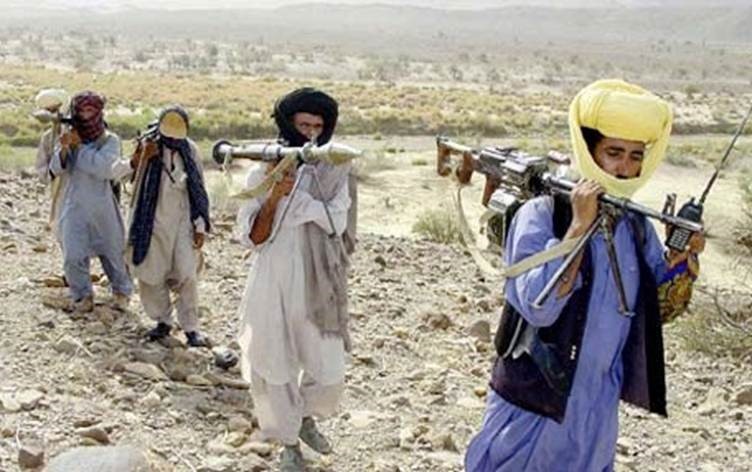
Balochi Insurgents in Iran (Rudaw)
Fighters of Jaysh al-Adl often take refuge across the border in Pakistani Balochistan during the Iranian military operations that follow the group’s attacks. Pakistan, on the other hand, accuses Iran of providing refuge to the Balochistan Liberation Army (BLA) and Balochistan Liberation Front (BLF) (see Terrorism Monitor, January 31, 2024). Cross-border strikes on Balochi insurgents have become common in recent years as Jaysh al-Adl and other armed Balochi groups carry out kidnappings, assassinations, suicide bombings, and attacks on police stations (Al Jazeera, January 17, 2024; Dawn, January 19, 2024).
In December 2025, Jaysh al-Adl announced it had merged with several other Baloch separatist movements to form the “Popular Fighters’ Front.” The new group intends to focus on civil disobedience “with full observance of personal and public security principles” while continuing attacks on Iranian security forces (Iran International, December 12, 2025).
Kurds
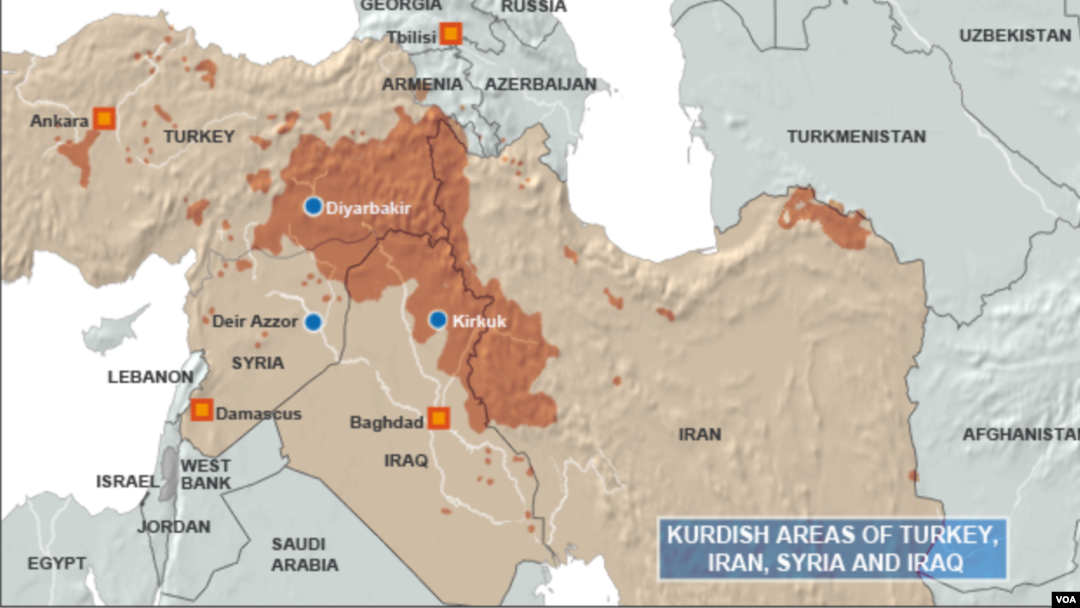
The Kurds are the second largest but most politically and militarily organized of Iran’s minority groups. Mostly Sunni rather than Shi’ite, Iran’s Kurds have experienced repression of their language, culture, and education.
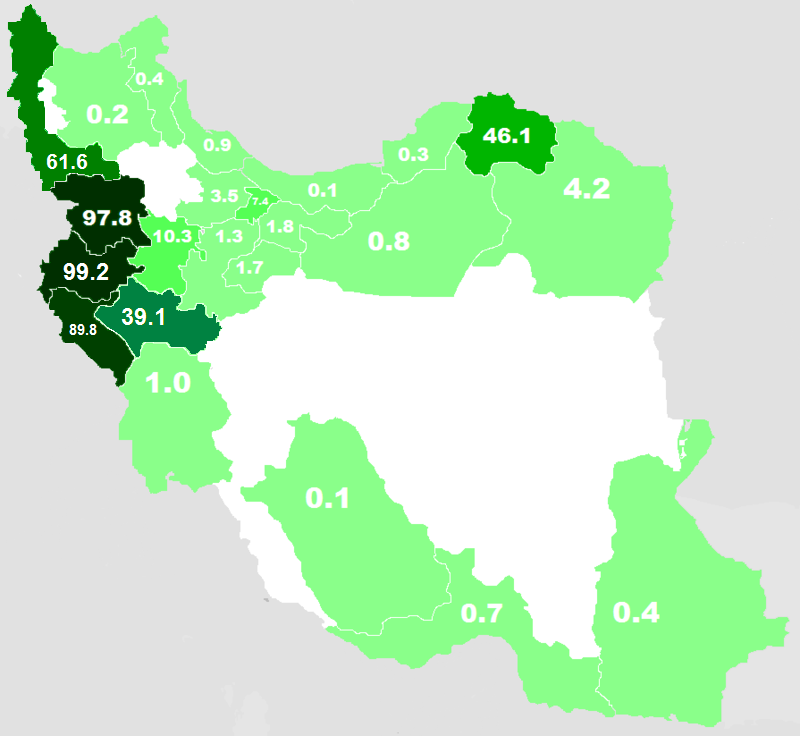 Percentage of Kurds in Provinces of Iran (r/Map Porn)
The existence of significant and often restless Kurdish communities in Syria, Iraq, and Türkiye, as well as Iran, has opened the group up to allegations of separatist tendencies and foreign influence. Iran’s four impoverished Kurdish-majority provinces notably lie along the Iraqi border, further contributing to the perception of separatist leanings. The Turkish government—now in the process of reconciling with its own Kurdish separatist movements—has no desire to see any kind of Kurdish political or military success in the region that might disrupt ongoing reconciliation processes in south-eastern Türkiye.
Iranian-Kurdish movements are insisting on an American-enforced no-fly zone over their operational area in northern Iran as well as the presence of U.S. land-based forces, before launching an offensive against the Iranian regime. This hesitancy stems from having witnessed fellow Kurds being burned several times in the past through alliances with the United States (France24, March 5). Reports indicate that the CIA began discussions on arming Iraq-based Iranian Kurdish opposition groups in early March and may have already begun supplying small arms (Al-Jazeera, March 4; El Pais, March 19). Since then, Iran has targeted the bases of these groups inside Iraq (France24, March 5).
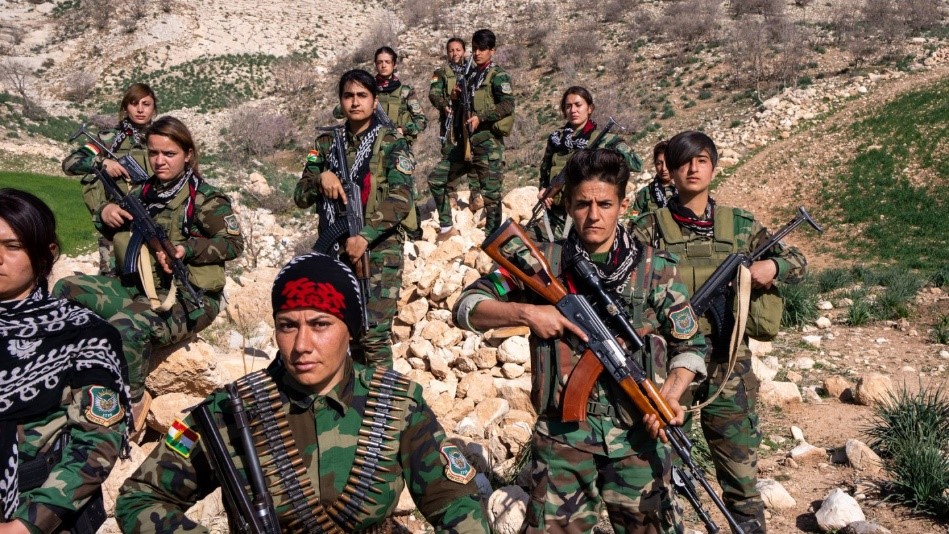 Armed Kurds (Monocle)
The Alliance of Political Forces of Iranian Kurdistan (a coalition of six Kurdish political movements) stated that “the struggle for the overthrow of the Islamic Republic and the realization of the national rights of the Kurdish nation” would continue unabated following Iranian attacks on Erbil, Sulaymaniyah and other places in Iraqi Kurdistan where Iranian Kurdish dissidents are based (PDKI.org; Anadolu Ajansi, March 8). Though there have been some intimations of a possible Kurdish offensive in western Iran, Iraq’s prime minister, Muhammad Shi’a al-Sudani, and Kurdistan regional president Nechirvan Barzani, have united in declaring that “Iraqi territory must not be used as a launching point for attacks against neighboring countries” (Al-Jazeera, March 7).
 The United States has sent mixed signals regarding the desirability of a Kurdish entry into the campaign in Iran. On March 5, U.S. President Donald Trump considered the possibility of a Kurdish attack, stating, “I think it’s wonderful that they want to do that, I’d be all for it” (Al-Jazeera, March 6). Two days later, however, the president remarked: “We’re very friendly with the Kurds, as you know, but we don’t want to make the war any more complex than it already is … I don’t want the Kurds going in. I don’t want to see the Kurds get hurt, get killed” (Anadolu Ajansi, March 8). The IRGC warned at the same time that “If separatist groups in the region [of Kurdistan] make any move against Iran’s territorial integrity, we will crush them” (Al-Arabiya, March 7).
During the nationwide protests in Iran earlier this year, Kurdish opposition parties agreed to carry out strikes rather than protests in order to avoid the massacres that followed similar protests in the past. Nonetheless, raids by security forces followed the strikes, even in Kurdish Shi’ite communities.
The Mojahedin-e-Khalq (MEK)
One exiled Iranian insurgent group—though not an ethnic minority—must be included in the list of movements seeking the violent downfall of the Iranian regime. The People’s Mojahedin Organization of Iran (PMOI, better known as Mujahedin-e-Khalq – MEK) is a Marxist-Islamist group initially formed in 1965 to oppose the rule of the Pahlavi monarchy. The MEK is a designated terrorist group within Iran and appeared on the American Foreign Terrorist Organization (FTO) list from 1997 to 2012.
 MEK Emblem
The movement backed the Iranian Revolution in 1978-1979, believing they could leverage their support into a power-sharing agreement. Instead, they found themselves targeted by the new regime, forcing their leadership to flee to Paris while surviving members relocated to Iraq. The movement responded with suicide attacks, bombings, assassinations, and attacks on Iranian embassies abroad (Al-Jazeera, August 4, 2011).
MEK operated from bases in Iraq after being banned by Iran’s post-revolution Islamic regime, carrying out credibility-damaging attacks on Iran during the Iraq–Iran War (1980-88) (Israel Hayom, January 13). In exchange for MEK support in suppressing Kurdish and Shi’ite rebellions in Iraq, Saddam Hussein provided the movement with military training, armor, and artillery (Times of Israel, March 5). The UN and the United States asked Albania to relocate the movement from Iraq in 2013 after it came under pressure from Shi’ite and Kurdish groups seeking revenge for their collaboration with Saddam Hussein. Some 3,000 members of MEK have since been based in an Albanian village (Deutsche Welle, January 20).
By June 2023, however, the MEK had worn out its welcome in Albania. 1,000 Albanian security officers raided the MEK compound during an organized crime investigation related to terrorist financing on June 20, 2023. Fifteen police officers and 21 MEK members were injured when MEK members attempted to prevent the seizure of computers and laptops (EuroNews, June 21, 2023; Times of Israel, March 5).
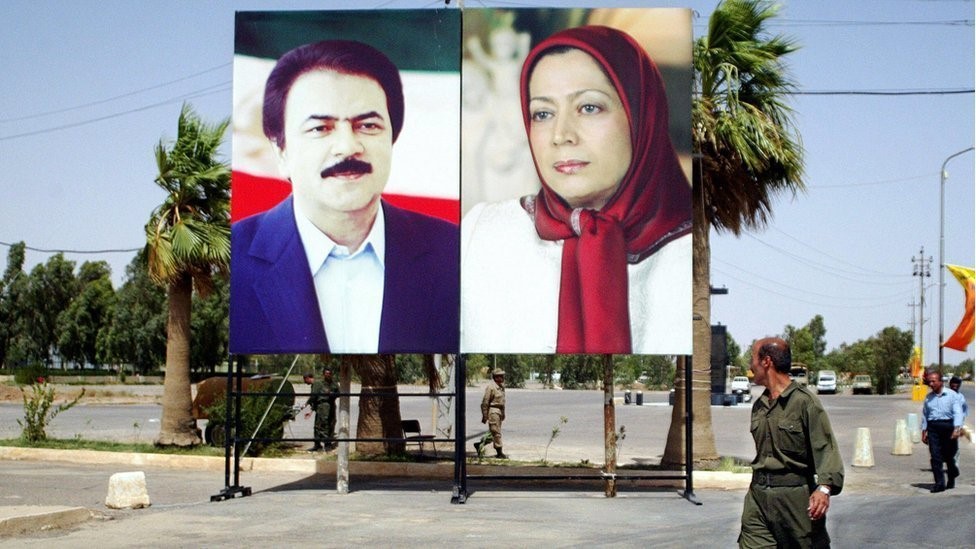 Massoud and Maryam Rajavi – MEK Camp (BBC)
The MEK now presents itself as a human-rights-focused “democratic alternative” to the clerical regime in Iran. Former U.S. Secretary of State Mike Pompeo has visited the group’s camp in Albania and described MEK leader Maryam Rajavi as “laying the groundwork for a free, sovereign, and democratic republic in Iran” (Iran International, May 17, 2022). The movement’s official leader, Massoud Rajavi, has not been seen since March 2003, and the MEK has gained a reputation as a cult-like group exercising strict control over its members. Dissident members are typically described as agents of Iranian intelligence and subject to retaliation.
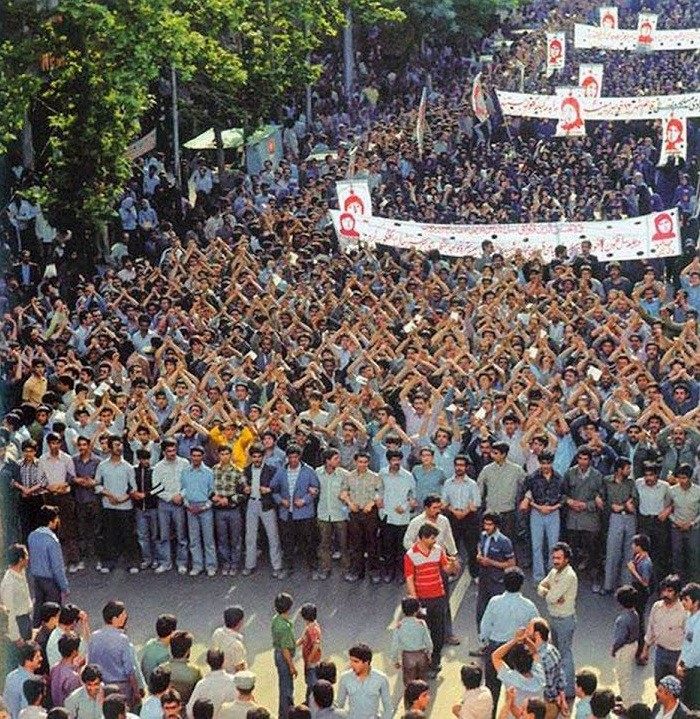
MEK Supporters (MEK Iran)
The IRGC reported killing at least 100 MEK fighters during a MEK operation near the Tehran headquarters of Supreme Leader Ali Khamenei, just days before the launch of the Israeli-American bombing campaign began (the incident and losses were confirmed by the MEK) (Jerusalem Post, February 25).
Despite broad American political support, the MEK’s legitimacy as an Iranian opposition group suffers from its historical collaboration with Iraq, its long period of exile, and its socialist ideology.
Conclusion
Iranian minorities are likely to be alarmed by any upsurge in Persian support for the return of a Pahlavi monarchy known for Persian supremacism. Would-be king of Iran, Reza Pahlavi—son of the late Shah Mohamed Reza Pahlavi—recently described the Kurds and other minorities as “contemptible” separatists, stating, “Iran’s territorial integrity is the ultimate red line of our great and united nation. Any individual or group that crosses this red line, or collaborates with those who do, will face the resolute response of the Iranian nation” (X/@PahlaviReza).
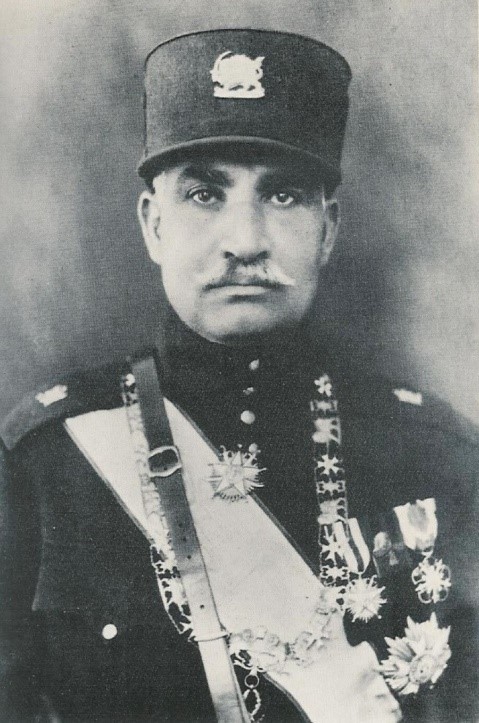 Reza Shah Pahlavi (Ashraf Pahlavi)
Ethnic Persian opposition groups have little in common with the ethnic minority factions, often sharing the regime’s view of these groups as separatist threats to Iranian sovereignty. The MEK leadership has, in the past, even encouraged its members to kill Kurdish fighters before taking on the IRGC (Al-Jazeera, August 4, 2011).
The lack of clear goals or timelines for the U.S.–Israeli military campaign has discouraged the entry of armed Iranian ethnic minority factions into the conflict. If Washington declares it has achieved its objectives and withdraws its forces, these groups are likely to find themselves facing the fury of a wounded regime ready to see treasonous cooperation with Israelis and Americans behind any signs of opposition.