Drones Over the Nile: Unmanned Aerial Warfare and Sudan’s Rapid Support Forces

Andrew McGregor

AIS Special Report on Sudan

June 24, 2024

The growing importance of drones in modern warfare has been amply demonstrated in the ongoing conflict between Russia and Ukraine, even though both states still possess manned military aircraft. In Africa, drones have been used extensively in the struggle between Libya’s rival governments, but the first broad use of drones by a “rebel” movement is taking place in Sudan. There, drones are in steady use by the Rapid Support Forces (RSF), a former state paramilitary that launched attacks on government institutions and the Sudan Armed Forces (SAF) on April 15, 2023. Only days after the conflict began, the SAF and other state security institutions declared the RSF “a rebel entity” that was fighting the state and ordered its dissolution (Al-Jazeera, April 17, 2023). [1]

Both the RSF and SAF have used drones for surveillance and offensive purposes since the beginning of the conflict. The SAF is now receiving shipments of advanced Iranian drones, while the RSF relies on shipments of drones and other weapons from the anti-Iran, anti-Islamist United Arab Emirates (UAE). Sudan recalled its ambassador to Chad on June 25 over allegations that Chad is allowing the UAE to ferry military supplies to the RSF through its airports. The import of drones to Sudan violates a 2005 UN Security Council resolution that bans the supply of weapons to the Sudanese government and armed groups in Darfur.

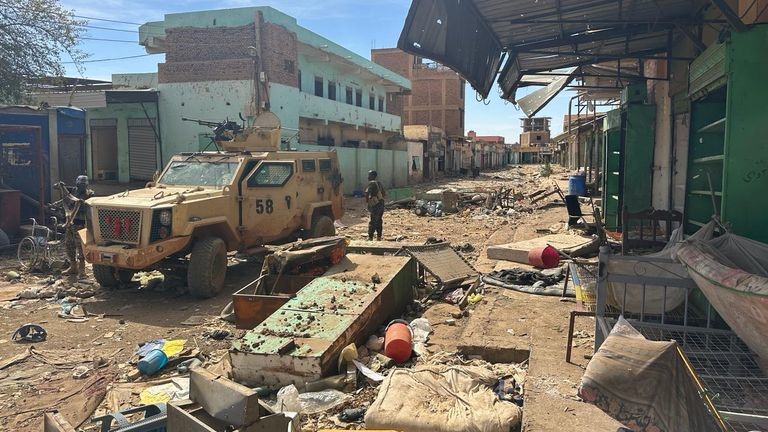
Omdurman Market (Sky News)

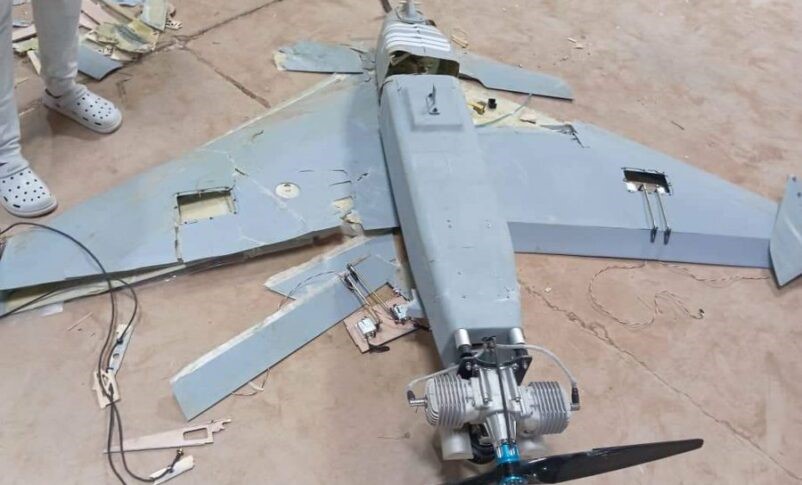
The precision-guided munitions of Iranian Mohajer-6 drones played a decisive factor in the SAF’s March offensive that retook old Omdurman and the National Radio and Television Corporation from the RSF (Radio Dabanga, March 17, 2024). The Mohajer-6 UAVs are, however, vulnerable to the RSF’s limited anti-aircraft weapons, mostly man-portable (MANPAD) systems that are less effective against small “suicide” drones. Earlier this year, RSF forces in Omdurman released photos of a downed Iranian Mohajer-6 drone operated by the SAF and “its extremist backers from the former regime” (a reference to Islamist groups formerly allied to the regime of President Omar al-Bashir). The RSF claimed it was the third such SAF drone to have been brought down (Radio Dabanga, January 29, 2024).

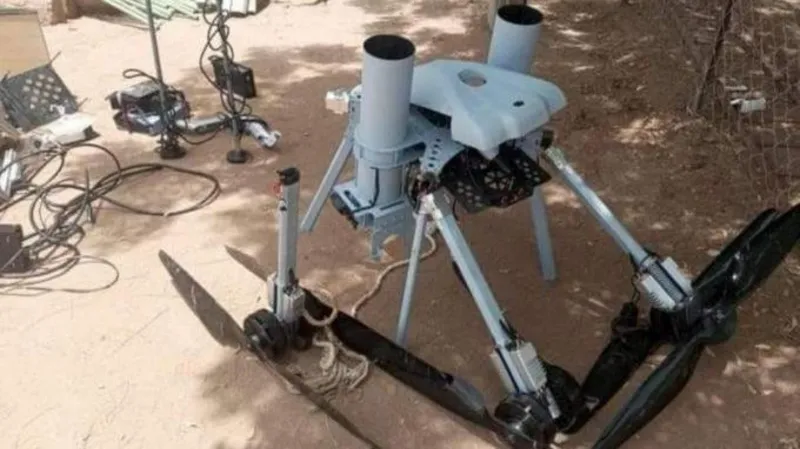
Captured RSF Quadcopter Drone

The SAF began using FPV (first-person view) quadcopter loitering munitions (a.k.a. “suicide” drones) in September 2023. With an ability to hover for long periods before the user finds a target and drives the drone and its warhead into it, loitering munitions provide a cheap and useful tool in urban warfare of the type being practiced in Khartoum and Omdurman. Sudan’s Military Industrial Corporation produces its own Kamin-25 loitering munitions (Military Africa, September 15, 2023).

The SAF uses several Chinese drone types, most notably the Rainbow CH-3 (used for reconnaissance, surveillance and attacks) and the enhanced Rainbow CH-4, which uses precision-guided munitions and has a range of up to 5,000 km (Military Africa, April 20, 2023). Most SAF drones operate out of Wadi Sayidna airbase north of Omdurman. On June 7, SAF air defense systems shot down two drones targeting the base (Radio Dabanga, June 7, 2024; Al-Taghyeer [Khartoum], June 9, 2024). SAF-held airbases are a common target of RSF drones.

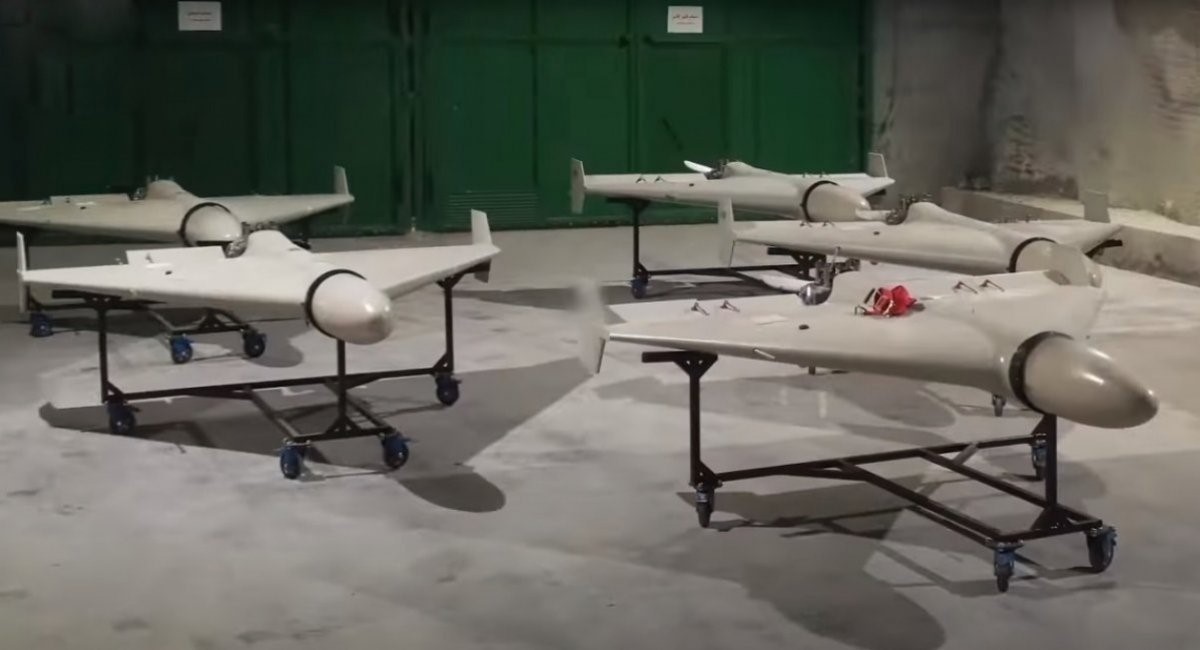
Iranian Shahed-136 drones

The RSF also operates Chinese-made Sunflower-200 “suicide drones,” an improved version of the Iranian Shahed-136 loitering munition drone. These have been deployed with the alleged assistance of Russian PMC Wagner personnel (Military Africa, April 27, 2024; Defense Express, August 16, 2023). Russia is a major purchaser of the Shahed-136, which it uses in Ukraine in a modified form known as the Geran-2. The RSF also operates UAE-supplied, Serbian-made Yugoimport VTOL (vertical take-off and landing) drones, modified to drop two 120mm mortar rounds on its target (Military Africa, February 12, 2024).

RSF drone brought down by the SAF in Shendi, April 23, 2024. (ST)

Recently, the RSF has used Chinese-made drones to bring the war to the previously safe cities of Upper Nubia, home of the riverine Arabs who have dominated Sudan’s politics and military since independence. The SAF’s Third Infantry Division was attacked by drones in Shendi (150 km north of Khartoum) on April 23, while an earlier attack in Atbara targeted the Bara’a bin Malik Brigade of Islamist fighters on March 2 (Al-Taghyeer [Khartoum], April 23, 2024). The Brigade is a hardline Islamist militia fighting alongside the SAF as part of the “popular mobilization” strategy that has brought both former rebel movements and ex-members of Omar al-Bashir’s military/Islamist regime on side with the SAF (Al-Taghyeer, April 3, 2024).

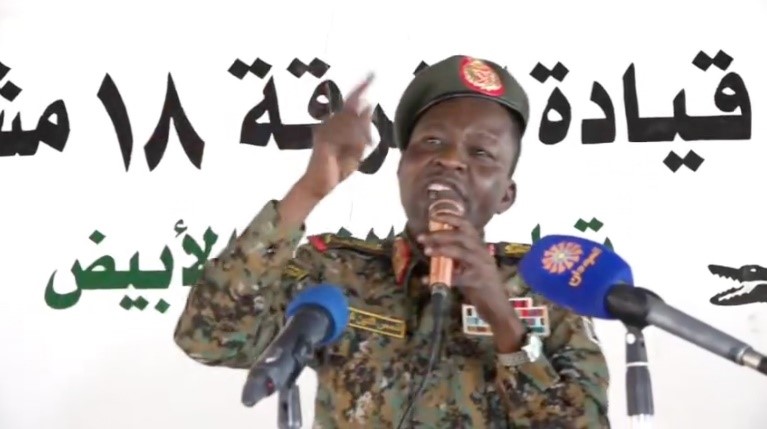
General Shams al-Din Kabbashi

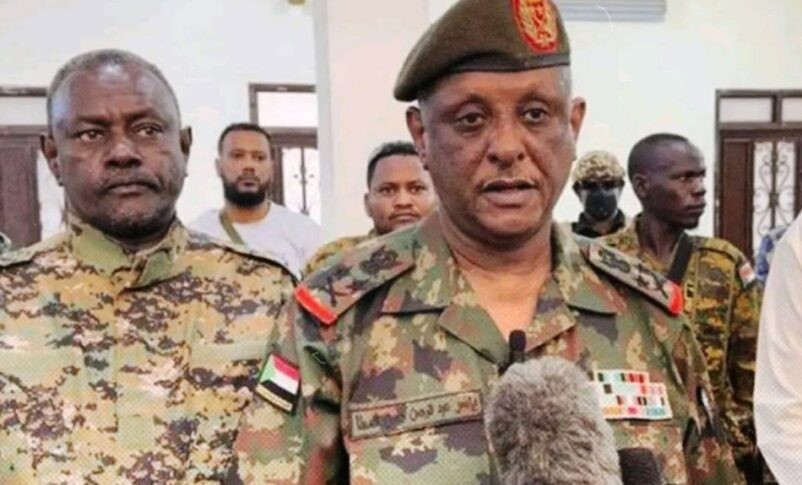
Brigadier Tibieg Mustafa, identified as an advisor to the RSF leader, insisted that the RSF had no part in the drone attacks on Shendi or Atbara: “What happened reflects internal disputes between the Army and the Islamic Brigades of Al-Barra’a bin Malik, which fight alongside the Army” (Radio Tamazuj, April 25, 2024). There appear to be differences in the SAF’s senior command over the role of the Islamic Brigades; General Shams al-Din Kabbashi, the army’s deputy commander, believes their inclusion is dangerous, while General Yasir al-Atta, a member of the sovereignty council, insists the SAF is open to all Sudanese, including Islamists (Middle East Eye, April 4, 2024). Despite Brigadier Tibieg’s claim, there seems little reason at this time to believe the SAF is attacking its allies with drones.

General Yasir al-Atta (ST)

On April 24, three reconnaissance drones were spotted flying over the Nubian town of Hambukol (Al-Taghyeer [Khartoum], April 25, 2024).  Shendi was attacked again on June 9, when five “suicide” drones were shot down by the Third Infantry Division. No damage or casualties were reported but widespread panic was reported in the town (Al-Taghyeer [Khartoum], June 9, 2024).

On June 7, the SAF’s 18th Infantry Division shot down two RSF drones targeting the Kenana airbase in White Nile State and the division headquarters in Kosti (White Nile State). The attacks came a day after SAF commander General ‘Abd al-Fatah al-Burhan arrived in Kosti (Sudan Tribune, June 7, 2024).

RSF advances east of the Nile have brought previously safe cities within range of RSF aerial attacks. In early April, two or three RSF drones panicked the eastern city of al-Qadarif when they struck the local headquarters of the General Intelligence Service and a judiciary building (Al-Taghyeer [Khartoum], April 9, 2024; Asharq al-Awsat, April 10, 2024).

Unlike the SAF, the RSF has no air force, but drones have provided an available and low-cost alternative that allows the paramilitary to spread terror in SAF-held cities well behind the lines and attack SAF facilities, airbases in particular.

NOTE

  1. The description of the RSF as “rebels” is somewhat contentious; see for example a report by the United States Institute of Peace (USIP), that insists the RSF is “not a ‘rebel’ group – it’s recognized by law and was developed, tolerated and sustained as an instrument of state power…” (USIP, April 20, 2023).


Congo Mercenary 2024: A Profile of Romania’s Horațiu Potra

Andrew McGregor

Jamestown Foundation, May 30, 2024

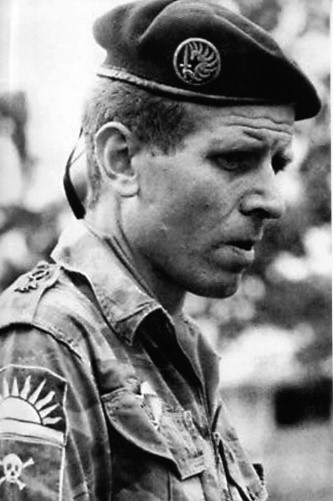
Congo Mercenary was Major “Mad Mike” Hoare’s account of 1960s mercenary action in the newly independent Republic of the Congo. His experience became the inspiration for movies like Dark of the Sun (1968) and The Wild Geese (1978) that forever linked White mercenaries and the Congo in the popular imagination. This era appeared to come to a close, however, with the 1971 Khartoum show-trial of German mercenary Rolf Steiner and the subsequent 1977 Organization of African Unity “Convention for the Elimination of Mercenarism in Africa” (Gabon, July 3, 1977) in which mercenaries were outlawed in Africa as preservers of “colonial and racist domination.”

Rolf Steiner

Most of Hoare’s “Five Commando” were acclimated South Africans or former residents of European colonies. When President Mobutu Sese Seko (1965-1997) reached for the aid of White mercenaries during the First Congo War (1996-1997) he discovered he could hire Eastern Europeans without colonial baggage (but often veterans of the vicious Balkan wars) for less than the usual West European or White African mercenaries.

Mobutu thus hired several hundred East Europeans, mainly Bosnian Serbs, augmented by Croatians, Bosniaks, Ukrainians and Russians. Unsurprisingly, most members of this so-called “White Legion” fell ill before making any useful contribution. [1] Unpaid and unsuccessful, the White Legion was sent home before the war was over. It was not, however, the end of East European mercenaries in Africa, who have returned under the leadership of a Romanian ex-Legionnaire named Horațiu Potra.

Early Years

Potra was born in 1970 in the Transylvanian town of Mediaș. He left school in 1992 to join the French Foreign Legion, completing his service in 1997. Potra was engaged in the late 1990s as a personal bodyguard to the Amir of Qatar, Hamid bin Khalifa al-Thani (1995-2013) (Ziarero.antena3.ro, July 15, 2009; Observator [Bucharest], February 9). The work involved international travel and the opportunity to make high-level contacts in the security community.

In the Central African Republic – 2002-2003

In 2002-2003, Potra, known at the time as “Lieutenant Henri,” was responsible for training the presidential guard of Ange-Félix Patassé, but fell out of favor after being suspected of collusion with rebel leaders like Mahamat Garfa and Mahamat Abbo Sileck (both members of the Tama ethnic group of north-eastern Chad) (Great Lakes Eye [Kigali], January 19, 2023).

Abdoulaye Miskine

Another Potra associate was the Chadian mercenary Abdoulaye Miskine (a.k.a. Martin Koumtamadji), a Hadjaraï from the Guéra mountain range of south-central Chad who provided presidential security in the CAR. Miskine was arrested by Chadian authorities in 2019 and charged with insurrection, rape, murder, torture and kidnapping (RFI, July 30, 2022). Never tried and excluded from a mass pardon in December 2023, “General” Miskine was last reported in ill health in Chad’s Klessoum Prison (al-Wihda [N’Djamena], February 20).

One of Potra’s more useful acquaintances from the CAR is the current Congolese defense minister, Jean-Pierre Bemba. Potra first came into contact with him when the Belgian-educated Bemba was invited to bring his Ugandan-backed Mouvement de Libération du Congo (MLC) rebel force to the CAR to protect President Ange-Félix Patassé from a coup attempt (Great Lakes Eye [Kigali], February 18).

Bemba’s MLC withdrew from the CAR in 2003 amidst numerous allegations of rape, looting and other disorders during their deployment (IRIN, February 17, 2003). Arrested in Europe in 2008, Bemba returned to the Congo in 2018 after spending 10 years in detention in the Hague, followed by his eventual acquittal on charges of war crimes and crimes against humanity.

When Patassé was overthrown by General François Bozizé in 2003, Potra was arrested by the rebels and sentenced to death before escaping. After being found by French troops he was evacuated to safety in Europe (Ziarero.antena3.ro, July 15, 2009). [2]

Legionnaires to Mercenaries

Potra is the director of the Romanian PMC (private military company) Asociatia RALF-ROLE (Românii care au Activat în Legiunea Franceză – Roumanie Legion Etrangere – Romanians who have Served in the French Legion – Romanian Foreign Legion), based in the Transylvanian city of Sibiu (Romania). Formed in 2007, RALF-ROLE describes itself on its website as “an association of former Romanian legionnaires who were active in the French Foreign Legion.” Using the ex-legionnaires’ experience “in security and investigation,” RALF-ROLE offers its services under the motto “Discretion, Safety and Efficiency to serve and protect you and your business” (Asociatia RALF). The new group provided security for the diamond trade in Sierra Leone, where Potra provided security for African Minerals Limited, owned by Vasile Frank Timiș, a wealthy but controversial Romanian businessman (Observator [Bucharest], February 9).

Vasile Frank Timiș

Trouble at Home

In Romania, Potra was investigated in 2010 on suspicion of drug trafficking and possession of weapons by the anti-organized crime prosecutor’s office, DIICOT (Direcția de Investigare a Infracțiunilor de Criminalitate Organizată și Terorism – Directorate for Investigating Organized Crime and Terrorism) (Libertatea [Bucharest], April 4, 2016). His arrest made headlines when DIICOT agents raided his home and found him sleeping with a loaded gun under his pillow (Observator [Bucharest], February 9). Potra ultimately received only a suspended sentence on a charge of keeping a firearm without a license (Fanatik [Bucharest], April 14, 2023). There were also allegations he had threatened to kill Adrian Volintiru, the director of Romgaz, the state-owned natural gas company. The case was resolved when Volintiru withdrew the complaint (Fanatik [Bucharest], April 14, 2023).

Horațiu Potra in Africa (HotNews.ro)

In West Africa and the Sahel

Potra later operated in Burkina Faso, where one of his men Iulian Gherguț, was abducted by Mokhtar Belmokhtar in 2015 while guarding a manganese mine. The mercenary was not released until 2023 after spending eight years as a prisoner shuttled between Mali and Burkina Faso (Libertatea [Bucharest], August 9, 2023; Libertatia [Bucharest], August 10, 2023). Potra’s company was supplying security at the time to mineral interests owned by Frank Timiș. Potra was also reported to have trained Chadian rebels (Taz [Berlin], January 9, 2023). By 2016, Potra was back in the CAR working as bodyguard to President Faustin Touadéra (Taz [Berlin], January 9, 2023).

Deployment in Nord-Kivu

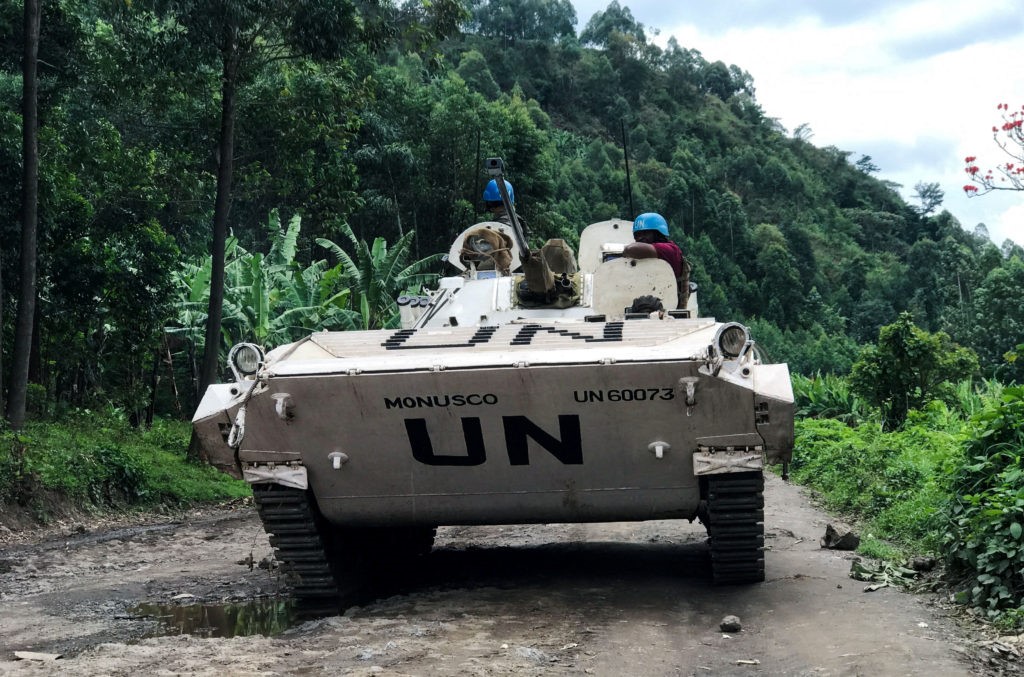
Currently, Potras and his Romanians are engaged in active combat alongside the Forces Armées de la République Démocratique du Congo (FARDC) and UN peacekeepers against the eastern Congo’s M23 (Mouvement du 23 mars), a predominantly Congolese Tutsi anti-government militia operating in the province of Nord-Kivu with the support of Rwanda (Terrorism Monitor, July 26, 2012). Both the Nord-Kivu Tutsi and the Sud-Kivu Banyamulenge Tutsi suffer from ethnic discrimination and the threat of expulsion from the DRC due to widespread accusations of being “Rwandan foreigners” rather than natives of the Kivu region.

M23 made an earlier play for power over a decade ago under Rwandan Tutsi General Bosco “The Terminator” Ntaganda (jailed for 30 years by the International Criminal Court in 2019 for war crimes and crimes against humanity), but were defeated in 2013. M23 fighters fled across the DRC border to refuge in Uganda and Rwanda. The movement began to return to the DRC quietly in 2017 under military leader Brigadier General Sultani Emmanuel Makenga. A Congo-born member of the Mugogwe sub-group of the Tutsi, Makenga helped bring Laurent-Désiré Kabila to power in the DRC in 1997 before Tutsis were ordered to leave the Congo during a general expulsion of “foreign” troops in 1998 (New African, February 15, 2013; for Makenga, see AIS, June 2, 2025).

A reorganized M23 retook the offensive in eastern Congo in October 2021 after Kinshasa launched a campaign to force all armed groups in its eastern provinces to disarm and demobilize. In response to alleged Rwandan backing for the M23, Kinshasa revived its support for the Forces Démocratiques de Libération du Rwanda (FDLR), a Hutu-based Rwandan armed opposition movement promoting the genocidal ideology behind the 1994 Tutsi genocide in Rwanda (Le Monde, March 20; Great Lakes Eye [Kigali], December 28, 2022).

Potra and Romanian Mercenaries in the Congo (IJ4EU)

Under pressure from the rebels, DRC President Félix Antoine Tshisekedi Tshilombo declared in October 2022 that he would not give in to the “fashionable” trend of hiring mercenaries to combat rebellion in his country. Two months later, White mercenaries were spotted providing security around Goma airport, which was overrun and looted by M23 in 2012 (Great Lakes Eye [Kigali], January 19, 2023). These were the vanguard of Potra’s Romanian PMC, consisting originally of 400 fighters, reports indicate this number may have recently doubled (Great Lakes Eye [Kigali], March 21, 2023). Rwanda claims there are now 2,000 mercenaries from Eastern Europe in Nord-Kivu (New Times [Kigali], October 16, 2023). Potra was able to take advantage of the December 2022 lifting of a long-standing arms embargo on the DRC to provide a free flow of arms for the mercenaries, who are paid $5000 per month (Observator [Bucharest], February 9).

Armed White men in combat gear (but without insignia) were soon spotted in the Nord-Kivu city of Goma, where they were guarded at their Hotel Mbiza headquarters by FARDC troops (Taz [Berlin], January 9, 2023). The local habit of referring to the Romanians as “Russians” initially created many false reports of a Wagner presence in Goma and Nord-Kivu. Unlike Wagner’s connections to the Kremlin, Romanian authorities have made it clear there is no state involvement with Potra’s mercenary group (Observator [Bucharest], February 9).

Romanian Mercenaries Using a FARDC Vehicle (Great Lakes Eye)

Corrupt, inefficient and undisciplined, FARDC is supported not only by the Hutu FDLR and European mercenaries, but also Burundian troops and the Wazalendo (Kiswahili – “patriots”), a coalition of Mayi Mayi militias and other pro-government armed groups formed in May 2023 (Africa Defense Forum, January 16). The Mayi Mayi are local Congolese militias ostensibly engaged in a struggle for indigenous rights, but better known for drug-fuelled rampages against villagers involving rape, looting and murder (see Terrorism Monitor, April 3, 2014).

Kenya General Jeff Nyaga

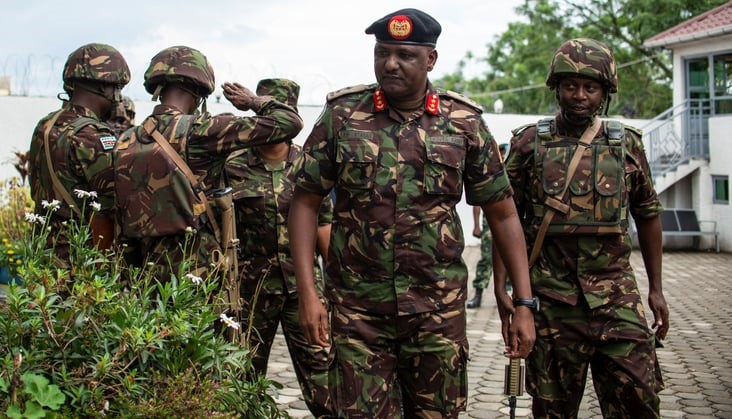
The incompetence of FARDC forces Kinshasa to seek defenders abroad. The East African Community Regional Force (EACRF – Burundians, Ugandans, Kenyans and South Sudanese) deployed in Nord-Kivu in November 2022 during M23 advances, but withdrew its last troops in December 2023 after the DRC declined to renew its mandate (East African [Nairobi], December 21, 2023). Only months into their mission, EACRF faced threats in Goma from demonstrators who accused the force of failing to fight M23, though their mandate called for an offensive only as a last resort (Great Lakes Eye [Kigali], March 21, 2023; DRC News, May 16, 2023). EACRF’s Kenyan commander, General Jeff Nyaga, resigned in April 2023, complaining of intimidation and surveillance by “foreign mercenaries” (Kinshasa Times, April 28, 2023). Nyaga was accused by the Congolese of “peaceful cohabitation” with M23 and Rwandan troops in Kivu (Kinshasa Times, May 3, 2023). Dissatisfaction with the EACRF may have motivated Tshisekedi to intensify his recruitment of mercenaries.

About 1,000 Tanzanian, Malawian and South African troops belonging to the Southern African Development Community Mission in the Democratic Republic of Congo (SAMIDRC) began to arrive as replacements for EACRF in December 2023, but deployment has been slow and six men have already been lost to M23 mortar fire (DRC News, April 3; Kinshasa Times, April 9).

One Moldovan and two of Potra’s Romanian mercenaries, Victor Railean and Vasile Badea, were killed in a M23 ambush in February (DRC News, February 19). Four others were wounded when the Romanian unit remained under fire for ten hours while defending the city of Saké from a M23 offensive (Libertatea [Bucharest, February 9).

Potra’s fighters collaborate with Bulgarian PMC Agemira, led by French businessman Olivier Bazin, a.k.a. “Colonel Mario” (Great Lakes Eye [Kigali], January 19, 2023). Agemira maintains what is left of the DRC’s aging, mostly Soviet-era air force (Jeune Afrique, July 28, 2023). Georgian and Belarussian pilots are engaged to fly the DRC’s helicopters and fighter jets (Deutsche Welle, January 17, 2023; Bellingcat, June 26, 2017). A Georgian helicopter pilot was captured by M23 in 2017 (OC Media [Tbilisi], May 26, 2017).

Conclusion

Potra has recently taken an interest in Romanian politics, becoming president in February 2022 of the Mediaș chapter of the Alianței Pentru Patrie (APP – Alliance for the Fatherland), a nationalist Euroskeptic party. Some days later, Potra issued a video addressed to the Romanian political class. Holding a machete, Potra declared: “You are all traitors to the country who serve foreign interests…”. The mercenary chief also denounced Romania’s military support for Ukraine (Romania has been a NATO member since 2004): “What have the Russians done to us, how have they wronged us to be against them?” (Fanatik [Bucharest], April 14, 2023). Nonetheless, Potra has tried to exploit the difference between Russian mercenaries with ties to the Kremlin and his own Romanians. According to Potra, Western governments “should be very happy that a European company is [in the DRC] that is not Wagner” (Le Monde, March 20). The governments of the West have so far avoided displays of happiness over the deployment of Potra’s Romanian soldiers-of-fortune in the long-suffering Congo.

NOTES

  1. Jason K Stearns: Dancing in the Glory of Monsters: the collapse of Congo and the Great War of Africa. New York, 2011, p. 124.
  2. For more on European and African mercenaries in the CAR, see AIS Special Report, February 5, 2022.

Russia in Niger – A Military Junta Walks Away from the West

Andrew McGregor

Eurasia Daily Monitor 21 (56), April 11, 2024

Jamestown Foundation, Washington DC

Executive Summary

  • Russia is actively expanding ties with Niger’s military junta to consolidate control over resource-rich assets and to push out Western influence.
  • Moscow has now signed multiple agreements to provide security guarantees to Abdourahamane Tchiani and potentially take over the rights to several Nigerien gold mines.
  • Kremlin propaganda relies on “anti-colonial” narratives that have played a role in pushing the French and US military presence out of the country.

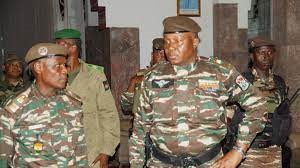
Nigerien president Mohamed Bazoum was overthrown by his own Garde Présidentielle on July 26, 2023. The Army backed the coup a day later, enabling former Garde leader Brigadier General Abdourahamane Tchiani to proclaim himself Niger’s new head-of-state. Bazoum was detained and coup supporters flooded the streets of the capital, Niamey, many of them waving Russian flags. The display raised suspicions of Russian/Wagner involvement in the coup.

Brigadier General Abdourahamane Tchiani (Reuters)

President Bazoum was known for his support of Ukraine at the UN and joined a diplomatic initiative to return rule of Crimea to Ukraine, though there were other factors at work in the coup besides pro-Russian sentiment in the military, including Bazoum’s Arab ethnicity in a Hausa-majority country (Arabs form less than 1% of the population) (AfricaNews, February 19, 2021). A stagnant economy, growing insecurity and the presence of Western troops were other factors, but the spark for the coup appears to have been Bazoum’s intention to shake up the ineffective military leadership. Like many other regional coup leaders, General Tchiani (a Hausa) and his armed forces chief-of-staff General Moussa Salaou Barmou received American military training.

Ukraine insisted Russia was behind the coup as part of its “scenario for provoking instability to undermine the global security order”​​​​​​​ (Anadolu Agency, August 1, 2023). Perhaps putting a damper on the idea that Russia had orchestrated the coup was Russian foreign minister Sergei Lavrov’s initial condemnation of the putsch as “an anti-constitutional undertaking” (Vedomosti, January 17).

Protesters in Niger’s capital Niamey hold a Russian flag and banner with images of coup leaders in Niger, Burkina Faso, Mali and Guinea (AFP)

Moscow nonetheless came to the defense of the junta when the Economic Community of West African States (ECOWAS) indicated it was planning a military intervention to restore President Bazoum (BBC, August 11, 2023). The military dictatorships of Mali, Burkina Faso and Guinea (all ECOWAS members) signalled their intent to oppose any ECOWAS action against Niger and its new rulers, the Conseil Supérieur pour la Sauvegarde de la Patrie (CNSP – National Council for the Safeguarding of the Homeland).

With 1500 French troops in Niger, the French military was the junta’s first target with the cancellation on August 3, 2023 of all five military cooperation agreements with France (signed between 1977 and 2020). The French force was assisting in the struggle against Islamic State militants and jihadists of al-Qaeda-related Jama’at Nusrat al-Islam wa’l-Muslimeen (JNIM) but was no longer having the impact it once did, providing fertile ground for anti-French Russian media manipulation. As ordered by the junta, French troops began evacuating Niger on October 10 (RIA Novosti, October 10, 2023). The last French troops left on December 22. Several weeks after their departure, Niger Defense Minister General Salifu Modi said the evacuations had already provided a “positive impact on our fight against terrorism” (RIA Novosti, January 17).

There were initial concerns that the coup in Niger might interrupt the flow of uranium to French nuclear reactors, but these concerns appear to have been overstated. Shortly after the coup, France’s Ministry of Energy Transition insisted: “The situation in Niger does not present any risk to France’s security of supply of natural uranium” (TV5Monde/AFP, July 31, 2023).. Niger is one of France’s top three uranium suppliers, supplying 20% of French needs  (TV5Monde/AFP, July 31, 2023). France maintains a strategic stockpile of strategic uranium equal to a two-year supply and is actively seeking to diversify its supply, including a long-term deal with Mongolia in October 2023 and the construction of a uranium recycling plant (Portail de l’IE [Paris], January 9; La Tribune [Paris], January 9).

A speaker believed to be Wagner chief Yevgeny Prigozhin used a Wagner-associated Telegram channel to make a pitch to Niger’s new rulers to engage Wagner while employing the anti-colonial rhetoric now pervasive in West Africa: “What happened in Niger is nothing other than the struggle of the people of Niger with their [French and American] colonizers… who are trying to foist their rules of life on them,,, and keep them in the state that Africa was in hundreds of years ago” (Meduza, July 28, 2023; al-Jazeera, July 31, 2023).

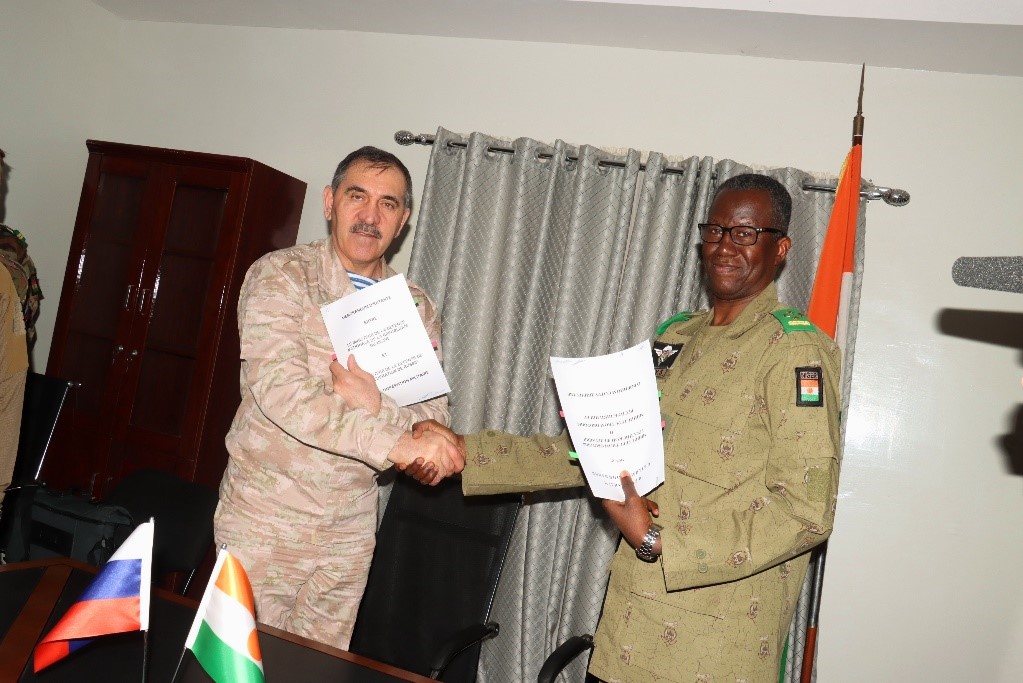
Following Prigozhin’s death last August and the subsequent reformation of the Wagner Group, Nigerien minister of state for defense Lieutenant General Salifou Modi joined Russian deputy minister of defense Colonel General Yunus-Bek Yevkurov in signing an agreement on December 4, 2023 providing for the deployment of Russia’s new GRU-directed Africa Corps in Niger (Izvestia, March 13).

Generals Yevkurov and Modi Sign a Defense Agreement (ANP)

According to General Modi, the cost would be significant: “A large part of our military budget will be allocated directly to our Russian partner.” Niger’s minister of mines added that some gold mines might be ceded to the Russians as well (Agence Nigérienne de Presse, December 4, 2023). In an interview a few days later, General Tchiani thanked Russia’s soldiers and mercenaries, but noted “we are paying them very dearly… Certainly, the security guarantees provided by Moscow have a high price and will require significant sacrifices, but it is a reliable partner” (Agence Nigérienne de Presse, December 10, 2023).

The tempo of reciprocal visits and meetings increased after this agreement, culminating in a March 26 phone call with President Putin in which General Tchiani expressed his gratitude for Moscow’s support and discussed stronger security cooperation (AFP, March 26).

A diplomatically disastrous visit to Niger by American officials in mid-March convinced the junta to cancel its “status of forces” agreement with the US on March 17 (ActuNiger, March 16; Al-Jazeera, March 17). The move forces the closure of a $100 million American drone facility and a separate CIA drone facility.

In another post-coup development, the junta repealed 2015 legislation outlawing migrant trafficking through Niger, claiming it had been implemented “under the influence of certain foreign powers” (AFP, January 23). Imprisoned traffickers were released and military escorts provided for migrant convoys. These measures were applauded both by traffickers and NGOs. The move raises the possibility of Russian manipulation of migrant flows to Europe.

Russia alone is unlikely to be able to provide all the assistance Niger needs in the economic, technical and financial fields. For these, Niger must be open to regional and international partnerships that might be jeopardized by an armed Russian presence following its own agenda. Niger has missed four debt payments in a row and is now $519 million in default (al-Jazeera, February 19).  With foreign aid accounting for half its budget, Niger can hardly afford to abandon all other partners in favor of Russia.

The junta will be taking a gamble with a relatively unknown partner like Russia, which has had few dealings with Niger since the Soviet era. On the other hand, Niger’s army has suffered numerous setbacks in trying to contain the jihadist insurgency and will require a new partner to replace the French.

This article was first published as “Niger Cozies Up to Russia and Walks Away From the West,” EDM, April 11, 2024.

Russian Military Intelligence Takes Over Wagner Operations in Libya

Andrew McGregor

Eurasia Daily Monitor

Jamestown Foundation, Washington DC

March 12, 2024

Executive Summary:

  • Moscow is consolidating the Wagner Group’s operations in Libya under the direct control of the Main Directorate of the General Staff of the Armed Forces (GRU) and instituting the African Corps, run by Russia’s Deputy Defense Minister.
  • “Field Marshal” Khalifa Haftar of the Libyan National Army is building connections with Russia to gain special forces training in exchange for further Russian presence in Libya while being warned against this by the United States.
  • Russia’s GRU is preparing important strategic plays in Libya through military operations that might shift the balance of power in the Mediterranean.

Libya’s broken government has offered a pathway to Russian influence in the oil-rich nation since 2018. With the death of Wagner leader Yevgeny Prigozhin in August 2023, Moscow is consolidating the Wagner Group’s operations in Libya under the direct control of the Main Directorate of the General Staff of the Armed Forces of the Russian Federation (GRU). It is a move with political as well as military implications. There are currently at least 800 Russian contractors in Libya, supported when necessary by up to 1000 Syrian militiamen based in Benghazi (Arab News, November 15, 2023; Al-Jazeera, February 25; Soufan Center Intel Brief, March 6).

Eastern Libya (Cyrenaïca) and southwest Libya (Fezzan) are currently under the authority of Libya’s parliament, the House of Representatives (HoR). The Tobruk-based HoR is dominated by “Field Marshal” Khalifa Haftar and his Libyan National Army (LNA), which is more a collection of militias and mercenaries than a “national army.” Haftar, an American citizen and former CIA asset, is supported by Russia, the United Arab Emirates, and Egypt (though Egypt’s support is ebbing due to Haftar’s backing of Sudan’s Rapid Support Forces). Opposed to the HoR and the LNA is the internationally recognized Government of National Unity (GNU), based in Tripoli with the support of Qatar, Italy, and Türkiye. In the continuing absence of a national president, the functions of the head of state are carried out by the allied High Council of State.

Wagner backed Haftar’s failed 2020 attempt to take Tripoli. Many of the Wagner fighters were inexperienced and performed poorly on the front lines, creating tensions with LNA commanders and Haftar, who delayed payment to the group (Libya Observer, May 14, 2020). An October 2020 ceasefire allowed the redeployment of some Wagner personnel, including Syrian mercenaries, to Mali and Ukraine (Libya Observer, March 22, 2022).

Following the collapse of the LNA/Wagner offensive, Moscow informed Tripoli’s GNU that it now supports UN efforts to promote fair elections for a unity government (Libya al-Ahrar, December 7, 2023). Russia’s newly reopened embassy in Tripoli is headed by Ambassador Aydar Rashidovich Aganin, a Muslim Tatar (Libya Observer, February 22). A Russian consulate scheduled to open in Benghazi before the end of the year has been meeting GNU opposition (Libya al-Ahrar, February 10; Agenzia Nova, February 23).

General Yevkurov Greets Field Marshal Haftar in Moscow (AFP)

Though he was previously warned off by an American delegation that cited a Russian risk to public security, Haftar held talks in Moscow with Russian President Vladimir Putin and Russian Defense Minister Sergei Shoigu in September 2023 (Asharq Al-Awsat, May 13, 2019; Sputnik, September 29, 2023; Libya Al-Ahrar, September 30, 2023). Unverified reports suggested that Hafter was seeking air-defense systems, pilot training, and special forces training in exchange for upgrades to airbases previously used by Wagner so they would be better suited for use by Russian military personnel (Libya Security Monitor, November 5, 2023; Libya Observer, November 11, 2023).

Docking rights for Russian warships at a Libyan port were also considered, though a source close to Haftar denied these were part of the talks (New Arab, October 9, 2023; Asharq al-Awsat, November 7, 2023). The most likely location for a Russian naval base would be the deep-water port of Tobruk, a significant improvement on Russia’s modest Mediterranean naval facilities at Tartus and Latakia in Syria (Libya Observer, January 31).

Haftar continues to meet with American military and state officials, even though this may only provide him leverage in his dealings with the Russians, who do not appear to oppose his plan to establish his family as a ruling dynasty. The meetings with American officials, however, may also raise suspicions in the Russian camp, which finds Haftar useful but not irreplaceable.

Russian military operations in Libya are being handed over to its new African Corps (AK) under the supervision of Russia’s Deputy Minister of Defense and former head of Ingushetia (2008-2019), Colonel General Yunus-Bek Yevkurov (Vedomosti, December 22, 2023). Yevkurov is best known for leading the Russian task force that marched 300 miles from Bosnia to seize Kosovo’s Pristina International Airport ahead of NATO forces in 1999, a signal to the West that post-Soviet Russia was still a force in Europe.

Yevkurov and GRU General Andrei Averyanov have been visiting all their new partners in Africa, including Libya, Niger, Burkina Faso, Mali, and the Central African Republic (CAR) (African Defense Forum, January 16). General Averyanov is the former head of the GRU’s Unit 29155, which was responsible for assassinations, sabotage, and destabilization operations. Yevkurov has made four visits to Libya in the last six months, the most recent in late January.

General Yevkurov with Russian and Libyan Officers in Benghazi (Libya al-Ahrar)

The Russian Ministry of Defense is offering former Wagner fighters new AK contracts (Vedomosti, December 22, 2023). In the pattern of colonial armies, African volunteers may be incorporated into the AK to bring it up to a projected 20,000 men under Russian command. Wagner’s security protection work is likely to be farmed out to other Russian private military companies (PMCs), like Redut and Convoy (Ukrainska Pravda, January 30; for a detailed analysis of Russian PMCs, see EDM, March 3).

Al-Jufra, Sirte, and Brak al-Shati airbases have already been integrated into a Russian air-supply route from Latakia to Bangui and the Sahel. Russian aircraft do not use Libyan bases with impunity. Two Ilyushin military transports were destroyed by drones of uncertain origin last year at al-Khadim and al-Jufra airbases (Libya al-Ahrar, December 21, 2023).

When the deployment of the AK is finished this summer, Libya will be an important staging post for Russian operations in Sudan, the CAR, and the new military Alliance of Sahel States, consisting of Niger, Mali, and Burkina Faso.

The GRU takeover of Russian forces in Libya raises several questions:

  • Wagner forces have been far from invincible on Libyan and African battlefields; if units of the new GRU-run AK run into trouble, will the GRU’s Spetsnaz (special forces) brigades intervene?
  • What role will GRU-controlled land forces and ships play in a hybrid-warfare manipulation of migrant flows through Libya to Europe?
  • The GRU was not intended to manage business operations. Will Wagner’s existing operations (including those of no strategic value, such as breweries) be absorbed to finance the GRU’s Africa Corps or hived of to other Russian interests (African Defense Forum, April 4, 2023)?
  • Russian nuclear submarines returned to the Mediterranean for the first time in 23 years with the 2022 visit of the K-560 Severodvinsk (Yasen class) and the K-157 Vepr (Akula-II class). There have been visits since by Kilo-class submarines, but durations are typically short due to a lack of suitable maintenance facilities (The Barents Observer, October 30, 2016; Majorca Daily Bulletin, October 18, 2023). Will a Russian naval base in Libya host a permanent Russian nuclear submarine force with its attendant atomic threat to Europe’s southern flank?

Using the multiple diversions presented by a US presidential election year and conflicts in Gaza and Ukraine, Russia’s GRU is busy preparing important strategic plays in Libya that might shift the balance of power in the Mediterranean.

Wagner’s Influence in Central African Republic Wanes as American PMC Enters the Scene

Eurasia Daily Monitor 21(19)

February 7, 2024

Andrew McGregor

Executive Summary:

  • President Faustin-Archange Touadéra (nicknamed “President Wagner”) of the Central African Republic (CAR) welcomed the Wagner Group in 2018 but is now in the process of diversifying the CAR’s relations.
  • Wagner’s influence in the CAR has waned following the Prigozhin mutiny despite assurances from Russian authorities of continued support. For example, Touadéra’s government last year approved a US competitor to Wagner to operate in the country.
  • The situation in the CAR and other countries where Russian private military companies operate is a test of Moscow’s ability to focus on any foreign issue beyond the Ukraine War.

_________________________________________________________________________

Landlocked, desperately impoverished and development-free, the Central African Republic (CAR) hardly seems like a strategic prize, but it may soon be the focus of a new “Cold War” struggle for Africa and its resources. Like other former French colonies in Africa, the CAR has endured security challenges as French military forces withdrew and Russian “mercenaries” flowed in to replace them.

CAR President Faustin Archange Touadéra

Russia’s Wagner Group was initially welcomed to the CAR in 2018 by President Faustin Archange Touadéra, who carried out a January reshuffle of the government in which important posts were reallocated to cronies, militia leaders and mistresses of the president (Corbeau News [Bangui], January 14).

Last December, the CAR’s presidential spokesman announced that the nation, so closely intertwined with the Wagner Group, was now “in the process of diversifying its relations,” especially in the area of strengthening its armed units. Potential partners named included Russia, but not the United States, though the spokesman noted the president was fond of saying: “I have my arms open to work with everyone” (RFI, December 24, 2023).

“Everyone” appears to include Bancroft Global Development (BGD), an American NGO reputed to be a private military contractor (PMC). The Washington-based BGD claims a presence in Kenya, Somalia, Uganda and Libya, delivering “permanent solutions to the economic, environmental and societal harm cause by armed conflict and the hazardous remnants of war” (Bancroft Global Development website).

Since its arrival, Wagner has become deeply involved in the CAR’s diamond and gold sectors, timber extraction and alcohol production. Wagner also inserted advisors at top government levels and launched intensive propaganda efforts in Sango, the local lingua franca. Russian is taught at the local university, a Bangui restaurant serves Russian cuisine and the construction of a Russian Orthodox church is Bangui is accompanied by a drive to encourage conversions from the nation’s Roman Catholic majority (Izvestia, May 29, 2023). Russian arms and training have turned elements of the Forces Armées Centrafricaines (FACA) into armed auxiliaries of the Wagner Group.

Colonel Denis Pavlov, SVR (Alleyesonwagner)

After Wagner’s failed June 2023 mutiny and the subsequent death of Wagner strongman Prigozhin, some 450 to one thousand Wagner personnel left CAR without replacement (Radio Ndeke Luka [Bangui], July 7, 2023; AFP, July 7, 2023). Russian authorities traveled to Bangui last September to assure CAR officials that the Russian mission there would continue, but under the authority of the Russian Defense Ministry. Denis Vladimirovich Pavlov replaced Vitaly Perfilev (a former French Foreign Legionnaire) as security director, while Dmitry Sytii (victim of a 2022 parcel-bomb attack that both Prigozhin and the CAR blamed on France) was replaced as Maison Russe director but remained on to manage Wagner business interests (RFI, December 18, 2023). Pavlov is not a Wagner man, but is instead from the SVR, Russia’s external intelligence agency (Alleyesonwagner.org./RFE/RFL, December 7, 2023; Radio Ndeke Luka [Bangui], December 17, 2022; Izvestia, May 29, 2023).

Last May, the CAR ambassador to Russia mentioned Bangui’s intention to establish a Russian military base “where there could be from five to ten thousand soldiers. Moreover, they could be used in other countries if necessary” (Izvestia, May 29, 2023). On January 26, Russian ambassador to the CAR Alexander Bikantov said that the size and location of the planned base had yet to be determined (Rossiyskaya Gazeta, January 26).

“Russia, the CAR is with you” (al-Jazeera)

Washington is alleged to have first broached the idea of American military training and humanitarian aid in exchange for a Wagner withdrawal within 12 months in a memo passed to the CAR president at the December 2022 United States-Africa conference. The existence of this memo was denied by the CAR’s foreign minister, though she did admit to the establishment of a “cooperative relationship” with the US (Radio Ndeke Luka [Bangui], March 3, 2023).

Rumors of the existence of the US memorandum led to protests against the departure of Wagner and a supposed American assault on CAR sovereignty Radio Ndeke Luka [Bangui], March 3, 2023; Corbeau News [Bangui], January 25). Russian reports echoed earlier French claims that BGD employees were seeking land near the capital for the operation of surveillance drones and the training of a CAR military unit that would protect American mining concessions (Rossiyskaya Gazeta, December 23, 2023; RFI, December 18, 2023). One newly formed pro-Russian civil society group described the “deployment of Bancroft mercenaries” as an “official declaration of war on the Central African people (RFI, January 26). Wagner’s propaganda machine in Bangui has warned of American plans to assassinate President Toudéra (RFI, December 18, 2023).

Michael Stock in Somalia (WSJ)

BGD founder, Michael Stock, and Franco-South African Richard Rouget, a former associate of French mercenary Bob Denard, visited the CAR last September. Contacts with BGD are reported to be handled by two close advisors to President Touadéra (RFI, December 18, 2023). Though BGD has been tight-lipped regarding its association with the CAR, confirmation of a deal with BGD was issued by a presidential spokesman on December 22 (Radio Ndeke Luka [Bangui], December 23, 2023).

Richard Rouget, a.k.a. “Colonel Sanders”

Perhaps sensing fissures in the regime’s stability, Touadera’s rule has been challenged in recent days by two former prime-ministers, Martin Ziguélé (2001-2003) and Henri-Marie Dondra (2021-2022) (Jeune Afrique, December 20, 2023; Jeune Afrique, January 5). They, like most other CAR opposition figures, must operate in exile following detentions and intimidation efforts by Wagner personnel. Nonetheless, most opposition leaders see the arrival of Bancroft as a means of preserving the power of the regime rather than the security of the people (Radio Ndeke Luka [Bangui], December 30, 2023).

There has been much talk of the CAR’s new “security diversification strategy,” though it is unrealistic to imagine Russian and American military personnel happily running parallel security and training operations in Bangui; there are limits to diversity. What will be tested in the coming days is the Russian Defense Ministry’s commitment to foreign adventures initiated by Prighozin’s free-booting Wagner Group.

Israeli End Goals in Gaza: A Palestinian Expulsion?

Terrorism Monitor Volume: 22 Issue: 2

Andrew McGregor

January 31, 2024

(NPR)

Executive Summary

  • Nearly all of Gaza’s 2.2 million people have been displaced by the current conflict, with Israel potentially considering “voluntary” resettlement plans for the Gazan population.
  • Various Israeli officials have proposed several such plans for the removal of Gazans to other nations like the Democratic Republic of the Congo or Egypt, which they have justified by declaring that Gazans’ main desire at this point is to destroy Israel.
  • Egypt has firmly rejected Israeli proposals to resettle Gazans in its country, equating any “voluntary” resettlement to illegal forced displacement. In particular, relocating the Gazan population to the Sinai is felt by Cairo to risk peace between Egypt and Israel.

In January 2008, Hamas fighters blasted holes through the border wall separating Gaza and Egypt to allow hundreds of thousands of starving Palestinians to access food and fuel supplies in Egypt. The incursion occurred five days after Israel imposed a complete blockade on Gaza, following a series of Hamas rocket attacks. Egyptian security forces backed off to alleviate the growing humanitarian crisis, but forced the Gazans back across the border several days later (Al Jazeera, January 24, 2008).

Now, sixteen years later, Israel may be seeking a more permanent repetition of this incident by forcing nearly all of Gaza’s 2.2 million people into the Egyptian Sinai. Some 1.9 million Gazans are now displaced, with little or nothing to return to when the bombing stops (United Nations Office for the Coordination of Humanitarian Affairs, January 4). In this context, high-level Israeli discussions regarding the “voluntary” resettlement of Gaza’s Palestinian population have become an indicator of the Israeli government’s war objectives.

Israeli Plans for Transferring Gazans to Sinai and Beyond

Schemes to transfer Gaza’s population to Sinai have appeared repeatedly since the 1950s, but the Sinai is not the only place to have been considered as a destination for Gaza’s Arabs. Israel’s Likud government is reported to be engaged in secret negotiations with several nations to accept displaced Gazans, most notably the Democratic Republic of the Congo, a nation beset by environmental crises, humanitarian challenges, political instability, and ceaseless internal warfare (Times of Israel, January 3).

General Alfredo Stroessner, Dictator of Paraguay

A secret 1969 plan to encourage Gazans to migrate to Paraguay was only revealed in 2020. Negotiated by Israel’s Mossad intelligence agency with Paraguayan dictator and Nazi sympathizer Alfredo Stroessner, the deal called for 60,000 Palestinians to move to the South American nation. However, ultimately, only 30 Palestinians did so, two of whom stormed the Israeli Embassy and killed the ambassador’s secretary (Jerusalem Post, August 12, 2020).

Israeli Intelligence Minister Gila Gamliel (X)

On January 2, Intelligence Minister Gila Gamliel outlined a post-war plan to take control of the Egypt–Gaza border. She noted that by war’s end, there will be no municipal authorities in Gaza, no source of work, a 60 percent decline in agricultural land, and a complete dependency on humanitarian aid. All these conditions encouraged “voluntary emigration” (Times of Israel, January 3).

Israeli Minister of Finance Bezalel Smotrich (Israel Hayom)

Minister of Finance Bezalel Smotrich (of the Religious Zionist Party), National Security Minister Itamar Ben Gvir (of the Otzma Yehudit Party) and numerous members of the Likud Party have also advocated the external resettlement of Gazans and their replacement with Israeli settlers. Smotrich justified the “voluntary” emigration by claiming “two million [Gazans] wake up every morning with a desire to destroy the State of Israel and to slaughter, rape, and murder Jews” (Jerusalem Post, January 3). However, these calls do not have universal support in the Israeli government, with two Likud ministers describing them as “unrealistic” and damaging to Israel’s international reputation (Times of Israel, January 4).

“An Integral Part of Israel” – Israel’s Projected New Western Border

In mid-December, extremist Rabbi Uzi Sharbaf, a founding member of banned Israeli terrorist group “The Jewish Underground” (HaMakhteret HaYehudit), told a Tel Aviv conference attended by Knesset members that Jewish settlements must return to Gaza as part of an historic opportunity to “liberate” biblical lands from the Sinai up to the Nile River (Jordan News, December 15, 2023; Al-Ahram [Cairo], December 14, 2023). This “unique and rare opportunity to evacuate the entire Gaza Strip” was also cited in an October 17 paper released by former senior defense and intelligence officials of the Misgav Institute for National Security and Zionist Strategy. Rather than the Sinai, the plan called for the resettlement of Gazans in existing housing in the Cairo satellite cities of “6 October” and “10 Ramadan” that would be purchased by Israel at a cost of $8 billion. [1]

General Giora Eiland (Jerusalem Post)

Giora Eiland, an influential retired IDF major-general and former head of the Israeli National Security Council who has compared Gaza to Nazi Germany, declared at the beginning of the current conflict that: “Israel needs to create a humanitarian crisis in Gaza, compelling tens of thousands or even hundreds of thousands to seek refuge in Egypt or the Gulf… Gaza will become a place where no human being can exist” (Ynetnews, October 12, 2023; Yedioth Ahronoth, November 19, 2023). Eiland has promoted a population transfer from Gaza to Sinai since 2004.

Egyptian Reactions

A leaked document from Israel’s Intelligence Ministry dated October 13 called for a permanent relocation of Gazans to Sinai, initially to tent cities, and then to more stable accommodation in the Sinai Peninsula, with a buffer zone along the border preventing their return to Gaza. The first step would consist of shifting the population to Gaza’s south. Egypt’s minister of foreign affairs, Sameh Shoukry, described the leaked document as “a ludicrous proposition,” noting that displacement was itself “an illegal activity” (Asharq Al-Awsat, November 4, 2023). Shoukry later denounced calls for a “voluntary” displacement as a “full-fledged war crime” (Al-Ahram [Cairo], November 21, 2023).

Egyptian Foreign Minister Sameh Shoukry (Daily News Egypt)

Israeli sources report that Israeli prime minister Benjamin Netanyahu suggested the World Bank write off Egypt’s considerable foreign debt (an estimated $165 billion) in return for accepting Gaza’s population (Yedioth Ahronoth, October 31, 2023). Some financial aid from the rich Gulf states might be included, but Egyptian authorities have loudly proclaimed their rejection of the deal (Egypt Independent, November 1, 2023). Egyptian prime minister Mustafa Madbouli has noted his government’s own plans to settle eight million Egyptians in the Sinai by 2050 (Al-Ahram [Cairo], November 23, 2023). [2]

Egypt fears that discontented and resentful Gazans might use Sinai as a base for attacks on Israel in contravention of the peace agreement between the two nations. President Abd al-Fatah al-Sisi has instead suggested that Israel transport the two million Gazans to Israel’s Negev Desert in the south of the country until they can be returned after the defeat of Hamas (Egypt Today, November 22, 2023).

Conclusion

Bitter divisions are already emerging in Israel’s war cabinet over the post-war destiny of Gaza’s people. The implications for Israel of a forced depopulation of Gaza are many, including international isolation, the collapse of the Abraham Accords, and even a renewal of hostilities with Egypt. So long as both Egypt and the Palestinians of Gaza reject the idea of resettlement, the scheme cannot be fulfilled without dangerous consequences for Israel’s future.

Notes:

[1] “A Plan for resettlement and final rehabilitation in Egypt of the entire population of Gaza: economic aspects,” Misgav Institute for National Security and Zionist Strategy, October 17, 2023. The paper was taken down from the web after an international backlash. See Middle East Eye, October 26, 2023.

[2] Cairo’s full plan for development in Sinai can be found here: “The New Republic Implements Comprehensive National Plan to Change Life in Sinai: The Land of Turquoise,” State Information Service, April 26, 2022, https://www.sis.gov.eg/Story/165520/Mega-Projects-on-every-inch-of-Sinai?lang=en-us

Assessing the War in Sudan: Is an RSF Victory in Sight?

Andrew McGregor

Terrorism Monitor 21(24)

Jamestown Foundation, Washington DC

December 15, 2023

After eight months of brutal warfare, Sudan’s Rapid Support Forces (RSF) now appear to have the upper hand against the better-armed Sudan Armed Forces (SAF). Led by Muhammad Hamdan Daglo “Hemetti,” the RSF has conducted a highly mobile campaign against the SAF’s reactive and defensive posture, allowing the group to take the initiative in all regions of the conflict. With the Sudanese capital of Khartoum now a devastated battlefield, the ineffective government, led by SAF commander-in-chief General Abd al-Fatah al-Burhan, operates from a temporary base in Port Sudan, which suffers from power shortages and a chronic lack of fresh water.

Peace talks in Jeddah between the two military factions, assisted by Saudi, American, and African Union mediators, were indefinitely suspended earlier this month after both sides failed to meet commitments agreed upon in earlier negotiations (al-Taghyeer [Khartoum], December 4; Africa News, December 5). The animosity between the factions is severe and historically based in the rivalry between the poor Arab tribesmen of western Sudan (the RSF) and the Arab elites of the Nile region who have controlled Sudan and its military since the country gained independence in 1956.

RSF Commander General Muhammad Hamdan Daglo “Hemetti”

Resistance to the RSF onslaught is weakening at all levels, placing Sudan’s diverse population at risk of rule by Arab supremacists with a record of savage conduct and a general ignorance of the means of development, administrative techniques, economic theory, and international relations.

The Impending RSF Conquest of Darfur

Four of Darfur’s five states, comprising nearly 80 percent of the western province, are now in RSF hands. North Darfur state and its capital, al-Fashir, may be the RSF’s next target. Al-Fashir is strategically and symbolically important as the former capital of the once powerful Fur Sultanate (c.1650-1916). Security in North Darfur is provided largely by the Joint Protection Force (JPF), an alliance of five non-Arab armed movements that has been busy recruiting in the region in anticipation of an RSF offensive. The RSF has also been recruiting from the region’s Arab population, setting the stage for a vicious ethnic conflict that will inevitably result in the mass slaughter and displacement of many of North Darfur’s civilians. Convoys bringing supplies to North Darfur from central Sudan have stopped, creating shortages of food, fuel, and medicines (Sudan Tribune, December 7).

JEM Leader Jibril Ibrahim (Sudan Tribune)

Two major armed movements, the Justice and Equality Movement (JEM) and the Sudan Liberation Army of Minni Minawi (SLA-MM), abandoned their self-declared neutrality on November 16 to announce their support for the SAF. Both groups also declared their willingness “to participate in military operations on all fronts without hesitation” (Radio Dabanga, November 17). JEM leader Jibril Ibrahim also condemned the RSF’s use of Arab mercenaries from Chad and Niger who have been promised the right to settle on land cleared of its non-Arab residents. The declaration followed months of murder and rape inflicted by the RSF on the non-Arab Black population of Darfur. The most notable atrocity involved the murder of some 1,300 civilians (mostly Masalit, an ethnic group in western Sudan and eastern Chad) in a camp for displaced people in West Darfur. The RSF attack began on November 2 and only ended three days later (Al Jazeera, November 10). The non-Arab Masalit have been targeted by the RSF and Arab militias since the start of the war in what appears to be an effort to ethnically cleanse the region of its indigenous Black population (see Terrorism Monitor, June 26).

Zaghawa Nomads (X)

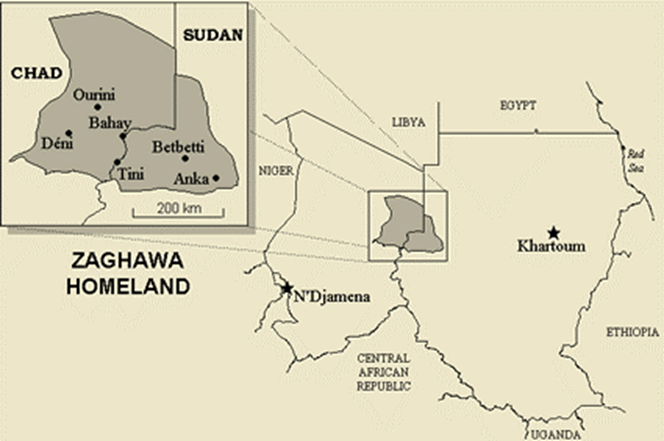
Despite their small numbers, the ambitious Black African Zaghawa ethnic group plays a leading role in Darfur’s anti-government opposition. SLA-MM leader Minni Minawi, JEM leader Jibril Ibrahim, and al-Tahir Hajar, leader of the Gathering of Sudan Liberation Forces (GSLF), are all Zaghawa. During the fighting for Nyala, RSF gunmen were accused of assassinating prominent members of the Zaghawa community (Sudan Tribune, September 16).

Darfur Governor and SLA-MM Leader Minni Minawi (AFP)

Minni Minawi, governor of Darfur since August 2021, remains wary of the SAF, which continues to be commanded by members of Sudan’s riverine Arab elite. The rank-and-file troops are composed of conscripts from other regions, including many non-Arabs. Without substantial reforms to the composition of the SAF, Minawi notes its victory might only mean a return to an oppressive status quo (Sudan War Monitor, December 4).

RSF’s Series of Conquests

Under pressure from the RSF, garrisons across Darfur have fallen like dominos. Nyala, Sudan’s second-largest city, is the capital of South Darfur and an important military strongpoint. It fell after a long siege followed by a four-day assault that ended on October 26, killing hundreds of civilians during the shelling of the city (Asharq al-Awsat, October 29).

Zalingei, the capital of Central Darfur, was lost after the SAF’s 21st Infantry Division fled on October 31, allowing the RSF to walk in. Al-Geneina, capital of West Darfur, was taken by the RSF on November 4 after most of the 15th Division garrison fled, leaving hundreds of troops and weapons behind. Masalit civilians and captured troops were abused, whipped, and forced to run barefoot through the rubble (Sudan War Monitor, November 6). Gathering smaller garrisons along the way, the remaining defenders fled to Chad, where they were disarmed and interned. Elsewhere in South Darfur, officers have changed into civilian clothes and made for the border with South Sudan (Sudan War Monitor, November 27).

SAF Leader General al-Burhan (BBC)

As it consolidates control of Darfur, the RSF is now poised to begin operations against al-Ubayd, the capital of neighboring North Kordofan. The RSF has already driven away the SAF’s garrison in the western Kordofan town of al-Mojalid and the nearby Balila oilfield (a joint Sudanese-Chinese project), despite intensive airstrikes by the SAF (Asharq al-Awsat, October 31; al-Taghayeer [Khartoum], November 27).

Where Do Armed Opposition Movements Stand?

The war of the generals has finally shattered the hard-won 2020 Juba Peace Agreement (JPA), which promised a new era of peace in Sudan by reconciling the government with the nation’s leading rebel movements. However, two of the most powerful movements rejected the process entirely. In practice, the JPA has been described as “a mechanism to disburse political patronage to a few key rebel leaders.” [1]

One of the principal armed movements in Darfur is the largely Fur-based Sudan Liberation Army of Abd al-Wahid al-Nur (SLA-AW). The group helped launch the 2003 rebel attacks on the SAF that sparked nearly two decades of war in Darfur (Darfur means “abode of the Fur”). The movement was not a signatory to the JPA and is not part of North Darfur’s Joint Protection Force. Nonetheless, General Yusuf Karjakula led a group of SLA-AW fighters from its Jabal Marra stronghold to al-Fashir in late November where they deployed to protect IDP camps from RSF assaults (Sudan Tribune, December 3). The general also met with SAF and JPF commanders, suggesting the SLA-AW may be considering joint operations to defend al-Fashir despite long-standing distrust of the SAF.

Many of the armed opposition movements have begun to split internally over the issue of alignment with the RSF or the SAF (for the rebel movements, see Terrorism Monitor, August 8). Even Minni Minawi’s faction of the SLA is experiencing divisions between its SAF-supporting leader and its military commander, General Juma Haggar, who supports the RSF (Sudan War Monitor, December 4). The Sudan Liberation Army-Transitional Council (SLA-TC), led by Al-Hadi Idris Yahya Farajallah, is considered close to the RSF, though the movement’s vice-president, Salah al-Din Abdel-Rahman al-Ma’rouf “Salah Rasas,” is considered to be a supporter of the SAF (Sudan War Monitor, December 4). A new faction of JEM under Sulayman Sandal Haggar split from the movement in August 2023 after some JEM members charged leader Jibril Ibrahim with backing the SAF (Darfur24, August 30).

Some rebel leaders are attempting to remain neutral, like Al-Tahir Abu Bakr Hajar, leader of the Gathering of Sudan Liberation Forces (GSLF), though some of his men were reported among the defenders of Nyala (Sudan War Monitor, October 26).

Foreign Intervention in the Sudan Conflict

There are allegations of foreign interference in the conflict, notably support for the RSF from the United Arab Emirates (UAE) and Russia’s Wagner Group, as well as Ukrainian support for General al-Burhan’s SAF.

Alleged Ukrainian Sniper on Ridge Northwest of Omdurman (Bellingcat)

Al-Burhan and Ukrainian President Volodymyr Zelenskyy met in Ireland on September 23 to discuss responses to the pro-RSF activities of the Russian Wagner Group in Sudan (Kyiv Independent, September 23; Sudan Tribune, September 23). The meeting came days after the release of videos alleged to show Ukrainian drone attacks on RSF forces in the Sudanese capital (see Eurasia Daily Monitor, November 14). Since then, videos have emerged of Ukrainian snipers operating in the hills northwest of Omdurman, as geolocated by independent investigative collective Bellingcat (Bellingcat.com, October 7). There have also been videos released on November 6, allegedly showing personnel of the Ukrainian Defense Ministry’s Main Directorate of Intelligence engaging with RSF fighters, Wagner personnel, and members of Russia’s special forces in the Sudanese city of Omdurman (Kyiv Post, November 6; Sudan War Monitor, November 10).

Journalists seeking confirmation or denial of these activities have been referred to the words of Kyrylo Budanov, the head of Ukraine’s military intelligence service HUR MOU (Holovne upravlinnja rozvidky Ministerstva oborony Ukrajiny), who stated last May that “we have killed Russians and will continue to kill Russians anywhere in the world, until the complete victory of Ukraine” (New Voice of Ukraine, May 17). RSF leader Hemetti has expressed his support for Russia’s invasion of Ukraine and his paramilitary force is alleged to have engaged in gold smuggling with Wagner operatives in exchange for arms and advisors.

Small operations of the type allegedly engaged in by Ukraine in Sudan ultimately have little influence on the outcome of the war. However, they do diminish the local reputation of Wagner operatives who have helped finance Russia’s war in Ukraine by smuggling gold from regions of western Sudan under RSF control.

General Yassir al-Atta

General Yassir al-Atta (deputy to al-Burhan) stated that military intelligence and diplomatic sources had confirmed that the UAE was shipping supplies to the RSF through neighboring countries, including Chad. The allegation was denied by authorities in the UAE (Radio Tamazuj [Juba], November 29). The UAE is Sudan’s main trading partner, has been a major investor in Sudan in recent years, and is the primary destination for gold smuggled out of western Sudan. Al-Atta’s description of the UAE as a “mafia-state” led to a breakdown in diplomatic relations between the two countries (Radio Dabanga, December 11).

Atta’s remarks also incensed Chadian authorities. On December 11, they demanded an official Sudanese apology for claiming the UAE had been allowed to ship weapons and munitions to the RSF through Chad. N’Djamena promised to take “measures” if the apology did not come within three days (Sudan Tribune, December 11). Darfur governor Minni Minawi had already accused Chadian authorities of allowing the passage of arms and mercenaries through Chad to the RSF in mid-November (Radio Dabanga, November 17).

There are further allegations that the Zaghawa generals who control Chad’s powerful military are annoyed by the UAE’s support of the mainly-Arab RSF and are providing clandestine support to their Zaghawa kinsmen in JEM and the SLA-MM (Sudan Tribune, December 7).

Destruction of Khartoum

Little remains in SAF hands in Khartoum other than the much-battered army headquarters and a small patch of Khartoum North (Bahri) connected by the SAF-controlled Blue Nile rail bridge. Khartoum’s al-Jaili refinery, the largest fuel production facility in Sudan, was destroyed in a bombing on December 6, the fourth such bombing of that location since the war began. Both the RSF and the SAF accuse the other of being responsible for the destruction (Sudan Tribune, December 6). RSF posts are dispersed throughout Khartoum; in the SAF’s attempt to find and destroy them, large parts of the city have been smashed by airstrikes and artillery, including many of its most notable buildings.

The RSF now controls all of Khartoum State, with the exception of the SAF-controlled pockets in Khartoum and northern Omdurman. RSF patrols have been spotted recently in eastern Sudan, possibly preparing the way for an occupation of that region. Twenty-five miles south of Khartoum, the strategic Jabal Awliya military base and airport fell on November 20 after a siege and two-day assault, removing a major obstacle to a RSF incursion into White Nile State (Radio Dabanga, November 21).

Conclusion

The SAF is highly demoralized and suffers from high rates of desertion and defection. Resistance to the RSF is collapsing in many parts of the country, diminishing hopes for a negotiated settlement. There are thousands of dead, soldiers and civilians alike. The country’s GDP is expected to decline by 18 percent this year due to the war (Africa News, October 12), with over half the population in need of humanitarian assistance. Six million Sudanese are displaced and cut off from normal avenues of support. As famine approaches, the only trade activity that still works is the import and distribution of arms, despite an international embargo.

Civilian groups that had previously discovered the power of the people when overthrowing President Omar al-Bashir in 2019 have now discovered that they have zero influence in the current military power struggle. Most alarming is the emergence of patterns of ethnic and tribal violence that have ways of resisting political settlement while perpetuating grievances both new and traditional. Focused on self-enrichment, the RSF’s barely literate leadership has no rational plan for reviving the state. There is little chance that the RSF’s military success can translate into a brighter future for Sudan’s 46 million people.

Note:

[1] Amar Jamal, “Key Actors in the Juba Peace Agreement: Roles, Impacts and Lessons,” Rift Valley Institute Research Report, September 14, 2023, p.16, https://riftvalley.net/sites/default/files/publication-documents/RVI%202023.09.14%20Key%20Actors%20in%20the%20JPA.pdf

Regime Change in Gaza: Trajectories for a Post-Hamas Future

Terrorism Monitor 21(22)

Jamestown Foundation, Washington DC

Dr. Andrew McGregor

November 17, 2023

Israeli Defense Minister Yoav Gallant (All Israel News)

The deadly October 7 Hamas operation was designed to use shock and terror to force a change in the status and future of Gaza’s Palestinian population. In this regard, the operation has been successful—life in Gaza will never be the same. According to Israeli authorities, part of these changes will include the disappearance of Hamas as a political and military entity. During a meeting at the Israeli Air Force operations headquarters, Israeli Defense Minister Yoav Gallant said of the planned Israeli Defense Force (IDF) land offensive into Gaza: “This has to be the last maneuver in Gaza, for the simple reason that after it, there will not be a Hamas” (Arutz Sheva, [Beit El] October 22). National Security Council chief Tzachi Hanegbi has pledged Israel will “wipe [Hamas] from the face of the earth” (Times of Israel, October 14).

What then will a post-Hamas Gaza look like if the IDF succeeds? To follow are eight possible directions for Gaza’s future, which may involve one or more of these scenarios in combination:

Scenario 1: Return of the Palestinian Authority

After Hamas’s violent expulsion of Fatah from Gaza in 2007 and the subsequent dissolution of the Palestinian Unity government, Gaza and the West Bank have had little official interaction. This means the Palestinian Authority (PA) government in the West Bank (dominated by the Fatah Party of President Mahmud Abbas) has little presence or influence in isolated Gaza.

Shrinking Palestinian Territories in red, including Gaza and parts of the occupied West Bank.

The credibility of the PA, should it return to Gaza, could only suffer by following behind Israeli troops, unless some sort of intermediate administration was established. Even afterwards, it would be difficult to avoid being characterized as Israel’s puppet. If Gazans are allowed to remain, Israel will certainly intensify rather than relax its control of the enclave, which will be sealed even tighter to prevent the supply of money or weapons to any resistance factions in Gaza. Moreover, the PA may not be eager to rush back into Gaza, especially if it remains politically unsettled.

Scenario 2: Islamist Extremist Groups Grow in Influence

Israel’s plan to destroy Hamas (and presumably the Gaza-based Palestinian Islamic Jihad movement and other minor Islamist militias) will leave a dangerous power vacuum in an already deeply traumatized region. This void is unlikely to be filled by any group or movement sympathetic to Israel. Palestinian anger may well encourage the growth of greater extremism. This could possibly manifest itself in new forms or in the rise in popularity in Gaza of more familiar groups, vis-à-vis al-Qaeda or Islamic State.

Scenario 3: Israeli Occupation

If, as expected, the IDF occupies all of Gaza, it will be the third such operation since the 2005 evacuation of Israeli troops and settlers. Returning Gaza to Israeli military occupation 18 years after disengagement is an idea with virtually no support in Israel or anywhere else. Israel is eager to escape an attack-response cycle that is expensive in economic terms, militarily demanding, and politically damaging.

Scenario 4: Return to Egyptian Control

Currently, Egypt has as little to do with Gaza as is possible and frequently closes its single border crossing with the enclave. Despite this, Egypt has a long history of being the dominant power in Gaza, going back as far as Pharaonic times, through the Muslim Ayyubid dynasty to the era of the medieval Mamluks before it passed into Ottoman control in the 16th century. Gaza was absorbed into Gamal Abd al-Nasser’s United Arab Republic (UAR) in 1959, and was ruled by an Egyptian governor until 1967. Before then, Egypt held Gaza with the Egyptian Army’s 8th Division, which was formed from Palestinian conscripts and Egyptian officers. Israel seized Gaza and Sinai from Egypt in the 1967 Six-Day War. While the Sinai Peninsula was eventually returned to Egypt, Gaza was not, and it remained under Israeli military occupation until 2005.

The Rafah Border Crossing between Gaza and Egypt

Officially, Egypt continues to advocate for an independent Palestinian state based on the borders that existed prior to the June 1967 Arab-Israeli War. Pro-Palestinian rallies have been organized under the aegis of President al-Sisi’s Mustaqbal Watan (Future of the Homeland) party and directed by officials believed to be undercover police. Unsanctioned protests of support in Cairo’s Tahrir Square and at al-Azhar mosque, however, have been met with beatings and mass arrests (MENA [Cairo], October 23; Al Jazeera, October 21). It is clear that Egypt’s response to the war in Gaza will be formed in government meeting rooms, not on the street.

Hamas can expect no help from Egypt, because of the group’s close connections to Egypt’s banned Muslim Brotherhood. In Cairo’s view, many Gazans are infected with Islamic extremist ideology, and are suspected of collaborating with Islamist fighters in the Sinai who continue to be engaged in a 12-year-old insurgency. Egypt already hosts 9 million refugees, mostly from Middle Eastern or African countries. There is no desire in Cairo to resume Egypt’s historical control of Gaza or its 2.2 million people. Such an occupation would bring Egypt into direct contact with Israeli security forces in an unstable tinderbox. Five decades of peace with Israel have benefited Egypt, which contends with many other challenges that will not be improved by confrontations with the state. Nonetheless, as a major leader of the Arab world, President al-Sisi asserts that in Gaza “the existing reaction exceeds the right of self-defense on the part of Israel, and is turning into collective punishment” (al-Hurra [Cairo], October 16).

Cairo is also concerned that the Gaza conflict is taking international attention away from the still-raging conflict in neighboring Sudan (Ahram [Cairo], October 22; see TM, April 28). Nine thousand people have been killed in Sudan since April, while Egypt has reluctantly received over 300,000 Sudanese refugees. Cairo is hard-pressed to handle refugee pressures on both its southern and northern borders and is looking for greater international intervention to bring an end to the six-month old war in Sudan.

Scenario 5: Depopulation of Gaza

Israel is using a combination of airstrikes and warnings to compel Gazans to move to the southern part of the enclave, close to the Egyptian border. This has led to fears that Israel may seek to drive the entire population of Gaza across the border into Egyptian Sinai. Consistent with this, on October 18, President al-Sisi remarked that beyond Israel’s “direct military action” against Hamas, there was “an attempt to push the civilian population to seek refuge” in Egypt (Daily News Egypt, October 18). In a meeting with the British PM, al-Sisi declared: “We must not allow a civilian exodus from Gaza to Sinai because it would be a very dangerous matter…” The Egyptian president further warned that the consequences of failing to contain a growing spiral of violence “go beyond the right to defend oneself” (Ahram Online [Cairo], October 20). Desperate to avoid this wave of Gazan refugees, al-Sisi suggested they could instead be funnelled into Israel’s sparsely populated Negev Desert (Egypt Independent, October 18; Middle East Monitor, October 19).

Western suggestions that Egypt take in over a million Gazan refugees have angered the Egyptian government, with one senior official reportedly telling a European envoy: “You want us to take one million people? Well, I am going to send them to Europe. You care about human rights so much—well, you take them” (Middle East Monitor, October 19).

The Nakba of 1948

PA leader Mahmud Abbas also fears the permanent displacement of the Gazans, suggesting this would constitute “a second Nakba,” referring to the 1948 expulsion of some 750,000 Palestinians from lands that would form the state of Israel (Al Jazeera, October 13). Ariel Kallner, a Knesset member from Israel’s ruling Likud Party, issued a call for another expulsion: “Right now, one goal: Nakba! A Nakba that will overshadow the Nakba of 48!” (al-Arabiya, October 8). Another Likud member, Revital Gotliv, has called for the use of nuclear weapons to destroy Gaza and render it uninhabitable: “It’s time to kiss doomsday!” (Middle East Eye, October 22; Middle East Monitor, October 10). These remarks were echoed by Heritage Minister Amichai Eliyahu of the Otzma Yehudit Party (a Likud coalition partner), who suggested that a nuclear strike on Gaza was “one of the options” (though he later claimed he was speaking “metaphorically”) (Jerusalem Post, November 6). He further suggested that Gazans could “go to Ireland” (Dublin has been critical of the Israeli offensive in Gaza) (Times of Israel, November 5). Such calls for the depopulation of Gaza and the permanent dislocation of its people do not encourage evacuation from targeted areas nor cooperation with the IDF. [1]

Ariel Kallner (Times of Israel)

A leaked document from Israel’s Intelligence Ministry (described as a “concept paper”) suggested “large-scale migration from war zones … is a natural and sought-after outcome…” Among the countries mentioned as possible destinations for a mass exodus of Gazans are Greece, Spain, and Canada. The latter is singled out as a prime choice due to its “permissive immigration policy” (+972 Magazine [Tel Aviv], October 30).

Scenario 6: Establishment of a UN Mandate

One possible direction for a post-Hamas Gaza involves the revival of mandated territories, such as were common in the Middle East and Africa in the interval between the first and second world wars. Gaza itself was under the British Mandate for Palestine from 1923 to 1948. Under the auspices of the League of Nations, these mandates typically involved the transfer of former European colonies or parts of the Ottoman Empire to the control of other European nations with an eye toward guiding these territories into a state of self-determination and independence. In practice, the mandates simply maintained colonial status under new masters who were in no hurry to establish self-governance.

Assuming such a mandate is approved by the UN Security Council, which is not necessarily likely, a return of Gaza to European control under a UN mandate is simply a non-starter. Broad international participation would be required, including a massive operation involving peacekeepers, reconstruction assistance, medical and development aid, and infrastructure repair. It would be difficult to secure support for such a program from all the badly-divided members of the permanent UN Security Council. With the UN already overstretched and underfunded (especially with regard to humanitarian aid), approval of a UN mandate would only be the first step in a long and difficult process. Yisrael Beitenu Party leader Avigdor Liberman (a former defense minister, foreign minister, and deputy prime minister) has suggested that the UN forgo providing any aid to Gaza in favor of sending assistance to Libya, Sudan, and Syria instead (Jerusalem Post, October 18).

Scenario 7: Arab League Occupation

It has been suggested that some Arab nations friendly to Israel (specifically Egypt, Jordan, Morocco, Bahrain, and the United Arab Emirates) could be handed a mandate over a disarmed Gaza (Israel Hayom, October 16). Israel would determine “how the international force can operate, what weapons it is allowed to have, and anything else that effects the Jewish state’s security needs,” effectively making such a force little more than an Israeli proxy (Israel Hayom, October 19). However, there is no lineup of Arab nations ready and willing to assume responsibility for struggling Gazans living in ruins.

Some of these formerly friendly Arab states may also be growing less friendly by the day. For example, nine nations, including at least seven that might be called friendly to Israel, issued a statement on October 26 assailing Israel’s conduct of the conflict: “The right to self-defense by the United Nations Charter does not justify blatant violations of humanitarian and international law.” They further rejected any attempt “to displace the Palestinian people from their land in any way, considering it a serious violation of international humanitarian law and tantamount to a war crime” (Asharq al-Awsat, October 26). [2] The Arab League, which has no joint military mechanism, has not yet expressed any interest in assuming control of Gaza.

Scenario 8: Survival/Revival of Hamas

In a policy born of anger rather than feasibility, Israel has set itself the impossible task of eliminating every trace of Hamas, which has both political and armed wings. Short of killing or expelling every resident of Gaza, this will prove impossible. Part of the problem is the success Hamas has had in eliminating internal threats to its rule, leaving Gazans with few political alternatives. With deep roots in Gaza, there is a strong chance that Hamas will survive the current round of fighting, even if it does so in a slightly different form or under a different name.

Conclusion

Israel has regarded Gaza as an independent Palestinian state since its withdrawal in 2005 and is thus likely to repudiate responsibility for the territory when military operations are complete. As two veteran Israeli intelligence authorities recently stated: “It needs to be clear that neither Gaza reconstruction nor care for the health, sanitation, or displacement of residents is Israel’s responsibility” (Times of Israel, October 21). Israeli Defense Minister Yoav Gallant likewise insists that the final phase of Israel’s ongoing assault on Gaza will involve “the removal of Israel’s responsibility for day-to-day life in the Gaza Strip” (Times of Israel, October 20).

There will inevitably be calls from so-called “progressive” factions in the West to allow mass migration of Gazans to Western nations, which could receive support from some Israeli leaders anxious to be done with the Palestinians. There are, however, already demands from Republican presidential hopefuls and others to ban Palestinian entry to the United States (Times of Israel, October 19).

With so many variables in play, one thing about the future of Gaza is still clear—the people who will not have a say in it are the Gazan people themselves.

Notes:

[1] Israeli government documents from 1948 were declassified in 2021 and confirm long-standing reports of massacres and forcible evictions, as well as the shocked responses of some Israeli cabinet members to the violence. The documents were examined in a report by Israeli daily Haaretz and the Akevot Institute for Israeli-Palestinian Conflict Research entitled “Classified Docs Reveal Massacres of Palestinians in ’48 – and What Israeli Leaders Knew” (Haaretz, December 9, 2021).

[2] The document was signed by the foreign ministers of Egypt, Jordan, Bahrain, the United Arab Emirates, Saudi Arabia, Oman, Qatar, Kuwait, and Morocco.

Russia in the Red Sea (Part Three): Converging Wars Obstruct Russian Plans for Naval Port in Sudan

Eurasia Daily Monitor 20(176)

Jamestown Foundation, Washington DC

Andrew McGregor

November 14, 2023

The Hamas attack on Israel on October 7 and the expanded war has pulled some of the Kremlin’s attention to the Middle East and North Africa. The conflict gives fresh impetus to Russia’s interest in establishing a stronger foothold in the Red Sea region. Russia’s war against Ukraine and the ongoing power struggle in Sudan have derailed Moscow’s efforts to establish a naval port in Sudan. The Wagner Group has allied with one side of the fight, which has hurt Russia’s prospects, especially if the Sudanese Armed Forces (SAF) of General Abdel Fattah al-Burhan prevail (see Terrorism Monitor, April 28, May 26, June 9). In addition, recent drone attacks in Khartoum, possibly of Ukrainian origin, suggest Kyiv may be trying to challenge Russia’s military contractors in Africa (The Moscow Times, September 20). The outcome of the fighting in Sudan will have important implications for the Kremlin’s efforts to establish a stronger military presence in the Red Sea region.

Before these geopolitical upheavals, Russia seemed well on its way to setting up its planned naval base. In 2017, an agreement between Russian President Vladimir Putin and former Sudanese President Omar al-Bashir called for the establishment of a Russian base at an unspecified location on Sudan’s Red Sea coast in return for arms and other military gear from Moscow. Operated by 300 Russian servicemen, the base would support as many as four Russian naval vessels at a time (see EDM, December 6, 2017).

Map showing location of Arakiyai (Abdul-Razak M Mohamed).

By 2021, the new Sudanese government began having second thoughts about the deal and sought new terms that included economic aid (The Arab Weekly, September 16, 2021). Initially, Moscow had hoped that the base would be established in Port Sudan, building on existing infrastructure there. Khartoum, however, suggested a new base be built from scratch at Arakiyai, a remote fishing village so small it does not appear on most maps (Radio Dabanga, December 7, 2021). Without supporting infrastructure or sufficient fresh water, the Arakiyai suggestion was meant to cool Russian designs on Sudanese waters.

Port of Suakin

The only other viable option would be the ancient Arab port of Suakin. Originally built to accommodate shallow draft dhows, the British moved operations from Suakin to Port Sudan when it became clear that Suakin could not accommodate deep-draft naval and commercial ships. Dredging has since improved access, but the construction of new facilities would take years (Middle East Eye, September 30, 2022).

The ancient coral city of Suakin, with the modern ‘Uthman Diqna port in the background.

In 2022, Sudan’s military rulers appeared ready to finalize a treaty authorizing the establishment of a Russian naval base at Port Sudan. The leader of the Rapid Support Forces (RSF), Mohamed Hamdan Dagalo (known as “Hemetti”), took the lead in most of these negotiations. He arrived in Moscow on February 23, one day before Russia’s full-scale invasion of Ukraine, with a delegation that did not include any SAF representatives. Hemetti expressed surprise that anyone might find a Russian base in Sudan controversial (Africanews, March 3, 2022).

Port Sudan is a politically unstable city that serves as Sudan’s primary connection to international trade routes. The city is riddled with ethnic rivalries and tribal divisions that could threaten any foreign military presence there. Port Sudan is separated from the Nile Valley by 250 miles of sun-baked desert inhabited almost entirely by Arab and Beja nomads. This isolation makes port operations and onward transportation of goods vulnerable to any group that could block the intersection of roads and narrow-gauge rail connections with the Nile.

Such interruptions do happen as a result of tensions between three major ethnic groups in the region; the Beja, the Bani Amer and the Nuba. [1] Scores have been killed in clashes between these groups since 2018. Swords, spears and knives were the weapons of choice until firearms were introduced to these street-fights, increasing the death toll. At times, the RSF has been called in to restore order.

On September 18, the SAF clashed with a Beja militia in Port Sudan led by Shibah Dirar, former leader of the militant Eastern Front. Dirar claims to support the army but would prefer they stay out of eastern Sudan (Al-Jazeera, September 21). SAF units arrived after Dirar’s men set up a checkpoint for all traffic leaving the port, allegedly to prevent a “fifth column” from smuggling supplies to the RSF (Radio Dabanga, September 19). With much of the government’s administration currently operating from Port Sudan rather than Khartoum, panic spread as residents feared the gunfire announced an RSF attack (Sudan Tribune, September 18). It was the latest in a series of Beja interventions; most notably, the Supreme Council of Beja closed all operations at the port for six weeks in September-October 2021. Dirar tried to shut the port down again in December 2022, even as it was still trying to recover from the 2021 shutdown (Al-Taghyeer [Khartoum], December 9, 2022).
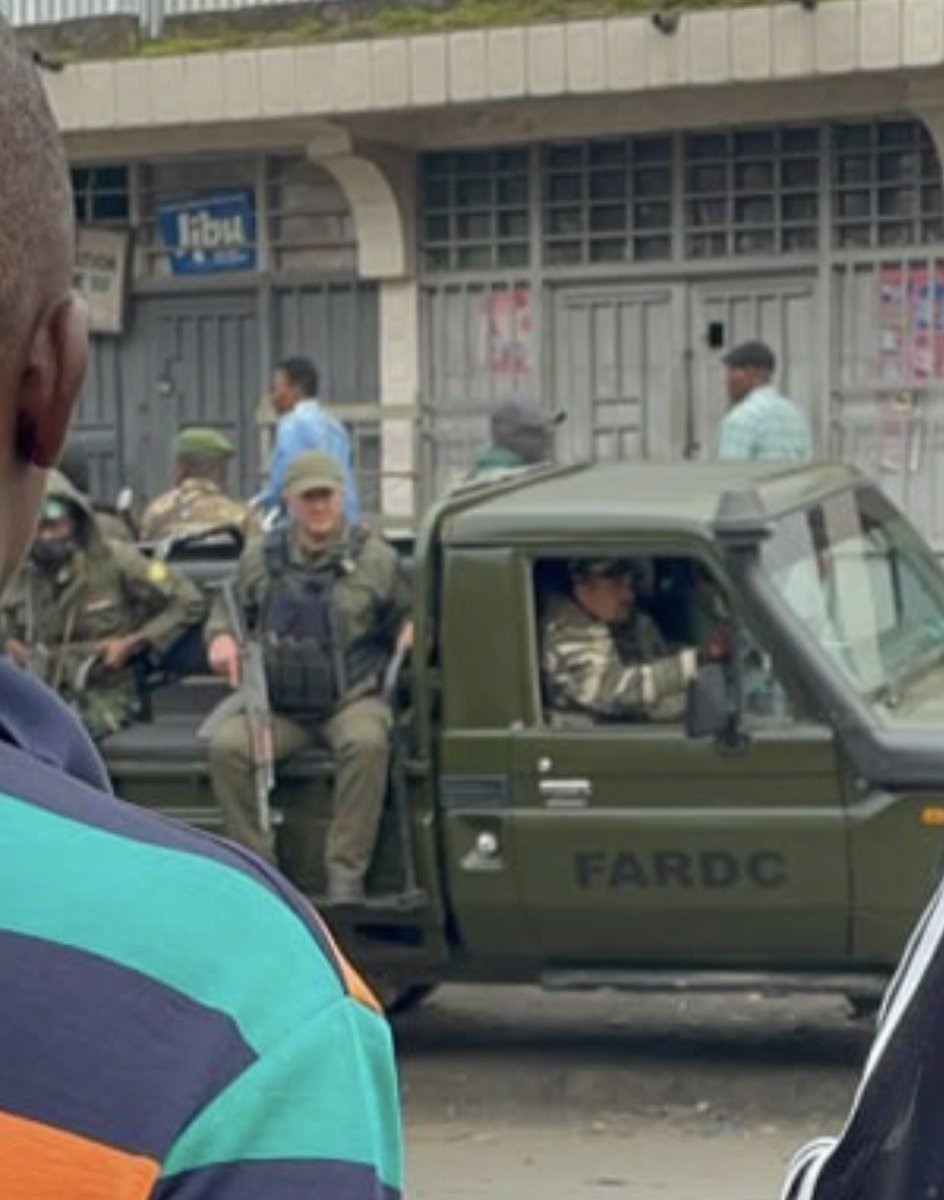
There is, however, no unanimity of opinion in the various tribal groups that make up the Beja people, which include separatists, Islamists, reformers and even supporters of the discredited al-Bashir regime. On May 4, the Port Sudan office of UN envoy Volker Perthes was stormed by protesters demanding his departure, many of them old regime supporters (Sudan Tribune, May 4).

The outbreak of fighting in and around Khartoum may squash any chances for the establishment of a Russian naval base in the near future. Videos circulating on X (formerly Twitter) on September 14 depicted a series of attacks by first-person view (FPV) kamikaze drones in Omdurman against RSF fighters and vehicles (Twitter.com/War Noir, September 14; Twitter.com/Mupper2 September 14). FPV drones are cheap and commercially available and can be easily modified to carry the warhead of a rocket-propelled grenade. The drone pilot, wearing video goggles, controls the low and fast flight of the explosive drones with the assistance of a spotter drone that selects targets and records the results.

Such capabilities could threaten a prospective Russian base should the fighting in Sudan continue over the long term. FPV drones have become commonplace in Ukraine, but this constituted their first appearance in an African conflict (both the SAF and RSF use other types of drones). The tactics seen in the videos resemble those used by Ukrainian forces, and parts of the videos appear to display Ukrainian text on the drone controller’s monitor. When questioned by journalists about the attacks, Ukrainian military intelligence chief Kyrylo Budanov simply said, “A year ago, I personally and openly said that all Russian war criminals who fought, are fighting, or plan to fight against Ukraine will be punished anywhere in the world” (Holosameryky.com, September 23).

Possible Ukrainian involvement in Sudan led to a flurry of diplomatic efforts by Moscow and Kyiv. On September 21, General al-Burhan spoke with Russian Foreign Minister Sergei Lavrov on the sidelines of the UN General Assembly session in New York. Lavrov indicated Moscow’s support for al-Burhan and the SAF’s efforts to stabilize Sudan despite Wagner’s association with the RSF (TASS, September 21). Two days later, al-Burhan met with Ukrainian President Volodymyr Zelenskyy and Defense Minister Rustem Umerov for “unscheduled” talks at Ireland’s Shannon Airport (Kyiv Independent; Sudan Tribune, September 23). Zelenskyy reported that the two leaders discussed the activity of illegal armed groups financed by Russia (i.e., Wagner). Afterward, Zelenskyy said he was “grateful for Sudan’s consistent support of Ukraine’s sovereignty and territorial integrity” (Anadolu Agency, September 23). These developments point to Ukraine potentially pursuing a policy in Africa that will challenge Moscow’s Wagner gambit. According to Ukrainian Foreign Minister Dmytro Kuleba, “Our strategy is not to replace Russia but to free Africa from Russia’s grip” (Africanews, August 17).
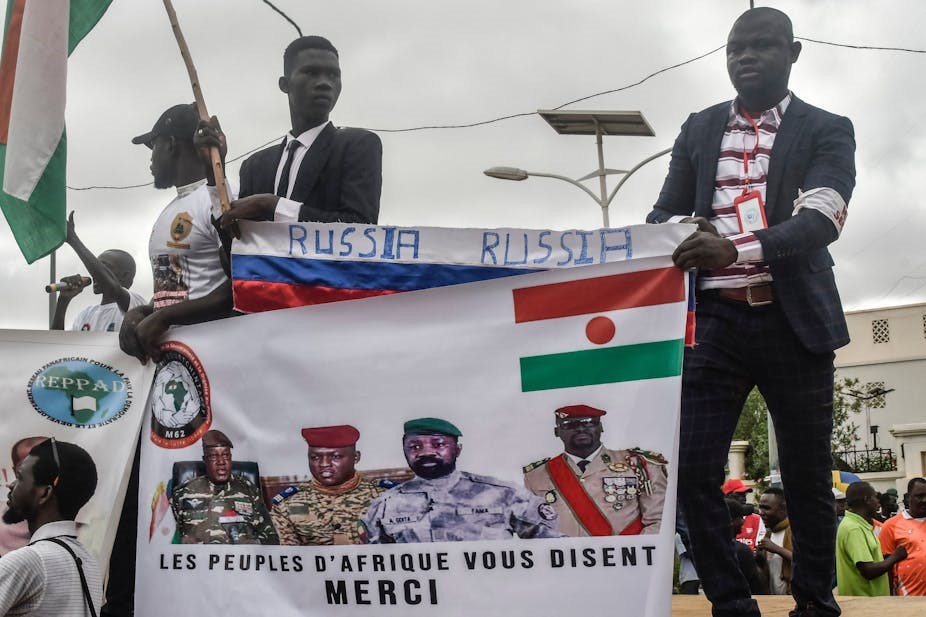
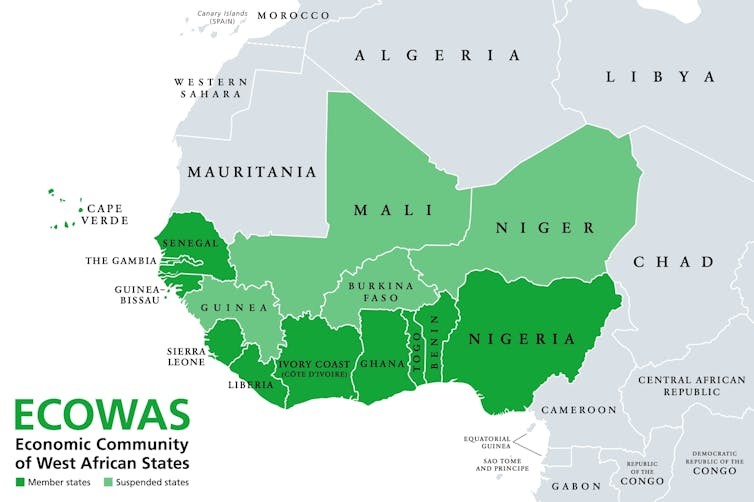
Russian Navy frigate Admiral Grigorovich visits Port Sudan in 2021 (AFP).

Perhaps most troubling for the Kremlin is the inherent political instability of Sudan. Even before the current power struggle, regional insurgencies, tribal clashes, mass demonstrations, and coup attempts have characterized the country’s political process. The months-long struggle between Sudan’s two most powerful military commanders is reducing the national capital to rubble and has had a similar effect on Khartoum’s international commitments. A Russian deal with one military faction is unlikely to be honored by the other, leaving a possible Russian base on Sudan’s Red Sea coast in limbo. The SAF leadership is convinced that Moscow now controls the Wagner Group following Yevgeny Prigozhin’s aborted mutiny and death, with the mercenary group supplying the RSF with arms and munitions. As a result, a victorious SAF would be unlikely to approve a Russian naval base and official military presence in Sudan.

There is a possibility Sudan could be cut off from aid and grain supplies should the presence of Russian (or other foreign) forces in Port Sudan draw attacks from their present or future rivals. The risk seemed remote until recently, but if Ukrainian special forces are indeed operating drones in the Sudanese capital, the danger of hosting a foreign naval base in Sudan’s most strategic location begins to come into focus. The consequences for Sudan of any extended shutdown of Port Sudan would be catastrophic.

Notes

  1. Today’s Beja are the heavily Arabized descendants of a group who have lived in eastern Sudan for six to seven thousand years. Arabic is now the dominant language, but many still speak the original Beja language, To Bedawie. The Bani Amer are a confederation of local peoples, largely Tigrayan and Beja, first assembled under an Arab ruling caste. They speak Tigrayan, To Bedawie and Arabic. The Black African Nuba, Muslim and Christian, are relative newcomers to Port Sudan. Many were driven out of their homes in the Nuba Hills of Southern Kordofan during the severe government suppression of the Nuba in the 1980s and 1990s, finding work on Port Sudan’s docks and construction projects.
  2. The close ties between the RSF, Russia and the Wagner Group are examined in “Putin’s New Russian Empire is Suddenly on the Rocks: How the War in Ukraine Threatens Russian Interests in Sudan,” AIS Special Report on Ukraine No.3, March 24, 2022.

Russia in the Red Sea (Part Two): Port Options in Eritrea

Andrew McGregor

Eurasia Daily Monitor

Jamestown Foundation, Washington DC, November 6, 2023

As Russian military and financial resources are being ground down in Ukraine, Moscow has struggled to maintain progress in some of its wider foreign policy objectives.  Some of these are a revival of Soviet-era goals, including a greater military, political, and economic presence in Africa and the establishment of more warm-water ports along major maritime trade routes. In September, it was reported that Eritrea was keen on expanding military and economic ties with Russia, reiterating its potential openness to hosting a foreign base in the future (Adf-magazine.com, September 5). A Russian base on the Red Sea would provide a southern complement to the small Russian Mediterranean naval facilities undergoing expansion at Tartus and Latakia in Syria. It would also place Russian warships within striking distance of both sides of the Suez Canal.

(UN Cartographic Section)

Control of the southern Red Sea and its trade routes have been highly sought after historically. Located at the north end of the Gulf of Zula, Massawa has a medium-sized, deep-water port that provides a maritime outlet for Asmara. During the rule of Ethiopian emperor Haile Selassie (1930–1974), Massawa was frequently visited by US warships bringing supplies to the Cold War military base at Kagnew. These visits came to an end with the 1974 Ethiopian Revolution and Mengistu Haile Mariam coming to power. Mengistu was open to the establishment of a Soviet naval base at Massawa, but Eritrean separatists in the area prevented the implementation of such plans. Eritrea’s 1991 victory in its war for independence and the Soviet collapse brought a temporary halt to Russian ambitions in the Red Sea region.

Moscow considers a strong naval presence in the Red Sea as vital to its economic interests in the region. Close to 15 percent of global trade, including Russian oil, passes through this narrow sea headed to or coming from the Suez Canal (Egypt Today, June 6, 2022). In February, Sudan was ready to offer a Red Sea port to Russia in exchange for arms and other considerations. Clashes broke out in April between factions of the Sudanese military, however, and the deal was put on hold indefinitely (Sudan Tribune, February 11).

Eritrean President Isaias Afwerki (Mohamed Nureldin Abdallah / Reuters)

Just south of Sudan, Eritrea’s position on the Red Sea provides Moscow with other options. Eritrea has not welcomed Wagner Group personnel on its territory, but its authoritarian dictatorship feels much closer to Russia than the West. The regime of President Isaias Afwerki, the nation’s only leader since independence in 1993, may believe that a Russian military presence on its soil could deter Western efforts at regime change. Eritrea has three primary areas of interest to Russian naval planners: the ports of Massawa and Assab and the offshore Dahlak Archipelago.

Port of Massawa

Vladimir Putin’s efforts to restore Soviet-style “greatness” to Russia has led to a recent revival of interest in Massawa and other potential naval ports on the Red Sea. Russian Foreign Minister Sergei Lavrov began negotiations to establish a logistical base in Eritrea in August 2018 during Eritrean Foreign Minister Osman Saleh’s visit to Sochi (RIA Novosti, August 31, 2018). More recently, in January 2023, Lavrov relayed Moscow’s interest in the Massawa port and airport, insisting that “concrete steps” were needed to protect Russian-Eritrean cooperation from Western sanctions (Interfax, January 27; TASS, January 26). Earlier, the Eritrean ambassador to Russia, Petros Tseggai, had announced the signing of a memorandum of understanding between Massawa and the Russian naval port of Sevastopol (RIA Novosti, January 8).

The establishment of a Russian military presence in Eritrea is not without its difficulties. A Russian base in Massawa would place foreign military forces only 70 miles from Eritrea’s xenophobic regime in Asmara. As a result, both Eritrea and Russia might prefer setting up a base at Assab, 283 miles south of Massawa at the northern entrance of the Bab al-Mandeb strait. Assab would be attractive to the Russian side largely due to the massive improvements made to the harbor by the United Arab Emirates (UAE) between 2015 and 2019 (Madote, November 5).

Satellite photo of Assab after UAE military withdrawal, February 5, 2021(Planet Labs Inc. via AP)

Eritrea agreed to host a UAE air and naval base at Assab in 2015. Asmara allowed for this due to the increased threats coming from Houthi insurgents and al-Qaeda terrorists across the Bab al-Mandeb strait in Yemen. The Emiratis dredged a new channel, built a new pier, and lengthened the airstrip to 3,500 meters. In 2019, the UAE decided to wind down its participation in the Yemen war and began stripping everything out of the port at Asmara, even dismantling barracks and hangars. By February 2021, there was little trace of the UAE’s presence other than the improved port facilities, leaving a potential opening for other foreign powers to capitalize on the port’s modernized infrastructure (Arab Weekly, February 18, 2021).

Italian colonial prison at Nakuru, Dahlak Archipelago (Shabait.com)

The Dahlak Archipelago may also be intriguing to Moscow based on its strategic location. The archipelago consists of two large and 124 smaller islands that sit 35 miles off Eritrea’s Red Sea coast. Only seven of the islands are inhabited and most are far too small to be of any military use. In 1982, US intelligence reported the presence of a Soviet naval facility at Nakuru (or Nocra), one of the archipelago’s largest islands. Other reports of foreign militaries using the archipelago have come out in more recent years. Both the Yemeni government-in-exile and Eritrean dissidents have claimed Asmara gave permission to Iran and Israel to operate military and intelligence facilities in the archipelago, though the Eritrean government has denied such allegations. An investigation of the islands in 2010 failed to find any trace of foreign troops or facilities on the larger islands of the archipelago (Gulf News, April 21, 2010). These allegations resurfaced in 2015 but suffered from a similar lack of evidence (Ahram Online, June 15, 2015). While this means the archipelago is effectively open to the development of port facilities, the Kremlin may shy away from such an expensive and intensive endeavor.

Russian efforts to gain a foothold in region have been hampered by its war against Ukraine and competition with other countries. For example, despite mutual pledges of a “no limits” partnership, Russia is competing with China for influence in the Horn of Africa and wider Red Sea region. Eritrea is growing closer to Beijing in developing numerous infrastructure projects, including improvements to the Port of Massawa (Mfa.gov.cn, May 15). China has operated a naval station in Djibouti since 2017, while France, the United States, and Japan also have military facilities in the small nation on Eritrea’s southern border (Defense.gov, November 5). The fighting in Ukraine and increased international competition for influence in Africa will likely stunt Moscow’s efforts to establish a warm-water port on the Red Sea in the near future, though that does not mean the Kremlin will give up on pursuing this goal altogether.

This article first appeared in the November 6, 2023 issue of the Jamestown Foundation’s Eurasia Daily Monitor.