The First Siege of al-Fashir, 1884: Prototype of a Modern Atrocity

Andrew McGregor

AIS Historical Background Report

December 3, 2025

Fighters of Sudan’s Rapid Support Forces (RSF) entered the North Darfur capital of al-Fashir in late October, launching a wave of atrocities based on ethnic persecution of non-Arab tribal groups in Darfur. The 18-month siege of al-Fashir that preceded these terrible events bore many parallels to the first siege of the city in 1884, one in which many Arab ancestors of current RSF personnel participated as followers of the Sudanese Mahdi, Muhammad Ahmad. Then, as now, most of the besieged were non-Arab and faced a similar fate when their defenses were overrun.
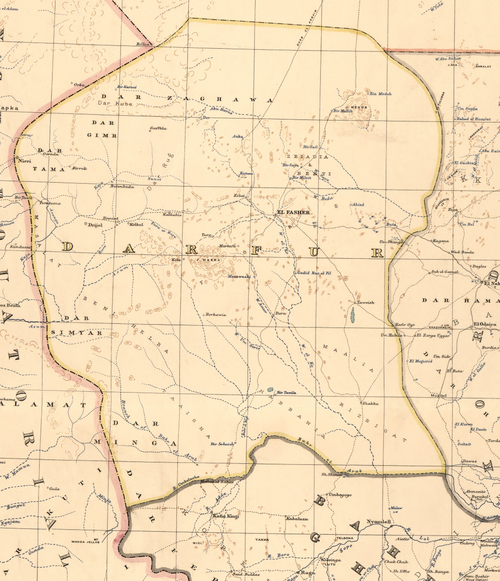
Map of the Sultanate of Darfur, 1914 

With the encouragement of his Ta’ashi Arab deputy, ‘Abd Allahi, Muhammad Ahmad proclaimed himself the expected Mahdi in 1881. The Mahdi as a messianic figure who appears at the end of time to restore justice in an oppressive world before the arrival of the Nabi Isa (the Prophet Jesus) figures prominently in both Sunni and Shi’ite eschatology (the study of final judgment and the last days of mankind).

Pious and charismatic, Muhammad Ahmad put himself at the head of a growing rebellion against the massively unpopular rule of Egypt’s Turko-Egyptian elite. The Turko-Egyptians invaded Sudan in 1821, replacing numerous chiefdoms and kingdoms with their own rule, one that was at once parsimonious, rapacious, grasping, incompetent and exploitative. Besides brutal methods of tax collection, the new elite angered many Sudanese by their interference in the slave trade, a thriving institution in Sudan. This interference was made more irksome by Egyptian Army officers who appeared publicly to be working to end slavery while making immense profits through their own covert involvement in the trade.
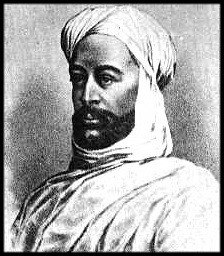
Muhammad Ahmad, the Sudanese Mahdi

A former Sufi, Muhammad Ahmad was a Dongolawi (one of three powerful groups of Arabized Nubians, including the Ja’alin and the Sha’iqiya) from northern Sudan. He began to attract followers, the so-called ansar (“supporters,” i.e., of religion), at his base on Aba Island in the White Nile. Forced from Aba by government troops, the Mahdi and his followers fled to the Nuba mountains of southern Kordofan and later into the plains of northern Kordofan, where they began besieging towns held by Turko-Egyptian troops, including local recruits, many of whom were Blacks taken as slaves by government-backed slaving expeditions. With Kordofan largely under Mahdist control, Muhammad Ahmad turned his attention west to the old sultanate of Darfur, a powerful Muslim kingdom since its foundation by the Fur people of Jabal Marra in the 17th century, but under Egyptian control since 1874. Al-Fashir, the sultanate’s capital, was established by Sultan ‘Abd al-Rahman in 1792 in the plains east of the mountainous Fur homeland of Jabal Marra. Formerly, the Fur sultans had maintained a peripatetic court, roaming the hills of Jabal Marra.

After many years of expansion, Darfur was nearly two-thirds non-Fur by the time of the 1884 siege. Intermarriage with non-Fur ethnic groups had been encouraged in the royal family as a means of consolidating political control, and by the latter half of the 19th century the royal family was probably as much Zaghawa by blood as Fur. Fur was still the court language, but Arabic was the language of official correspondence. A willingness to bring non-Fur into important administrative positions, a reliance on slave labor and a high tolerance for pre-Islamic religious practices helped maintain the Fur royalty. The main dissenters were the nomadic Baqqara (cattle-herding) Arabs of southern Darfur, who maintained their independence by retreating into the marshes along the border with the southern region of Bahr al-Ghazal whenever the sultan decided it was time to send out a punitive column to bring them in line. Repeated clashes grew into bitterness on both sides, a situation that only deteriorated under the rule of the Turko-Egyptians, leaving both the Baqqara tribes and their northern Abbala (camel-herding) Arab cousins ready to be led into full-scale revolt under a strong leader such as the Mahdi, who represented a local form of Islam that differed from that promoted by the Egyptian religious scholars who had followed the army into Sudan and set up their own government-allied form of Islam.

Zubayr Takes al-Fashir – 1874

In 1883, al-Fashir was a town of only 2650 people, including both Arabs and non-Arab groups such as the Fur, the Zaghawa, the Berti and others. By the time of the siege a year later, it had been ten years since the powerful slaver and freebooter Zubayr Mansur Pasha had roared north to conquer Darfur with an army of loyal Black slave-troops (bazinger-s) from his headquarters in Bahr al-Ghazal. [1]
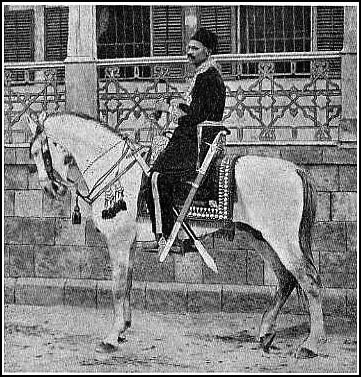
Zubayr Mansur Pasha

Zubayr was a Nile Valley Ja’ali of modest background who had worked his way up through the ranks of the slavers busy depopulating parts of southern Sudan in the mid-19th century. He had become wealthy and powerful through his subjugation of the immense southern province of Bahr al-Ghazal before eying the riches of its independent northern neighbor, the sultanate of Darfur. After the defeat and death of Fur sultan Ibrahim Qarad bin Muhammad Husayn in a great battle at Manawashi in 1874, the way was open for Zubayr to enter al-Fashir without a fight on November 2, 1874. The Fur capital was thoroughly looted by Zubayr, who had sworn allegiance to the Egyptian khedive but acted mainly in his own interests. As Zubayr led his army west to conquer neighboring Wadai Sultanate, a weaker detachment of the Egyptian Army entered al-Fashir five days after Zubayr. These troops were led by Governor General Isma’il Ayub Pasha, who claimed Darfur for the growing Egyptian Empire in Africa and confiscated much of the loot Zubayr had left behind in al-Fashir. Isma’il Ayub claimed most of the credit for taking al-Fashir and was duly promoted, while Zubayr found himself cheated out of his anticipated khedive-approved rule of Darfur. Zubayr departed to protest in person in Cairo, where, being judged as overly ambitious and a threat to Egyptian sovereignty in Sudan, he was compelled to remain in comfortable but closely-watched exile. [2]

Opposite the sultan’s al-Fashir palace, Isma’il Ayub ordered the construction of a square fort with a deep trench and bank patrolled by sentries. Inside the fort was a house for the governor and barracks for the troops (Na’um Bey, 1913). A strong zariba (fence made of thorn bushes) surrounded the defenses. A gun at each angle was sufficient to control the town under normal circumstances.

Alexander Macomb Mason Bey

When F Sidney Ensor visited al-Fashir in the late 1870s during an Egyptian government railroad survey, he found the palace occupied by Colonel Alexander Macomb Mason Bey, a Confederate veteran of the Virginia State Navy. Mason was on the staff of the Egyptian khedive after a stint fighting Spain as a mercenary officer in the Chilean Navy. Improvements to the remains of the old palace were made by Egyptian troops to make it suitable for the accommodation of officers, including floors of Norway pine imported at great expense from England.

Slatin and the Loss of Darfur

Rudolf Slatin, a 27-year-old Austrian mercenary in the employ of the Khedive in Sudan, was with the Mahdist army at the time al-Fashir was taken, only seven days after he had surrendered. Slatin, despite only a brief employment by the Austro-Hungarian Army in the Balkans, arrived in Darfur in 1879 and was soon after appointed governor of Darfur in 1881 by Sudan’s governor general, Muhammad Rauf Pasha.
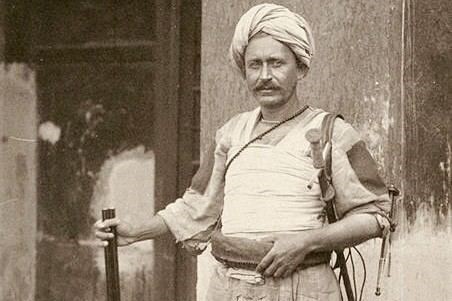
Rudolf Slatin in Mahdist Uniform

The young Austrian’s time was almost immediately consumed by military matters, fighting a series of battles, first against the displaced Fur royals, then against the Arabs who had rallied to the Mahdi. In a desperate move, he converted to Islam in 1883 in an unsuccessful attempt to rally his Muslim troops shortly before his surrender at Dara. Thus began Slatin’s 11-year residence in the camp of the Mahdi and his successor, the Khalifa (“successor”). His surrender was marred, however, by his surprising failure to first destroy the Dara garrison’s vast stocks of powder, ammunition and other war materiel that now fell into the eager hands of the Mahdists.

Mahdist Assault on al-Fashir

In early January, 1884, Amir Muhammad Bey Khalid “Zuqal” began marching on al-Fashir, which had already indicated its intention of surrendering after receiving letters from Slatin (now in the Mahdist camp) urging its commander to do so. In anticipation of surrender, the garrison had sent the keys to the treasury to Zuqal by courier and adopted the patched jibba-s (cotton outer garments) worn by the Mahdists. All seemed ready for a peaceful transfer of power; the Egyptian troops were expected to shift their allegiance to the Mahdi.

Zuqal, a Ja’ali Arab from the Nile Valley, had once been one of Slatin’s aides. As a trader and government official, Zuqal was a member of the Bahhara (“those of the river”), the Arab (or Arabo-Nubian) tribes of northern Sudan’s Nile region who had spread as traders throughout Sudan in the wake of the 19th century Turko-Egyptian expansion. A relative of the Mahdi, he was sent by Slatin to Kordofan to appeal to the Mahdi to refrain from raising a rebellion amongst the Arabs in Darfur. Zuqal instead transferred his loyalties to Muhammad Ahmad, being appointed Darfur’s new governor in turn after Slatin’s surrender on December 23, 1883. Many of the smaller Egyptian Army outposts in Darfur soon followed Slatin’s lead, especially after it became known that the Egyptian Army relief expedition led by General William Hicks Pasha (a veteran of the Indian Army) had been utterly destroyed by the Mahdi in Kordofan in November.

The commander of the Fashir garrison and governor of the city since 1879 was Sa’id Bey Juma’a, a native of Egypt’s Fayyum Oasis. Well known for his “rich vocabulary of bad language,” Sa’id Bey was not always popular with his fellow officers, but was known for his personal courage and devotion to Darfur (Hill,1967, p.325).
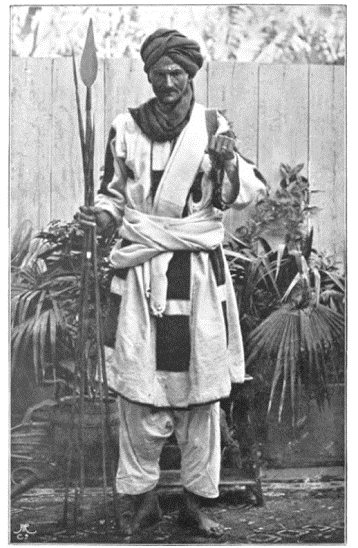
Sa’id Bey Juma’a in Mahdist Uniform

Sa’id Bey was a hard man, but not a stupid man. His small garrison was already weak before the Mahdist siege started. In August 1883, he had dispatched a large force from al-Fashir to clear the surrounding region of insurgents; only 99 men returned. Since then, the Mahdists had only grown in numbers, especially after the defeat of Hicks Pasha and the capture of thousands of Remington rifles. Sa’id Bey and the people of al-Fashir had already decided to submit to the Mahdi, but began to think twice when they heard of the atrocities that had followed the capitulation of Dara, Slatin Bey’s former headquarters (Slatin, p.248).

In the way that the flapping of a butterfly’s wings might be the first breath of a hurricane, one ill-advised admonition changed what was intended to be a peaceful transition of power into a bloody weeks-long confrontation followed by scenes of torture and murder. The courier between al-Fashir and Zuqal’s camp, a local fiki (rural holy man) named Khalifa ‘Abd al-Rahman, full of the religious fervor of the Mahdist revolution and its prohibitions on alcohol and tobacco, piously informed Sa’id Bey Juma’a that he must stop smoking cigarettes.

This was the last straw for Sa’id Bey, who was already alarmed by the brutality dealt out to the officers and leading citizens of Dara and Um Shanga after they had been guaranteed safety. The Bey issued orders for the imprudent fiki to be shot and for his men to discard their Mahdist jibba-s and re-don the uniforms of the Egyptian Army. The fiki somehow escaped his appearance before a firing squad and sent a message to Zuqal regarding Sa’id Bey’s change of heart, no doubt omitting his own role in that reversal. Sa’id Bey now prepared to meet Zuqal’s army with a garrison of 1,000 men, 10 guns and a hand-cranked Gatling gun. The city’s weak point was its wells, the only source of fresh water, which lay just outside the city walls. These could only be used during a siege by teams working under the protection of cover fire from the walls.

Zuqal launched three assaults on the town, each of which was repelled by the desperate garrison. Sa’id Bey in turn launched several unsuccessful sorties. The Mahdist Amir was compelled to send for reinforcements from Dara and Kabkabiya while recruiting local Arabs to help invest the city. An attempt to bombard the city into submission was made, using artillery captured from other units of the Egyptian Army. This too failed, as the experienced gunners of the Fashir garrison targeted and destroyed the Mahdist guns (Wingate, pp. 130-131).
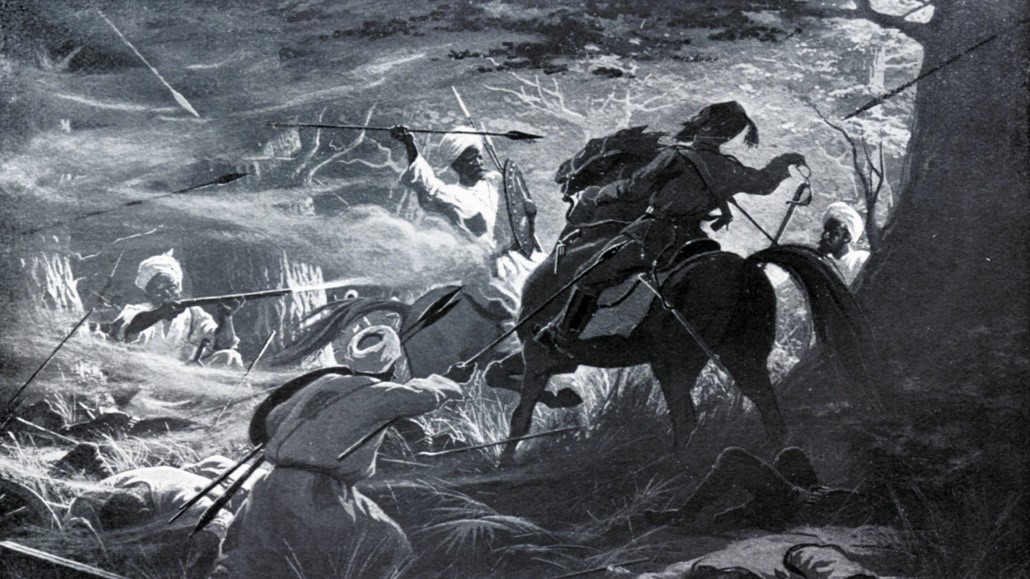
Death of Hicks Pasha at the Battle of Shaykan

Amir Zuqal, who had taken up a position on the site of Sultan Ibrahim’s old palace now ordered his men to fill in the wells just under the city walls, which was carried out under heavy fire from above. The Amir also ordered the captured munitions brought up from Dara that Slatin had failed to destroy before his surrender. As thirst and hunger increased within the walls, Zuqal ordered Slatin (who had also been brought up from Dara for this purpose) to write Sa’id Bey, urging him to capitulate. With the Egyptian Army relief column having already been destroyed by the Mahdi at Shaykan (Kordofan) in November 1883, there was now no alternative to surrender after 15 days of siege. Sa’id Bey would later say that the garrison could have held out at al-Fashir, but for the ammunition stores that Slatin had turned over to the Mahdists (Neufeld, 1899, pp.319-320).

Occupation of al-Fashir

With the city having been so recently looted of its treasures in 1874 by Zubayr and the Egyptian Army (which confiscated some of Zubayr’s loot for transport to Cairo), the Mahdists turned to extreme measures to find wealth they were certain had been hidden by merchants and officers of the Egyptian garrison.

According to Slatin, who witnessed events from the Mahdist camp: “The horrible scenes at Dara were now re-enacted with even greater severity, and numbers of people were tortured in the most merciless manner” (Slatin, p. 149). Egyptian officers were targeted especially; Major Hamada Effendi was flogged daily for three days in an unsuccessful attempt to make him reveal where his money was hidden; after the flogging ceased each day, a mixture of salt-water and hot peppers was poured over his ragged flesh. Called a slave by one of his captors, another officer, Ibrahim Tagalawi, shot his wife, his brother and himself; Sa’id Agha Fula committed suicide rather than undergo the disgrace of flogging. The Mahdi’s army had need of professional soldiers, so Zuqal eventually ordered a halt to the floggings and beatings of the officers. Sa’id Bey Juma’a, the bristly nicotine-deprived governor, escaped death only through the intervention of Slatin and, after a term of imprisonment, became chief of the Mahdist artillery in the siege of Khartoum. Slatin became a closely-watched bodyguard and advisor to the Mahdi’s successor, Khalifa ‘Abd Allahi al-Ta’aisha, before escaping from Omdurman in 1895.

Only days after the fall of al-Fashir, Slatin received a letter containing orders he could no longer carry out as a prisoner of the Mahdi. Khartoum had instructed him to concentrate all his men and supplies at al-Fashir and there await the arrival of Fur “sultan” ‘Abd al-Shakur ibn ‘Abd al-Rahman Shattut, who would restore Fur rule in al-Fashir under Egyptian sovereignty. That was Governor General Gordon’s plan. In reality, ‘Abd al-Shakur, who had been plucked from the Fur royal exiles living in Cairo since 1874, made only a sluggish, alcohol-fogged procession up the Nile, failing to get much further than Dongola. Gordon pulled the plug on the whole operation and ‘Abd al-Shakur returned to the safety of obscurity.

Conqueror of al-Fashir

Zuqal crowned his conquest of the Fur capital by marrying the Iya Basi (Fur – “great sister”), a traditional pre-Islamic position in the Fur royal hierarchy assumed by a full sister of the sultan. The Iya Basi maintained her own palace, wealth and retinue of hundreds of slaves and servants. Now comfortably ensconced in al-Fashir, Zuqal began the dangerous practice of ignoring summonses from the Mahdi to join his forces in Kordofan.

At the time of the siege, Sultan Harun Dud Banga was in the ancestral Fur homeland, the mountains of Jabal Marra, where he had been fighting a guerrilla campaign against the Turko-Egyptians. With the Egyptian Army no longer a threat after their collapse in Darfur, the sultan was faced with a new and more dangerous enemy – the Mahdists, with their core of Arab tribesmen who had resisted Fur rule for many years. Zuqal assembled an army of captured Sudanese regulars who had served in the Egyptian Army and Black slave troops (bazinger-s), supplemented by as many as 20,000 Arabs. The Mahdist army marched into the hills of Jabal Marra, where they cornered Sultan Harun in a hill-top stronghold. The Mahdists suffered enormous losses storming the fortress, but eventually broke resistance after a two-month siege. Harun was enlisted in the Mahdi’s army and reported to have met his death a few years later fighting the Abyssinians at Gallabat in 1889, though another account claims he survived the Mahdiya and lived quietly at al-Qadarif in eastern Sudan until 1903. [3]

The Mahdi died soon after the conquest of Khartoum and the death of hir rival Gordon, but Zuqal remained at al-Fashir until March 1886, when he finally responded to a series of letters from the Khalifa ‘Abd Allahi summoning him to Omdurman. The main obstacle to ‘Abd Allahi’s efforts to consolidate his power as the Mahdi’s successor came from the Mahdi’s Nile Valley Arab relatives, the Ashraf; Zuqal, as a relative of the Mahdi, was now under suspicion. His departure for Omdurman with a large armed following only alarmed the Khalifa, who ordered Hamdan Abu ‘Anja to intercept Zuqal’s party. Zuqal quickly found himself under arrest at al-‘Ubayd in Kordofan, relieved of his soldiers and his wealth (Wingate, pp.291-292).

After the Ashraf ceased to be a threat to ‘Abd Allahi’s power, Zuqal found his way back into the Khalifa’s good graces and back out again. He was eventually exiled to Rajaf in southern Sudan but freed by Belgian forces in 1897. [4] He returned to Darfur only to be executed by ‘Ali Dinar, who had restored the Fur Sultanate in the days after the Battle of Omdurman (1898). Zuqal was taken into the hills of Jabal Marra, where he was “lowered into a well containing the bones of many former offenders, the rope cut, and left to die, with a guard posted to ensure no assistance” (Egyptian Army Military Intelligence Summary, 1902).

Aftermath

Many of the Black soldiers who served under Slatin before being absorbed into the Mahdist ranks mutinied in al-‘Ubayd in October 1885. Most of these troops came from the Nuba Hills of South Kordofan, and it was to that place that they marched, still in order and under arms. Such defiance could not be condoned by the Khalifa, and Mahdist troops spent months exterminating the mutineers in the hills.
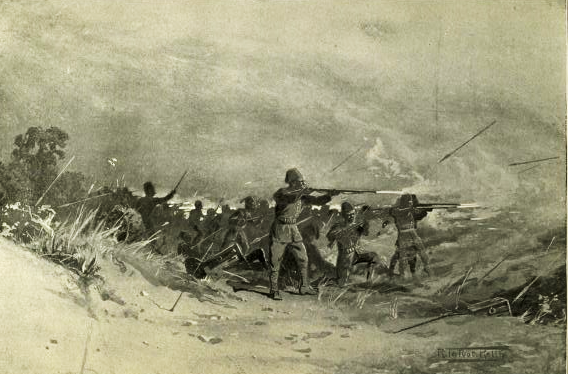
Egyptian Troops in Action in Sudan, 1879

Sa’id Bey died in his home oasis of Fayyum in 1912, having sought a quiet life there since his experiences in the Mahdiya.

When Sultan ‘Ali Dinar revived the Fur Sultanate in 1898, he began repairing the damage and neglect of the city by ordering the construction of a vast new palace compound (hosh) and mosque, as well as a qubba-style (beehive-shaped) memorial to his father, Zakariya. Despite the ever-present risk of a raid by the restless Arab Baqqara (especially the Rizayqat of Musa Madibbo), al-Fashir grew in importance and prosperity under Sultan ‘Ali Dinar until 1916, when it was occupied once more by the Egyptian Army, this time under British leadership and direction.

Notes

  1. Egyptian ranks and titles used in this paper include Agha, Bey, Effendi, Khedive and Pasha. All were part of the Turkish nomenclature for political and military titles, Turkish still being the working language of the Egyptian Army in the 19th Definitions below (with the exception of khedive) are those relevant to military usage.

Agha: An honorific for officers below the rank of Kaimakam (roughly ‘colonel’), it also tended to indicate the officer was non-literate.

Bey: An honorific for senior officers below the level of Pasha, available in several grades.

Effendi: Like Agha, an honorific for officers below the rank of Kaimakam, but implying literacy and education.

Khedive: “Viceroy,” i.e. of the Ottoman sultan. Originally from the Persian khediv. Though first used by Muhammad ‘Ali in 1805, its use was only recognized officially by the Ottoman sultan from 1867 to 1914.

Pasha: Another Turkish term with Persian origins, Pasha was the highest title, available in four grades for military officers.

  1. For the consequent collusion between Zubayr in Cairo and his ill-fated son Sulayman in Bahr al-Ghazal, see: “Romolo Gessi Pasha: Early Counter-Insurgency Lessons from an Italian Soldier of Fortune’s Campaign in Central Africa,” Military History Online/AIS, August 21, 2016, https://www.aberfoylesecurity.com/?p=3696
  2. For Gallabat, see Hill (1967), p.4 and Wingate (1891), p.325; for al-Qadarif, see Sudan Archives Durham SAD 731/6/68 and HHS Morant: “Recent History of Darfur” (Sudan Military Intelligence Report no.104).
  3. Rajaf, a town in Central Equatoria (now part of the state of South Sudan), was near the southernmost extent of the Mahdist state and used as a place of exile for those who offended the Khalifa. The Mahdists were expelled from the town in February 1897 by Congo Free State forces led by Louis-Napoléon Chaltin, a veteran of the 1882-1884 Congo Free State war with Zanzibari Arab merchants and slavers.

Bibliography

Egyptian Army Military Intelligence Summary (MIS) no. 93, April 1902, Sudan Archives Durham, SAD 735/3/1-27.

Ensor, F. Sidney: Incidents on a Journey through Nubia to Darfoor, WH Allen, London, 1881.

Farwell, Byron: Prisoners of the Mahdi, Harper and Row, New York, 1967.

Haim Shaked: The Life of the Sudanese Mahdi: A Historical Study of Kitab sa’adat al-mustahdi bi-sirat al-Imam al-Mahdi by Isma’il b. ‘Abd al-Qadir, Transaction Books, New Brunswick N.J., 1978.

Hill, Richard: A Biographical Dictionary of the Sudan, 2nd Ed., Frank Cass & Co., London, 1967.

Holt, PM: The Mahdist State in the Sudan, 1881-1898: A study of its origins, development and overthrow, (2nd ed.), Oxford, 1970.

Lampen, GD: “History of Darfur,” Sudan Notes and Records 31(2), 1950, pp. 177-209.

Mamdani, Mahmood: Saviors and Survivors: Darfur, Politics, and the War on Terror, Pantheon Books, New York, 2009.

McGregor, Andrew: “American Civil War Veterans and the Egyptian Empire in Africa,” A lecture given at the Royal Canadian Military Institute, Toronto, March 28, 2018, https://www.aberfoylesecurity.com/?p=4264

Na’um Bey Shuqair: “The Masalit and Tama Sultanates: Are they within Darfur or Wadai Sultanate,” Typescript, February 2, 1913, Sudan Archives Durham, SAD 731/6/109.

Neufeld, Charles: A Prisoner of the Khaleefa. Twelve Years Captivity at Omdurman, Chapman & Hall, Ltd., London, 1899.

Report on the Egyptian Provinces of the Sûdan, Red Sea, and Equator, Intelligence Branch, Horse Guards, War Office, HM Stationary Office, London, 1883.

Slatin Pasha, Colonel Sir Rudolf: Fire and Sword in the Sudan: A Personal Narrative of Fighting and Serving the Dervishes, 1879-1895, Edwin Arnold, London, 1897.

Theobald, AB: The Mahdiya: A History of the Anglo-Egyptian Sudan, 1881-1899, Longmans, Green and Co., London, 1951.

Wingate, Major FR: Mahdiism and the Egyptian Sudan, MacMillan and Co., London, 1891.
 

Rapid Support Forces Establish Rival Government as Sudan’s War Spirals

Terrorism Monitor

Jamestown Foundation, Washington DC

November 20, 2025

Executive Summary:

  • The Rapid Support Forces’ (RSF) capture of al-Fashir, accompanied by exterminatory extrajudicial killings after an 18-month siege, represents the militia’s most significant territorial victory to date and accelerates the effective partition of Sudan.
  • With control over most of Darfur and parts of Kordofan and Blue Nile, the RSF is consolidating a parallel “Tasis State,” seeking external legitimacy despite its reliance on predatory militias and systematic abuses.
  • The Sudanese Armed Forces–Transitional Sovereignty Council (SAF–TSC) coalition remains internally divided and constrained by Islamist-aligned networks, leaving both major coalitions dependent on abusive partners and limiting prospects for a negotiated national political settlement.

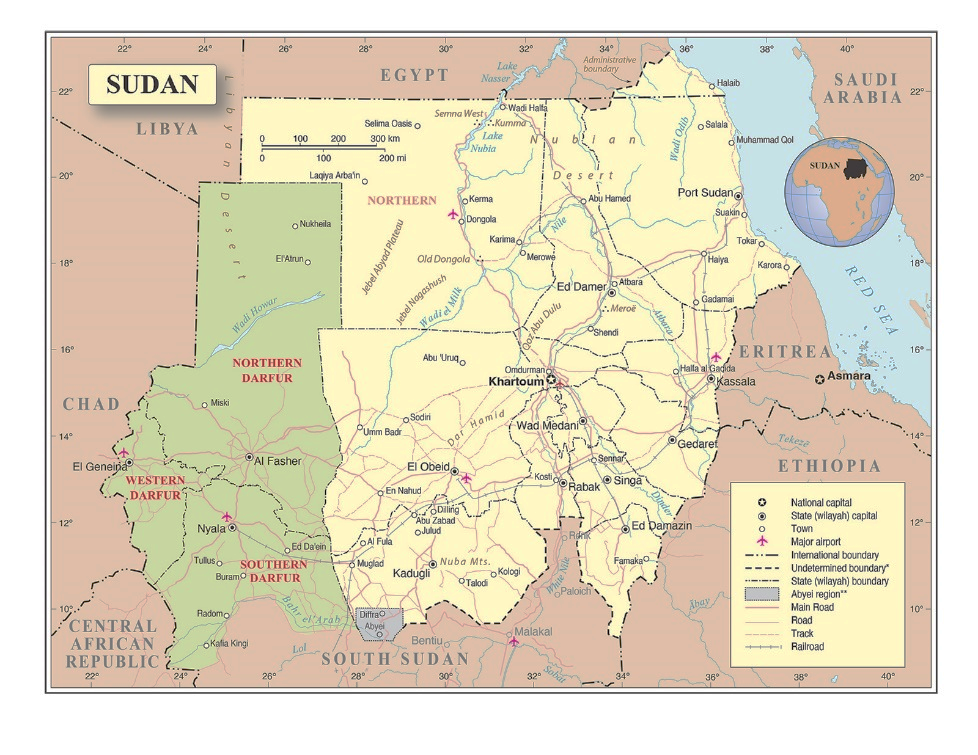
Until 2005, Sudan was Africa’s largest country by territory size. After 22 years of civil war, South Sudan separated, taking the nation’s oil wealth and roughly one-third of its territory with it. Today, after two-and-one-half years of a new civil war, the rebel Rapid Support Forces (RSF) declared its intention on July 2 to form a new state, splitting the country once again. Though the RSF’s stated intention is to form a new government for all Sudan, it is in reality now focusing on consolidating its control of the western provinces of Kordofan and Darfur, having been ejected from Khartoum and the central region of al-Jazirah by the Sudan Armed Forces (SAF) and its allies.

(Maprr)

The initiative is designed to provide legitimacy and access to aid and arms for a paramilitary accused of genocide, ethnic cleansing, looting, destruction of cultural institutions, sexual violence, war crimes and widespread atrocities.

The Battle for al-Fashir

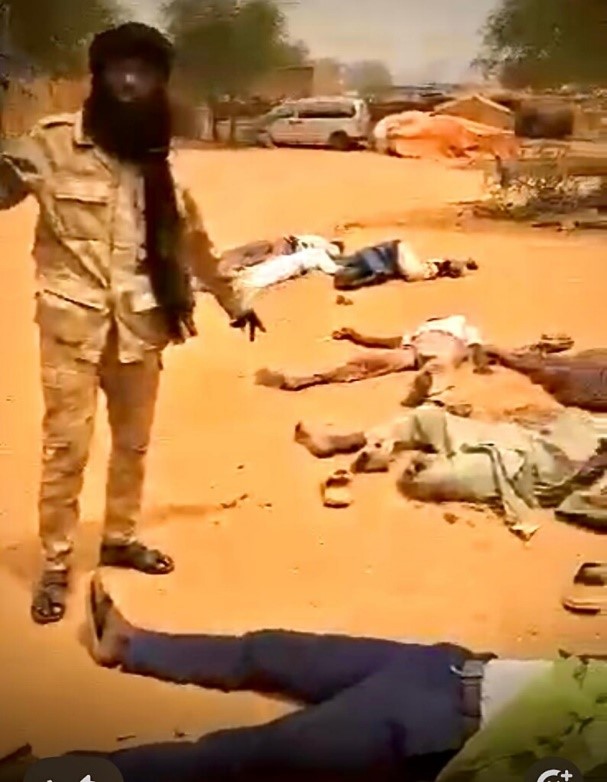
RSF Fighter with Dead Civilians

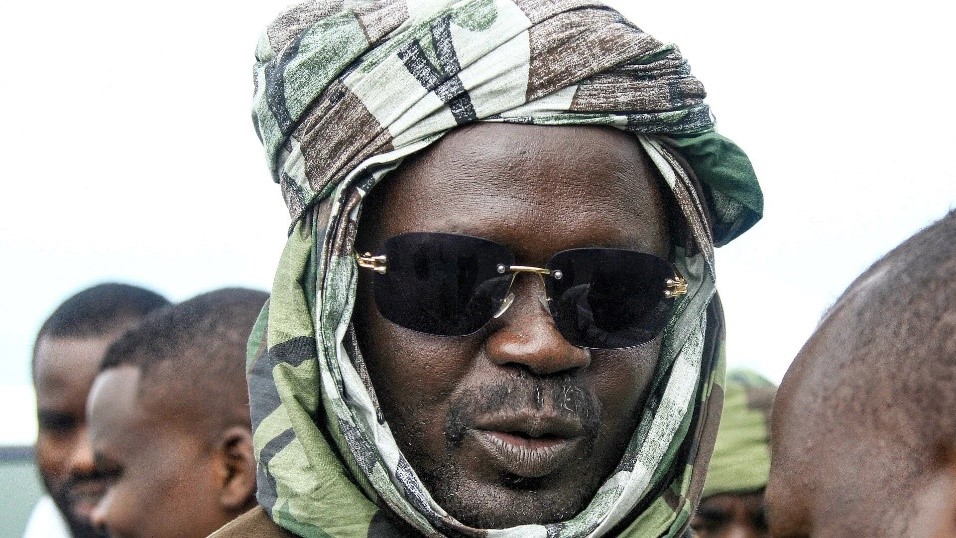
Crucial to the establishment of a new RSF state based largely in western Sudan is the seizure and occupation of al-Fashir, the traditional capital of Darfur since its founding in the late 18th century as capital of the Fur Sultanate. After an 18-month siege, the city was taken by the RSF on October 27, when the movement overran the SAF’s 6th Infantry Division and elements of the Sudan Liberation Movement-MM led by Darfur Governor Minni Arko Minawi (now resident in Port Sudan). Taking al-Fashir frees up RSF forces for the ongoing battle for neighboring Kordofan region and solidifies its control of Darfur (Mada Masr, July 11).

Minni Arko Minawi, Governor of Darfur and Leader of the SLA-MM

The entry of RSF forces was followed by massacres largely targeting the non-Arab population of the city that have killed at least 1500 people, including 460 patients and health workers at the Saudi Maternity Hospital (Al-Jazeera, October 30). According to the Sudan Doctors’ Network, “Hospitals in El Fasher have been transformed into human slaughterhouses” (Radio Dabanga, October 30). The atrocities appear to exceed even the dark episodes that followed the taking of al-Fashir after a siege by Mahdist forces in 1883. RSF commander Muhammad Hamdan Daglo “Hemetti” acknowledged he had “observed abuses occurring in al-Fashir” and pledged to hold RSF personnel accountable for their crimes (Sudan Tribune, October 29).

During the siege RSF constructed 68 km of 3-meter-tall sand berms alongside 3-meter-deep ditches as wide as five meters around al-Fashir to prevent escape from the siege (Radio Dabanga, September 30; Mada Masr, September 5). [1] People fleeing al-Fashir along the so-called “Road of Death” to nearby cholera-stricken Tawila were routinely deprived of all their possessions before being killed or raped as suspected supporters of the SAF. Others were forced to provide blood for wounded RSF fighters; many of these died soon after (Sudan Tribune, September 6). Those remaining in al-Fashir were reduced to eating leaves or a diminishing supply of animal feed as supplies of food, medicine and other aid were interrupted by the RSF’s siege lines (Al-Jazeera, September 4).

Palace of Sultan ‘Ali Dinar, al-Fashir (TIKA)

Earlier this year, the RSF, having already looted the Sudan National Museum in Khartoum, bombed the historical al-Fashir palace of Fur Sultan ‘Ali Dinar (1898-1916), a revered national symbol of anti-colonial resistance, but one who campaigned constantly against the western Arab tribes that now dominate the RSF (Radio Dabanga, January 22; Darfur Network for Human Rights, January 17).

South of al-Fashir, there are indications that the RSF has turned the airbase at Nyala into a base for Iranian and Chinese-designed drones capable of striking any target within Sudan (Sudan Tribune, September 29). The RSF has also made major improvements in its air-defense systems through the use of Wagner Group-supplied surface-to-air missiles capable of downing the SAF’s Turkish-made Bayraktar Akinci high-altitude, long-endurance drones, once expected to be a game-changing weapon in the struggle to relieve al-Fashir (Military Africa, September 28).

The Tasis State

A political charter to form a parallel “transitional peace government” was signed in February by the RSF, the Sudan People’s Liberation Movement – North (SPLM-N) and other armed groups (the “Tasis Alliance”) operating in western Sudan (al-Jazeera, July 28). The new state was declared on July 26 as the “Government of Peace and Unity,” but is more commonly known as “the Tasis State.” Though the new state insists it represents all parts of Sudan, in reality it can only govern those regions currently controlled in whole or part by the RSF and the SPLM-N (Darfur, parts of Kordofan and parts of Blue Nile State). For now, the Tasis capital is in Nyala (southern Darfur), but will likely be shifted to al-Fashir.

The Tasis (“Founding”) Alliance is formed from 24 armed and civil groups, including the RSF, the SPLM-N, the Beja Congress of eastern Sudan, the Rasha’ida Arab “Free Lions” of eastern Sudan, and factions of the National Umma Party (UP), Democratic Unionist Party (DUP) and the largely Zaghawa Justice and Equality Movement (JEM) (Ash Sharq al-Awsat, March 4; Sudan Tribune, January 22). To maintain a façade of ruling all Sudan, Tasis has appointed regional governors for Khartoum and the Eastern region, despite the RSF currently having no presence in these areas (Sudan Tribune, July 26; Arab Weekly, July 28).

The head of the presidential council is RSF leader Muhammad Hamdan Daglo “Hemetti”; his deputy is SPLM-N leader ‘Abd al-Aziz Hilu (see MLM, June 2012). Both attended the swearing in of the presidential council in Nyala on August 30; the ceremony site was bombed several hours later by the SAF (Mada Masr, September 5).

Tasis Prime Minister Muhammad Hassan al-Ta’aishi

As prime minister, the Darfur Arabs controlling the RSF have appointed Muhammad Hassan al-Ta’aishi, a known ally of Hemetti. The appointment has significant symbolic value with reference to the rivalry between the Baqqara (cattle-herding) Arabs of Darfur and the riverain Arabs of northern Sudan in the time of the Mahdist State (1885-1898), when the northern Arab relatives of the Mahdi, the ashraf, were repressed by the Mahdi’s successor, Khalifa ‘Abd Allahi, a member of Darfur’s Ta’aisha tribe. Sudan’s northern Arab minority has dominated Sudan since independence in 1956, and the appointment of a Ta’aishi as prime minister is a political signal understood by all Sudanese.

The RSF justifies its declaration of a new state by saying it is necessitated by an urgent need for identity documents, currency, security, medicine, healthcare and education identity documents (Mada Masr, August 16). One purpose of establishing the rival state is to establish legitimacy in talks hosted by outside parties such as the Quartet – the US, UK, UAE and Saudi Arabia (better known as “the Quad”). For now, only the UAE recognizes the RSF as a de facto authority (Mada Masr, September 28). Sudan’s government has complained to the UN about the UAE’s alleged involvement in supplying arms, logistical support and Colombian mercenaries to the RSF (AIS Special Report, June 13; Mada Masr, September 14).

The UN Security Council rejected the declaration of a rival state in Sudan, calling it “a direct threat to Sudan’s territorial integrity” (UN News, August 13). It has also been opposed by many Arab states, including Algeria, Egypt, Jordan, Qatar and Saudi Arabia (New Arab, March 6). Other opposition comes from the US and the African Union (AU), which suspended Sudan’s membership in 2021. Besides the UAE, supporters include Khalifa Haftar’s eastern Libya, Chad, Kenya, South Sudan and the Central African Republic.

THE SAF/TSC Government

The Port Sudan-based SAF/Transitional Sovereignty Council (TSC) government is making its own bid for legitimacy in the face of what it regards as exclusion from international peace efforts supported by the Quad, the UN and the AU. Declaring it will not negotiate without a declaration of its legitimacy, the SAF/TSC has also rejected all efforts to place the RSF on an equal footing and insists only a military resolution can bring peace to Sudan (Mada Masr, September 20).

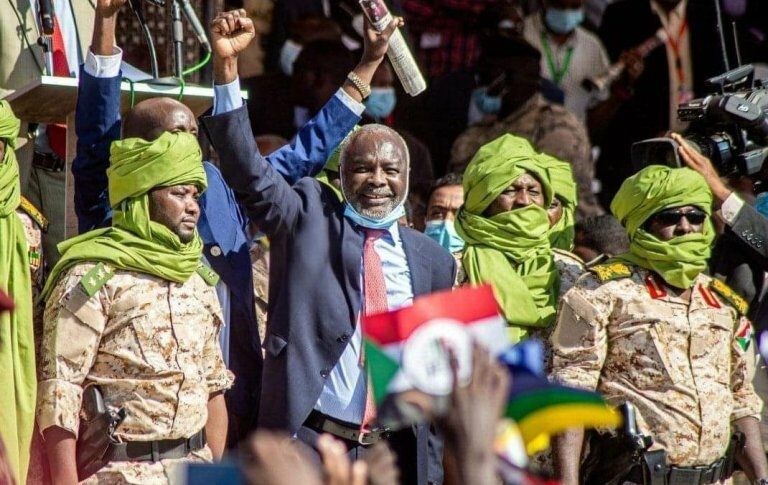
Finance Minister and JEM leader Dr. Jibril Ibrahim (Akhbar al-Sudan/Facebook)

On May 19, Kamil al-Tayib Idris, with doctorates in international relations and international law, was appointed Sudan’s first civilian prime minister since 2022 by General ‘Abd al-Fatah al-Burhan, head of the SAF and chair of the TSC. Shortly afterward, the new PM tried to expel two powerful former rebel leaders from the TSC cabinet, JEM’s Dr. Jibril Ibrahim (minister of finance) and Darfur governor Minni Arko Minawi, but was quickly overruled by al- Burhan, who doubtless has no desire to see these leaders and their valuable troops depart the SAF-led coalition (Al-Jazeera, July 23). Many former rebel leaders and their subordinates gained their positions as TSC ministers under the terms of the 2020 Juba peace agreement (International Institute for Democracy and Electoral Assistance, April 21, 2021).

Traditional Parties Divided

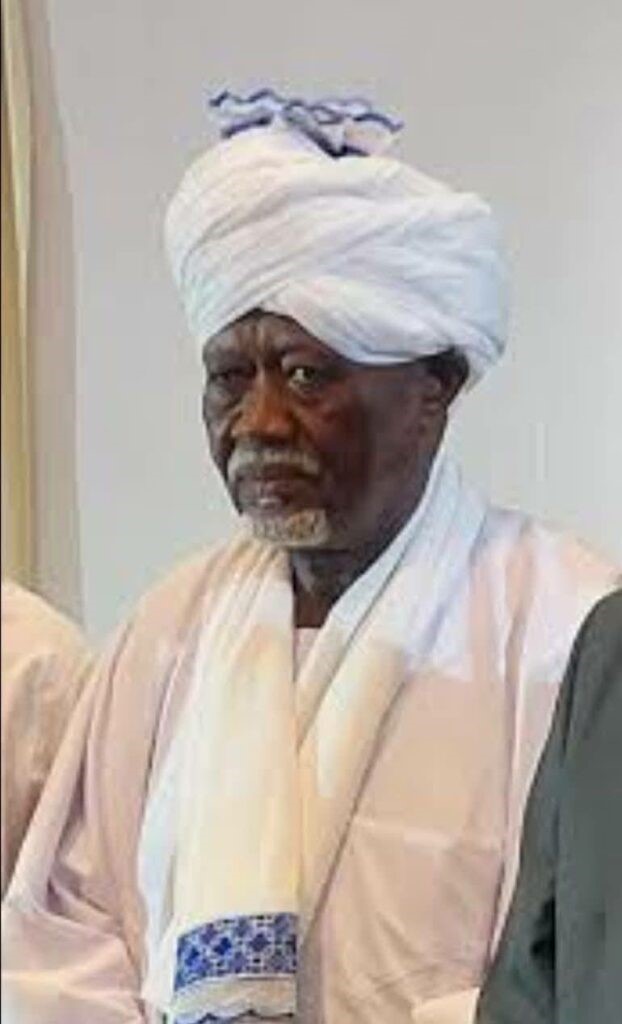
The National Umma Party (NUP) is the political arm of Sudan’s neo-Mahdist movement and has been a strong, western-based political force in Sudan since independence under the leadership of various descendants of its founder ‘Abd al-Rahman al-Mahdi, the posthumous son of Muhammad Ahmad ibn ‘Abd Allah, “the Mahdi” (1843-1885). The party is currently divided, with a faction led by acting head Muhammad ‘Abd Allah al-Douma backing the Port Sudan SAF/TSC government while a faction led by Fadlallah Burma Nasir supports the RSF and the creation of a parallel Sudanese state (Sudan Tribune, July 8). Fadlallah has accepted an appointment to be speaker of the Tasis government’s legislative council.

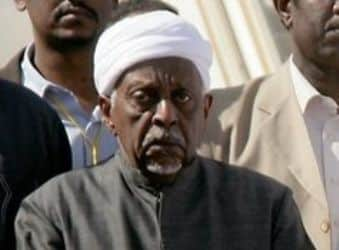
Khatmiyya Leader Muhammad ‘Uthman al-Mirghani

The NUP’s historical rival is the Democratic Unionist Party (DUP), led by Sayyid Muhammad ‘Uthman al-Mirghani, the 89-year-old leader of the historically pro-Egyptian Khatmiyya Sufi order and descendant of the order’s founder, ‘Ali al-Mirghani (1873-1968). The leadership of the DUP is in turmoil after decrees allegedly issued by Sayyid al-Mirghani on June 24 replaced the party leader’s son, Ja’afar al-Sadiq, as deputy leader with Ahmad Sa’ad Omar, a loyalist of deposed president Omar al-Bashir. Many DUP leaders allege the maneuver was the work of another of al-Mirghani’s sons, ‘Abd Allah al-Mahjub, who was taking advantage of the elderly Sufi leader, a resident of Cairo who is known for his publicly expressed support for the SAF but has little other political involvement (Sudan Tribune, June 25; Altaghyeer.info, July 8, 2024).

A faction under Ibrahim al-Mirghani, another descendant of Khatmiyya founder ‘Ali al-Mirghani, has come out in support of the RSF and the Tasis alliance. A DUP spokesman declared in February that “the presence of Ibrahim Ahmed Al-Mirghani does not represent the party in any way, and he only represents himself and the constituencies that entrusted him with the mission” (SUNA, February 20).

The Islamists Return

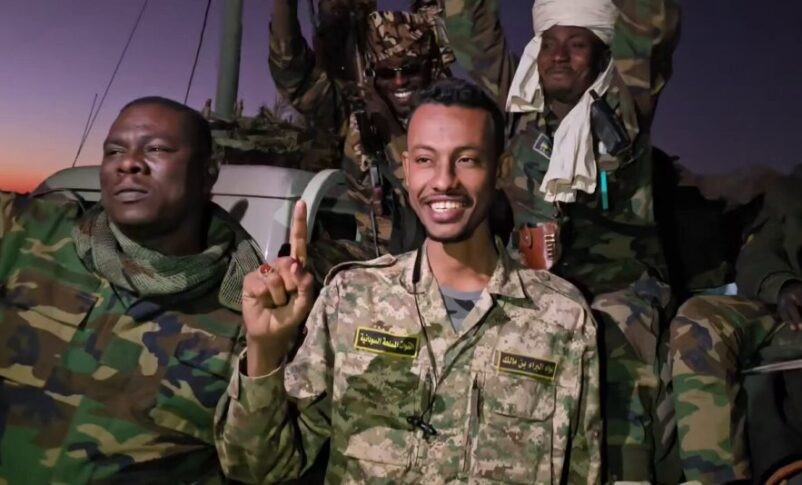
Much like the RSF-led Tasis coalition, the “official” SAF/TSC government and its armed supporters also constitute a tenuous alliance. Complicating its own search for legitimacy is the presence within the coalition of many Islamists, including veterans of the discredited military-Islamist government of Omar al-Bashir, who was deposed in 2019 and is currently wanted by the International Criminal Court (ICC) on charges of war crimes, torture and genocide. Islamist militias under SAF command have played a major role in the fighting, most notably the Bara’a bin Malik Brigade, tied to the Islamist National Congress Party (NCP).

Commander of the Bara’a Bin Malik Brigade, al-Misbah Abu Zaid Talha (Sudan Tribune)

The NCP, which ruled Sudan from 1998 to 2019, is currently led by Ahmad Harun (also wanted by the ICC on charges of war crimes and genocide in Darfur). Harun believes Western political models are inappropriate for Sudan and that there must be a political role for the army, but insists the Islamists will wait to seek power via the ballot box after the war’s conclusion  (Sudan Tribune, July 25; Arab Weekly, July 26).

The RSF is strongly opposed to a political return by the Islamists, blaming them for initiating the current conflict (Sudan Tribune, July 25). Tasis prime minister Muhammad Hassan al-Ta’aishi explained in an interview that General al-Burhan has “benefited from the Islamists’ infiltration of the military establishment” and that he “became the general who served the Islamists most after the [2019] revolution” (Assayha, October 16). The Tasis alliance has declared they will dissolve all Islamist militias affiliated with the NCP after they take control of Sudan (Ash Sharq al-Awsat, March 4).

Conclusion

The problem is that there are not two groups fighting for power in Sudan, but many, who have flocked to one or the other of the major coalitions (RSF and SAF) to further their own interests, even when that has meant splitting existing movements. In turn, the leaders of the major coalitions have become beholden to unreliable partners who have a track record of opportunism. In this situation, a victory by either side may mark not the end of the conflict, but only the starting point of a new one.

Most international support (however unenthusiastic) tends to line up behind the SAF/TSC as the default successor to the line of recognized Sudanese governments. However, the civilian leaders in the TSC are in thrall to the military members of the TSC, particularly TSC chairman General al-Burhan. While many civilian members reject a return to the political Islamism of the era of President Omar al-Bashir, they must contend with the fact that the northern Arab generals of the SAF are precisely those that survived the frequent purges of non-Islamist officers during the Bashir regime.

The RSF’s new Tasis State is not without its own international support, but these backers remain focused on what can be gained by supporting a paramilitary (led by Darfur Arabs) that has adopted a veneer of statehood to cloak the fact it is manifestly incapable of running anything resembling a 21st century administration with any other objective than the personal enrichment of its leadership. The inability of both RSF and SAF commanders to envision the possibility of a Sudanese nation led by a member of Sudan’s non-Arab majority guarantees further rounds of combat focused on the pursuit of ethnic-based power sharing.

On the battlefield, ongoing atrocities by both the SAF and the RSF mean there is little to choose between them in a humanitarian sense. Beyond the deliberate destruction of national infrastructure (much of which is the now ruined and irreplaceable legacy of the brief days of oil wealth before the separation of South Sudan), a recent UN report entitled “A War of Atrocities” found both side guilty of adopting a brutal approach to achieving their attainment of power: “Both sides have deliberately targeted civilians through attacks, summary executions, arbitrary detention, torture, and inhuman treatment in detention facilities, including denial of food, sanitation, and medical care. These are not accidental tragedies but deliberate strategies amounting to war crimes” (UN Human Rights Council, September 5). Ultimately, the division of Sudan into two dysfunctional states rather than one cannot offer the Sudanese people the prospect of stability or prosperity.

Note

  1. “Special Report: No Safe Haven: Bombardment of Abu Shouk IDP Camp and El-Fasher’s Increasing Berm Encirclement,” September 11, 2025, https://files-profile.medicine.yale.edu/documents/e3d32307-89f9-4573-8c87-fc7d15239a9f


Assessing the War in Sudan: Is an RSF Victory in Sight?

Andrew McGregor

Terrorism Monitor 21(24)

Jamestown Foundation, Washington DC

December 15, 2023

After eight months of brutal warfare, Sudan’s Rapid Support Forces (RSF) now appear to have the upper hand against the better-armed Sudan Armed Forces (SAF). Led by Muhammad Hamdan Daglo “Hemetti,” the RSF has conducted a highly mobile campaign against the SAF’s reactive and defensive posture, allowing the group to take the initiative in all regions of the conflict. With the Sudanese capital of Khartoum now a devastated battlefield, the ineffective government, led by SAF commander-in-chief General Abd al-Fatah al-Burhan, operates from a temporary base in Port Sudan, which suffers from power shortages and a chronic lack of fresh water.

Peace talks in Jeddah between the two military factions, assisted by Saudi, American, and African Union mediators, were indefinitely suspended earlier this month after both sides failed to meet commitments agreed upon in earlier negotiations (al-Taghyeer [Khartoum], December 4; Africa News, December 5). The animosity between the factions is severe and historically based in the rivalry between the poor Arab tribesmen of western Sudan (the RSF) and the Arab elites of the Nile region who have controlled Sudan and its military since the country gained independence in 1956.

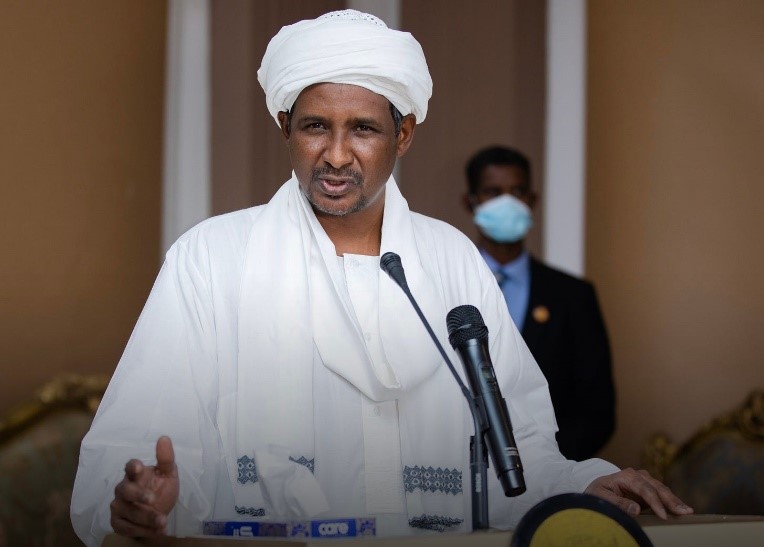
RSF Commander General Muhammad Hamdan Daglo “Hemetti”

Resistance to the RSF onslaught is weakening at all levels, placing Sudan’s diverse population at risk of rule by Arab supremacists with a record of savage conduct and a general ignorance of the means of development, administrative techniques, economic theory, and international relations.

The Impending RSF Conquest of Darfur

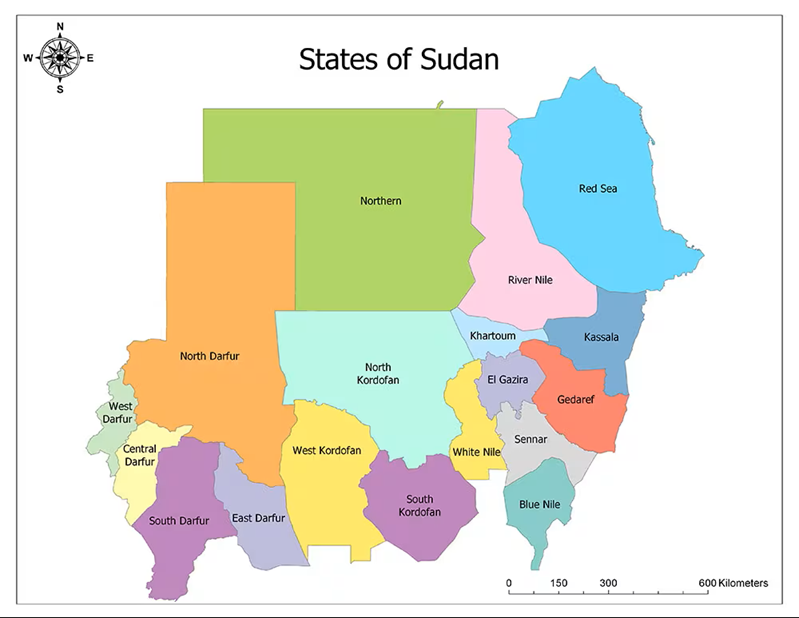
Four of Darfur’s five states, comprising nearly 80 percent of the western province, are now in RSF hands. North Darfur state and its capital, al-Fashir, may be the RSF’s next target. Al-Fashir is strategically and symbolically important as the former capital of the once powerful Fur Sultanate (c.1650-1916). Security in North Darfur is provided largely by the Joint Protection Force (JPF), an alliance of five non-Arab armed movements that has been busy recruiting in the region in anticipation of an RSF offensive. The RSF has also been recruiting from the region’s Arab population, setting the stage for a vicious ethnic conflict that will inevitably result in the mass slaughter and displacement of many of North Darfur’s civilians. Convoys bringing supplies to North Darfur from central Sudan have stopped, creating shortages of food, fuel, and medicines (Sudan Tribune, December 7).

JEM Leader Jibril Ibrahim (Sudan Tribune)

Two major armed movements, the Justice and Equality Movement (JEM) and the Sudan Liberation Army of Minni Minawi (SLA-MM), abandoned their self-declared neutrality on November 16 to announce their support for the SAF. Both groups also declared their willingness “to participate in military operations on all fronts without hesitation” (Radio Dabanga, November 17). JEM leader Jibril Ibrahim also condemned the RSF’s use of Arab mercenaries from Chad and Niger who have been promised the right to settle on land cleared of its non-Arab residents. The declaration followed months of murder and rape inflicted by the RSF on the non-Arab Black population of Darfur. The most notable atrocity involved the murder of some 1,300 civilians (mostly Masalit, an ethnic group in western Sudan and eastern Chad) in a camp for displaced people in West Darfur. The RSF attack began on November 2 and only ended three days later (Al Jazeera, November 10). The non-Arab Masalit have been targeted by the RSF and Arab militias since the start of the war in what appears to be an effort to ethnically cleanse the region of its indigenous Black population (see Terrorism Monitor, June 26).

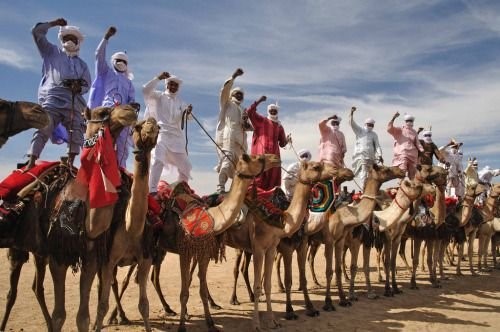
Zaghawa Nomads (X)

Despite their small numbers, the ambitious Black African Zaghawa ethnic group plays a leading role in Darfur’s anti-government opposition. SLA-MM leader Minni Minawi, JEM leader Jibril Ibrahim, and al-Tahir Hajar, leader of the Gathering of Sudan Liberation Forces (GSLF), are all Zaghawa. During the fighting for Nyala, RSF gunmen were accused of assassinating prominent members of the Zaghawa community (Sudan Tribune, September 16).

Darfur Governor and SLA-MM Leader Minni Minawi (AFP)

Minni Minawi, governor of Darfur since August 2021, remains wary of the SAF, which continues to be commanded by members of Sudan’s riverine Arab elite. The rank-and-file troops are composed of conscripts from other regions, including many non-Arabs. Without substantial reforms to the composition of the SAF, Minawi notes its victory might only mean a return to an oppressive status quo (Sudan War Monitor, December 4).

RSF’s Series of Conquests

Under pressure from the RSF, garrisons across Darfur have fallen like dominos. Nyala, Sudan’s second-largest city, is the capital of South Darfur and an important military strongpoint. It fell after a long siege followed by a four-day assault that ended on October 26, killing hundreds of civilians during the shelling of the city (Asharq al-Awsat, October 29).

Zalingei, the capital of Central Darfur, was lost after the SAF’s 21st Infantry Division fled on October 31, allowing the RSF to walk in. Al-Geneina, capital of West Darfur, was taken by the RSF on November 4 after most of the 15th Division garrison fled, leaving hundreds of troops and weapons behind. Masalit civilians and captured troops were abused, whipped, and forced to run barefoot through the rubble (Sudan War Monitor, November 6). Gathering smaller garrisons along the way, the remaining defenders fled to Chad, where they were disarmed and interned. Elsewhere in South Darfur, officers have changed into civilian clothes and made for the border with South Sudan (Sudan War Monitor, November 27).

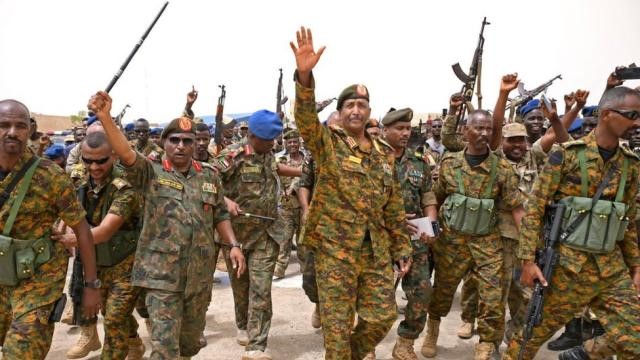
SAF Leader General al-Burhan (BBC)

As it consolidates control of Darfur, the RSF is now poised to begin operations against al-Ubayd, the capital of neighboring North Kordofan. The RSF has already driven away the SAF’s garrison in the western Kordofan town of al-Mojalid and the nearby Balila oilfield (a joint Sudanese-Chinese project), despite intensive airstrikes by the SAF (Asharq al-Awsat, October 31; al-Taghayeer [Khartoum], November 27).

Where Do Armed Opposition Movements Stand?

The war of the generals has finally shattered the hard-won 2020 Juba Peace Agreement (JPA), which promised a new era of peace in Sudan by reconciling the government with the nation’s leading rebel movements. However, two of the most powerful movements rejected the process entirely. In practice, the JPA has been described as “a mechanism to disburse political patronage to a few key rebel leaders.” [1]

One of the principal armed movements in Darfur is the largely Fur-based Sudan Liberation Army of Abd al-Wahid al-Nur (SLA-AW). The group helped launch the 2003 rebel attacks on the SAF that sparked nearly two decades of war in Darfur (Darfur means “abode of the Fur”). The movement was not a signatory to the JPA and is not part of North Darfur’s Joint Protection Force. Nonetheless, General Yusuf Karjakula led a group of SLA-AW fighters from its Jabal Marra stronghold to al-Fashir in late November where they deployed to protect IDP camps from RSF assaults (Sudan Tribune, December 3). The general also met with SAF and JPF commanders, suggesting the SLA-AW may be considering joint operations to defend al-Fashir despite long-standing distrust of the SAF.

Many of the armed opposition movements have begun to split internally over the issue of alignment with the RSF or the SAF (for the rebel movements, see Terrorism Monitor, August 8). Even Minni Minawi’s faction of the SLA is experiencing divisions between its SAF-supporting leader and its military commander, General Juma Haggar, who supports the RSF (Sudan War Monitor, December 4). The Sudan Liberation Army-Transitional Council (SLA-TC), led by Al-Hadi Idris Yahya Farajallah, is considered close to the RSF, though the movement’s vice-president, Salah al-Din Abdel-Rahman al-Ma’rouf “Salah Rasas,” is considered to be a supporter of the SAF (Sudan War Monitor, December 4). A new faction of JEM under Sulayman Sandal Haggar split from the movement in August 2023 after some JEM members charged leader Jibril Ibrahim with backing the SAF (Darfur24, August 30).

Some rebel leaders are attempting to remain neutral, like Al-Tahir Abu Bakr Hajar, leader of the Gathering of Sudan Liberation Forces (GSLF), though some of his men were reported among the defenders of Nyala (Sudan War Monitor, October 26).

Foreign Intervention in the Sudan Conflict

There are allegations of foreign interference in the conflict, notably support for the RSF from the United Arab Emirates (UAE) and Russia’s Wagner Group, as well as Ukrainian support for General al-Burhan’s SAF.

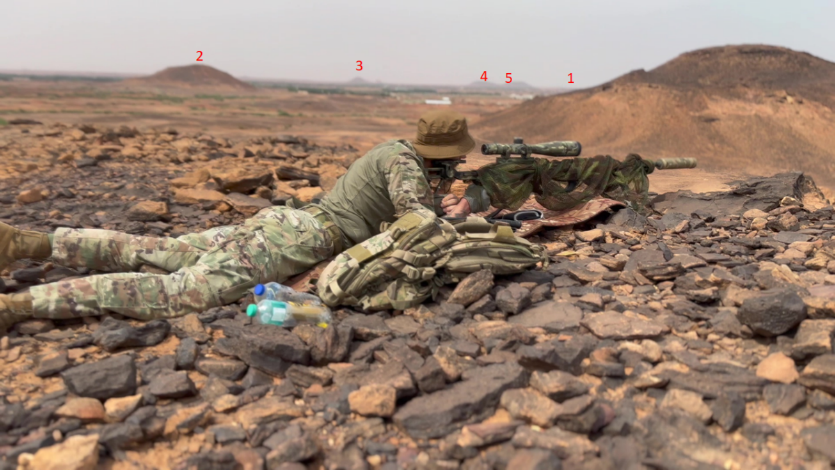
Alleged Ukrainian Sniper on Ridge Northwest of Omdurman (Bellingcat)

Al-Burhan and Ukrainian President Volodymyr Zelenskyy met in Ireland on September 23 to discuss responses to the pro-RSF activities of the Russian Wagner Group in Sudan (Kyiv Independent, September 23; Sudan Tribune, September 23). The meeting came days after the release of videos alleged to show Ukrainian drone attacks on RSF forces in the Sudanese capital (see Eurasia Daily Monitor, November 14). Since then, videos have emerged of Ukrainian snipers operating in the hills northwest of Omdurman, as geolocated by independent investigative collective Bellingcat (Bellingcat.com, October 7). There have also been videos released on November 6, allegedly showing personnel of the Ukrainian Defense Ministry’s Main Directorate of Intelligence engaging with RSF fighters, Wagner personnel, and members of Russia’s special forces in the Sudanese city of Omdurman (Kyiv Post, November 6; Sudan War Monitor, November 10).

Journalists seeking confirmation or denial of these activities have been referred to the words of Kyrylo Budanov, the head of Ukraine’s military intelligence service HUR MOU (Holovne upravlinnja rozvidky Ministerstva oborony Ukrajiny), who stated last May that “we have killed Russians and will continue to kill Russians anywhere in the world, until the complete victory of Ukraine” (New Voice of Ukraine, May 17). RSF leader Hemetti has expressed his support for Russia’s invasion of Ukraine and his paramilitary force is alleged to have engaged in gold smuggling with Wagner operatives in exchange for arms and advisors.

Small operations of the type allegedly engaged in by Ukraine in Sudan ultimately have little influence on the outcome of the war. However, they do diminish the local reputation of Wagner operatives who have helped finance Russia’s war in Ukraine by smuggling gold from regions of western Sudan under RSF control.

General Yassir al-Atta

General Yassir al-Atta (deputy to al-Burhan) stated that military intelligence and diplomatic sources had confirmed that the UAE was shipping supplies to the RSF through neighboring countries, including Chad. The allegation was denied by authorities in the UAE (Radio Tamazuj [Juba], November 29). The UAE is Sudan’s main trading partner, has been a major investor in Sudan in recent years, and is the primary destination for gold smuggled out of western Sudan. Al-Atta’s description of the UAE as a “mafia-state” led to a breakdown in diplomatic relations between the two countries (Radio Dabanga, December 11).

Atta’s remarks also incensed Chadian authorities. On December 11, they demanded an official Sudanese apology for claiming the UAE had been allowed to ship weapons and munitions to the RSF through Chad. N’Djamena promised to take “measures” if the apology did not come within three days (Sudan Tribune, December 11). Darfur governor Minni Minawi had already accused Chadian authorities of allowing the passage of arms and mercenaries through Chad to the RSF in mid-November (Radio Dabanga, November 17).

There are further allegations that the Zaghawa generals who control Chad’s powerful military are annoyed by the UAE’s support of the mainly-Arab RSF and are providing clandestine support to their Zaghawa kinsmen in JEM and the SLA-MM (Sudan Tribune, December 7).

Destruction of Khartoum

Little remains in SAF hands in Khartoum other than the much-battered army headquarters and a small patch of Khartoum North (Bahri) connected by the SAF-controlled Blue Nile rail bridge. Khartoum’s al-Jaili refinery, the largest fuel production facility in Sudan, was destroyed in a bombing on December 6, the fourth such bombing of that location since the war began. Both the RSF and the SAF accuse the other of being responsible for the destruction (Sudan Tribune, December 6). RSF posts are dispersed throughout Khartoum; in the SAF’s attempt to find and destroy them, large parts of the city have been smashed by airstrikes and artillery, including many of its most notable buildings.

The RSF now controls all of Khartoum State, with the exception of the SAF-controlled pockets in Khartoum and northern Omdurman. RSF patrols have been spotted recently in eastern Sudan, possibly preparing the way for an occupation of that region. Twenty-five miles south of Khartoum, the strategic Jabal Awliya military base and airport fell on November 20 after a siege and two-day assault, removing a major obstacle to a RSF incursion into White Nile State (Radio Dabanga, November 21).

Conclusion

The SAF is highly demoralized and suffers from high rates of desertion and defection. Resistance to the RSF is collapsing in many parts of the country, diminishing hopes for a negotiated settlement. There are thousands of dead, soldiers and civilians alike. The country’s GDP is expected to decline by 18 percent this year due to the war (Africa News, October 12), with over half the population in need of humanitarian assistance. Six million Sudanese are displaced and cut off from normal avenues of support. As famine approaches, the only trade activity that still works is the import and distribution of arms, despite an international embargo.

Civilian groups that had previously discovered the power of the people when overthrowing President Omar al-Bashir in 2019 have now discovered that they have zero influence in the current military power struggle. Most alarming is the emergence of patterns of ethnic and tribal violence that have ways of resisting political settlement while perpetuating grievances both new and traditional. Focused on self-enrichment, the RSF’s barely literate leadership has no rational plan for reviving the state. There is little chance that the RSF’s military success can translate into a brighter future for Sudan’s 46 million people.

Note:

[1] Amar Jamal, “Key Actors in the Juba Peace Agreement: Roles, Impacts and Lessons,” Rift Valley Institute Research Report, September 14, 2023, p.16, https://riftvalley.net/sites/default/files/publication-documents/RVI%202023.09.14%20Key%20Actors%20in%20the%20JPA.pdf