Andrew McGregor
Saratoga Foundation, Washington DC
March 11, 2026
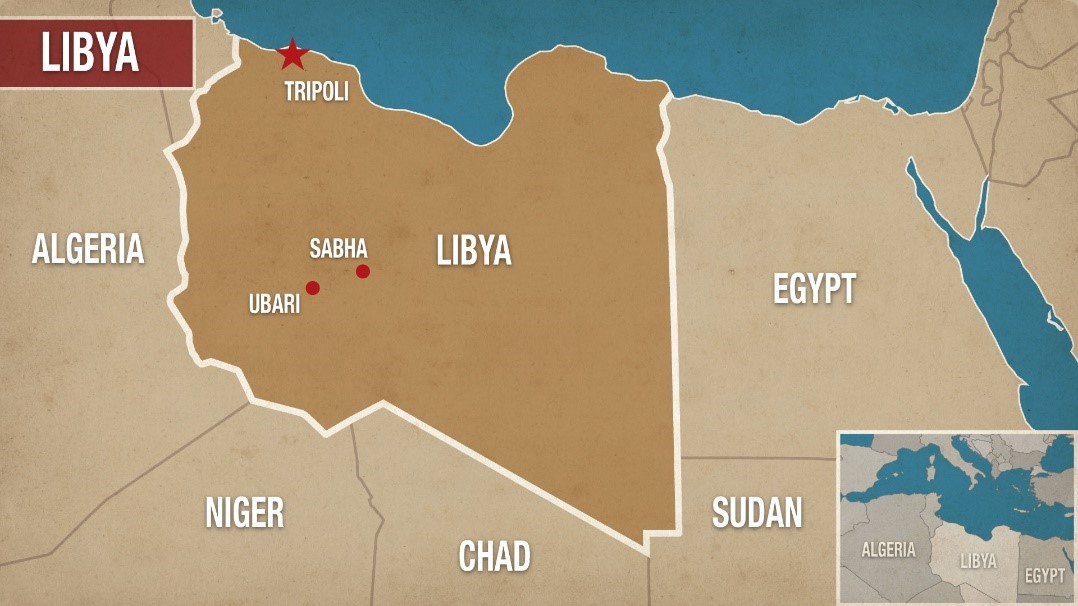
In a brutal war for control of Sudan, Egypt has avoided direct military intervention despite recognizing the Sudan Armed Forces/Transitional Sovereignty Council (SAF/TSC) administration as the legitimate government of Sudan over the rival Rapid Support Forces (RSF). Cairo has, however, observed both the United Arab Emirates (UAE) and Khalifa Haftar’s unrecognized government of eastern Libya joining to support the Arab-supremacist RSF in their effort to seize control of Sudan and suppress its non-Arab communities. Crucial to the outcome of Sudan’s civil war is the question of who will dominate the so-called “Triangle” (Al-Muthalath) region, where Libya, Egypt, and Sudan meet.
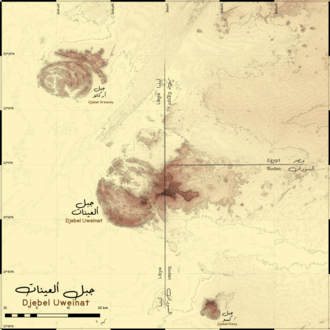 On January 9, Egypt carried out airstrikes on a UAE-supplied Libyan weapons convoy passing south from Benghazi, through the Kufra Oasis and past Jabal ‘Uwaynat into northern Darfur, where they were to be received by the RSF. Egypt’s previous warnings to Haftar’s Libyan National Army (LNA) to desist from such activity appear to have been ignored. The convoy is reported to have lost dozens of vehicles carrying arms and fuel to the RSF, with significant loss of life. The strike came only two days before an official visit to Cairo by Saddam Hafter, son (and presumed heir) of LNA commander Field Marshal Khalifa Haftar. Saddam is in charge of LNA operations in south-eastern Libya and the Triangle region.
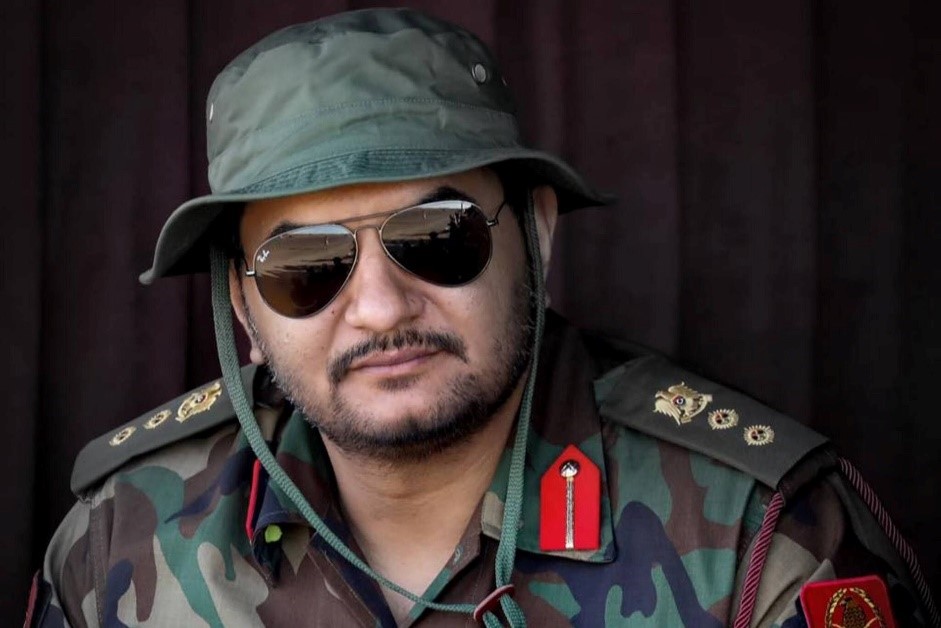 Saddam Haftar (La Croix)
The RSF’s reliance on material support from the UAE and its ties with the LNA provide further cause for Egypt to seek an end to refugee flows and the restoration of a true national government in Sudan. While Egypt and the Emirates both support Haftar’s LNA (Haftar has received military aid in the past from both Egypt and the UAE), the refusal of the UAE to acknowledge its long-suspected military support of the RSF has complicated relations between Cairo and Abu Dhabi. Despite its size and power, Egypt has limited leverage over the UAE, a substantial and much-needed investor in Egypt.
Saharan Supply Line: From Kufra to Jabal ‘Uwaynat
Libya’s Kufra Oasis, 640 miles south of Benghazi and 185 miles from Sudan, is the historic launching point for caravans connecting Libya to Chad and Darfur. Its airport is recently renovated and expanded, and now receives regular arrivals of transport aircraft, many of them carrying arms. Shipments of arms from Kufra to Darfur began in May 2025 despite a UN arms embargo on Sudan. Videos and geolocation techniques have confirmed the establishment of an RSF base in Kufra.
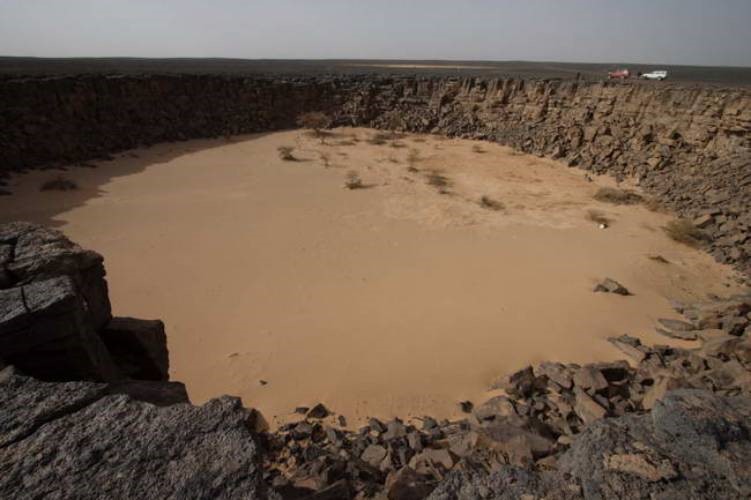
A little more than a century ago, Jabal (Mount) ‘Uwaynat, roughly located at the meeting point of the Libyan, Egyptian, and Sudanese borders, was one of the planet’s most remote locations, more legendary than real, and visited only rarely by Tubu herders and raiders. However, in recent years, it has become a heavily militarized nexus of desert trade, artisanal gold mining, drug smuggling, migrant trafficking, and arms-running.
Egypt has sought to establish a long-term presence in the region with the development of the East Uwaynat Desert Reclamation Project, 37 miles from the Sudanese border. Included in the largely agricultural project is a two-runway airport begun in 2018 and finished in 2024. Beginning in mid-2025, Egyptian authorities started delivering Turkish-made drones and other military equipment to the base in East ‘Uwaynat. Some Turkish Air Force cargo flights have arrived directly from Turkey. Satellite images have confirmed that Egypt is deploying advanced Turkish-built Bayraktar Akinci drones at this base.
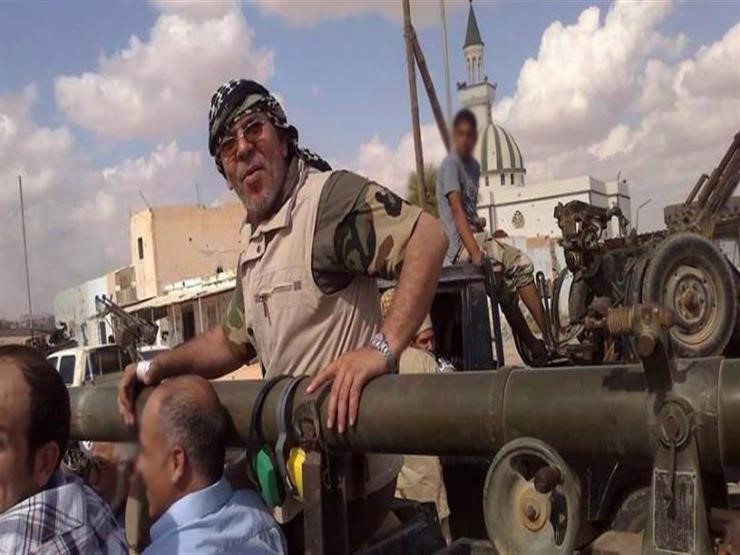
 ‘Abd al-Rahman Hashim, Commander of the Salafist Subul al-Salam Brigade
RSF fighters and Libyan troops (likely members of Kufra’s Islamist Subul al-Salam militia) first arrived in the Triangle region near Jabal Arkenu on June 10, 2025, forcing out units of the SAF and allied militias of the Joint Forces (former Darfur rebels) and looting local markets of anything of value. The Libyans returned north, while the RSF declared it had complete control of the region. Control of the Triangle helped secure overland supply convoys to the RSF and provided a potential launching point for RSF incursions into lightly defended northern Sudan. Shortly after the occupation, RSF commander Muhammad Hamdan Daglo “Hemetti” offered to transform the Triangle into a regional trade and economic hub for Sudan, Libya, and Egypt. Uninterested in a scheme that would involve recognition of the RSF as a regional authority, Cairo instead promised SAF leader General ‘Abd al-Fatah al-Burhan that it would not permit the RSF to use the Triangle region as a base for the invasion of Sudan’s Northern Province.
Arms and Mercenaries
When the RSF consolidated its authority over the tri-border region last June, it took control of the supply routes running through it while denying access to the Sudanese military. Supplies and mercenaries arriving from Kufra allowed the RSF to recover from its loss of Khartoum to take al-Fashir and consolidate its control of Darfur. However, the move also brought the RSF, a regional source of instability, into contact with the perpetually instability-averse Egyptian state. Cairo has dedicated diplomatic and political resources to finding a solution to the Sudanese conflict, preferably one that provides unity, prosperity, and stability. In its search for a solution, Cairo has maintained an official neutrality, while leaning toward the familiar, Sudan’s army and traditional political class, rather than the unfamiliar and unpredictable future offered by the RSF and its new political manifestation, the Tasis government. Cairo has strongly rejected the creation of what it terms as “parallel entities that threaten Sudan’s unity and territorial integrity,” calling such efforts a “red line” that threatens Egyptian security, a point that has been emphasized in meetings between LNA leaders and Egyptian intelligence and military officials.
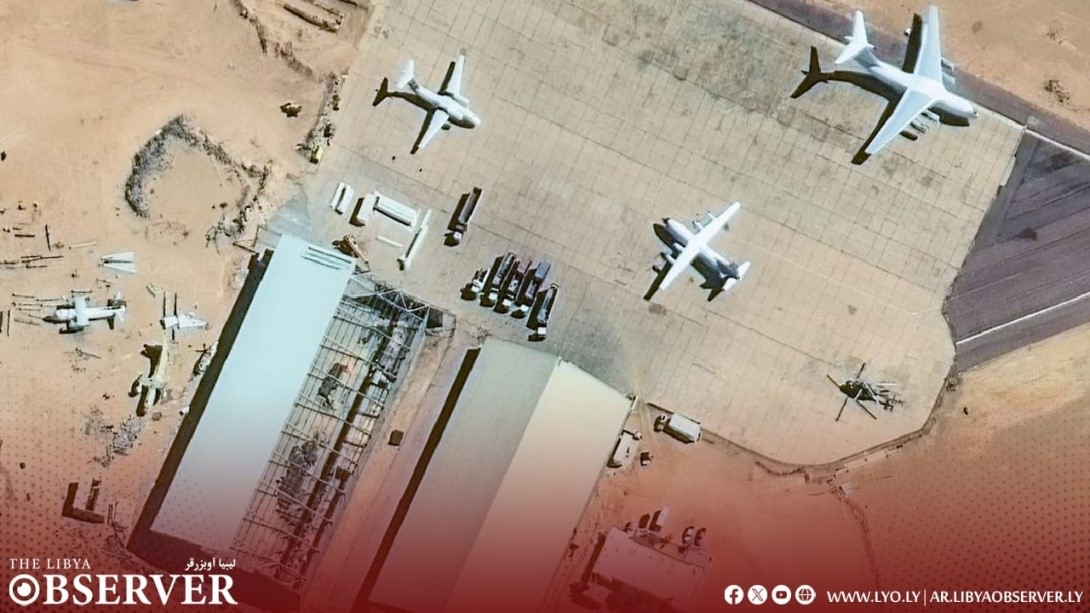 Kufra Airport
Contradictions are the order of the day when trying to sort out who backs whom in the Triangle region. Kufra’s LNA-allied Subul al-Salam militia is undeniably Salafist and Islamist in nature, yet it appears to be strongly involved in the transit of arms and mercenaries to the RSF, which insists one of the main motives for its military campaign is to prevent an Islamist return to power in Sudan. Hemetti recently acknowledged the RSF’s use of Colombian mercenaries who arrive in convoys from Kufra, saying they are used to supervise drone operations, while accusing the SAF of using Ukrainian and Iranian mercenaries. The RSF leader also claimed Sudanese intelligence is trying to bring in Islamist al-Shabaab fighters from Somalia, promising to eliminate them when they arrive.
Conclusion
Egypt’s willingness to attack RSF supply convoys may force the Sudanese paramilitary to switch to a much longer supply route through Libya’s southwestern Fezzan region, through Chad, and into western Darfur, or a return to a previously-used route by air to eastern Chad’s Amdjarass airstrip, followed by a convoy to western Darfur. However, these possibilities have been complicated by diplomatic pressure from Egypt and Saudi Arabia, as well as Chad’s decision to close its border with Sudan following military clashes with RSF personnel carrying out operations against the Zaghawa people in northwestern Darfur.
Cairo prefers a diplomatic solution to the Sudanese conflict, which now threatens to become a regional war capable of creating years of instability along Egypt’s borders. Nonetheless, Egypt remains the region’s most powerful military state and will deploy whatever forces are necessary to preserve the peaceful existence of its 120 million people.