DISSENSION AND DESERTIONS BEGIN TO PLAGUE UGANDA’S MILITARY

Andrew McGregor

May 2, 2013

Uganda’s military is one of the most active in Africa, with ongoing operations in Somalia, the Central African Republic (CAR) and the Democratic Republic of the Congo (DRC) reflecting Ugandan president Yoweri Museveni’s willingness to use his nation’s military to establish Uganda as a regional power in east Africa.  Internally, the Uganda People’s Defense Force (UPDF) is still engaged in operations against the Allied Democratic Forces (ADF) in western Uganda (for the ADF, see Terrorism Monitor, December 5, 2007). Last year, the UPDF threatened to intervene militarily in South Sudan if Khartoum attacked the new nation (Sudan Tribune, April 20, 2013). UPDF operations in Somalia and the CAR have the active support of the U.S. Defense Department.

In recent months, over 400 UPDF servicemen have deserted, often with their arms. Surprisingly, 37 of the deserters were members of the elite Special Forces Command (SFC). According to an investigation carried out by a Kampala daily, the deserters had been part of a larger SFC group assigned to fell trees and clear bush around President Museveni’s ranch in Mpigi district. The elite troops resented being deployed in heavy labor tasks with no apparent military purpose, though the army maintains the men were used to clear “an observation zone to spot enemies” (Daily Monitor [Kampala], April 25). Desertion has rarely been a problem in the SFC in the past as SFC members are better trained and better paid than other UPDF commands and receive an extra food allowance. Many of the deserters from other units appear to come from the northern and eastern parts of Uganda, reflecting complaints of discrimination in the UPDF against recruits from certain geographical regions. Uganda’s Internal Security Organization (ISO) is reported to be running intensive search operations in pursuit of the deserters that have already resulted in over 100 arrests (Daily Monitor [Kampala], April 30).

Deserters are thought to have been among those responsible for a March 4 attack on the Mbuya army barracks that appears to have been designed to seize enough weapons to arm a criminal group or rebel movement. Though the attack was repulsed after a firefight, there are concerns the attackers may have had support from active service members at the Mbuya base (New Vision [Kampala], March 5; Daily Monitor [Kampala], March 6; Observer Online [Kampala], March 19).Colonel Felix Kulayigye, who was appointed Chief Political Commissar of the UPDF in March, says that the problem is that many recruits are joining the army to make money rather than serve the nation: “There has been a misunderstanding that there is a lot of money in the army… A job seeker is simply a wage seeker, and if the wage is not satisfactory to their expectations, they run away” (Daily Monitor [Kampala], April 25).
A lively debate has opened up in Uganda regarding the merits of the SFC commander, Brigadier Muhoozi Kainerugaba, who also happens to be the first son of President Museveni. Muhoozi received education and training at Sandhurst, Fort Leavenworth and the U.S. General Staff College but his rapid rise through the ranks of the UPDF has prompted questions surrounding political interference in the promotion process. The president’s son took only one year to rise from second lieutenant in 2000 to major in 2001. Last August, Muhoozi was promoted to Brigadier ahead of many senior colonels and given command of the SFC. According to Minister of Defense Dr. Crispus Kiyonga, Muhoozi was “promoted on merit because he has trained and is very hard-working” (Daily Monitor [Kampala], March 1). After questions were raised about the appointment by opposition politician and former UPDF colonel Dr. Kizza Besigye, the president took the extraordinary step of responding to charges of nepotism by penning a lengthy refutation published in a Kampala daily (Saturday Monitor [Kampala], February 17). As SFC leader, Brigadier Muhoozi commands Uganda’s most capable troops, organized in 11 battalions with a total of 10,000 soldiers tasked with protecting the president, guarding oil infrastructure and carrying out special military operations as required. There is reason to believe that Muhoozi’s military career is intended as a stepping stone to his eventual succession of his father as Ugandan president.

Uganda’s Special Forces have been effective in carrying out special missions of the type recently described by the commander of Uganda’s African Union Mission in Somalia (AMISOM) contingent, Brigadier Michael Ondoga: “You may have special scenarios like an enemy hiding somewhere in a narrow place and he can only be dealt with in a special way, say at night by surprising him. These are the kind of special operations we are talking about. Those special scenarios that need night visual equipment and high speed to execute and return. They also carry out night operations in built up areas. They are well trained and have that capability. They can move in quickly and carry out surgical operations and come out” (Ugandan News, March 23).

Ugandan/AMISOM operations in Somalia have been complicated by Ethiopia’s March decision to withdraw its roughly 8,000 man force from Somalia. Ethiopian troops entered western regions of Somalia in November 2011, but have remained outside the AMISOM command structure. Al-Shabaab fighters are moving to re-occupy areas from which they were once expelled by the Ethiopian forces (AFP, April 26).  Ugandan police do not believe the Islamist al-Shabaab has lost its ability to carry out terrorist operations and have consequently issued a public alert warning information has been received of potential terrorist attacks by the Somali Islamists (Daily Monitor [Kampala], April 27). There are currently over 6,000 Ugandan soldiers deployed in Somalia.

However, the UPDF is planning a similar withdrawal from joint operations in the Central African Republic designed to eliminate the decades-long threat posed by Joseph Kony and his Lord’s Resistance Army (LRA). Working alongside elements from the U.S. Special Forces, Ugandan military operations in the CAR have greatly reduced the number of killings and abductions carried out by the LRA, but Kony remains at large and is expected to exploit the Ugandan withdrawal to resume operations in the region (Daily Monitor [Kampala], April 4). Service in the CAR campaign is disliked by many of the Ugandan troops deployed there and is thought to be behind a number of the recent desertions.

The transformation of the UPDF from a guerrilla force to a national army has not eased a tendency for some officers to be outspoken on political matters, despite the implications for civil-military relations. Many serving and retired officers recently welcomed the verdict of a General Court Martial in the case of former military intelligence chief Brigadier Henry Tumukunde. The Brigadier was ordered released with a “serious reprimand” after being arrested in 2005 following remarks he made in a 2005 radio interview questioning Museveni’s leadership and the decision to abolish term limits on the presidency. Former internal security deputy director and current opposition politician Major John Kazoora suggested Tumukunde’s prosecution and other government moves to stifle dissent were proof that “The country has gone full cycle into dictatorship. Museveni has muzzled parliament and does not want divergent views” (Daily Monitor [Kampala], April 19; April 18).

Uganda’s alliance with the United States and the West and the role of the UPDF in establishing regional security have helped mute Western criticism of election irregularities and authoritarian tendencies in the Museveni government. Nonetheless, the government will find it hard to avoid the internal repercussions of these policies. With the UPDF providing the backbone of the Museveni regime, any signs of dissent within that force are bound to have political importance in Kampala, where opposition figures are eager to use any lever to dislodge the president’s grip on power.

This article was first published in the May 2, 2013 issue of the Jamestown Foundation’s Terrorism Monitor.

ISLAMIST VIOLENCE IN TRIPOLI DEFIES EFFORTS TO RESTORE SECURITY IN LIBYA

Andrew McGregor

May 2, 2013

An estimated 80% of the two-storey French Embassy in the suburban al-Andlus neighborhood of Tripoli was destroyed by a car bomb in morning of April 23. The massive blast also damaged four neighboring houses. Remarkably, only two French gendarmes were injured in the 7 AM attack, which seemed designed to avoid mass casualties amongst the hundreds of Libyans who assemble outside the embassy later in the morning to seek French visas. No group has claimed responsibility, though the Interior Ministry and Foreign Ministry have both typically blamed Qaddafi loyalists rather than radical Islamists for the bombing (Le Monde, April 26; Xinhua, April 23).

The attack may actually have been connected to French operations against Islamist militants in northern Mali. The bombing came one day after France’s decision to extend its military mission in Mali and coincided with a visit to Tripoli by Jacques Myard, chairman of the National Assembly’s Foreign Affairs Committee (al-Sharq al-Awsat, February 24). Islamists in Tripoli and Benghazi expressed their anger with the French intervention in January protests. Since then, there have been concerns in Libya that continued inability to prevent attacks on foreign nationals and facilities in Tripoli and elsewhere in Libya might invite further foreign military intervention (al-Watan [Tripoli], April 24; February Press [Tripoli], February 24).

Libyan officials still see the hand of Qaddafi loyalists behind much of the insecurity in Libya. According to Libyan Defense Minister Muhammad al-Barghathi: “There are enemies inside Libya from the former regime who are still active in undermining the internal situation and influencing some leaders.” In light of the bombing and earlier attacks on the Italian ambassador in January and the fatal assault on the U.S. consulate in Benghazi in September, Libyan Foreign Minister Muhammad Abd al-Aziz concedes the existence of radical Islamists in Libya, but believes “The solution is to have a dialogue with them and to pursue a policy of integration with the families. To use force is not the right approach within the context of the national reconciliation necessary to rebuild Libya” (Le Monde, April 26).

Car-jackings and gunfights between militias have become daily occurrences in Tripoli, which was known for its safety until recently. Libya’s militias are also opposing the development of a free press, a crucial step in the development of a democratic society. Beatings, threats and illegal detentions have all been used to silence attempts to report on militia activities in Tripoli (Reuters, May 1). In recent days the Libyan government has come under siege from the militias and even its own police, making the establishment of a functioning government nearly impossible:

  • On April 28, armed men and vehicles surrounded the Foreign Ministry in a continuing blockade to demand the dismissal of Ministry employees who worked for the Qaddafi regime.
  • On April 29, former rebels briefly occupied the Finance Ministry.
  • On April 29 and 30, policemen took over the Interior Ministry twice to demand raises and promotions.
  • On April 30, 20 to 30 gunmen pulled up in front of the Justice Ministry in trucks mounted with anti-aircraft guns and occupied the building, sending Ministry workers fleeing. The gunmen were angered by remarks made by the Justice Minister regarding illegal prisons run by the militias (AFP, May 1; BBC April 30).

As well as arms, much of the Qaddafi regime’s internal surveillance equipment has fallen into the hands of various Libyan militias. According to Interior Minister Ashur Shuwayil, these militias are now using this equipment to monitor senior members of the Libyan government, the General National Congress (parliament) and members of the media (al-Sharq al-Awsat, April 24). Inside Libya, there is a debate over whether the intimidation practiced by the militias is a useful stimulus to moving the revolution forward or crass manipulation of the political process by politicians looking to expel potential opponents from the government (BBC, April 30).

Libya’s Defense Minister says the government has sought help from Canada, Australia, India, Pakistan, Jordan and Egypt in creating a new professional army to replace the militias. Of these nations, Egypt has been most receptive to Libya’s request, despite experiencing its own breakdown in internal security (al-Sharq al-Awsat, April 24). Libya’s Defense Ministry is seeking to obtain modern, sophisticated weaponry, but must wait another year for UN restrictions on arms sales to Libya to expire. Describing the army of the Qaddafi regime as “a joke,” Defense Minister al-Barghathi maintains that Libya trying to restore security and is “seeking to build an army whose number is proportionate with the population despite Libya’s vast territory, but in ways that lead to units that are small in size but professional and equipped with special weapons—and in which aircraft are used in particular” (al-Sharq al-Awsat, April 24).

Libyan armed forces chief-of-staff Major General Yusuf al-Mangush continues to face opposition from officers of the new national army, especially in Benghazi and other eastern regions. Though government officials continue to express confidence in al-Mangush, a recent conference in al-Burayqah saw army officers, militia leaders and civilian leaders call for the chief-of-staff’s immediate dismissal and an investigation into missing funds issued to the Libyan Army’s General Staff (al-Watan [Tripoli], April 23). One of the groups represented at the conference was composed of current and former army officers who have organized under the name “Free Libyan Army Officers Assemblage.” The group has called for the elimination of the Libyan Army’s General Staff and its replacement with an independent body of qualified personnel (al-Hurrah [Tripoli], April 20).

At some point, the new government will need to assert its authority if it wishes to end armed attempts to direct the government’s direction. For now, however, the government remains outmanned and outgunned, lacking the firepower advantage normally expected with government militaries. With UN Chapter VII restrictions on arms sales to Libya still in effect for another year, Libya’s government will have to seek other means of restraining the militias, which in at least one sense could be viewed as a favorable development, as an argument could be made that shipping even more arms to Libya might contribute little to solving the nation’s many problems.

This article was first published in the May 2, 2013 issue of the Jamestown Foundation’s Terrorism Monitor.

LIBYA’S SABHA OASIS: FORMER QADDAFIST STRONGHOLD BECOMING REGIONAL CENTER OF INSECURITY

Andrew McGregor, April 19, 2013

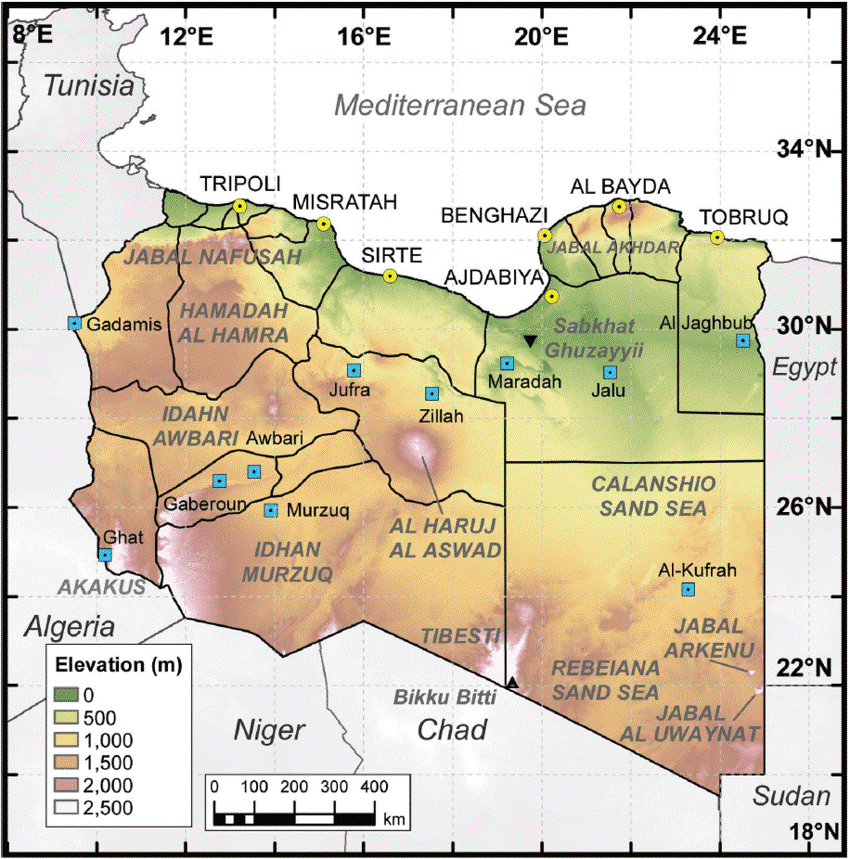
During the rule of the late Mu’ammar Qaddafi, Libya’s Sabha Oasis was an important regional security center, dominating Libya’s remote Fezzan region and the ancient trans-Saharan trade routes that connect sub-Saharan Africa to the Mediterranean coast. The Libyan airbase and garrison at Sabha gave Qaddafi a military presence in a region that contains most of Libya’s considerable oil wealth as well as a remote center for nuclear weapons development and rocket testing.  The presence of many Qaddafist loyalists in Sabha (including members of Qaddafi’s own Qadhadhfa tribe) made it the last major center to be taken by rebel forces in the campaign to depose Qaddafi. Today, roughly a year-and-a-half after Qaddafi’s death, Sabha’s strategic importance has actually increased due to the insecurity that prevails in southwestern desert.

To cope with the rampant insecurity that allowed the deadly Islamist attack on Algeria’s In Aménas gas plant to be mounted from southwestern Libya, Sabha was one of several southern regions declared a closed military zone in December, 2012, with temporary closures to border crossings with Niger, Algeria, Chad and Sudan (see Terrorism Monitor, January 25).

Sabha – The Disputed Oasis

Located some 500 miles south of Tripoli, the town of Sabha, with a population of roughly  200,000, is dominated by a massive Italian-built fort (Fortezza Margherita, but now known as Fort Elena),  a legacy of Italy’s brutal occupation of the Libyan interior in the early 20th century. Most residents belong to Arab or Arab-Berber tribes, but the Tayuri and al-Hijra neighborhoods belong to members of the Tubu, an indigenous Black African tribe following a semi-nomadic lifestyle in what is now southern Libya, northern Chad and northeastern Niger. Though famed for their traditional fighting skills, the Tubu of Sabha occupy cheap fire-blackened cinder block housing that provides witness to the bitter inter-communal battles that have plagued the oasis town since the Libyan revolution. The Tubu make up only 10 to 15% of Sabha’s population, which also includes a number of Tuareg and migrants from Sudan, Chad and Niger who were encouraged to fill jobs in Libya’s oil economy. 

Stripped of citizenship by Qaddafi and denied basic services such as medical care and education by Libyan administrators ordered to treat all Tubu as undocumented aliens, the Tubu see an opportunity to normalize and legitimize their historic presence in southern Libya through specific inclusion in Libya’s new constitution. Earlier this month, the Tubu attempted to educate other Libyans and foreign delegates about the Tubu by holding the first-ever “Festival for Tubu Heritage and Culture” in Murzuk, southwest of Sabha. While the event was attended by a number of members of the GNC, official foreign representation was limited to the Turkish consul and a UN delegate (Libya Herald, April 8).  For the Turkish consul, his arrival marked something of a symbolic return to the region: Ottoman troops were beginning to establish posts in the Tubu regions of the Sahara in the early 20th century prior to being withdrawn after the Italian invasion of Libya in 1912.

A group of Tubu fighters under the leadership of Niger-based militant chief Barka Wardougou (who became close to Tuareg rebel groups in Niger in the last decade) took Murzuk from its loyalist garrison in August, 2011 (Ennahar [Algiers], August 20, 2011). Wardougou and his militia remained in southwestern Libya after Qaddafi’s overthrow (Jeune Afrique, May 17, 2012).

Who Will Control the Borders?

Despite playing a leading role in the expulsion of Qaddafist forces from Libya’s southwest and the southeastern Kufra Oasis region, Libyan Tubus continue to be treated with the suspicion normally associated with pro-Qaddafists. When Sa’adi al-Qaddafi threatened to return from his Niger exile in February, 2012 to lead a new uprising in cooperation with elements of the Libyan military against the “gangs” who controlled Libya, attacks quickly began on Tubu residents of Kufra who were suspected (without evidence) of supporting Sa’adi’s plans for counter-revolution (Jeune Afrique, May 17, 2012; al-Arabiya, February 11, 2012; al-Sharq al-Awsat, February 15, 2012). For now, the Tubu continue to guard the border regions of the southwest, though partly out of self-interest – infiltration by Islamic extremists and narco-traffickers would challenge traditional Tubu control of local smuggling routes. The Tubu are already engaged in a struggle for control of these routes with their local rivals, the Awlad Sulayman Arabs. The Tubu and Awlad Sulayman fought a vicious battle using automatic weapons, rockets and mortars in Sabha in March 2012. The clashes left at least 50 dead and over 160 wounded (Libya Herald, March 28; Tripoli Post, March 29; for the battle, see Terrorism Monitor Brief, April 6, 2012).

In Sabha, incendiary rumors that the Tubu minority are about to take over the city often find a ready audience amongst the Awlad Sulayman and Awlad Abu Seif Arabs. Many Tubu are similarly convinced that the Awlad Sulayman intend to take control of the entire southwest region. Operating under the nominal direction of the Ministry of Defense, Tubu militias remain in control of several sensitive areas in southwestern Libya, including the southern al-Wigh airbase and parts of the Murzuk oil-fields. Calls from the militias for funding and equipment to control the borders have largely fallen on deaf ears. The Tubu not only know the physical terrain, they also know the location of unmarked minefields along the Libyan-Chadian border, deadly relics of the prolonged struggle between Chad and Qaddafi’s Libya for control of the uranium-rich Aouzou Strip.

Return of the Qaddafists

The continued presence of Sa’adi Qaddafi across the border in Niger also contributes to the destabilization of the region. A group of armed men attacked a Sabha police post on April 12, killing a police guard and two others before seizing vehicles and arms from the station.  The next day, over 20 individuals described as supporters of the Qaddafi regime were arrested. According to the head of Sabha’s military council, Ahmad al-Atteibi, the men had confessed to having been infiltrated from abroad with the purpose of setting up a base in the south (SAPA, April 13; News24, April 14). Another police source claimed the assailants were veterans of the Libyan Army’s 32nd Mechanized Brigade, a well-trained, well-armed and highly loyal unit under the direct command of Khamis al-Qaddafi (a son of the Libyan leader who was killed in a NATO airstrike in late August, 2012 (Libya Herald, April 14). Two vehicles belonging to the attackers were later recovered by the Zawiya Martyrs’ Brigade, a militia hailing from the Berber-dominated Nafusa Mountains of western Libya. Libyan border police also reported arresting a group of Libyans entering the country from Egypt with a large quantity of pro-Qaddafi literature for distribution in Sabha (Libya Herald, April 13).

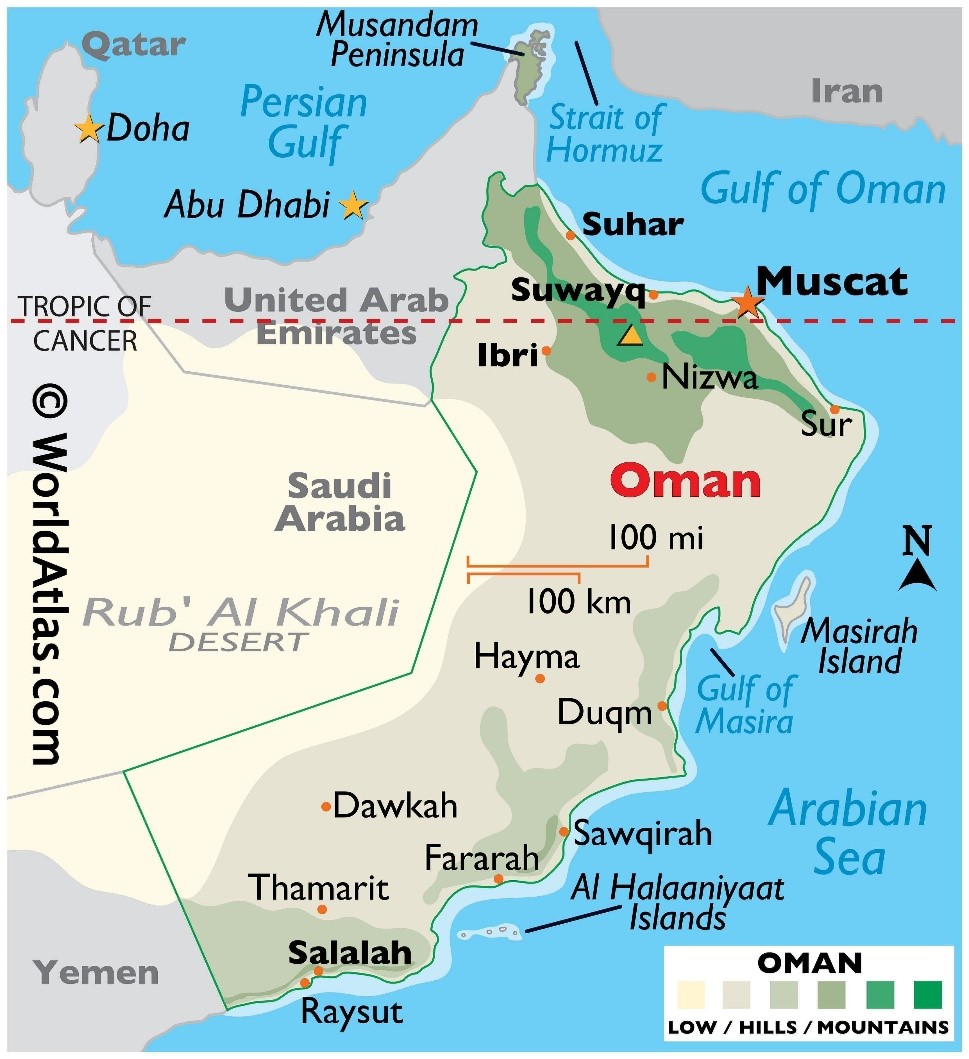
Libya has been applying intense pressure on Niger to extradite Sa’adi to Libya to face war crimes charges and it is expected that the former soccer player and Special Forces commander will join other members of the Qaddafi family in Oman rather than wait to be returned to an unhappy fate in Libya (al-Shabiba [Oman], March 26; Times of Oman, March 26).

Securing the South

The apparent inability of local security forces to resist attacks on their posts prompted a joint emergency meeting of Libya’s government and the ruling General National Congress (GNC). The meeting was attended by the highest levels of Libya’s administration and security services in an effort to find a solution to the ongoing challenges to government authority in the south (Libya Herald, April 14).

Security forces and militias from northern Libya dislike serving in the south, partly because there are no additional benefits offered to persuade them to serve there. Deployment orders from the Libyan Army command continue to be treated as requests by most of the Libyan militias.  Most are unable to cope with the isolation and severe climate of the vast desert expanses south of Sabha, leaving the region largely in the hands of local tribal militias, smuggling bands and roving groups of extremists who may have already established bases in the deserts.

The smugglers, who specialize in arms, fuel, vehicles, subsidized food, narcotics and human trafficking, are usually at least as well-armed and organized as the security forces tasked with their elimination. With under-equipped local security forces often going unpaid for months at a time, it has become much easier to simply purchase free movement through Libya’s ungoverned southwest. Efforts to inhibit the smugglers’ operations can invite retaliation; on March 30, a well-armed smuggling group angered by attempts to restrict their activities attacked the Sabha headquarters of the southern military region command at the Sabha airbase, killing two officers and wounding three other soldiers (Libya Herald, March 30; PANA, April 2).

The Arab-Berber Qadhadhfa, who were regarded as Qaddafi loyalists during the rebellion, have also engaged in deadly clashes with the generally anti-Qaddafi Awlad Sulayman tribe, who experienced rough treatment from the former dictator after he suspected them of planning his overthrow. Libyan army Special Forces units under Colonel Wanis Bukhamada were deployed to stop these tribal battles in early 2012. Bukhamada has since survived assassination attempts in both Sabha and his hometown of Benghazi.

Conclusion

The task of securing southern Libya from Islamist militants, narco-traffickers and arms-traders depends greatly upon efforts to reform Libya’s security services, most notably the National Liberation Army. However, with most former rebels preferring to remain under arms with their rebellion-era militias, such efforts have been painfully slow in obtaining results. Northerners dislike military service in the south and enduring suspicion of Tubu motives prevents the GNA from supplying this group with the arms, funds and equipment they need to secure the borders. As clashes with their Arab neighbors continue, Tubu goodwill towards post-revolutionary Libya is rapidly diminishing, as is the potential for this group to assume security tasks in southern Libya that few others are qualified to carry out. The In Aménas attack is a potent reminder of the necessity of securing the strategic Sabha Oasis and the rest of southwestern Libya before well-armed Islamists fleeing the French-led intervention in Mali can set up new operational bases in the region.

This article was first published in the April 19, 2013 issue of the Jamestown Foundation’s Terrorism Monitor.

SOMALIA’S AL-SHABAAB TARGETS TURKISH NATIONALS IN MOGADISHU

Andrew McGregor, April 19, 2013

A series of terrorist attacks in Mogadishu on April 14 may represent a last-ditch attempt by the leadership of the Salafi-Jihadist al-Shabaab movement to prove it is still capable of taking the Islamist insurgency to the new federal government in the face of growing internal dissent and expulsion by African Union troops from its lucrative holdings in Mogadishu and the southern port city of Kismayo. The specific targeting of Turkish nationals in one of these attacks also demonstrates al-Shabaab’s rejection of Turkey’s growing influence in the rebuilding state.

The Taliban-style attack on a busy courthouse in downtown Mogadishu on April 14 began with a car bomb exploding at the building’s gate, followed by as many as nine men in Somali army uniforms firing automatic weapons as they rushed in. At least three of the gunmen blew themselves up with suicide vests while the remainder were killed in a three-hour firefight with Somali security forces and Ugandan AMISOM troops (Reuters, April 14). Twenty-two others were killed at the scene, most of them soldiers.

At roughly the same time, a vehicle packed with explosives targeted Turkish vehicles in an AU/Turkish Red Crescent convoy on the airport road, killing a Somali driver and injuring three Turkish aid workers (Andalou Agency [Ankara], April 15; Mareeg Online, April 14). A Shabaab spokesman contacted a pro-Islamist website to confirm the attacks in Mogadishu were carried out by al-Shabaab’s “Special Forces” (Somali Memo, April 14). Al-Shabaab spokesman Shaykh Ali Mahmud Raage also told a French news agency that the attack on the courthouse was “a holy action which targeted non-believers who were meeting within the court complex. We will continue until Somalia is liberated from invaders” (AFP, April 14).

There are reports that Somali investigators believe the deceased leader of the courthouse attackers was a Canadian citizen who left Canada for east Africa four years ago (Toronto Star, April 14; National Post [Toronto], April 15). This news follows reports that as many as four young Canadian citizens were involved in the deadly attack by al-Qaeda in the Islamic Maghreb (AQIM) on foreign workers at the In Aménas gas plant in January.

The attacks in Mogadishu continued the next day, with a roadside bomb failing to kill the district commissioner of Mogadishu’s Heliwaa District as he drove to work (Shabelle Media Network, April 15). Security sweeps on April 15 detained hundreds of young men in the capital on suspicion of being al-Shabaab operatives (Dhacdo.com, April 15; AFP, April 15). Somali president Hassan Shaykh Mohamud described the attacks as “nothing but a sign of desperation by the terrorists, who’ve lost all their strongholds and are in complete decline right across Somalia” (Mareeg Online, April 14).

Divisions within al-Shabaab became public on April 6, when an open letter to al-Qaeda leader Ayman al-Zawahiri from a leading Shabaab member was published on jihadi websites. Penned by Shaykh Ibrahim Haji Jama “al-Afghani” (a.k.a. Abu Bakr al-Zayla’i), the letter reaffirmed the movement’s allegiance to al-Qaeda, but outlined growing differences between Somali members of al-Shabaab and foreign fighters who are accused of failing to abide by the Shari’a code  (Africa Review [Nairobi], April 18). A veteran of fighting in Kashmir and Afghanistan, al-Afghani also cited the failed leadership of Shaykh Ahmad Abdi Godane “Abu Zubayr,” who has replaced many capable military and religious leaders with members of his own Isaaq clan from northern Somalia. Al-Afghani (himself an Isaaq) asks for al-Zawahiri’s guidance as the movement stands to lose everything if the losses endured under Godane cannot be reversed: “We have witnessed an obvious drawback in the achievements of the mujahideen. Ten states were under the rule of the movement four years ago, which came with the possession of huge human resources and the sympathy of our Muslim people. Now, the jihadi spirit has receded and the motives for creation and production have been destroyed” (al-Shorfa.com, April 15). Al-Afghani goes on to complain that the movement’s internal divisions are now being exposed on social media such as Twitter.

With al-Shabaab having turned to terrorist methods since being driven from the capital by Somali and AMISOM forces in August 2011, Somali president Hasan Shaykh Mohamud warned that after al-Shabaab was defeated, “they changed their war tactics and we want all Somalis to prepare themselves for a new war against al-Shabaab. I know it will be costly, but we need to exercise our patience until we crush them” (Hiraan Online, April 15).

The attack on the Turkish aid workers appears to imply a rejection of Turkey’s growing engagement with Somalia. The attack also confirms al-Shabaab’s takfiri ideology and dispels speculation that Somalia’s Islamist militants might take a more open view to development assistance from a country with a Muslim majority.

The groundbreaking August, 2011 visit to Mogadishu by Turkish Prime Minister Recep Tayyip Erdogan was widely seen as a sign of Somalia’s return to the international community and his pledges of Turkish reconstruction assistance represented a show of support from fellow Muslims. Somalis used to ineffectual UN relief and reconstruction efforts run from offices in Nairobi have marveled at what Turkish aid and development workers have accomplished in less than two years on the ground in Mogadishu. Temporary hospitals with Turkish doctors serve the community, schools have been built (which incidentally offer Turkish language courses), the airport reconstructed, streets cleared of debris and students sent to Turkey on scholarships (Reuters, June 3, 2012). Somali police officers are already graduating Turkish police academies and an agreement on military training is in place (Today’s Zaman, November 9, 2012). Turkey’s interests are not related solely to aid, however; strong efforts have been made to revitalize and legitimize Somalia’s business community, much of which has operated without permits, regulation or taxation through years of political chaos. A series of reforms will be required before commerce and financial transactions with Turkey’s well-organized business community can begin.

Ottoman contacts with Somalia go back to the mediaeval period and intensified in the 19th century when the Egyptian Khedive sought to expand his empire (under Ottoman suzerainty) into the Horn of Africa, establishing short-lived bases at Kismayo and Barawe (Brava) and going so far as to send an exploratory mission up the Juba River under the command of a British naval officer, McKillop Pasha, and two American Civil War veterans, Colonel Chaillé-Long and Lieutenant Colonel William H. Ward.

Ankara has also pledged increased levels of aid to autonomous Somaliland and is hosting and facilitating a new round of reconciliation talks in Ankara between the unrecognized breakaway state and the rest of Somalia. Turkish investors have initiated a number of economic projects in Somaliland and Turkish oil exploration company Genel Energy PLC is planning to begin operations in the region (Today’s Zaman, April 14; Anadolu Agency, April 15).

While engagement with Somalia promises access to resources and new markets for Anatolian industries, Turkey’s growing involvement in places such as Libya and the Horn of Africa is part of a larger Turkish geo-political offensive in the African continent that is part of Ankara’s vision of Turkey as an advanced non-Western state ready to embrace its Ottoman heritage (with conditions) and resume its place as a vital and important international player. However, the targeting of Turkish nationals displays al-Shabaab’s determination to impose its own version of a Salafist theocracy on Somalia regardless of economic realities and the desperate conditions endured by many Somalis.

This article was first published in the April 19, 2013 issue of the Jamestown Foundation’s Terrorism Monitor.

CHAD WITHDRAWS FROM NORTHERN MALI AS PLANNING FOR UN FORCE BEGINS

Andrew McGregor, April 19, 2013

Chad has begun the withdrawal of its expeditionary force of roughly 2,250 troops from northern Mali as the conflict enters a new stage. According to Chadian president Idriss Déby, the “man-to-man fighting” against armed Islamists in the Ifoghas Mountains is over and the Chadian army does not have the ability to conduct operations against guerrilla forces: “Our troops will return to Chad. They have accomplished their mission. We have already withdrawn the heavy support battalion. The remaining elements will return to the country gradually” (TV5 Monde, April 13).

France is also intent on withdrawing most of its forces in the region. A draft resolution before the UN Security Council calls for the creation of an 11,000 strong UN peacekeeping force (aided by 1,440 police) that could relieve French forces and assume responsibility for security in Mali by July 1 if major combat operations were completed by that date (AFP, April 15). The new mission will be known as the UN Multidimensional Integrated Stabilization Mission in Mali (MINUSMA). President Déby has indicated that Chad will respond positively if it receives a request from the UN for participation (AFP, April 14). UN Secretary General Ban Ki-moon is said to favor an additional Special Forces formation drawn from a single Western nation (the unspoken preference is France) that would be tasked with counter-terrorism operations in parallel with the operations of the UN peacekeeping mission (Jeune Afrique, April 8).

The UN force would likely absorb the mostly inactive African-led International Support Mission in Mali (AFISMA), a force largely drawn from states belonging to the Economic Community of West African States (ECOWAS). On April 9, a senior Pentagon official warned the existing African intervention force was “completely incapable” and would likely be unable to deter al-Qaeda and its allies from retaking northern Mali once French forces pull out (France24, April 10). Most of the AFISMA units remain in southern Mali due to shortages of transportation, food, equipment and even boots. The troops also lack training in desert warfare, making their deployment highly risky (Jeune Afrique, April 8). EU trainers have begun work in Mali but it is expected to be months before training graduates can take the field. A new UN mission may include a deployment from Burundi, whose troops have been honing their combat skills in battles against Somalia’s al-Shabaab for several years now as part of the African Union Mission in Somalia (AMISOM).

Tensions have been reported in northern Mali’s Kidal region between the Chadians and members of the rebel Mouvement National de Libération de l’Azawad (MNLA), a largely Tuareg group that guides French forces operating in the Adrar des Ifoghas mountains and provides security in Kidal in the absence of regular Malian forces, who are prevented from entering Kidal as the price of the MNLA’s necessary cooperation.  The MNLA suspects the Chadians are encouraging the arrival of Malian regulars to help facilitate their own withdrawal. The Tuareg separatists have warned they will fire on any Malian regulars who approach the Kidal and Tessalit regions where the MNLA still holds sway. An armed confrontation between the Chadians and the Tuareg rebels was reported to have been narrowly averted on April 13 when a Chadian officer ordered his men to avoid provocations as they were confronted by MNLA protestors in front of the Chadian camp (Xinhua, April 16). The MNLA members said they were angered by the panic of Chadian troops who opened fire on civilians in Kidal immediately after a suicide bombing in the Kidal market that killed three of their comrades and injured four others (Sahara Media [Nouakchott], April 13; RFI, April 12; April 13). The blast brought the number of Chadian dead in the French-led military intervention to 36.

Chadian claims to have killed al-Qaeda terrorist chieftain Mokhtar Belmokhtar during a battle in the Ametetai Valley on March 2 have yet to be verified in the absence of any evidence, but Chadian claims took an odd turn last week when President Déby explained the AQIM leader’s remains had been destroyed in an explosion: “We have proof of [Belmokhtar’s] death. We couldn’t film it because he blew himself up after the death of [AQIM commander] Abu Zeid. He wasn’t the only one. Three or four other jihadists [also] blew themselves up in despair…” (AFP, April 14; for Chad’s original claim, see Terrorism Monitor Brief, March 8). For the moment, the Chadian claim appears to rest largely on the evidence of prisoners taken in the battle.

Chadian troops remain in the Central African Republic (CAR), where Chadian units tasked with defending the capital of Bangui from Seleka rebels stood down when the rebel force advanced in March, allowing them to seize the capital and engage in a two-day firefight with South African troops the rebels believed were helping to prop up the regime of President François Bozizé (for the battle, see Terrorism Monitor Briefs, April 4).

Bozizé now blames Chad for his downfall and claims his security forces observed 40 Chadian battle-wagons reinforcing the the Seleka rebels who took the CAR capital of Bangui on March 24-25 (RFI, April 4). A Chadian spokesman denied the claims: “No Chadian special forces were in the CAR. It is only in the imagination of Bozizé … He is somebody who was in power for 10 years and did not set up an army that could resist that small rebellion which came to seize power in a few hours” (RFI, April 8). By coincidence or otherwise, Seleka’s battle with the South African military forces in Bangui worked in favor of Chad and France, both of whom felt their traditional influence in the region was threatened by Bozizé’s growing relationship with South African business and government interests.

Asked about perceptions that Chad is using its military strength to become a regional power, Chadian Information and Communication Minister Hassan Silla replied: “We do not have any vision of invading Africa. But today, Chad is solicited by the world as a result of its effectiveness, due to its defense and security forces, which proved their mettle against traffickers and terrorism” (RFI, April 9).

This article was first published in the April 19, 2013 issue of the Jamestown Foundation’s Terrorism Monitor.

SOUTH AFRICAN MILITARY DISASTER IN THE CENTRAL AFRICAN REPUBLIC: PART ONE – THE REBEL OFFENSIVE

Andrew McGregor

April 4, 2013

While international attention focuses on efforts to deal with the fallout from Mali’s military collapse and subsequent coup, a rebellion and coup in the Central African Republic (CAR) involving some of the main actors in the Mali crisis (including France and Chad) has garnered less attention, but may have equally important implications for the future of African security efforts, particularly those relying on the declining capabilities of the South African military (for the current state of the South African military, see Terrorism Monitor Brief, January 25).

In a series of skirmishes and battles from March 22 to 24 with a large force of Seleka rebels in the CAR capital of Bangui, a force of roughly 250 South African paratroopers and Special Forces personnel suffered 13 killed and 27 wounded, putting an effective end to the South African military presence in the CAR. The number of prisoners in Seleka hands has not been confirmed, but is rumored to be as high as 40 (SAPA, March 26). In a development similar to one of the grievances that led to last year’s military coup in Mali, South African troops complained of being provided with insufficient ammunition, contributing to their losses in the fighting with rebels (SAPA, April 1). The South Africans’ heaviest weapons appear to have been rocket launchers and 107mm mortars.

The rebel attacks followed the overthrow of President François Bozize and it is believed the rebels were angered by what they perceived as the South Africans’ role in helping Bozize escape the capital. Bozize is reported to have fled to neighboring Cameroon with some members of the Presidential Guard, where he is awaiting news on which African country is prepared to shelter him. One of Seleka’s main demands prior to their capture of Bangui was for the withdrawal of the South African troops, whom they regarded as “mercenaries” preserving the rule of a corrupt ruler.

A group of some 25 South African soldiers were present in Bangui under the terms of a 2007 Memorandum of Understanding in which the SA soldiers would engage in a capacity-building mission to help the CAR with the implementation of a disarmament, demobilisation and reintegration process designed to absorb former rebels into the Forces armées centrafricaines (FACA) (Sowetan [Johannesburg], March 26). Some of the South African troops in Bangui were deployed to protect what the South African National Defense Union (SANDU), which represents South Africa’s troops, described as South African commercial interests in Bangui (Johannesburg Times, March 27).

Referring to reports that South African president Jacob Zuma ordered the deployment against the advice of Defense Minister Nosiviwe Mapisa-Nqakula and senior military staff who were instead urging the withdrawal of the small training mission in Bangui, Democratic Alliance parliamentary leader Lindiwe Mazibuko noted that the CAR was one of the most corrupt states in the world: “The key question that needs to be asked is: why did South Africa need to lose lives to defend this president?” (SAPA, March 27; Business Day Online [Johannesburg], March 26). The opposition has called for a “comprehensive investigation” into the debacle in Bangui, but the ruling African National Congress (ANC) has retorted that this is not the time to score “cheap political points” and has promised that South Africa “will not turn our backs when our neighboring countries need our assistance” (AFP, March 26; link2media [Johannesburg], March 27).

As the rebels made their final advance on Bangui, France sent an additional 350 troops to the CAR to strengthen the existing force of 250 soldiers (mostly Legionnaires) and protect the roughly 1200 French citizens in Bangui (AFP, March 26; RFI, March 24). The rebel offensive met little resistance from FACA forces and Chadian troops based north of the capital at Damara. Bozize called on Chad for military assistance in early December, but the Chadian troops sent to the CAR did not make a stand against the southwards advance of the Seleka rebels, which was only halted when a peace agreement (the Libreville Accords) was reached in January.

It was Bozize’s failure to implement the accords, particularly the clause relating to integration of former rebels into the CAR military, that led to Seleka’s final march on Bangui. A Seleka spokesman, Colonel Christian Djouma Narkovo, said military resistance collapsed quickly after the rebels entered the capital. The Colonel added that the rebels had clashed three times with the South Africans: “We took their arms and even took prisoners. They laid down their arms and are now in their barracks.” Colonel Narkovo also asked the French and Chadian forces in the capital to assist in bringing a halt to four days of looting and related chaos in Bangui that was fuelled by a power blackout and radio silence that began on March 23 (RFI, March 24). Three Chadian soldiers were reported to have been killed in the confused fighting in the capital (RFI, March 24). Two Indian nationals were killed by French troops guarding the Bangui airport when three cars approaching at high speed ignored warning shots (AFP, March 26). The fall of the Bozize government has also forced the suspension of the CAR-based hunt for Lord’s Resistance Army leader Joseph Kony by the Ugandan People’s Defense Forces (UPDF) and U.S. Special Forces teams (Daily Monitor [Kampala], April 3; AFP, April 3)

Zuma’s decision to send a force of 400 men to ostensibly guard a group of 25 military trainers who could have easily been otherwise withdrawn can only be interpreted as an effort to bolster the CAR regime. In the end, only 200 troops were actually sent, though they were not provided with air support, medical services, armored personnel carriers, logistical support or an evacuation plan. Since the mission was mounted on a unilateral basis, the South Africans had no-one else to call on if things went bad. Two days after the battle in Bangui the South African Air Force put its Saab Gripen fighter-jets on standby, but the warplanes were reported to lack the weapons needed to carry out an attack (SAPA, March 26). The remaining South African contingent in Bangui remains under French protection in a barracks near the Bangui Airport, where they await an extraction mission by the South African Air Force.

This article was first published in the April 4, 2013 issue of the Jamestown Foundation’s Terrorism Monitor.

SOUTH AFRICAN MILITARY DISASTER IN THE CENTRAL AFRICAN REPUBLIC: PART TWO – THE POLITICAL AND STRATEGIC FALLOUT

Andrew McGregor

April 4, 2013

The motivation of South African president Jacob Zuma for the South African military deployment in Bangui is uncertain; as a South African business website points out, the Central African Republic (CAR) is outside South Africa’s economic sphere of influence as it belongs to the Economic Community of Central African States (ECCAS – chaired by Chadian president Idriss Déby) rather than the South African Development Community. Trade between the two nations is virtually non-existent though rumors of South African mining interests in the CAR persist (Business Day Online, March 26).

According to CAR opposition leader Martin Ziguele, the head of the Movement for the Liberation of Central African People (MLCAP):

“President Jacob Zuma was dragged along into this wasp’s nest mostly by South African businessmen, who were naturally interested in mining activities in Central Africa. They truly dragged President Zuma into, it should be said, a trap. Because all countries in the sub-region had more intimate knowledge than South Africa on Central Africa’s political realities and the conditions for a real exit from the crisis” (RFI, March 26).

On March 28, a Johannesburg daily published the detailed results of an investigation into South African business connections with the CAR that began at the same time as the signing of the 2007 Memorandum of Understanding regarding defense, minerals and energy that called, in part, for the establishment of a South African military mission in Bangui. The report identified the involvement of a number of high-ranking ANC security and intelligence figures and ANC investment front Chancellor House in an effort to dominate the CAR’s diamond-mining industry. The initiative was arranged by a well-known and controversial “fixer,” Didier Pereira, a business partner of senior ANC security figures Paul Langa and Billy Masetlha, a former head of the South African National Intelligence Agency (NIA) (Mail & Guardian [Johannesburg], March 28). An ANC statement denied the allegations, claiming the Mail & Guardian was “pissing on the graves of gallant fighters who put their lives on the line in service of our country and our continent” (Mail & Guardian [Johannesburg], April 1).

It is possible that Bozize’s growing ties with South Africa irritated Chadian president Idriss Déby, who had played a major role in installing Bozize as president and had provided his personal bodyguard force until they were withdrawn last December. Bozize has claimed that the attack on the South Africans was led by “Chadian special forces” (BBC, April 3). A force of roughly 400 Chadian troops forms part of the Mission de consolidation de la paix en République Centrafricaine (MICOPAX), an international force drawn from Chad, Gabon, Cameroon and the Congo (see Terrorism Monitor Brief, January 10, 2013). South African defense analyst Helmoed Römer Heitman has noted that “the attacking force was far different from the “rag tag” rebel force originally reported: Most of them in standardized uniforms with proper webbing and with flak jackets, new AK47s and heavy weapons up to 23mm cannons.  It was also clear that many were not from the CAR, some speaking with Chad accents and others having distinctly Arabic features” (Sunday Independent, March 31).

Shortly before his overthrow, Bozize suggested the rebellion was an externally-fuelled attempt to control the CAR’s growing oil industry, alleging the involvement of maverick American oilman Jack Grynberg, who sued the CAR government after his exploration license in the northwestern CAR was revoked by Bozize (Jeune Afrique, October 14, 2011).

Seleka leader Michel Djotodia, a Russian trained economist who lived in the Soviet Union for 14 years, has denied rumors that Seleka was supported by Chad, Gabon or Congo-Brazzaville, saying that it was “simply misery that pushed us into taking up arms” (RFI, March 25). SANDU, the soldiers’ union, has insisted that the South African government has a legal duty to arrange for an ICC indictment of Djotodia after the bodies of child soldiers were discovered among the large numbers of dead rebels after the battle in Bangui (SAPA, April 1) There are signs that Djotodia is settling in for the long-term as the CAR’s ruler; though he has pledged to hold elections in 2016 (when Bozize’s term would have expired), he has also noted: “I did not say that I would hand over power. I said that in three years I will organize free and transparent elections with everyone’s support” (RFI, March 25).

Under heavy pressure from the media and political opposition, South African president Jacob Zuma reversed his intention to keep the battered South African force in the CAR and announced on April 4 that the South African military mission would be withdrawn (AFP, April 4). France may have played a role in the decision by preventing the deployment of a stronger South African force for fear it may lead to an attack on the Bangui airport or French interests in the city (Sunday Independent, March 31). The opposition had called for the withdrawal of a force that was “deployed to defend particular economic interests near the capital on behalf of a corrupt, authoritarian and unpopular government” (Business Day Online [Johannesburg], March 25).

South Africa has traditionally been one of the largest contributors to peacekeeping operations in Africa, with current SANDF deployments in Darfur and the Kivu region of the DRC. Though the South African military remains woefully underfunded, the ANC government continues to use it as an instrument of foreign policy and a means of establishing regional influence. While the South African opposition is demanding the recall of the badly damaged and still unsupported military mission in Bangui, there are rumors that the South African military may now be planning a retaliation in order to defend the reputation and future safety of SANDF troops, potentially expanding a conflict whose true motives are known only to the senior South African leadership. The struggle for control of the CAR is further evidence of the growing military and political influence of Chad in Africa, working at times (as in Mali) in partnership with France. The current decline of South Africa and Nigeria as Africa’s military powerhouses also suggests major shifts are ongoing in Africa’s regional balance of power.

This article was first published in the April 4, 2013 issue of the Jamestown Foundation’s Terrorism Monitor.

ISLAMIST MILITIAS TAKE TO THE STREETS AS EGYPTIANS LOOK FOR SOLUTIONS TO INTERNAL SECURITY CRISIS

Andrew McGregor

March 21, 2013

Though it lacks the compelling and convenient images produced in Cairo’s Tahrir Square during Egypt’s dramatic January, 2011 revolution, Egypt has been plunged into what has been variously described as a counter-revolution, a continuation of the 2011 revolution or an attempt by Islamist forces to consolidate power by taking advantage of Egypt’s internal security crisis. With police walking away from their duties across the country, Egyptians are seeking solutions to a security collapse that has given free rein to criminals, vandals and political extremists.  Solutions such as massive reforms in the Interior Ministry or even privatization of the police have been floated, but Egypt’s Islamist movements have come up with their own solution – the creation and deployment of Islamist militias known as “popular committees.” The inability of the government to deal with the ongoing security crisis and the growing divide between Egypt’s religious and secular communities has many Egyptian politicians and commentators raising the possibili9ty of a civil war.

Public protests have been fueled by economic turmoil, fuel shortages and controversial court decisions such as the acquittal of seven police officers tried for their role in the soccer-related violence that claimed 74 lives in Port Said in February, 2012 (21 civilians have been sentenced to death for their involvement in the violence) (al-Arabiya, March 11). Ongoing strikes in the industrial sector have paralyzed economic development.

Some demonstrations have involved shutting down public transportation and assaulting railway passengers, behavior that was unthinkable in pre-revolution Egypt (Ahram Online, February 11). Even the Mugamma building, Egypt’s monument to labyrinthine bureaucracy in Tahrir Square, has been subject to assault by demonstrators as security forces stood by (al-Masry al-Youm [Cairo], February 24). Cairo’s “Ultra” soccer hooligans have also engaged in vandalism and public violence in their deadly feud with Egypt’s security forces. A Muslim Brotherhood website has claimed that former leading officials of the now dissolved National Democratic Party (NDP – the ruling party of the former regime) are instigating the Ultras to attack the Muslim Brothers (Egyptwindow.net, March 15). Several days later, the same website claimed that former NDP members were alternately bribing citizens to go on strike or forcing them to strike at gunpoint (Egyptwindow.net, March 18).

In a troubling development, weapons appear to be pouring into the traditionally unarmed civilian population of Egypt since the revolution and the collapse of the Qaddafi regime in neighboring Libya. A recent sweep by Egyptian police seized 423 weapons, including machine guns and rifles (Middle Eastern News Agency [MENA – Cairo], March 17).

In what could be an embarrassing challenge to Egypt’s pretensions of leading the Arab world, reports have emerged that the Arab League is considering moving its headquarters out of Cairo due to continued violence that has forced the group to relocate many of its meetings (Ma’an News Agency [Bethlehem], March 18). Foreign investment is in steep decline and Egypt’s tourist industry, a vital source of hard currency, is floundering as Western tourists look for more secure places to vacation. For Egypt’s Islamists, however, this is not necessarily a bad thing, as they seek to replace Western tourists with Muslim tourists from the Gulf States, though the latter seem to be avoiding Egypt as well.

Citizen’s Arrests or Privatization?

Egypt’s prosecutor-general Talat Abdullah (an appointee of Egyptian president Muhammad Mursi) created a storm of controversy by urging “all citizens” to combat the destruction of private and public property and the creation of roadblocks by exercising “the right afforded to them by Article 37 of Egypt’s criminal procedure law to arrest anyone found committing a crime and refer them to official personnel” (Ahram Online [Cairo], March 10; al-Sharq al-Awsat, March 12).  A later statement from Abdullah’s office tried to back away from advocating citizen arrests, but had little impact.

Article 37 is an existing but little-used piece of legislation that allows citizens to arrest defendants for offenses that can be punished by no less than one year in prison – making an arrest on lesser offences could result in a charge of illegal arrest. These provisions are clearly designed to limit the use of Article 37, but these details are likely to be overlooked in the current heated environment. According to a military source cited by a major Cairo daily, “The statements of the prosecutor-general regarding granting citizens arrest powers are a clear attempt to legalize the militias of the Muslim Brotherhood and Salafists on the streets and to give them the right to arrest citizens, which puts Egypt on the verge of a civil war and ends the state of law” (Ahram Online, March 11).

While secular opposition parties denounced the prosecutor-gerneral’s statement as an attempt to legitimize Islamist militias and a violation of the constitution, the secretary general of the Islamist Hizb al-Bena’a wa’l-Tanmia (Building and Development Party) Ala’a Abu al-Nasr, hailed the announcement, saying “The decision of the prosecutor-general to grant citizens the right to arrest vandals is a correct decision based on the law… The decision comes as a first step to confront systematic violence in Egypt” (Ahram Online, March 11).

The dismissal of prosecutor-general Abdullah and the resignation of the government of Prime Minister  Hisham Qandil are among the demands an opposition coalition, the National Salvation Front, has said must be met before they will participate in forthcoming parliamentary elections (Ahram Online, March 14). Talat Abdullah has submitted his resignation once already since his November 2012 appointment after hundreds of public prosecutors staged a sit-in outside his office (al-Sharq al-Awsat, March 12). The largest of Egypt’s Salafist parties, the Nur Party, is also backing calls for the replacement of the Qandil government.

On March 9, Sabir Abu al-Futuh, a senior member of the Muslim Brotherhood’s political wing, Ḥizb al-Ḥurriya wa’l-Adala (FJP – Freedom and Justice Party), announced that the party was considering legislation that would give private security firms the right to bear arms, make arrests and be engaged by the state to provide domestic policing functions. Abu al-Futuh also recommended the establishment of armed “popular committees “in the event that police continue their strike action.” Ahmad Fawzi of the Egyptian Social Democratic Party called Abu al-Futuh’s proposal “a continuation of the Islamist group’s ongoing endeavors to monopolize power in all of its forms, whether it be police, army or judiciary” (Ahram Online, March 10).  Some Egyptians warn that privatization of the domestic security services would open the way for U.S. security firms to set up shop in Egypt with the approval of their “friends” in the Muslim Brotherhood (al-Masry al-Youm [Cairo], March 16).

The Interior Ministry

Striking police oppose what they describe as the “Brotherhoodization” of the Interior Ministry and call for the dismissal of another Mursi appointee, Interior Minister Muhammad Ibrahim (Ahram Online, March 15). Scores of police stations and Central Security Force (CSF) camps across Egypt (including those in the main cities of Cairo and Alexandria) have joined the strike that began March 7 when security forces in the Suez town of Ismailiya refused to deploy to Port Said, where several police officers have been killed in ongoing unrest. Egypt’s security services are still reeling from the public contempt that followed their brutal response to the anti-Mubarak revolution and fear that association with the ruling party will only further alienate the security forces from the public. According to one striking policeman, “We don’t want to be hated and feared by the people; we don’t want to be treated as the enemies of the people and the servants of the regime” (Daily News Egypt, March 9). The striking policemen are also calling for better arms to tackle the wave of lawlessness sweeping Egypt.

Many policemen have been suspended after growing beards to express their affiliation with Islamist movements. Though an Administrative Court ruled in favor of the “bearded policemen” on the grounds of religious freedom, the Interior Ministry has refused to follow the court’s ruling, leading to further demonstrations and the creation of an official Facebook page: “I am a bearded policeman” (Ahram Online [Cairo], March 14). There are now also demands from some members of the army that they be allowed to grow beards, demands that have been interpreted in some quarters as an attempt to turn the army into an armed wing of the Muslim Brotherhood (al-Watan [Cairo], March 17).

One of the early victims of the police strikes was the CSF commander, Magid Nouh, who was replaced on March 8 by CSF veteran Ashraf Abdullah after he failed to persuade the security services to return to work (al-Masry al-Youm [Cairo], March 8; al-Jazeera, March 8). The Egyptian president followed this move by making a personal visit to the Cairo headquarters of the CSF where he returned to the familiar language of “external threats” by warning the officers: “Beware, our outside enemy is seeking to create division among us, and we must not allow it” (Ahram Online [Cairo], March 15).

Al-Gama’a al-Islamiya

Leading the effort to form “popular committees” is al-Gama’a al-Islamiya (GI), a Salafist group that turned to non-violence after a long record of terrorist attacks through the 1980s and 1990s.  Many leading members of the GI and BDP are former militants released from prison during the 2011 revolution.

According to a spokesman for the BDP, the GI’s political wing, “community police groups would step in under the supervision of the Interior Ministry,” while claiming that “this system is applied in other countries” (al-Masry al-Youm [Cairo], March 12). Another BDP spokesman has complained the police are forcing the people to choose between torture or a lack of security: “We call on the police to meet their duty in protecting state institutions and not to give up the country’s security and stability in such critical times” (Ahram Online, March 9).

Asim Abd al-Magid, a senior GI member, has been given the job of organizing the GI’s “popular committees.” Besides calling on Egyptians to gather at mosques to form militias, Abd al-Magid has shown only slight respect for the security services: “Any policeman who wants to leave his position can do so, but he will not be allowed to come back… We want to purge the ministry of such elements anyway” (al-Sharq al-Awsat, March 12).

Satellite television has carried footage of the “Gama’a al-Islamiya police” parading in the streets of Asyut in cars and motorcycles despite warnings from the police that their activities are illegal (al-Hayat TV, March 12). In the city of Minya, the BDP has joined with the Salafist Nur Party to form “popular committees” to restore order in the streets (Ahram Online, March 9).

The Muslim Brotherhood

The vice-president of the FJP (the Brothers’ political wing), Dr. Rafiq Habib (a Coptic Christian), believes that the chaos in Egypt’s streets is the work of secular forces and representatives of the old regime who see the violence as a means of preventing the Islamists from governing the country effectively, thus opening an opportunity for the restoration of the old regime (sans Mubarak) (Egyptwindow.net, March 15).

The Brotherhood has been unnerved by a series of arson attacks on its offices throughout Egypt that began last December. At times, these attacks have resulted in pitched street battles between anti-Brotherhood protestors and Brotherhood self-defense groups (Amal al-Ummah [Alexandria], March 19). In an effort to come to grips with the spiraling violence, the leader of the Muslim Brothers, Dr. Muhammad Badi, launched an initiative on March 16 that calls for all the various political factions to remove their supporters from the streets for a specific period of time so that maximum efforts can be made to re-build the country (Egyptwindow.net, March 17).

The possibility of Islamist militias taking to the streets reminded many Egyptians of the shocking photos published in 2006 that showed a military display at Cairo’s Islamic al-Azhar University put on by a Muslim Brotherhood student group known as “the Hawks,” though the event was later dismissed by the Brotherhood as nothing more than “a theatrical display” (al-Sharq al-Awsat, December 13, 2006). More recently, Cairo’s al-Dustur daily reported on March 20 that Muslim Brotherhood members had received military training at CSF camps in preparation for fielding militias, though the Interior Ministry has denied these claims.

The Army

Demonstrations in Alexandria have called for the resignation of President Mursi, the trial of Interior Minister Muhammad Ibrahim on charges of killing demonstrators in the Suez region and the return of the army to run the country until new elections can be held (al-Masry al-Youm [Cairo], March 8). A recent poll by Cairo’s Ibn Khaldun Center for Development Studies showed a surprising 82% of Egyptians want the army to take control of the country on a temporary basis (al-Masri al-Youm [Cairo], March 18). The poll results were released days after residents of al-Nasr City took to the streets on March 15 to demand a return to military rule (MENA, March 15). Call for the return of the army are also beginning to appear with frequency in the non-Islamist Egyptian press.

Defense Minister General Abd al-Fatah al-Sisi maintains that the “Brotherhoodization” of the military is a near impossibility, but has warned recruits to abandon sectarian or political allegiances when they enter the military (al-Ahram [Cairo], March 15). Whether they form the government or not, the Muslim Brotherhood cannot easily transform the leadership of an institution that has spent decades purging all officers suspected of being sympathetic to the Brothers. While the situation could be changed very gradually through loosening restrictions on officer-candidates, command of the military cannot be simply handed over to a group of inexperienced Islamist subalterns. The Islamization of the military could more realistically take one or two decades – any sudden attempt to transform the military would inevitably result in yet another coup d’état and a return to military rule. The military’s surprising cooperation with the Brotherhood so far has raised the possibility that the command has simply given the Islamists enough rope to hang themselves in trying to transform a deeply entrenched social and political system. When popular opinion cries out for a return to the stability of military rule and foreign governments begin to give indications they are ready to look the other way, the military will be in a prime position to return to government or install a more pliant regime. The Army still controls a large but undefined section of the national economy, making it a necessary partner in any shift in political direction.

Conclusion

Before his death last year, former Egyptian intelligence chief General Omar Sulayman warned of the creation of Islamist militias in Egypt and the consequent threat of a civil war: “The Muslim Brotherhood group is not foolish, and hence it is preparing itself militarily, and within two to three years it will have a revolutionary guard to fight the army, and Egypt will face a civil war, like Iraq (al-Hayat, May 22, 2012; see also Terrorism Monitor Brief, June 1, 2012).

The Egyptian Army has indicated that the creation of private militias is a “red-line” for the military that could bring on military intervention to restore state control (Ahram Online, March 11). Interior Minister Ibrahim has insisted there is no role for vigilantes or militias in Egypt: “From the minister to the youngest recruit in the force, we will not accept having militias in Egypt. That will be only when we are totally dead, finished” (al-Sharq al-Awsat, March 12). For Egypt, however, the greatest challenges to internal security may be yet to come, as Egyptian jihadists return from the battlefields of Syria and exiled Egyptian members of core al-Qaeda take advantage of the security collapse to re-infiltrate the country and resume the type of bloody operations that marked the struggle between Islamist terrorists and security forces in the 1990s.

This article was first published in the March 21, 2013 issue of the Jamestown Foundation’s Terrorism Monitor.

SHOCK WAVES CONTINUE FROM MYSTERIOUS SUICIDE BLAST AT U.S. EMBASSY IN ANKARA

Andrew McGregor

March 21, 2013

In terms of scale alone, the February 1 suicide bombing that killed a Turkish security guard and injured a Turkish journalist outside the U.S. Embassy in Ankara was a relatively minor event that did not succeed in causing any significant damage to the embassy itself. Nonetheless, the attack carried out by left-wing militant Ecevit Sanli has created political and diplomatic reverberations throughout Europe and the Middle East.

Though suicide bombings are most commonly associated with Islamist groups, Sanli was a long-term member of a Marxist-Leninist revolutionary group that adopted the tactic of suicide-bombing in 2001, the Devrimci Halk Kurtuluş Partisi-Cephesi (DHKP/C – Revolutionary People’s Liberation Party/Front). After several years of inactivity following the death of founder Dursun Karatas in 2008, the Marxist-Leninist group suddenly renewed activities in September, 2012.

In the embassy attack, Sanli is reported to have used an electric detonator to set off six kilograms of TNT strapped to his body. The suicide bomber had previously been imprisoned for an attack on an Istanbul barracks in 1997. After three years in pre-trial detention, Sanli engaged in hunger strikes with dozens of other prisoners in Istanbul’s Umraniye Prison in 2000 to prevent their transfer to one of Turkey’s feared F-Type prisons, which emphasize social isolation in modern, sterile institutions, an environment that prisoners refer to as “white torture.”

Mass hunger strikes have been common in Turkey’s high-security F-Type Prisons. Scores of prisoners have died in these events, while Sanli and hundreds of others subsequently suffered from Wernicke-Korsakoff syndrome, a degenerative brain disease better known as “Wet Brain.” Caused by thiamine deficiency, the syndrome is common in chronic alcoholics and individuals who have engaged in extended hunger strikes. F-Type Prisons are reserved for terrorists, political prisoners and organized crime leaders. The DHKP/C has been prominent in leading prison hunger strikes. Turkish intelligence has suggested that the DHKP/C used militants suffering from terminal illnesses in a number of suicide attacks carried out in the last seven months (Today’s Zaman, February 4).

Released on parole after an eight month hunger strike, Sanli eventually disappeared and was sentenced to death in absentia in June, 2002 (later reduced to life in prison). Sanli next appeared in Germany in September, 2002, where his application for political asylum was denied after his record of terrorist acts came to light. Germany, however, refused to deport him to Turkey for fear he might be tortured. By 2011 he had lost the right to reside in Germany and was ordered not to leave Cologne (Der Spiegel [Hamburg], February 11). German intelligence continued to track Sanli’s whereabouts in Germany but lost sight of him last October. It is believed that Sanli planned the Ankara attack while still in Germany.

Anger is growing in Turkey over the alleged failure of various EU states, particularly Germany, to cooperate with Ankara in bringing an end to the use of European nations as bases for extremist groups carrying out terrorist operations in Turkey (Today’s Zaman, February 5).  Germany’s reluctance to extradite suspected Turkish extremists was brought up only days after the bombing in talks between Turkish Interior Minister Muammer Guler and his German counterpart, Hans-Peter Friedrich (Hurriyet Daily News, February 14).

According to the DHKP/C claim of responsibility that followed the embassy attack, “Our warrior [Sanli] carried out an act of self-sacrifice by entering the Ankara embassy of the United States, murderer of the peoples of the world” (Today’s Zaman, February 4). The statement went on to condemn Turkey’s close security relationship with the United States, citing issues such as the installation of Patriot missiles and NATO’s creation of a radar base at Kurecik that Iran claims is intended to defend Israel, not Turkey (Milliyet, February 10).

Shortly after the attack, President Abdullah Gul revealed that Turkey’s security services had information in January that the DHKP/C was planning an attack, but “unfortunately it could not be prevented and the attack against the embassy took place” (Hurriyet Daily News, February 6). Turkish police are searching for two other DHKP/C members who entered Turkey alongside Sanli from a training camp in Greece. There are fears the two may be planning further suicide attacks (Zaman Online, February 17). A statement issued earlier this month by the Milli Istihbarat Teskilati (MIT – Turkey’s national intelligence organization) warned Istanbul policemen that the DHKP/C was using internet search engines, Facebook and Twitter to obtain the photographs and addresses of police officers (Milliyet, March 4).

The Police Intelligence Department revealed at a recent parliamentary hearing that a 2008 DHKP/C plot to attack the home of Prime Minister Erdogan and a 2009 plan to assassinate former justice minister Hikmet Sami Turk had been foiled by electronic surveillance. The information was given during a hearing in which the police defended their use of wiretaps by claiming 284 terrorist attacks had been stopped and 138 “bombers” arrested in the last three years (Hurriyet, February 24).  Many Turks are puzzled by the persistence of what one local columnist called “rogue groups with absolutely no foundation in society,” and tend to see the hand of Turkey’s “deep state” structure behind the resiliency of Turkey’s terrorist groups, including movements that appear to be still fighting the Cold War, such as the DHKP/C (Today’s Zaman, February 4).

The prior knowledge of an impending DHKP/C attack mentioned by President Gul may have been the reason why Turkish security forces cracked down on the group in the weeks before the bombing, arresting over 80 suspects. After the attack, the crackdown intensified. 167 people were detained in country-wide raids on suspected DHKP/C members on February 18. Many of the detainees were identified as professionals or public servants belonging to the Confederation of Public Sector Trade Unions (KESK), whose offices were also raided. The raids uncovered documents containing the license numbers and identity information of Ankara judges and prosecutors who have worked on DHKP/C-related cases (Hurriyet Daily News, February 19, February 20; Today’s Zaman, March 11).

A March 14 raid in the Okmeydani neighborhood of Istanbul was resisted by the occupants of a fortified DHKP/C safe-house, who endured tear gas while trying to burn documents. Twelve people were detained, six of whom were reported to be under 18. The occupants of the safe-house were said to have illegally tapped into electricity, water and natural gas supplies. A gathering of socialists protested the arrest later that day and were dispersed by Istanbul police using pepper spray (Today’s Zaman, March 14, March 15).

Greece, which has usually refused to extradite suspects to Turkey, appears to have re-examined its approach in the wake of a March 4 meeting between Greek Prime Minister Antonis Samaras and Turkish Prime Minister Recep Tayyip Erdogan. After the meeting, Samaras was reported to have ordered the closing of two DHKP/C training camps in the Lavrion and Oropo regions. The movement is now said to have moved its headquarters to an apartment in Thessaloniki (Daily Star [Beirut], March 9; Hurriyet Daily News, March 9). Greece has also promised to extradite the elusive Zeki Gurbuz, leader of the Marksist Leninist Komunist Parti Turkiye (MLKP) and a DHKP/C member identified only as “S.E.” (Today’s Zaman, March 15).

Various theories have been advanced to explain the motivation behind the attack on the U.S. embassy, some based on the belief that the DHKP/C is a “deep-state” legacy working as a subcontractor for other extremist groups or intelligence agencies in order to raise funds for their own operations. If this is the case, there are three possible clients for the embassy attack:

  • Syria, as a covert effort to harm the United States, but with a message attached for Ankara regarding its pro-rebel position on Syria. Turkish security analyst and Jamestown contributor Nihat Ali Ozcan pointed to a possible connection between the bombing and the development of a proxy war between Turkey and Syria: “It is no secret that during the Cold War, Syria hosted Marxist-Leninist movements. When Turkey changed its stance against Iran and Syria, everybody started to look at the old files to see ‘what kind of networks we had’” (Hurriyet Daily News, February 18).
  • Iran, as part of a larger proxy war against American interests. The attack would also convey Tehran’s dissatisfaction with Turkish policies in Syria.
  • Kurdish rebel commanders belonging to the Parti Karkerani Kurdistan (PKK), as a message to Ankara that they will continue operations even as the government enters talks with imprisoned PKK leader Abdullah Ocalan.

The DHKP/C is rooted in Turkey’s Alevi community, a sectarian affiliation including Turks, Kurds and Arabs and comprising approximately 10% of Turkey’s population of 75 million people. Alevism is a syncretic faith that, like Alawism, combines elements of Shi’ism, Christianity and pre-Islamic rites and beliefs. Alevis, who are generally strong supporters of Turkish secularism, have been under pressure from the AKP government for several years to conform to Sunni orthodoxy (EDM, October 12, 2007).

Analyst Nihat Ali Ozcan has suggested that the DHKP/C’s Marxist allegiance is of less importance than its “ethnic-sectarian identity”; “There are some homegrown organizations in which most members share a common allegiance to the Alevi faith beneath the cloak of Marxism… Accordingly, with the end of the Cold War, the true colors of the DHKP/C were derived not from Marxism, but from this kind of sectarian identity” (Hurriyet Daily News, February 7).

This article first appeared in the March 21, 2013 issue of the Jamestown Foundation’s Terrorism Monitor.

NEW ANSAR AL-SHARI’A GROUP ESTABLISHED AS MAURITANIA PONDERS JOINING INTERVENTION IN MALI

Andrew McGregor

March 21, 2013

The largely desert nation of Mauritania has been engaged in an often deadly struggle against al-Qaeda terrorists and local Salafist militants for several years now. Many local Salafists now populate the prison in the capital of Nouakchott, though even this does not seem to have deterred some of them from carrying out various activities.

Abu Ayyub al-Mahdi (a.k.a. Ahmad Salim bin al-Hassan), an imprisoned Mauritanian Salafist, announced the creation of a new militant group, Ansar al-Shari’a in the Shanqiti [Mauritanian] Country, on February 12, the latest in a series of autonomous but ideologically sympathetic Ansar al-Shari’a groups to spring up across North Africa and the Middle East.

One of the greatest promoters of the Ansar al-Shari’a phenomenon is a Mauritanian ideologue, Abu Mundhir al-Shanqiti, the author of an influential 2012 article entitled “We are Ansar al-Shari’a.” [1] Al-Shanqiti proposed gathering the disparate Salafist-Jihadist movement behind a unified objective – the rejection of democracy and the establishment of Shari’a as the leading principle in the Muslim world. As part of this process, al-Shanqiti maintains the movement must be brought out into the open from its present underground existence (al-Hayat, January 3). This may be a difficult task however; many of the Salafists detained in the Nouakchott prison have denied any association with the new branch of Ansar al-Shari’a (Al-Monitor, February 19).

Though President Muhammad Ould Abd al-Aziz kept Mauritanian forces out of the current ECOWAS-based African intervention force operating in Mali on the grounds that Mauritania was not an ECOWAS country and that the French-led intervention was launched without prior notice, he has indicated that Mauritania would be ready to provide troops to a UN-backed mission in Mali. The president added that Mauritania is aware of two problems driving the insecurity in Mali, these being Bamako’s tolerance of terrorist groups in northern Mali over the last 12 years and the “sometimes legitimate” demands of the people of northern Mali for “basic infrastructure, health and education” (Sahara Media [Nouakchott], March 4).

Mauritanian military intervention in Mali is opposed not only by the Salafist community, but also by mainstream, secular politicians such as Ahmad Ould Daddah, the main opposition leader and secretary general of the Regroupement des Forces Démocratiques (RFD – Rally of Democratic Forces):

“I am afraid we will participate in a war that we have no interest in — a war that poses danger to us and the region in general. What our region and the Sahel region need are building and development efforts to improve conditions; not the destruction of an already worn-out infrastructure… We do not want or accept that our region becomes the Afghanistan of the African Sahel. To remove any confusion, we affirm that we are against terrorists and terrorism. However, each war has two fronts; a fighting front and an internal front, which is more important than the fighting front in my opinion. When the national public opinion is not convinced of the reasons and pretexts of a war, it means that it does not serve the country. This affects the performance of the soldiers and makes them question the sanctity of their mission” (al-Sharq al-Awsat, March 11).

Ould Dadah initially supported Ould Abd al-Aziz, but now observes the president backing away from democracy to adopt a more military-style of rule and notes the adverse effects on military performance created by involving the military in politics, effects that could hamper the military’s ability to mount a campaign in Mali or even effectively guard its 2,237 kilometer border with that country:

“We have become certain that he adheres to the mentality of a military rule, which is not proper in for a country that claims to be democratic. The practices of the regime encourage the army to become involved in politics, abandon its noble military mission, and to indulge in luxuries that destroy its combat ability. In my opinion, the army is the first to be harmed by the military regime. It is also dangerous when the army becomes involved in politics, because in this case politics are practiced through guns and weapons, not through reason, thinking, and logic. This is the logic of the military rule that is running the country” (al-Sharq al-Awsat, March 11).

In Mauritania, 3.5 million people live in a land of well over 1 million square kilometers. Mauritania’s security services lack the men and resources to properly patrol and monitor the nation’s borders, most of which cross lifeless deserts. This has left Mauritania open to attack by al-Qaeda in the Islamic Maghreb (AQIM) several times in the past, despite efforts to set up joint counter-terrorist patrols with the similarly under-equipped Malian army (see Terrorism Monitor July 7, 2011; November 11, 2010). On March 17, the Ministry of Foreign Affairs announced the capture of five “Islamist terrorists” from northern Mali who were caught trying to infiltrate the border (Agence Nouakchott d’Information, March 18).

In early February, Mauritania launched a new initiative with its southern neighbor, Senegal, to coordinate military activity along the border with groups of villagers along the Senegal River who will act as the eyes and ears of the security services in identifying suspicious individuals or groups active in the border region (Al-Monitor, February 6). Senegalese troops recently arrested a Mauritanian al-Qaeda member who had slipped into the country across the border (PANA Online {Dakar], February 15). Mauritania is now hosting more than 150,000 refugees from northern Mali and claims to have intercepted several al-Qaeda militants posing as part of that number.

There are extensive historical and communal ties between the two countries – many of the Arab tribes of northern Mali have relatives across the border in Mauritania, while a significant number of Mauritanians have settled in northern Mali over the years. There have been repeated demonstrations in the Mauritanian capital of Nouakchott by Malian Arab refugees protesting human rights abuses by Malian troops following the French intervention force into northern Mali (RFI, March 12; AFP, March 11).

Mauritania hosted this year’s Operation Flintlock, an annual training exercise for North African and West African militaries sponsored by the U.S. Department of Defense’s Africa Command (AFRICOM) (for Operation Flintlock, see Terrorism Monitor, June 3, 2010). The exercises, which ended on March 9, saw troops from the United States and various NATO allies provide training in counterterrorist operations and field-craft. Last year’s exercises, which were to be held in Mali, were cancelled due to the Islamist occupation of Mali’s northern districts. Some of the African troops trained in this year’s event could wind up taking part in a possible UN peacekeeping operation in northern Mali.

This article first appeared in the March 21, 2013 issue of the Jamestown Foundation’s Terrorism Monitor.