The First Siege of al-Fashir, 1884: Prototype of a Modern Atrocity

Andrew McGregor

AIS Historical Background Report

December 3, 2025

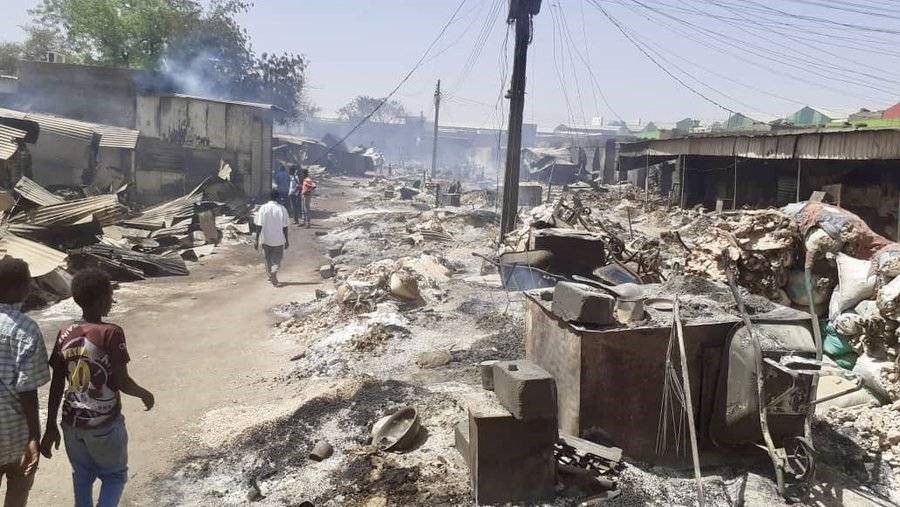
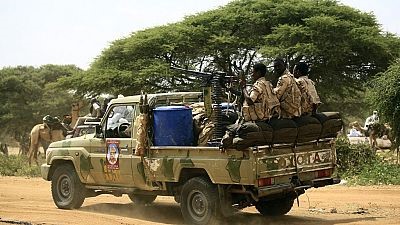
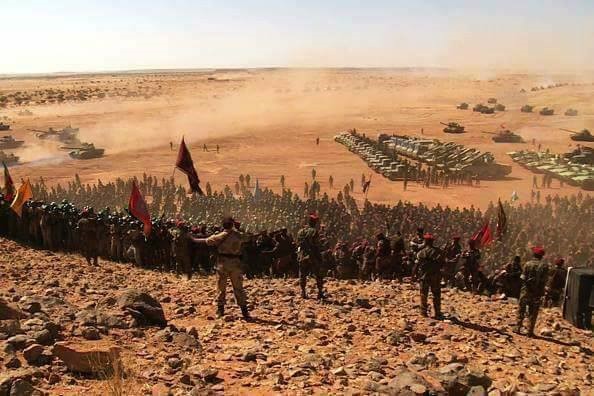
Fighters of Sudan’s Rapid Support Forces (RSF) entered the North Darfur capital of al-Fashir in late October, launching a wave of atrocities based on ethnic persecution of non-Arab tribal groups in Darfur. The 18-month siege of al-Fashir that preceded these terrible events bore many parallels to the first siege of the city in 1884, one in which many Arab ancestors of current RSF personnel participated as followers of the Sudanese Mahdi, Muhammad Ahmad. Then, as now, most of the besieged were non-Arab and faced a similar fate when their defenses were overrun.
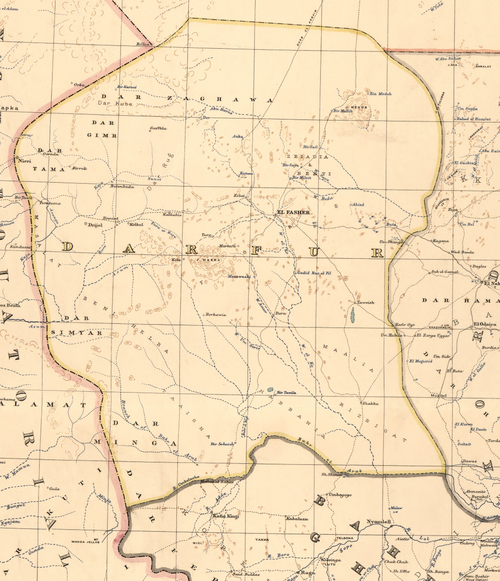
Map of the Sultanate of Darfur, 1914 

With the encouragement of his Ta’ashi Arab deputy, ‘Abd Allahi, Muhammad Ahmad proclaimed himself the expected Mahdi in 1881. The Mahdi as a messianic figure who appears at the end of time to restore justice in an oppressive world before the arrival of the Nabi Isa (the Prophet Jesus) figures prominently in both Sunni and Shi’ite eschatology (the study of final judgment and the last days of mankind).

Pious and charismatic, Muhammad Ahmad put himself at the head of a growing rebellion against the massively unpopular rule of Egypt’s Turko-Egyptian elite. The Turko-Egyptians invaded Sudan in 1821, replacing numerous chiefdoms and kingdoms with their own rule, one that was at once parsimonious, rapacious, grasping, incompetent and exploitative. Besides brutal methods of tax collection, the new elite angered many Sudanese by their interference in the slave trade, a thriving institution in Sudan. This interference was made more irksome by Egyptian Army officers who appeared publicly to be working to end slavery while making immense profits through their own covert involvement in the trade.
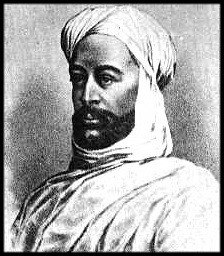
Muhammad Ahmad, the Sudanese Mahdi

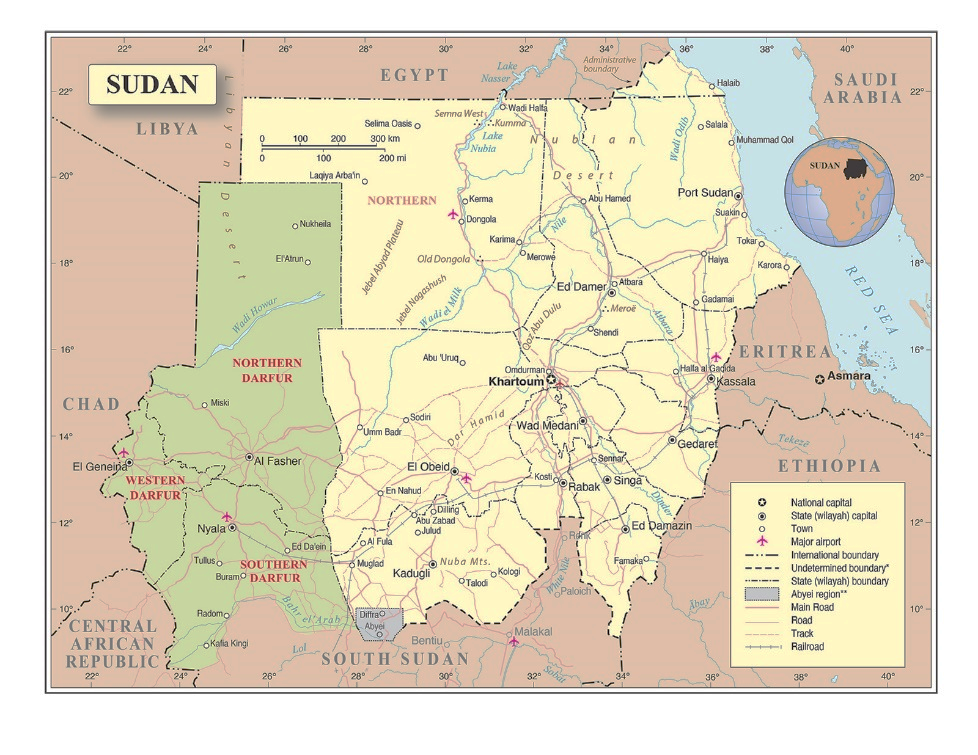
A former Sufi, Muhammad Ahmad was a Dongolawi (one of three powerful groups of Arabized Nubians, including the Ja’alin and the Sha’iqiya) from northern Sudan. He began to attract followers, the so-called ansar (“supporters,” i.e., of religion), at his base on Aba Island in the White Nile. Forced from Aba by government troops, the Mahdi and his followers fled to the Nuba mountains of southern Kordofan and later into the plains of northern Kordofan, where they began besieging towns held by Turko-Egyptian troops, including local recruits, many of whom were Blacks taken as slaves by government-backed slaving expeditions. With Kordofan largely under Mahdist control, Muhammad Ahmad turned his attention west to the old sultanate of Darfur, a powerful Muslim kingdom since its foundation by the Fur people of Jabal Marra in the 17th century, but under Egyptian control since 1874. Al-Fashir, the sultanate’s capital, was established by Sultan ‘Abd al-Rahman in 1792 in the plains east of the mountainous Fur homeland of Jabal Marra. Formerly, the Fur sultans had maintained a peripatetic court, roaming the hills of Jabal Marra.

After many years of expansion, Darfur was nearly two-thirds non-Fur by the time of the 1884 siege. Intermarriage with non-Fur ethnic groups had been encouraged in the royal family as a means of consolidating political control, and by the latter half of the 19th century the royal family was probably as much Zaghawa by blood as Fur. Fur was still the court language, but Arabic was the language of official correspondence. A willingness to bring non-Fur into important administrative positions, a reliance on slave labor and a high tolerance for pre-Islamic religious practices helped maintain the Fur royalty. The main dissenters were the nomadic Baqqara (cattle-herding) Arabs of southern Darfur, who maintained their independence by retreating into the marshes along the border with the southern region of Bahr al-Ghazal whenever the sultan decided it was time to send out a punitive column to bring them in line. Repeated clashes grew into bitterness on both sides, a situation that only deteriorated under the rule of the Turko-Egyptians, leaving both the Baqqara tribes and their northern Abbala (camel-herding) Arab cousins ready to be led into full-scale revolt under a strong leader such as the Mahdi, who represented a local form of Islam that differed from that promoted by the Egyptian religious scholars who had followed the army into Sudan and set up their own government-allied form of Islam.

Zubayr Takes al-Fashir – 1874

In 1883, al-Fashir was a town of only 2650 people, including both Arabs and non-Arab groups such as the Fur, the Zaghawa, the Berti and others. By the time of the siege a year later, it had been ten years since the powerful slaver and freebooter Zubayr Mansur Pasha had roared north to conquer Darfur with an army of loyal Black slave-troops (bazinger-s) from his headquarters in Bahr al-Ghazal. [1]
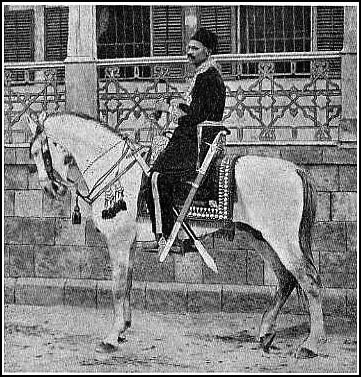
Zubayr Mansur Pasha

Zubayr was a Nile Valley Ja’ali of modest background who had worked his way up through the ranks of the slavers busy depopulating parts of southern Sudan in the mid-19th century. He had become wealthy and powerful through his subjugation of the immense southern province of Bahr al-Ghazal before eying the riches of its independent northern neighbor, the sultanate of Darfur. After the defeat and death of Fur sultan Ibrahim Qarad bin Muhammad Husayn in a great battle at Manawashi in 1874, the way was open for Zubayr to enter al-Fashir without a fight on November 2, 1874. The Fur capital was thoroughly looted by Zubayr, who had sworn allegiance to the Egyptian khedive but acted mainly in his own interests. As Zubayr led his army west to conquer neighboring Wadai Sultanate, a weaker detachment of the Egyptian Army entered al-Fashir five days after Zubayr. These troops were led by Governor General Isma’il Ayub Pasha, who claimed Darfur for the growing Egyptian Empire in Africa and confiscated much of the loot Zubayr had left behind in al-Fashir. Isma’il Ayub claimed most of the credit for taking al-Fashir and was duly promoted, while Zubayr found himself cheated out of his anticipated khedive-approved rule of Darfur. Zubayr departed to protest in person in Cairo, where, being judged as overly ambitious and a threat to Egyptian sovereignty in Sudan, he was compelled to remain in comfortable but closely-watched exile. [2]

Opposite the sultan’s al-Fashir palace, Isma’il Ayub ordered the construction of a square fort with a deep trench and bank patrolled by sentries. Inside the fort was a house for the governor and barracks for the troops (Na’um Bey, 1913). A strong zariba (fence made of thorn bushes) surrounded the defenses. A gun at each angle was sufficient to control the town under normal circumstances.

Alexander Macomb Mason Bey

When F Sidney Ensor visited al-Fashir in the late 1870s during an Egyptian government railroad survey, he found the palace occupied by Colonel Alexander Macomb Mason Bey, a Confederate veteran of the Virginia State Navy. Mason was on the staff of the Egyptian khedive after a stint fighting Spain as a mercenary officer in the Chilean Navy. Improvements to the remains of the old palace were made by Egyptian troops to make it suitable for the accommodation of officers, including floors of Norway pine imported at great expense from England.

Slatin and the Loss of Darfur

Rudolf Slatin, a 27-year-old Austrian mercenary in the employ of the Khedive in Sudan, was with the Mahdist army at the time al-Fashir was taken, only seven days after he had surrendered. Slatin, despite only a brief employment by the Austro-Hungarian Army in the Balkans, arrived in Darfur in 1879 and was soon after appointed governor of Darfur in 1881 by Sudan’s governor general, Muhammad Rauf Pasha.
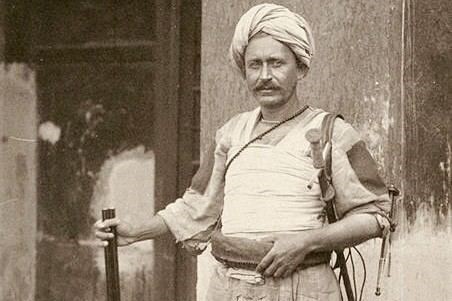
Rudolf Slatin in Mahdist Uniform

The young Austrian’s time was almost immediately consumed by military matters, fighting a series of battles, first against the displaced Fur royals, then against the Arabs who had rallied to the Mahdi. In a desperate move, he converted to Islam in 1883 in an unsuccessful attempt to rally his Muslim troops shortly before his surrender at Dara. Thus began Slatin’s 11-year residence in the camp of the Mahdi and his successor, the Khalifa (“successor”). His surrender was marred, however, by his surprising failure to first destroy the Dara garrison’s vast stocks of powder, ammunition and other war materiel that now fell into the eager hands of the Mahdists.

Mahdist Assault on al-Fashir

In early January, 1884, Amir Muhammad Bey Khalid “Zuqal” began marching on al-Fashir, which had already indicated its intention of surrendering after receiving letters from Slatin (now in the Mahdist camp) urging its commander to do so. In anticipation of surrender, the garrison had sent the keys to the treasury to Zuqal by courier and adopted the patched jibba-s (cotton outer garments) worn by the Mahdists. All seemed ready for a peaceful transfer of power; the Egyptian troops were expected to shift their allegiance to the Mahdi.

Zuqal, a Ja’ali Arab from the Nile Valley, had once been one of Slatin’s aides. As a trader and government official, Zuqal was a member of the Bahhara (“those of the river”), the Arab (or Arabo-Nubian) tribes of northern Sudan’s Nile region who had spread as traders throughout Sudan in the wake of the 19th century Turko-Egyptian expansion. A relative of the Mahdi, he was sent by Slatin to Kordofan to appeal to the Mahdi to refrain from raising a rebellion amongst the Arabs in Darfur. Zuqal instead transferred his loyalties to Muhammad Ahmad, being appointed Darfur’s new governor in turn after Slatin’s surrender on December 23, 1883. Many of the smaller Egyptian Army outposts in Darfur soon followed Slatin’s lead, especially after it became known that the Egyptian Army relief expedition led by General William Hicks Pasha (a veteran of the Indian Army) had been utterly destroyed by the Mahdi in Kordofan in November.

The commander of the Fashir garrison and governor of the city since 1879 was Sa’id Bey Juma’a, a native of Egypt’s Fayyum Oasis. Well known for his “rich vocabulary of bad language,” Sa’id Bey was not always popular with his fellow officers, but was known for his personal courage and devotion to Darfur (Hill,1967, p.325).
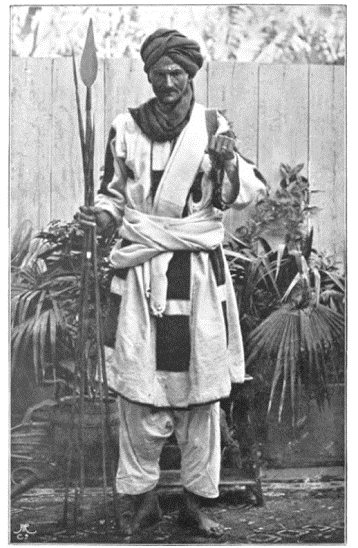
Sa’id Bey Juma’a in Mahdist Uniform

Sa’id Bey was a hard man, but not a stupid man. His small garrison was already weak before the Mahdist siege started. In August 1883, he had dispatched a large force from al-Fashir to clear the surrounding region of insurgents; only 99 men returned. Since then, the Mahdists had only grown in numbers, especially after the defeat of Hicks Pasha and the capture of thousands of Remington rifles. Sa’id Bey and the people of al-Fashir had already decided to submit to the Mahdi, but began to think twice when they heard of the atrocities that had followed the capitulation of Dara, Slatin Bey’s former headquarters (Slatin, p.248).

In the way that the flapping of a butterfly’s wings might be the first breath of a hurricane, one ill-advised admonition changed what was intended to be a peaceful transition of power into a bloody weeks-long confrontation followed by scenes of torture and murder. The courier between al-Fashir and Zuqal’s camp, a local fiki (rural holy man) named Khalifa ‘Abd al-Rahman, full of the religious fervor of the Mahdist revolution and its prohibitions on alcohol and tobacco, piously informed Sa’id Bey Juma’a that he must stop smoking cigarettes.

This was the last straw for Sa’id Bey, who was already alarmed by the brutality dealt out to the officers and leading citizens of Dara and Um Shanga after they had been guaranteed safety. The Bey issued orders for the imprudent fiki to be shot and for his men to discard their Mahdist jibba-s and re-don the uniforms of the Egyptian Army. The fiki somehow escaped his appearance before a firing squad and sent a message to Zuqal regarding Sa’id Bey’s change of heart, no doubt omitting his own role in that reversal. Sa’id Bey now prepared to meet Zuqal’s army with a garrison of 1,000 men, 10 guns and a hand-cranked Gatling gun. The city’s weak point was its wells, the only source of fresh water, which lay just outside the city walls. These could only be used during a siege by teams working under the protection of cover fire from the walls.

Zuqal launched three assaults on the town, each of which was repelled by the desperate garrison. Sa’id Bey in turn launched several unsuccessful sorties. The Mahdist Amir was compelled to send for reinforcements from Dara and Kabkabiya while recruiting local Arabs to help invest the city. An attempt to bombard the city into submission was made, using artillery captured from other units of the Egyptian Army. This too failed, as the experienced gunners of the Fashir garrison targeted and destroyed the Mahdist guns (Wingate, pp. 130-131).
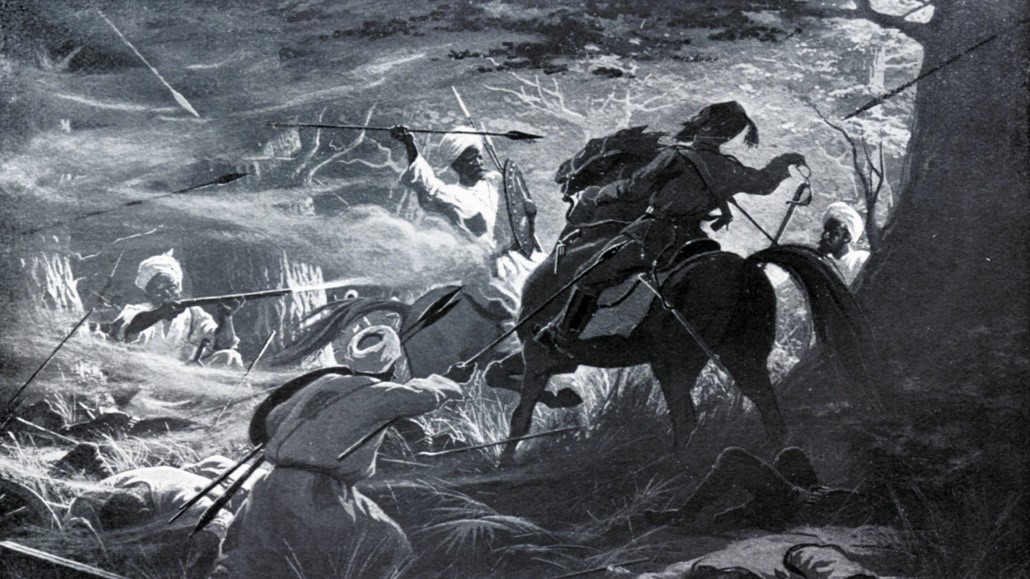
Death of Hicks Pasha at the Battle of Shaykan

Amir Zuqal, who had taken up a position on the site of Sultan Ibrahim’s old palace now ordered his men to fill in the wells just under the city walls, which was carried out under heavy fire from above. The Amir also ordered the captured munitions brought up from Dara that Slatin had failed to destroy before his surrender. As thirst and hunger increased within the walls, Zuqal ordered Slatin (who had also been brought up from Dara for this purpose) to write Sa’id Bey, urging him to capitulate. With the Egyptian Army relief column having already been destroyed by the Mahdi at Shaykan (Kordofan) in November 1883, there was now no alternative to surrender after 15 days of siege. Sa’id Bey would later say that the garrison could have held out at al-Fashir, but for the ammunition stores that Slatin had turned over to the Mahdists (Neufeld, 1899, pp.319-320).

Occupation of al-Fashir

With the city having been so recently looted of its treasures in 1874 by Zubayr and the Egyptian Army (which confiscated some of Zubayr’s loot for transport to Cairo), the Mahdists turned to extreme measures to find wealth they were certain had been hidden by merchants and officers of the Egyptian garrison.

According to Slatin, who witnessed events from the Mahdist camp: “The horrible scenes at Dara were now re-enacted with even greater severity, and numbers of people were tortured in the most merciless manner” (Slatin, p. 149). Egyptian officers were targeted especially; Major Hamada Effendi was flogged daily for three days in an unsuccessful attempt to make him reveal where his money was hidden; after the flogging ceased each day, a mixture of salt-water and hot peppers was poured over his ragged flesh. Called a slave by one of his captors, another officer, Ibrahim Tagalawi, shot his wife, his brother and himself; Sa’id Agha Fula committed suicide rather than undergo the disgrace of flogging. The Mahdi’s army had need of professional soldiers, so Zuqal eventually ordered a halt to the floggings and beatings of the officers. Sa’id Bey Juma’a, the bristly nicotine-deprived governor, escaped death only through the intervention of Slatin and, after a term of imprisonment, became chief of the Mahdist artillery in the siege of Khartoum. Slatin became a closely-watched bodyguard and advisor to the Mahdi’s successor, Khalifa ‘Abd Allahi al-Ta’aisha, before escaping from Omdurman in 1895.

Only days after the fall of al-Fashir, Slatin received a letter containing orders he could no longer carry out as a prisoner of the Mahdi. Khartoum had instructed him to concentrate all his men and supplies at al-Fashir and there await the arrival of Fur “sultan” ‘Abd al-Shakur ibn ‘Abd al-Rahman Shattut, who would restore Fur rule in al-Fashir under Egyptian sovereignty. That was Governor General Gordon’s plan. In reality, ‘Abd al-Shakur, who had been plucked from the Fur royal exiles living in Cairo since 1874, made only a sluggish, alcohol-fogged procession up the Nile, failing to get much further than Dongola. Gordon pulled the plug on the whole operation and ‘Abd al-Shakur returned to the safety of obscurity.

Conqueror of al-Fashir

Zuqal crowned his conquest of the Fur capital by marrying the Iya Basi (Fur – “great sister”), a traditional pre-Islamic position in the Fur royal hierarchy assumed by a full sister of the sultan. The Iya Basi maintained her own palace, wealth and retinue of hundreds of slaves and servants. Now comfortably ensconced in al-Fashir, Zuqal began the dangerous practice of ignoring summonses from the Mahdi to join his forces in Kordofan.

At the time of the siege, Sultan Harun Dud Banga was in the ancestral Fur homeland, the mountains of Jabal Marra, where he had been fighting a guerrilla campaign against the Turko-Egyptians. With the Egyptian Army no longer a threat after their collapse in Darfur, the sultan was faced with a new and more dangerous enemy – the Mahdists, with their core of Arab tribesmen who had resisted Fur rule for many years. Zuqal assembled an army of captured Sudanese regulars who had served in the Egyptian Army and Black slave troops (bazinger-s), supplemented by as many as 20,000 Arabs. The Mahdist army marched into the hills of Jabal Marra, where they cornered Sultan Harun in a hill-top stronghold. The Mahdists suffered enormous losses storming the fortress, but eventually broke resistance after a two-month siege. Harun was enlisted in the Mahdi’s army and reported to have met his death a few years later fighting the Abyssinians at Gallabat in 1889, though another account claims he survived the Mahdiya and lived quietly at al-Qadarif in eastern Sudan until 1903. [3]

The Mahdi died soon after the conquest of Khartoum and the death of hir rival Gordon, but Zuqal remained at al-Fashir until March 1886, when he finally responded to a series of letters from the Khalifa ‘Abd Allahi summoning him to Omdurman. The main obstacle to ‘Abd Allahi’s efforts to consolidate his power as the Mahdi’s successor came from the Mahdi’s Nile Valley Arab relatives, the Ashraf; Zuqal, as a relative of the Mahdi, was now under suspicion. His departure for Omdurman with a large armed following only alarmed the Khalifa, who ordered Hamdan Abu ‘Anja to intercept Zuqal’s party. Zuqal quickly found himself under arrest at al-‘Ubayd in Kordofan, relieved of his soldiers and his wealth (Wingate, pp.291-292).

After the Ashraf ceased to be a threat to ‘Abd Allahi’s power, Zuqal found his way back into the Khalifa’s good graces and back out again. He was eventually exiled to Rajaf in southern Sudan but freed by Belgian forces in 1897. [4] He returned to Darfur only to be executed by ‘Ali Dinar, who had restored the Fur Sultanate in the days after the Battle of Omdurman (1898). Zuqal was taken into the hills of Jabal Marra, where he was “lowered into a well containing the bones of many former offenders, the rope cut, and left to die, with a guard posted to ensure no assistance” (Egyptian Army Military Intelligence Summary, 1902).

Aftermath

Many of the Black soldiers who served under Slatin before being absorbed into the Mahdist ranks mutinied in al-‘Ubayd in October 1885. Most of these troops came from the Nuba Hills of South Kordofan, and it was to that place that they marched, still in order and under arms. Such defiance could not be condoned by the Khalifa, and Mahdist troops spent months exterminating the mutineers in the hills.
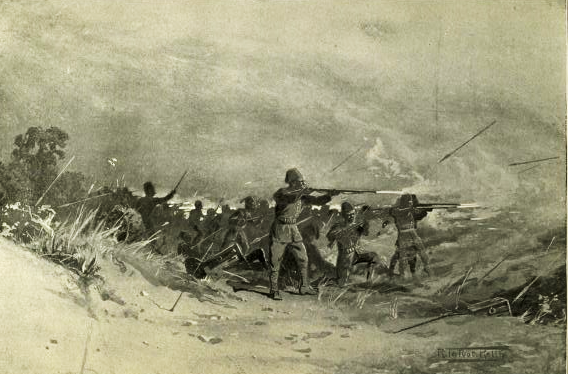
Egyptian Troops in Action in Sudan, 1879

Sa’id Bey died in his home oasis of Fayyum in 1912, having sought a quiet life there since his experiences in the Mahdiya.

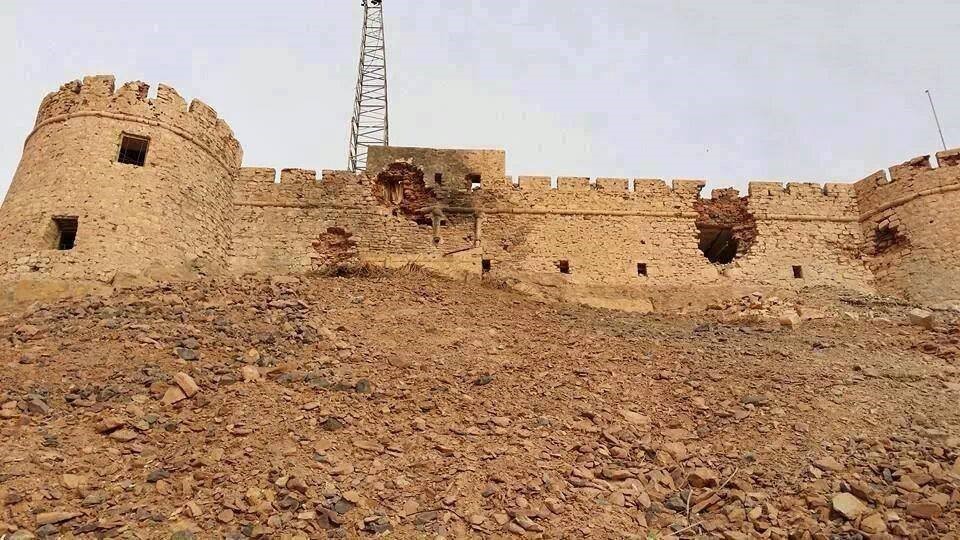
When Sultan ‘Ali Dinar revived the Fur Sultanate in 1898, he began repairing the damage and neglect of the city by ordering the construction of a vast new palace compound (hosh) and mosque, as well as a qubba-style (beehive-shaped) memorial to his father, Zakariya. Despite the ever-present risk of a raid by the restless Arab Baqqara (especially the Rizayqat of Musa Madibbo), al-Fashir grew in importance and prosperity under Sultan ‘Ali Dinar until 1916, when it was occupied once more by the Egyptian Army, this time under British leadership and direction.

Notes

  1. Egyptian ranks and titles used in this paper include Agha, Bey, Effendi, Khedive and Pasha. All were part of the Turkish nomenclature for political and military titles, Turkish still being the working language of the Egyptian Army in the 19th Definitions below (with the exception of khedive) are those relevant to military usage.

Agha: An honorific for officers below the rank of Kaimakam (roughly ‘colonel’), it also tended to indicate the officer was non-literate.

Bey: An honorific for senior officers below the level of Pasha, available in several grades.

Effendi: Like Agha, an honorific for officers below the rank of Kaimakam, but implying literacy and education.

Khedive: “Viceroy,” i.e. of the Ottoman sultan. Originally from the Persian khediv. Though first used by Muhammad ‘Ali in 1805, its use was only recognized officially by the Ottoman sultan from 1867 to 1914.

Pasha: Another Turkish term with Persian origins, Pasha was the highest title, available in four grades for military officers.

  1. For the consequent collusion between Zubayr in Cairo and his ill-fated son Sulayman in Bahr al-Ghazal, see: “Romolo Gessi Pasha: Early Counter-Insurgency Lessons from an Italian Soldier of Fortune’s Campaign in Central Africa,” Military History Online/AIS, August 21, 2016, https://www.aberfoylesecurity.com/?p=3696
  2. For Gallabat, see Hill (1967), p.4 and Wingate (1891), p.325; for al-Qadarif, see Sudan Archives Durham SAD 731/6/68 and HHS Morant: “Recent History of Darfur” (Sudan Military Intelligence Report no.104).
  3. Rajaf, a town in Central Equatoria (now part of the state of South Sudan), was near the southernmost extent of the Mahdist state and used as a place of exile for those who offended the Khalifa. The Mahdists were expelled from the town in February 1897 by Congo Free State forces led by Louis-Napoléon Chaltin, a veteran of the 1882-1884 Congo Free State war with Zanzibari Arab merchants and slavers.

Bibliography

Egyptian Army Military Intelligence Summary (MIS) no. 93, April 1902, Sudan Archives Durham, SAD 735/3/1-27.

Ensor, F. Sidney: Incidents on a Journey through Nubia to Darfoor, WH Allen, London, 1881.

Farwell, Byron: Prisoners of the Mahdi, Harper and Row, New York, 1967.

Haim Shaked: The Life of the Sudanese Mahdi: A Historical Study of Kitab sa’adat al-mustahdi bi-sirat al-Imam al-Mahdi by Isma’il b. ‘Abd al-Qadir, Transaction Books, New Brunswick N.J., 1978.

Hill, Richard: A Biographical Dictionary of the Sudan, 2nd Ed., Frank Cass & Co., London, 1967.

Holt, PM: The Mahdist State in the Sudan, 1881-1898: A study of its origins, development and overthrow, (2nd ed.), Oxford, 1970.

Lampen, GD: “History of Darfur,” Sudan Notes and Records 31(2), 1950, pp. 177-209.

Mamdani, Mahmood: Saviors and Survivors: Darfur, Politics, and the War on Terror, Pantheon Books, New York, 2009.

McGregor, Andrew: “American Civil War Veterans and the Egyptian Empire in Africa,” A lecture given at the Royal Canadian Military Institute, Toronto, March 28, 2018, https://www.aberfoylesecurity.com/?p=4264

Na’um Bey Shuqair: “The Masalit and Tama Sultanates: Are they within Darfur or Wadai Sultanate,” Typescript, February 2, 1913, Sudan Archives Durham, SAD 731/6/109.

Neufeld, Charles: A Prisoner of the Khaleefa. Twelve Years Captivity at Omdurman, Chapman & Hall, Ltd., London, 1899.

Report on the Egyptian Provinces of the Sûdan, Red Sea, and Equator, Intelligence Branch, Horse Guards, War Office, HM Stationary Office, London, 1883.

Slatin Pasha, Colonel Sir Rudolf: Fire and Sword in the Sudan: A Personal Narrative of Fighting and Serving the Dervishes, 1879-1895, Edwin Arnold, London, 1897.

Theobald, AB: The Mahdiya: A History of the Anglo-Egyptian Sudan, 1881-1899, Longmans, Green and Co., London, 1951.

Wingate, Major FR: Mahdiism and the Egyptian Sudan, MacMillan and Co., London, 1891.
 

Rapid Support Forces Establish Rival Government as Sudan’s War Spirals

Terrorism Monitor

Jamestown Foundation, Washington DC

November 20, 2025

Executive Summary:

  • The Rapid Support Forces’ (RSF) capture of al-Fashir, accompanied by exterminatory extrajudicial killings after an 18-month siege, represents the militia’s most significant territorial victory to date and accelerates the effective partition of Sudan.
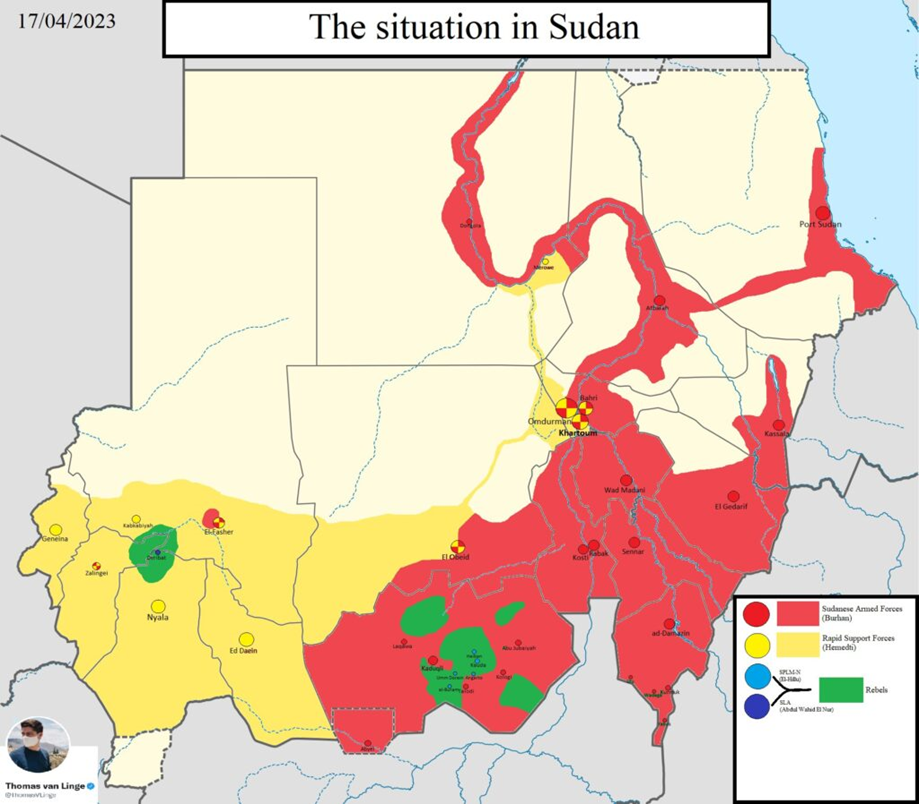
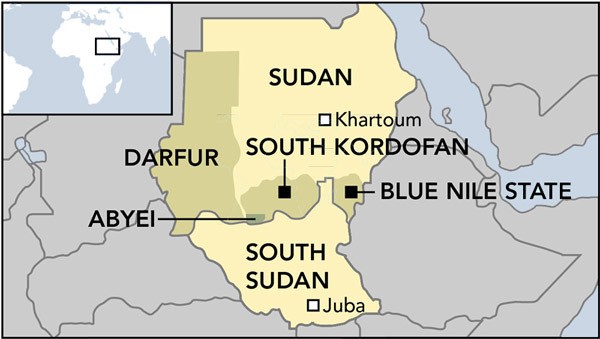
  • With control over most of Darfur and parts of Kordofan and Blue Nile, the RSF is consolidating a parallel “Tasis State,” seeking external legitimacy despite its reliance on predatory militias and systematic abuses.
  • The Sudanese Armed Forces–Transitional Sovereignty Council (SAF–TSC) coalition remains internally divided and constrained by Islamist-aligned networks, leaving both major coalitions dependent on abusive partners and limiting prospects for a negotiated national political settlement.

Until 2005, Sudan was Africa’s largest country by territory size. After 22 years of civil war, South Sudan separated, taking the nation’s oil wealth and roughly one-third of its territory with it. Today, after two-and-one-half years of a new civil war, the rebel Rapid Support Forces (RSF) declared its intention on July 2 to form a new state, splitting the country once again. Though the RSF’s stated intention is to form a new government for all Sudan, it is in reality now focusing on consolidating its control of the western provinces of Kordofan and Darfur, having been ejected from Khartoum and the central region of al-Jazirah by the Sudan Armed Forces (SAF) and its allies.

(Maprr)

The initiative is designed to provide legitimacy and access to aid and arms for a paramilitary accused of genocide, ethnic cleansing, looting, destruction of cultural institutions, sexual violence, war crimes and widespread atrocities.

The Battle for al-Fashir

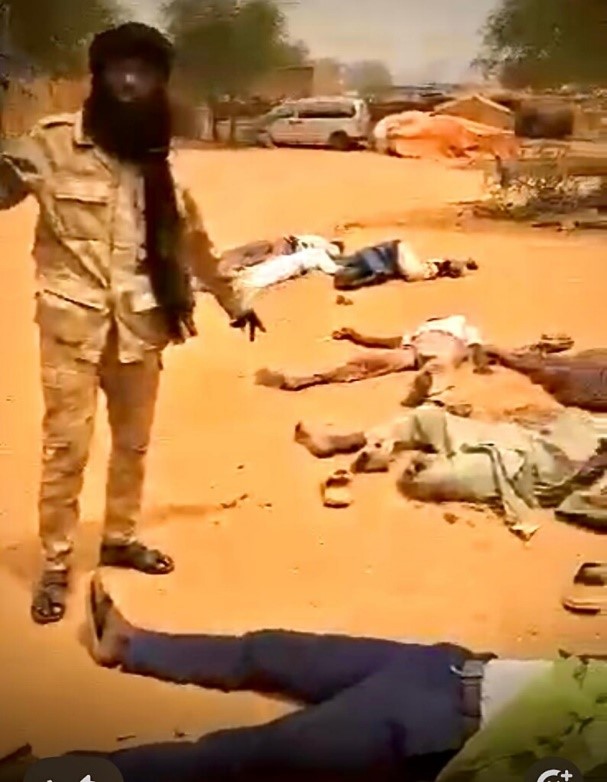
RSF Fighter with Dead Civilians

Crucial to the establishment of a new RSF state based largely in western Sudan is the seizure and occupation of al-Fashir, the traditional capital of Darfur since its founding in the late 18th century as capital of the Fur Sultanate. After an 18-month siege, the city was taken by the RSF on October 27, when the movement overran the SAF’s 6th Infantry Division and elements of the Sudan Liberation Movement-MM led by Darfur Governor Minni Arko Minawi (now resident in Port Sudan). Taking al-Fashir frees up RSF forces for the ongoing battle for neighboring Kordofan region and solidifies its control of Darfur (Mada Masr, July 11).

Minni Arko Minawi, Governor of Darfur and Leader of the SLA-MM

The entry of RSF forces was followed by massacres largely targeting the non-Arab population of the city that have killed at least 1500 people, including 460 patients and health workers at the Saudi Maternity Hospital (Al-Jazeera, October 30). According to the Sudan Doctors’ Network, “Hospitals in El Fasher have been transformed into human slaughterhouses” (Radio Dabanga, October 30). The atrocities appear to exceed even the dark episodes that followed the taking of al-Fashir after a siege by Mahdist forces in 1883. RSF commander Muhammad Hamdan Daglo “Hemetti” acknowledged he had “observed abuses occurring in al-Fashir” and pledged to hold RSF personnel accountable for their crimes (Sudan Tribune, October 29).

During the siege RSF constructed 68 km of 3-meter-tall sand berms alongside 3-meter-deep ditches as wide as five meters around al-Fashir to prevent escape from the siege (Radio Dabanga, September 30; Mada Masr, September 5). [1] People fleeing al-Fashir along the so-called “Road of Death” to nearby cholera-stricken Tawila were routinely deprived of all their possessions before being killed or raped as suspected supporters of the SAF. Others were forced to provide blood for wounded RSF fighters; many of these died soon after (Sudan Tribune, September 6). Those remaining in al-Fashir were reduced to eating leaves or a diminishing supply of animal feed as supplies of food, medicine and other aid were interrupted by the RSF’s siege lines (Al-Jazeera, September 4).

Palace of Sultan ‘Ali Dinar, al-Fashir (TIKA)

Earlier this year, the RSF, having already looted the Sudan National Museum in Khartoum, bombed the historical al-Fashir palace of Fur Sultan ‘Ali Dinar (1898-1916), a revered national symbol of anti-colonial resistance, but one who campaigned constantly against the western Arab tribes that now dominate the RSF (Radio Dabanga, January 22; Darfur Network for Human Rights, January 17).

South of al-Fashir, there are indications that the RSF has turned the airbase at Nyala into a base for Iranian and Chinese-designed drones capable of striking any target within Sudan (Sudan Tribune, September 29). The RSF has also made major improvements in its air-defense systems through the use of Wagner Group-supplied surface-to-air missiles capable of downing the SAF’s Turkish-made Bayraktar Akinci high-altitude, long-endurance drones, once expected to be a game-changing weapon in the struggle to relieve al-Fashir (Military Africa, September 28).

The Tasis State

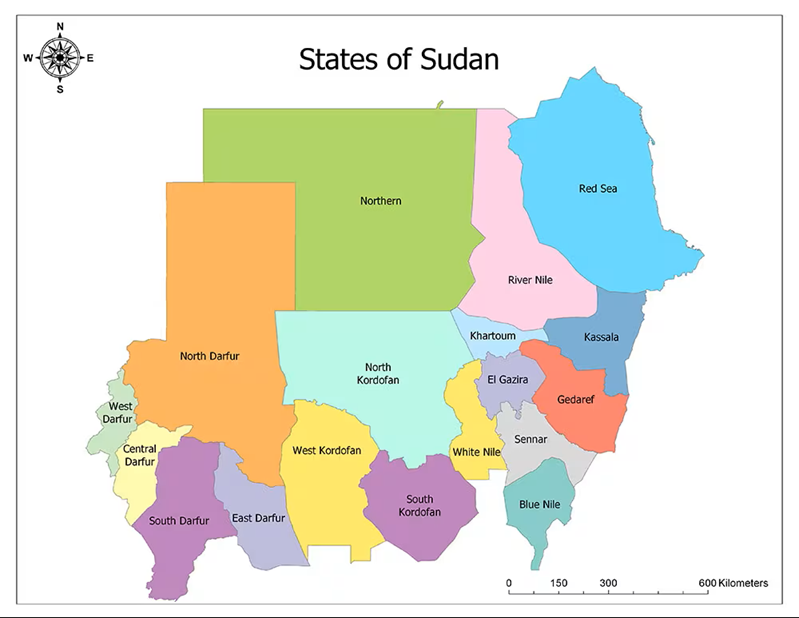
A political charter to form a parallel “transitional peace government” was signed in February by the RSF, the Sudan People’s Liberation Movement – North (SPLM-N) and other armed groups (the “Tasis Alliance”) operating in western Sudan (al-Jazeera, July 28). The new state was declared on July 26 as the “Government of Peace and Unity,” but is more commonly known as “the Tasis State.” Though the new state insists it represents all parts of Sudan, in reality it can only govern those regions currently controlled in whole or part by the RSF and the SPLM-N (Darfur, parts of Kordofan and parts of Blue Nile State). For now, the Tasis capital is in Nyala (southern Darfur), but will likely be shifted to al-Fashir.

The Tasis (“Founding”) Alliance is formed from 24 armed and civil groups, including the RSF, the SPLM-N, the Beja Congress of eastern Sudan, the Rasha’ida Arab “Free Lions” of eastern Sudan, and factions of the National Umma Party (UP), Democratic Unionist Party (DUP) and the largely Zaghawa Justice and Equality Movement (JEM) (Ash Sharq al-Awsat, March 4; Sudan Tribune, January 22). To maintain a façade of ruling all Sudan, Tasis has appointed regional governors for Khartoum and the Eastern region, despite the RSF currently having no presence in these areas (Sudan Tribune, July 26; Arab Weekly, July 28).

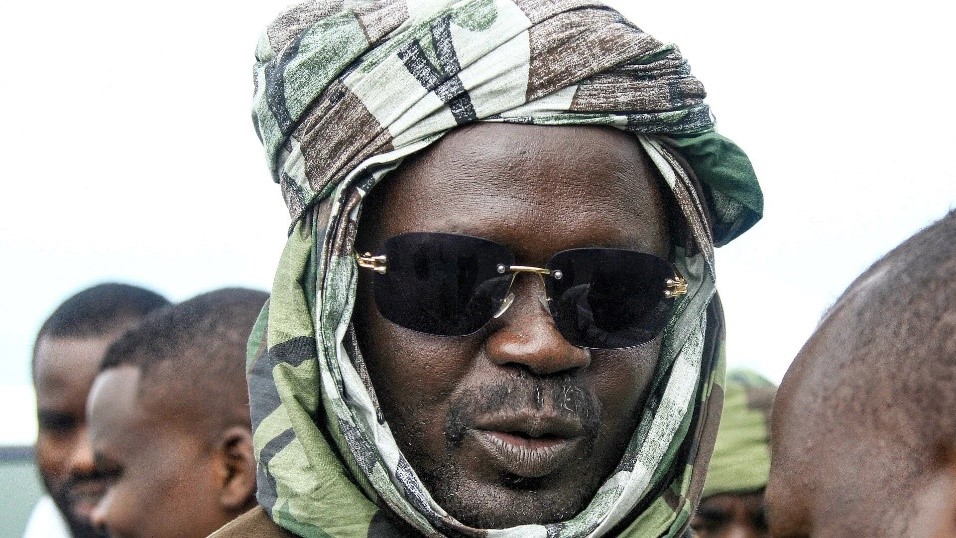
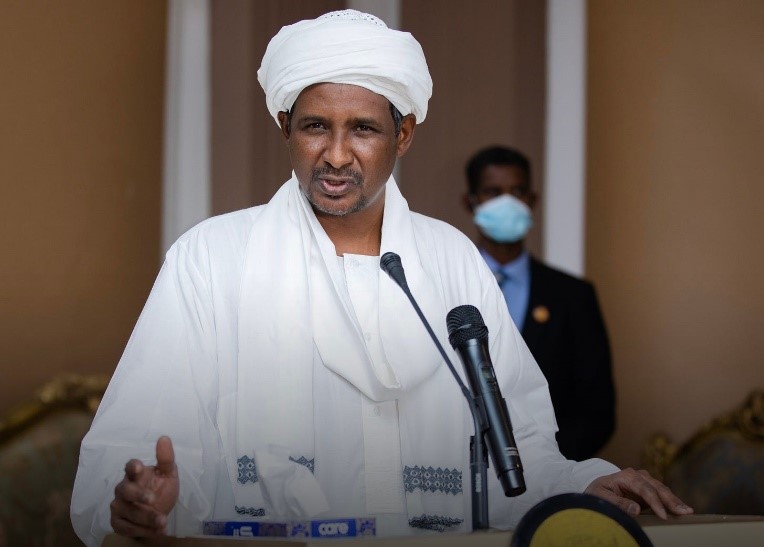
The head of the presidential council is RSF leader Muhammad Hamdan Daglo “Hemetti”; his deputy is SPLM-N leader ‘Abd al-Aziz Hilu (see MLM, June 2012). Both attended the swearing in of the presidential council in Nyala on August 30; the ceremony site was bombed several hours later by the SAF (Mada Masr, September 5).

Tasis Prime Minister Muhammad Hassan al-Ta’aishi

As prime minister, the Darfur Arabs controlling the RSF have appointed Muhammad Hassan al-Ta’aishi, a known ally of Hemetti. The appointment has significant symbolic value with reference to the rivalry between the Baqqara (cattle-herding) Arabs of Darfur and the riverain Arabs of northern Sudan in the time of the Mahdist State (1885-1898), when the northern Arab relatives of the Mahdi, the ashraf, were repressed by the Mahdi’s successor, Khalifa ‘Abd Allahi, a member of Darfur’s Ta’aisha tribe. Sudan’s northern Arab minority has dominated Sudan since independence in 1956, and the appointment of a Ta’aishi as prime minister is a political signal understood by all Sudanese.

The RSF justifies its declaration of a new state by saying it is necessitated by an urgent need for identity documents, currency, security, medicine, healthcare and education identity documents (Mada Masr, August 16). One purpose of establishing the rival state is to establish legitimacy in talks hosted by outside parties such as the Quartet – the US, UK, UAE and Saudi Arabia (better known as “the Quad”). For now, only the UAE recognizes the RSF as a de facto authority (Mada Masr, September 28). Sudan’s government has complained to the UN about the UAE’s alleged involvement in supplying arms, logistical support and Colombian mercenaries to the RSF (AIS Special Report, June 13; Mada Masr, September 14).

The UN Security Council rejected the declaration of a rival state in Sudan, calling it “a direct threat to Sudan’s territorial integrity” (UN News, August 13). It has also been opposed by many Arab states, including Algeria, Egypt, Jordan, Qatar and Saudi Arabia (New Arab, March 6). Other opposition comes from the US and the African Union (AU), which suspended Sudan’s membership in 2021. Besides the UAE, supporters include Khalifa Haftar’s eastern Libya, Chad, Kenya, South Sudan and the Central African Republic.
THE SAF/TSC Government

The Port Sudan-based SAF/Transitional Sovereignty Council (TSC) government is making its own bid for legitimacy in the face of what it regards as exclusion from international peace efforts supported by the Quad, the UN and the AU. Declaring it will not negotiate without a declaration of its legitimacy, the SAF/TSC has also rejected all efforts to place the RSF on an equal footing and insists only a military resolution can bring peace to Sudan (Mada Masr, September 20).

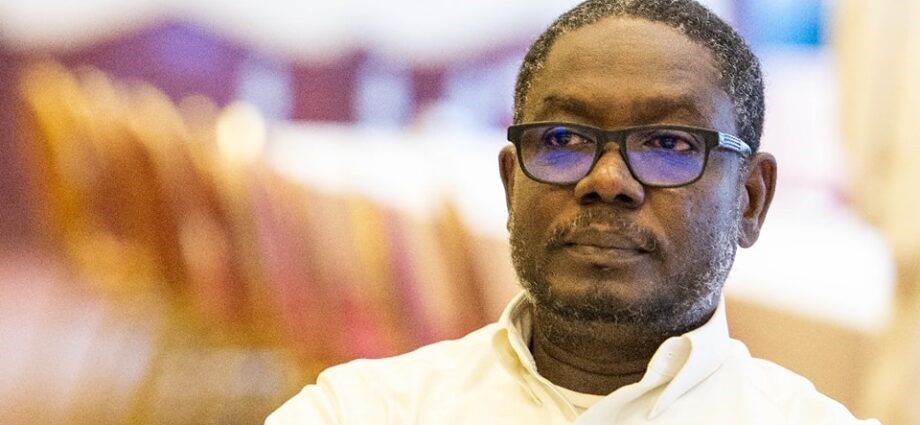
Finance Minister and JEM leader Dr. Jibril Ibrahim (Akhbar al-Sudan/Facebook)

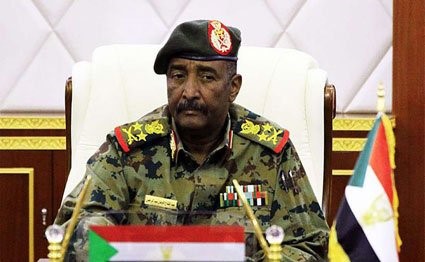
On May 19, Kamil al-Tayib Idris, with doctorates in international relations and international law, was appointed Sudan’s first civilian prime minister since 2022 by General ‘Abd al-Fatah al-Burhan, head of the SAF and chair of the TSC. Shortly afterward, the new PM tried to expel two powerful former rebel leaders from the TSC cabinet, JEM’s Dr. Jibril Ibrahim (minister of finance) and Darfur governor Minni Arko Minawi, but was quickly overruled by al- Burhan, who doubtless has no desire to see these leaders and their valuable troops depart the SAF-led coalition (Al-Jazeera, July 23). Many former rebel leaders and their subordinates gained their positions as TSC ministers under the terms of the 2020 Juba peace agreement (International Institute for Democracy and Electoral Assistance, April 21, 2021).

Traditional Parties Divided

The National Umma Party (NUP) is the political arm of Sudan’s neo-Mahdist movement and has been a strong, western-based political force in Sudan since independence under the leadership of various descendants of its founder ‘Abd al-Rahman al-Mahdi, the posthumous son of Muhammad Ahmad ibn ‘Abd Allah, “the Mahdi” (1843-1885). The party is currently divided, with a faction led by acting head Muhammad ‘Abd Allah al-Douma backing the Port Sudan SAF/TSC government while a faction led by Fadlallah Burma Nasir supports the RSF and the creation of a parallel Sudanese state (Sudan Tribune, July 8). Fadlallah has accepted an appointment to be speaker of the Tasis government’s legislative council.

Khatmiyya Leader Muhammad ‘Uthman al-Mirghani

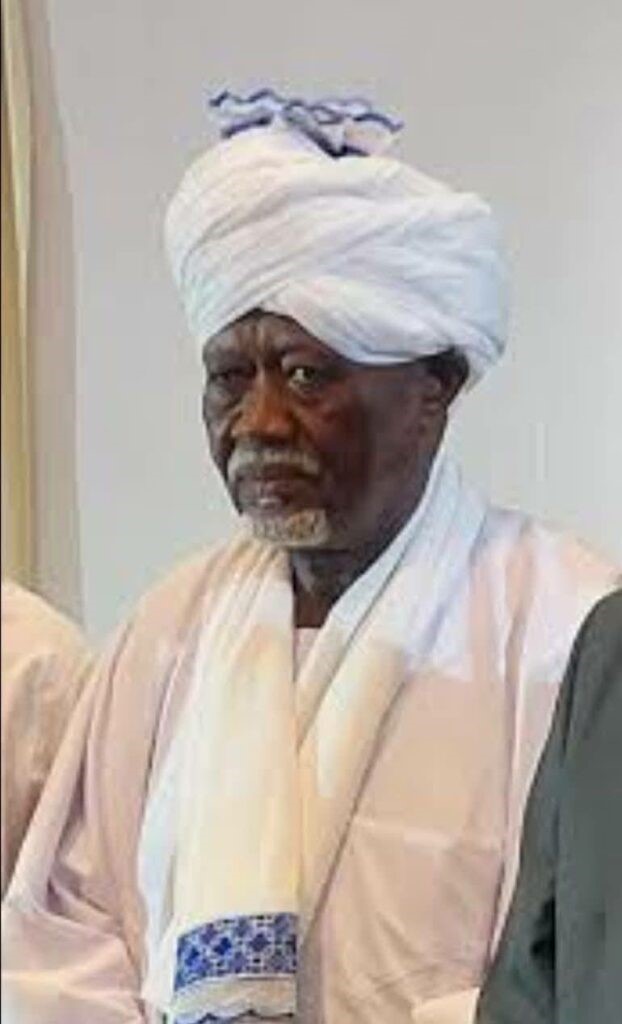
The NUP’s historical rival is the Democratic Unionist Party (DUP), led by Sayyid Muhammad ‘Uthman al-Mirghani, the 89-year-old leader of the historically pro-Egyptian Khatmiyya Sufi order and descendant of the order’s founder, ‘Ali al-Mirghani (1873-1968). The leadership of the DUP is in turmoil after decrees allegedly issued by Sayyid al-Mirghani on June 24 replaced the party leader’s son, Ja’afar al-Sadiq, as deputy leader with Ahmad Sa’ad Omar, a loyalist of deposed president Omar al-Bashir. Many DUP leaders allege the maneuver was the work of another of al-Mirghani’s sons, ‘Abd Allah al-Mahjub, who was taking advantage of the elderly Sufi leader, a resident of Cairo who is known for his publicly expressed support for the SAF but has little other political involvement (Sudan Tribune, June 25; Altaghyeer.info, July 8, 2024).

A faction under Ibrahim al-Mirghani, another descendant of Khatmiyya founder ‘Ali al-Mirghani, has come out in support of the RSF and the Tasis alliance. A DUP spokesman declared in February that “the presence of Ibrahim Ahmed Al-Mirghani does not represent the party in any way, and he only represents himself and the constituencies that entrusted him with the mission” (SUNA, February 20).

The Islamists Return

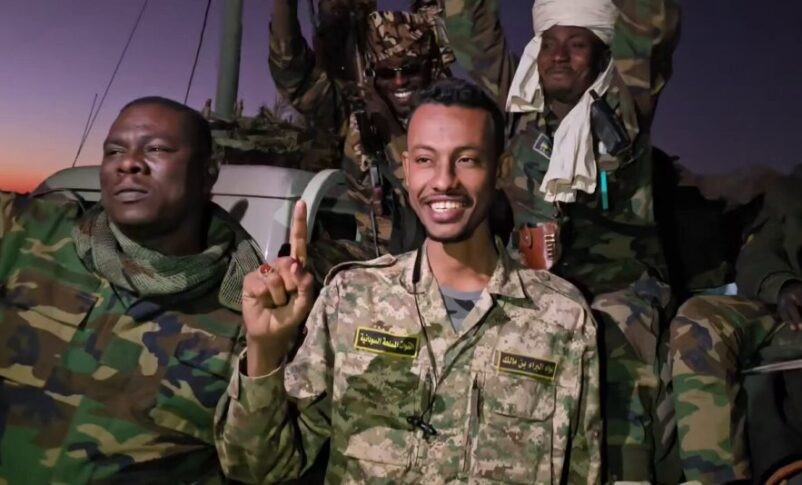
Much like the RSF-led Tasis coalition, the “official” SAF/TSC government and its armed supporters also constitute a tenuous alliance. Complicating its own search for legitimacy is the presence within the coalition of many Islamists, including veterans of the discredited military-Islamist government of Omar al-Bashir, who was deposed in 2019 and is currently wanted by the International Criminal Court (ICC) on charges of war crimes, torture and genocide. Islamist militias under SAF command have played a major role in the fighting, most notably the Bara’a bin Malik Brigade, tied to the Islamist National Congress Party (NCP).

Commander of the Bara’a Bin Malik Brigade, al-Misbah Abu Zaid Talha (Sudan Tribune)

The NCP, which ruled Sudan from 1998 to 2019, is currently led by Ahmad Harun (also wanted by the ICC on charges of war crimes and genocide in Darfur). Harun believes Western political models are inappropriate for Sudan and that there must be a political role for the army, but insists the Islamists will wait to seek power via the ballot box after the war’s conclusion  (Sudan Tribune, July 25; Arab Weekly, July 26).

The RSF is strongly opposed to a political return by the Islamists, blaming them for initiating the current conflict (Sudan Tribune, July 25). Tasis prime minister Muhammad Hassan al-Ta’aishi explained in an interview that General al-Burhan has “benefited from the Islamists’ infiltration of the military establishment” and that he “became the general who served the Islamists most after the [2019] revolution” (Assayha, October 16). The Tasis alliance has declared they will dissolve all Islamist militias affiliated with the NCP after they take control of Sudan (Ash Sharq al-Awsat, March 4).

Conclusion

The problem is that there are not two groups fighting for power in Sudan, but many, who have flocked to one or the other of the major coalitions (RSF and SAF) to further their own interests, even when that has meant splitting existing movements. In turn, the leaders of the major coalitions have become beholden to unreliable partners who have a track record of opportunism. In this situation, a victory by either side may mark not the end of the conflict, but only the starting point of a new one.

Most international support (however unenthusiastic) tends to line up behind the SAF/TSC as the default successor to the line of recognized Sudanese governments. However, the civilian leaders in the TSC are in thrall to the military members of the TSC, particularly TSC chairman General al-Burhan. While many civilian members reject a return to the political Islamism of the era of President Omar al-Bashir, they must contend with the fact that the northern Arab generals of the SAF are precisely those that survived the frequent purges of non-Islamist officers during the Bashir regime.

The RSF’s new Tasis State is not without its own international support, but these backers remain focused on what can be gained by supporting a paramilitary (led by Darfur Arabs) that has adopted a veneer of statehood to cloak the fact it is manifestly incapable of running anything resembling a 21st century administration with any other objective than the personal enrichment of its leadership. The inability of both RSF and SAF commanders to envision the possibility of a Sudanese nation led by a member of Sudan’s non-Arab majority guarantees further rounds of combat focused on the pursuit of ethnic-based power sharing.

On the battlefield, ongoing atrocities by both the SAF and the RSF mean there is little to choose between them in a humanitarian sense. Beyond the deliberate destruction of national infrastructure (much of which is the now ruined and irreplaceable legacy of the brief days of oil wealth before the separation of South Sudan), a recent UN report entitled “A War of Atrocities” found both side guilty of adopting a brutal approach to achieving their attainment of power: “Both sides have deliberately targeted civilians through attacks, summary executions, arbitrary detention, torture, and inhuman treatment in detention facilities, including denial of food, sanitation, and medical care. These are not accidental tragedies but deliberate strategies amounting to war crimes” (UN Human Rights Council, September 5). Ultimately, the division of Sudan into two dysfunctional states rather than one cannot offer the Sudanese people the prospect of stability or prosperity.

Note

  1. “Special Report: No Safe Haven: Bombardment of Abu Shouk IDP Camp and El-Fasher’s Increasing Berm Encirclement,” September 11, 2025, https://files-profile.medicine.yale.edu/documents/e3d32307-89f9-4573-8c87-fc7d15239a9f


Assessing the War in Sudan: Is an RSF Victory in Sight?

Andrew McGregor

Terrorism Monitor 21(24)

Jamestown Foundation, Washington DC

December 15, 2023

After eight months of brutal warfare, Sudan’s Rapid Support Forces (RSF) now appear to have the upper hand against the better-armed Sudan Armed Forces (SAF). Led by Muhammad Hamdan Daglo “Hemetti,” the RSF has conducted a highly mobile campaign against the SAF’s reactive and defensive posture, allowing the group to take the initiative in all regions of the conflict. With the Sudanese capital of Khartoum now a devastated battlefield, the ineffective government, led by SAF commander-in-chief General Abd al-Fatah al-Burhan, operates from a temporary base in Port Sudan, which suffers from power shortages and a chronic lack of fresh water.

Peace talks in Jeddah between the two military factions, assisted by Saudi, American, and African Union mediators, were indefinitely suspended earlier this month after both sides failed to meet commitments agreed upon in earlier negotiations (al-Taghyeer [Khartoum], December 4; Africa News, December 5). The animosity between the factions is severe and historically based in the rivalry between the poor Arab tribesmen of western Sudan (the RSF) and the Arab elites of the Nile region who have controlled Sudan and its military since the country gained independence in 1956.

RSF Commander General Muhammad Hamdan Daglo “Hemetti”

Resistance to the RSF onslaught is weakening at all levels, placing Sudan’s diverse population at risk of rule by Arab supremacists with a record of savage conduct and a general ignorance of the means of development, administrative techniques, economic theory, and international relations.

The Impending RSF Conquest of Darfur

Four of Darfur’s five states, comprising nearly 80 percent of the western province, are now in RSF hands. North Darfur state and its capital, al-Fashir, may be the RSF’s next target. Al-Fashir is strategically and symbolically important as the former capital of the once powerful Fur Sultanate (c.1650-1916). Security in North Darfur is provided largely by the Joint Protection Force (JPF), an alliance of five non-Arab armed movements that has been busy recruiting in the region in anticipation of an RSF offensive. The RSF has also been recruiting from the region’s Arab population, setting the stage for a vicious ethnic conflict that will inevitably result in the mass slaughter and displacement of many of North Darfur’s civilians. Convoys bringing supplies to North Darfur from central Sudan have stopped, creating shortages of food, fuel, and medicines (Sudan Tribune, December 7).

JEM Leader Jibril Ibrahim (Sudan Tribune)

Two major armed movements, the Justice and Equality Movement (JEM) and the Sudan Liberation Army of Minni Minawi (SLA-MM), abandoned their self-declared neutrality on November 16 to announce their support for the SAF. Both groups also declared their willingness “to participate in military operations on all fronts without hesitation” (Radio Dabanga, November 17). JEM leader Jibril Ibrahim also condemned the RSF’s use of Arab mercenaries from Chad and Niger who have been promised the right to settle on land cleared of its non-Arab residents. The declaration followed months of murder and rape inflicted by the RSF on the non-Arab Black population of Darfur. The most notable atrocity involved the murder of some 1,300 civilians (mostly Masalit, an ethnic group in western Sudan and eastern Chad) in a camp for displaced people in West Darfur. The RSF attack began on November 2 and only ended three days later (Al Jazeera, November 10). The non-Arab Masalit have been targeted by the RSF and Arab militias since the start of the war in what appears to be an effort to ethnically cleanse the region of its indigenous Black population (see Terrorism Monitor, June 26).

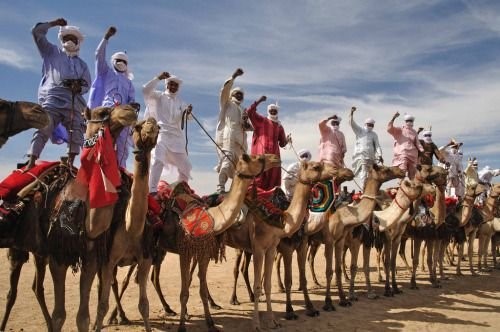
Zaghawa Nomads (X)

Despite their small numbers, the ambitious Black African Zaghawa ethnic group plays a leading role in Darfur’s anti-government opposition. SLA-MM leader Minni Minawi, JEM leader Jibril Ibrahim, and al-Tahir Hajar, leader of the Gathering of Sudan Liberation Forces (GSLF), are all Zaghawa. During the fighting for Nyala, RSF gunmen were accused of assassinating prominent members of the Zaghawa community (Sudan Tribune, September 16).

Darfur Governor and SLA-MM Leader Minni Minawi (AFP)

Minni Minawi, governor of Darfur since August 2021, remains wary of the SAF, which continues to be commanded by members of Sudan’s riverine Arab elite. The rank-and-file troops are composed of conscripts from other regions, including many non-Arabs. Without substantial reforms to the composition of the SAF, Minawi notes its victory might only mean a return to an oppressive status quo (Sudan War Monitor, December 4).

RSF’s Series of Conquests

Under pressure from the RSF, garrisons across Darfur have fallen like dominos. Nyala, Sudan’s second-largest city, is the capital of South Darfur and an important military strongpoint. It fell after a long siege followed by a four-day assault that ended on October 26, killing hundreds of civilians during the shelling of the city (Asharq al-Awsat, October 29).

Zalingei, the capital of Central Darfur, was lost after the SAF’s 21st Infantry Division fled on October 31, allowing the RSF to walk in. Al-Geneina, capital of West Darfur, was taken by the RSF on November 4 after most of the 15th Division garrison fled, leaving hundreds of troops and weapons behind. Masalit civilians and captured troops were abused, whipped, and forced to run barefoot through the rubble (Sudan War Monitor, November 6). Gathering smaller garrisons along the way, the remaining defenders fled to Chad, where they were disarmed and interned. Elsewhere in South Darfur, officers have changed into civilian clothes and made for the border with South Sudan (Sudan War Monitor, November 27).

SAF Leader General al-Burhan (BBC)

As it consolidates control of Darfur, the RSF is now poised to begin operations against al-Ubayd, the capital of neighboring North Kordofan. The RSF has already driven away the SAF’s garrison in the western Kordofan town of al-Mojalid and the nearby Balila oilfield (a joint Sudanese-Chinese project), despite intensive airstrikes by the SAF (Asharq al-Awsat, October 31; al-Taghayeer [Khartoum], November 27).

Where Do Armed Opposition Movements Stand?

The war of the generals has finally shattered the hard-won 2020 Juba Peace Agreement (JPA), which promised a new era of peace in Sudan by reconciling the government with the nation’s leading rebel movements. However, two of the most powerful movements rejected the process entirely. In practice, the JPA has been described as “a mechanism to disburse political patronage to a few key rebel leaders.” [1]

One of the principal armed movements in Darfur is the largely Fur-based Sudan Liberation Army of Abd al-Wahid al-Nur (SLA-AW). The group helped launch the 2003 rebel attacks on the SAF that sparked nearly two decades of war in Darfur (Darfur means “abode of the Fur”). The movement was not a signatory to the JPA and is not part of North Darfur’s Joint Protection Force. Nonetheless, General Yusuf Karjakula led a group of SLA-AW fighters from its Jabal Marra stronghold to al-Fashir in late November where they deployed to protect IDP camps from RSF assaults (Sudan Tribune, December 3). The general also met with SAF and JPF commanders, suggesting the SLA-AW may be considering joint operations to defend al-Fashir despite long-standing distrust of the SAF.

Many of the armed opposition movements have begun to split internally over the issue of alignment with the RSF or the SAF (for the rebel movements, see Terrorism Monitor, August 8). Even Minni Minawi’s faction of the SLA is experiencing divisions between its SAF-supporting leader and its military commander, General Juma Haggar, who supports the RSF (Sudan War Monitor, December 4). The Sudan Liberation Army-Transitional Council (SLA-TC), led by Al-Hadi Idris Yahya Farajallah, is considered close to the RSF, though the movement’s vice-president, Salah al-Din Abdel-Rahman al-Ma’rouf “Salah Rasas,” is considered to be a supporter of the SAF (Sudan War Monitor, December 4). A new faction of JEM under Sulayman Sandal Haggar split from the movement in August 2023 after some JEM members charged leader Jibril Ibrahim with backing the SAF (Darfur24, August 30).

Some rebel leaders are attempting to remain neutral, like Al-Tahir Abu Bakr Hajar, leader of the Gathering of Sudan Liberation Forces (GSLF), though some of his men were reported among the defenders of Nyala (Sudan War Monitor, October 26).

Foreign Intervention in the Sudan Conflict

There are allegations of foreign interference in the conflict, notably support for the RSF from the United Arab Emirates (UAE) and Russia’s Wagner Group, as well as Ukrainian support for General al-Burhan’s SAF.

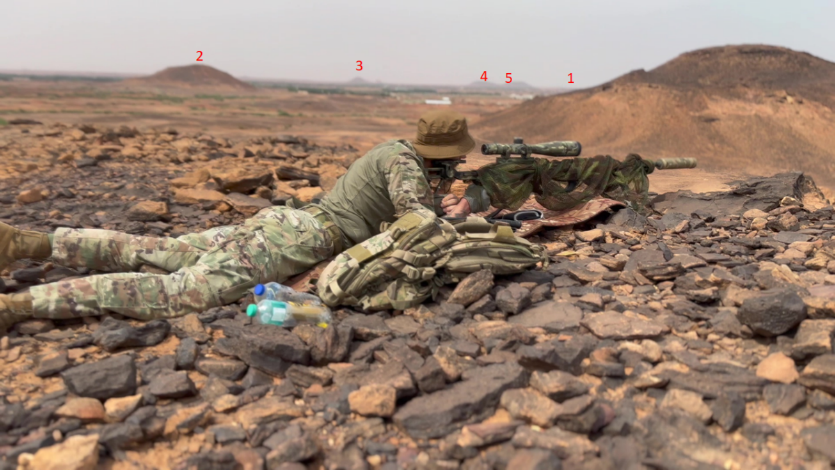
Alleged Ukrainian Sniper on Ridge Northwest of Omdurman (Bellingcat)

Al-Burhan and Ukrainian President Volodymyr Zelenskyy met in Ireland on September 23 to discuss responses to the pro-RSF activities of the Russian Wagner Group in Sudan (Kyiv Independent, September 23; Sudan Tribune, September 23). The meeting came days after the release of videos alleged to show Ukrainian drone attacks on RSF forces in the Sudanese capital (see Eurasia Daily Monitor, November 14). Since then, videos have emerged of Ukrainian snipers operating in the hills northwest of Omdurman, as geolocated by independent investigative collective Bellingcat (Bellingcat.com, October 7). There have also been videos released on November 6, allegedly showing personnel of the Ukrainian Defense Ministry’s Main Directorate of Intelligence engaging with RSF fighters, Wagner personnel, and members of Russia’s special forces in the Sudanese city of Omdurman (Kyiv Post, November 6; Sudan War Monitor, November 10).

Journalists seeking confirmation or denial of these activities have been referred to the words of Kyrylo Budanov, the head of Ukraine’s military intelligence service HUR MOU (Holovne upravlinnja rozvidky Ministerstva oborony Ukrajiny), who stated last May that “we have killed Russians and will continue to kill Russians anywhere in the world, until the complete victory of Ukraine” (New Voice of Ukraine, May 17). RSF leader Hemetti has expressed his support for Russia’s invasion of Ukraine and his paramilitary force is alleged to have engaged in gold smuggling with Wagner operatives in exchange for arms and advisors.

Small operations of the type allegedly engaged in by Ukraine in Sudan ultimately have little influence on the outcome of the war. However, they do diminish the local reputation of Wagner operatives who have helped finance Russia’s war in Ukraine by smuggling gold from regions of western Sudan under RSF control.

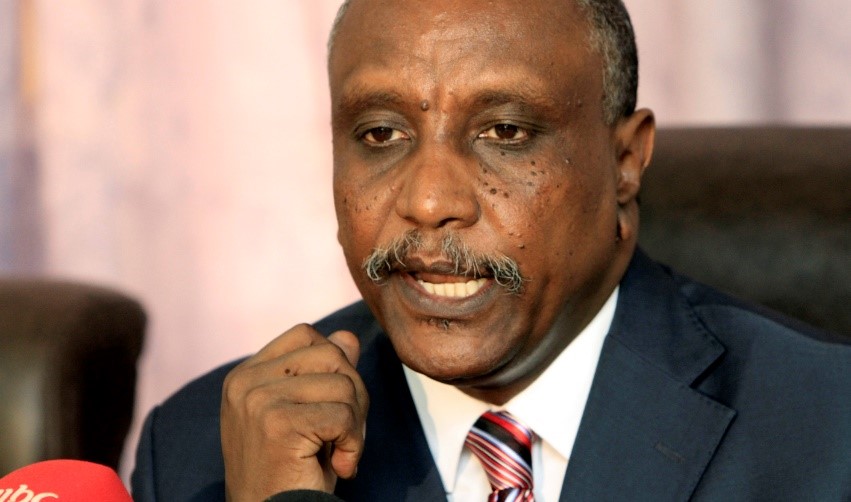
General Yassir al-Atta

General Yassir al-Atta (deputy to al-Burhan) stated that military intelligence and diplomatic sources had confirmed that the UAE was shipping supplies to the RSF through neighboring countries, including Chad. The allegation was denied by authorities in the UAE (Radio Tamazuj [Juba], November 29). The UAE is Sudan’s main trading partner, has been a major investor in Sudan in recent years, and is the primary destination for gold smuggled out of western Sudan. Al-Atta’s description of the UAE as a “mafia-state” led to a breakdown in diplomatic relations between the two countries (Radio Dabanga, December 11).

Atta’s remarks also incensed Chadian authorities. On December 11, they demanded an official Sudanese apology for claiming the UAE had been allowed to ship weapons and munitions to the RSF through Chad. N’Djamena promised to take “measures” if the apology did not come within three days (Sudan Tribune, December 11). Darfur governor Minni Minawi had already accused Chadian authorities of allowing the passage of arms and mercenaries through Chad to the RSF in mid-November (Radio Dabanga, November 17).

There are further allegations that the Zaghawa generals who control Chad’s powerful military are annoyed by the UAE’s support of the mainly-Arab RSF and are providing clandestine support to their Zaghawa kinsmen in JEM and the SLA-MM (Sudan Tribune, December 7).

Destruction of Khartoum

Little remains in SAF hands in Khartoum other than the much-battered army headquarters and a small patch of Khartoum North (Bahri) connected by the SAF-controlled Blue Nile rail bridge. Khartoum’s al-Jaili refinery, the largest fuel production facility in Sudan, was destroyed in a bombing on December 6, the fourth such bombing of that location since the war began. Both the RSF and the SAF accuse the other of being responsible for the destruction (Sudan Tribune, December 6). RSF posts are dispersed throughout Khartoum; in the SAF’s attempt to find and destroy them, large parts of the city have been smashed by airstrikes and artillery, including many of its most notable buildings.

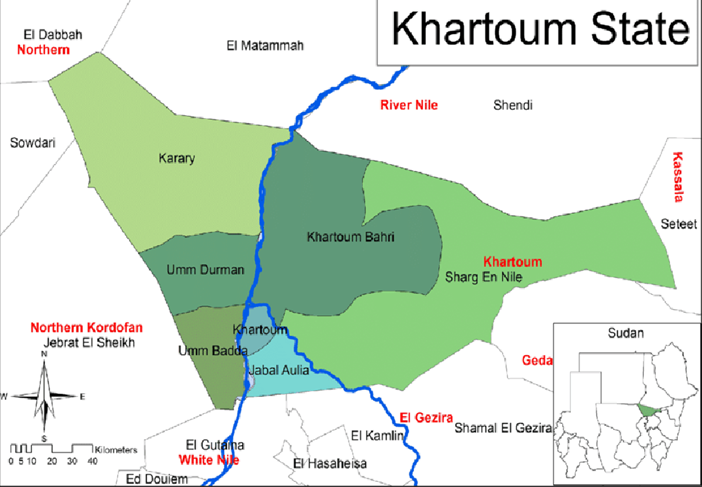
The RSF now controls all of Khartoum State, with the exception of the SAF-controlled pockets in Khartoum and northern Omdurman. RSF patrols have been spotted recently in eastern Sudan, possibly preparing the way for an occupation of that region. Twenty-five miles south of Khartoum, the strategic Jabal Awliya military base and airport fell on November 20 after a siege and two-day assault, removing a major obstacle to a RSF incursion into White Nile State (Radio Dabanga, November 21).

Conclusion

The SAF is highly demoralized and suffers from high rates of desertion and defection. Resistance to the RSF is collapsing in many parts of the country, diminishing hopes for a negotiated settlement. There are thousands of dead, soldiers and civilians alike. The country’s GDP is expected to decline by 18 percent this year due to the war (Africa News, October 12), with over half the population in need of humanitarian assistance. Six million Sudanese are displaced and cut off from normal avenues of support. As famine approaches, the only trade activity that still works is the import and distribution of arms, despite an international embargo.

Civilian groups that had previously discovered the power of the people when overthrowing President Omar al-Bashir in 2019 have now discovered that they have zero influence in the current military power struggle. Most alarming is the emergence of patterns of ethnic and tribal violence that have ways of resisting political settlement while perpetuating grievances both new and traditional. Focused on self-enrichment, the RSF’s barely literate leadership has no rational plan for reviving the state. There is little chance that the RSF’s military success can translate into a brighter future for Sudan’s 46 million people.

Note:

[1] Amar Jamal, “Key Actors in the Juba Peace Agreement: Roles, Impacts and Lessons,” Rift Valley Institute Research Report, September 14, 2023, p.16, https://riftvalley.net/sites/default/files/publication-documents/RVI%202023.09.14%20Key%20Actors%20in%20the%20JPA.pdf

“There Will Be No Dar Masalit, Only Dar Arab”: Sudan’s Ethnic Divisions Destroy West Darfur

Andrew McGregor

Terrorism Monitor, Washington DC

June 26, 2023

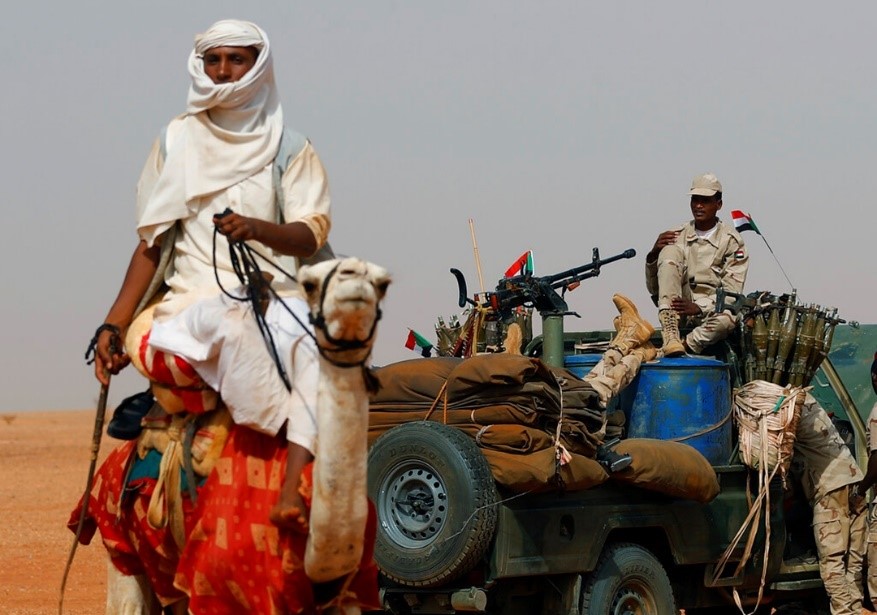
Arab Tribesman and RSF vehicle, West Darfur, June 2022 (AP)

The conflict between the Rapid Support Forces (RSF) and the Sudan Armed Forces (SAF) in Sudan started on April 15. However, parts of Darfur were already experiencing ethnic and political violence, much of it dating back to the 1990s. While the clashes in Khartoum dominate international media attention, fighting in the more remote Darfur region has exploded in intensity and bloodshed, particularly in one of the region’s five states—West Darfur.

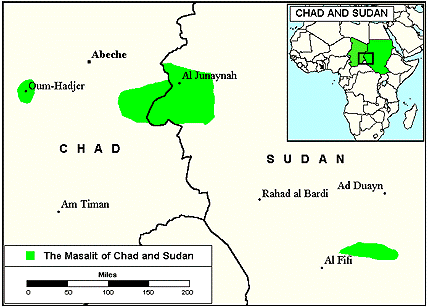
West Darfur is home to the Masalit people, Black Africans claiming ancestral origins in Tunisia. Historically, the region is known as “Dar Masalit” (dar meaning “abode of” or “home of”). Based in the historically volatile border region between western Darfur and eastern Chad, the Masalit took advantage of political upheavals in the region to establish an independent border sultanate in the late 19th century. The young sultanate, however, immediately faced invasion by Sudanese Mahdists and attacks from the Sultan of Darfur, who considered the sultanate his property.

Range of the Masalit People (Joshua Project)

Famed for their fierceness in battle, the Masalit also fought two major battles against the French in 1910, halting the eastward expansion of the French colonialists and the absorption of Dar Masalit into French-ruled Chad. The Anglo-Egyptian army that occupied Darfur in 1916 continued west into Dar Masalit, leading to its eventual formal absorption in 1922 into the Anglo-Egyptian Sudan (and later independent Sudan) following a border treaty between Britain and France. To this day, however, the Masalit and other tribes of the region have closer relations with their kinsmen in Chad than Sudan’s ruling Nile Valley Arabs. Al-Geneina (a.k.a. al-Junaynah), the capital of West Darfur, is 745 miles from Khartoum, but only 17 miles from Chad.

In all its turbulent history, the escalating conflict in West Darfur now represents the greatest threat in many years to the existence of the Masalit homeland.

Arabism vs. Traditional Society

As the Khartoum regime began to promote an Arab supremacist/Islamist ideology in the 1990s, it replaced the traditional administrative structure of the Masalit with appointees from the military and the Rizayqat Arabs of North Darfur. Persecution of Masalit community leaders followed, and soon Arab militias began to attack Masalit villages and burn their crops to force them into out-migration. By 1997-1999, the Masalit were suffering thousands of civilian casualties as government-armed Arab militias ran wild under the direction of national intelligence units. Khartoum staunched local resistance by disarming the Masalit and conscripting their young men to fight the rebels in South Sudan.

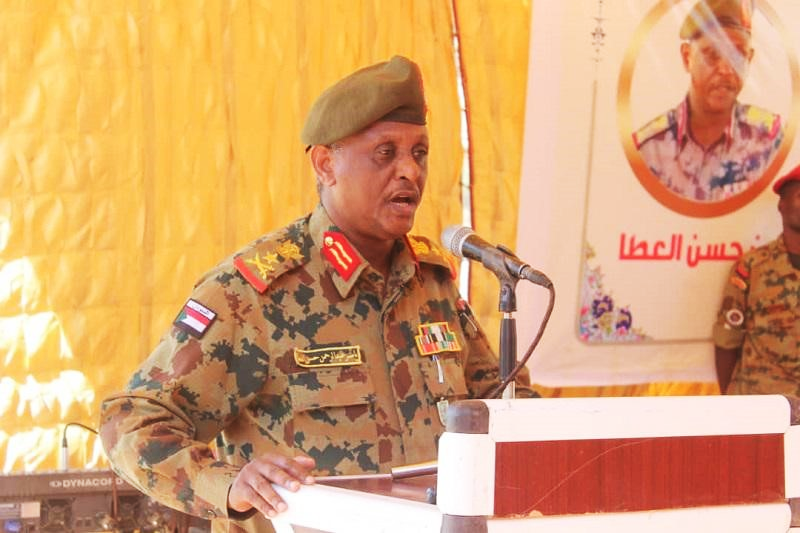
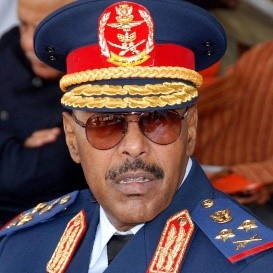
Sudan Minister of National Defense ‘Abd al-Rahim Muhammad Husayn

In 1999, then Sudanese Interior Minister ‘Abd al-Rahim Muhammed Husayn declared the Masalit to be outlaws and enemies of the regime, falsely claiming they had murdered all the Arab leaders in Dar Masalit. [1] Promoted to Minister of National Defense, ‘Abd al-Rahim found himself facing an International Criminal Court (ICC) arrest warrant in March 2012 for war crimes and crimes against humanity. [2] Fighting between the Masalit and Arabs broke out again in January 2020 and again in April 2021, leaving 452 dead and over 500 wounded (Darfur24, July 21, 2021).

Sudanese Army Recruitment in Darfur

More recently, the Sudanese Army launched an intensive recruitment effort in Darfur a month before hostilities between the army and the RSF, which is composed mainly of Darfur Arabs, broke out in mid-April. The recruitment campaign targeted Arab tribesmen, focusing on the Mahamid clan of the Rizayqat Arabs. The chief of the Mahamid is Musa Hilal, the former leader of the infamous Janjaweed and a main rival of his cousin and former protegé, RSF leader Muhammad Hamdan Daglo “Hemetti,” a member of the Mahariya branch of the Rizayqat.

Musa Hilal (Sudan Tribune)

Some Arab leaders suspect the military focused on recruiting followers of Musa Hilal in order to create a new border force that would rival Hemetti’s RSF (al-Jazeera, May 3). The new force could incorporate Musa loyalists returning from work as mercenaries in Libya. Mahmud Madibbo, who is the nazir (paramount chief) of the Rizayqat, declared “our total rejection of the campaigns of recruitment of tribal youth by intelligence agencies working to mobilize the tribes for more war and prolong the tribal conflict that has claimed a number of innocent lives” (Sudan Tribune, March 16). The latest in a long line of powerful Rizayqat chiefs, Mahmud is a supporter of Hemetti and vowed last year to protect him.

Rizayqat elders met in 2020 with leaders of the RSF, but were unsuccessful in working out the differences between Musa Hilal and Hemetti. Relations between their respective branches of the Rizayqat, the Mahamid and the Mahariya, became tense after the violent 2017 clashes between Musa’s Mahamid supporters and the RSF, in which Hemetti’s brother, Brigadier ‘Abd al-Rahim Juma’a Daglo, was killed. Musa Hilal served four years in prison after being charged with attacking government forces, although he was pardoned and released by the post-revolution transitional government in March 2021.

The Destruction of al-Geneina

Al-Geneina, the capital of West Darfur state, is home to nearly half a million people. Escalating violence, much of it ethnic-based, forced the West Darfur governor to declare a State of Emergency and a 7AM to 7PM curfew on April 10, five days before the conflict between the RSF and SAF broke out. Arab gunmen on motorcycles and camels were reportedly attacking the eastern part of al-Geneina, burning houses and shooting randomly at people. Security forces were conspicuously absent from the streets (Sudan Tribune, April 10).

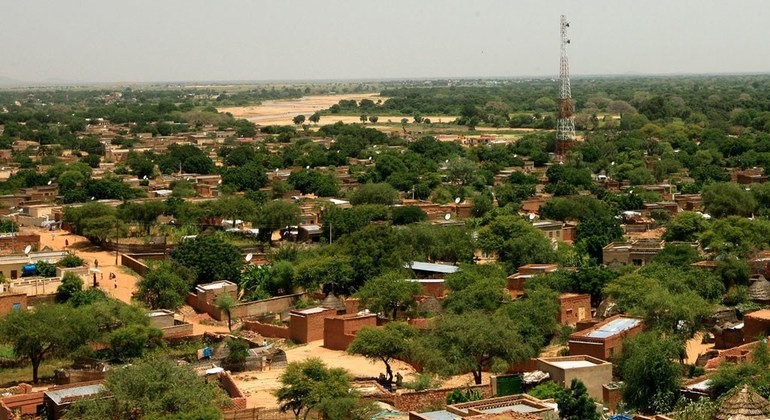
Al-Geneina in Peacetime (UN News)

By late April, the police and much of the regular army had fled as armed Arab tribesmen began to pour into al-Geneina from north and central Darfur. Indiscriminate fire killed many, camps for displaced people were overrun and medical facilities, including the Red Crescent headquarters, were looted and burned, destroying blood banks and valuable medical equipment (Sudan Tribune, April 27). All dialysis patients in al-Geneina died after equipment and medicines were looted (Darfur24, June 10). Al-Geneina airport has since closed, which prevented the arrival of humanitarian assistance.

Al-Geneina Now (Mail and Guardian)

Doctors and other health workers have fallen victim to snipers and the generators needed to power emergency clinics have been stolen by gunmen. Markets, government buildings, schools and aid agencies remain closed after being looted and the water system, communications and power grid have been disabled (Middle East Monitor, May 26). Many private homes have been destroyed. Areas where residents have taken refuge in large numbers have come under attack by RSF forces firing RPGs (Radio Dabanga, June 14). Other African groups besides the Masalit are also being attacked in al-Geneina by Arab militias backed by RSF forces under the command of ‘Abd al-Rahman Juma’a. Hundreds of bodies lie in the streets as snipers prevent anyone from going outside. Rape, arson and armed robbery have become common (Darfur24, June 10). According to West Darfur’s deputy governor, al-Bukhari ‘Abd Allah, “The magnitude of suffering is inconceivable in El Geneina” (Radio Dabanga, June 8).

Masalit and RSF Responses

In the first days of May, Masalit residents were reported to have seized 7,000 weapons from an abandoned police armory in al-Geneina, though a Masalit leader denied responsibility (Sudan Tribune, May 2). Weapons are plentiful and arrive regularly from Chad. However, they are expensive, and only wealthy residents can afford the $1300 it costs to purchase a Kalashnikov (France24.com, May 19).

RSF Patrol, West Darfur (AP)

The RSF has attempted to obscure its part in the violence by insisting, as it has in Khartoum, that men were impersonating RSF personnel during attacks on civilians. The RSF used social media to condemn a May 14 SAF attack in al-Geneina using tanks and heavy artillery that allegedly killed 20 civilians and damaged the Nassim mosque (RSF Twitter, May 14). The paramilitary has also called for an independent investigation into the violence in al-Geneina, and is no doubt confident that no such inquiry can proceed under the current conditions.

Despite the RSF’s role in the fighting, Hemetti issued a message in late May calling on the people of al-Geneina to “reject regionalism and tribalism. Stop fighting amongst yourselves immediately” (Middle East Monitor, May 26). Nevertheless, by June 15, there were over 1,000 dead in al-Geneina, including women and children, with thousands more wounded and unable to receive treatment. Over 100,000 residents have fled across the border to Chad or other parts of Darfur (al-Hadath TV [Dubai], June 15; Darfur24, June 10).

The Murder of West Darfur’s Governor

Governor Khamis ‘Abd Allah Abkar

The governor of West Darfur, Khamis ‘Abd Allah Abkar, was murdered on June 14, only two hours after receiving an interview form al-Hadath TV. During the interview, Khamis denounced the killing of civilians by the RSF and Arab militants in West Darfur: “There is an ongoing genocide in the region and therefore we need international intervention to protect the remaining population of the region” (Sudan Tribune, June 14). Khamis led Masalit self-defense militias during the Arab attacks of the 1990s. Arrested and sentenced to 20 years in prison, Khamis nonetheless escaped in 2003. He then joined the Sudan Liberation Army (SLA) rebel movement but eventually left to form his own breakaway movement, the SLA-Khamis Abakr (SLA-KA) (Small Arms Survey, July 2010). In time, this became the largely Masalit Sudanese Alliance Forces. Khamis was appointed governor of West Darfur after this new group joined four other rebel groups in signing the 2020 Juba Peace Agreement (JPA).

Khamis’ arrest by RSF forces followed his interview, with a short video clip appearing on social media showing the governor being unloaded from a vehicle by armed men, one of whom appears to have tried to attack him with a chair as he was being led into a room (Twitter, June 14). A second video then appeared on social media showing the governor’s bloody body, while unseen individuals celebrate offscreen (Sudan Tribune, June 14). SAF commander General ‘Abd al-Fatah al-Burhan accused the RSF of the killing, noting “the dead man had nothing to do with the conflict” (al-Hadath TV [Dubai], June 15). The RSF condemned the murder of the governor. However, an RSF spokesman did not affirm or deny responsibility for the murder, stating only that, “We are in a state of war and there is no safe place in West Darfur” (The New Arab, June 15; Channels Television [Lagos], June 16; SUNA, June 14).

Masalit Sultan Sa’ad ‘Abd al-Rahman Bahr al-Din

West Darfur’s traditional leadership has been challenged as well as its political leadership. After Rizayqat gunmen carried out three major massacres of Masalit civilians between 2019 and 2022, killing a total of 378 people, the Sultan of Dar Masalit, Sa’ad ‘Abd al-Rahman Bahar al-Din, complained of the growth of government-sponsored “Arabism,” accompanied by the disarmament of the Masalit and the arming of Arab militias. As sultan (a largely symbolic but influential position), Sa’ad hinted in 2021 that it might be time to re-examine the Gilani Agreement of 1919, which saw Dar Masalit absorbed by Anglo-Egyptian Sudan rather than French-ruled Chad (Darfur24, May 14, 2021). The sultan later complained it would have been better for Dar Masalit to have been absorbed by Chad, which despite being one of the world’s poorest nations, “has a strong security apparatus.” (BBC, May 31, 2022). Masalit tribal leaders have been targeted in the fighting; among the victims is the Sultan’s brother, Amir Tariq. The sultan’s palace overlooking the city was looted and partly destroyed and an Arab fighter was filmed outside the damaged building declaring “There will be no Dar Masalit again, only Dar Arab” (Sudan Tribune, June 13).

Conclusion

With local support from Darfur’s Arab tribes (and across the board support is not guaranteed), the RSF could make Darfur a stronghold in the event that the paramilitary is driven from Khartoum and other Sudanese cities. Mustafa Tambour, leader of the breakaway Sudan Liberation Movement-Tambour (SLM-T), recently reported that goods, vehicles, and cash looted by the RSF in Khartoum are being shipped to parts of central and western Darfur (Radio Dabanga, June 13).

On the other hand, the assassination of Governor Khamis, as leader of one of the five Darfur rebel movements to sign the JPA, has the potential to draw the other rebel leaders into the conflict, especially as violence has spread across the rest of Darfur, where the joint patrols of the JPA signatories have helped, if not maintain security, at least prevent insecurity from becoming much worse. Such joint operations have had less success in West Darfur. When Darfur Governor Minni Minnawi tried on May 24 to deploy a joint force of former rebel groups to escort a commercial convoy into al-Geneina and stop the violence against civilians, for example, his forces were ambushed outside the city by RSF troops supported by armed Arabs (Sudan Tribune, May 24). For the moment, there appears to be little to prevent the further displacement of the Masalit from their traditional homeland.

NOTES

  1. Daowd Ibrahim Salih, Mohamed Adam Yahya, Abdul Hafiz Omar Sharief and Osman Abbakorah (Masalit Community in Exile): “The Hidden Slaughter and Ethnic Cleansing in Western Sudan: An Open Letter to the International Community,” Damanga.org, April 8, 1999.
  2. “Situation in Darfur, Sudan,” Case Information Sheet, The Prosecutor v. Abdel Raheem Muhammad Hussein, ICC-02/05-01/12, May 1, 2012, https://www.icc-cpi.int/sites/default/files/CaseInformationSheets/HusseinEng.pdf

This article first appeared in the June 26, 2023 issue of the Jamestown Foundation’s Terrorism Monitor.

Gold, Arms, and Islam: Understanding the Conflict in Sudan

Terrorism Monitor Volume: 21 Issue: 9

Andrew McGregor

April 28, 2023

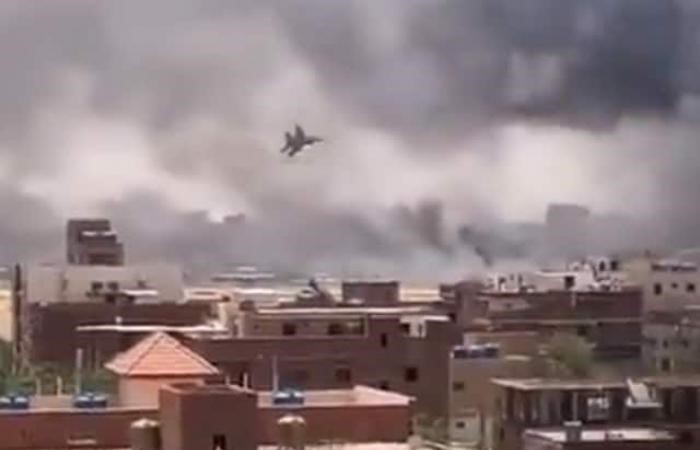
Sudan Air Force Warplane Strikes Targets in Khartoum

Sudan ended over a quarter-century of Islamist-military rule with the 2019 overthrow of President Omar al-Bashir, whose rule was based on Islamism, Arab supremacy, and the ruthless application of military power. A joint civilian-military government was formed to lead the transition to a civilian-led democracy. However, an October 2021 coup led by Sudan’s military and security forces ended all progress toward civilian rule, severing at the same time most of Sudan’s economic and financial ties to the West.

The UN and international diplomats have been trying to guide negotiations for a democratic transition between the military and the civilian Forces for Freedom and Change (FFC) coalition. The final version of the Framework Agreement on transition was to be signed on April 6. However, the deadline passed when the security forces indicated they were not prepared to sign due to the inability of two competing elements of the military to agree on integration and military reform provisions.

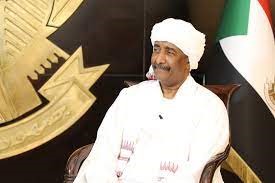
General ‘Abd al-Fatah al-Burhan (Reuters)

The Framework Agreement called for the integration of the Sudan Armed Forces (SAF, or al-Quwwat al-Musallaha al-Sudaniya) and Sudan’s Rapid Support Forces (RSF, or al-Quwat al-Da’m al-Sari). The SAF is led by Lieutenant General ‘Abd al-Fatah al-Burhan, who is Sudan’s de facto leader as Chair of the Transitional Sovereignty Council (TSC), while the RSF is a 30,000-strong paramilitary led by the number two figure in Sudan, TSC Deputy Chair Muhammad Hamdan Daglo “Hemeti.” The Framework Agreement was intended to lead Sudan to civilian rule. The SAF, however, is highly politicized, and many of its senior officers adhere to an Islamist ideology that rejects the idea of secular government. Rather than unifying the security forces, the Framework Agreement ultimately brought their differences to a head. Supporters of the former president in the SAF are seemingly using the dispute to create a state of political insecurity favorable for a return to Islamist-military rule. Nation-wide fighting finally broke out on April 15 between the two factions.

The RSF, which was loyal to al-Bashir until his overthrow, has sought international support by accusing the army of mounting a “coup d’état” and seeking “to repeat the failed experiences of the rule of the Islamic Movement that conquered our country and destroyed the dreams of our people for thirty years” (Facebook/RSFCommand, April 16). The paramilitary now refers to their former military partners as “fascist military leaders” supported by “a crowd of corrupt Islamic people thirsty for the blood of the Sudanese people” (Facebook/RSFCommand, April 17). In a February 19 televised speech, Hemeti described the 2019 military coup as a “mistake” that has become “a gateway for the return of the former regime” and warned of efforts by Islamists to restore the Bashir regime (Radio Dabanga, February 21; BBC, February 20).

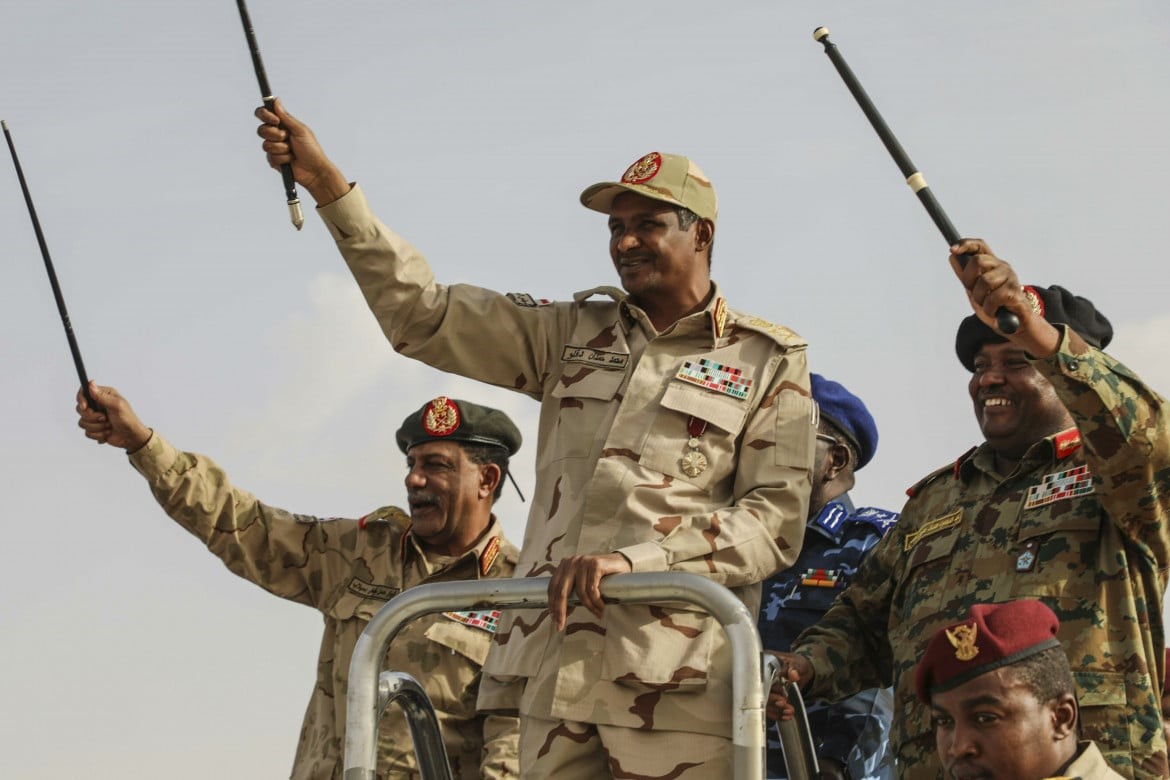
RSF Commander Muhammad Hamdan Daglo “Hemeti”

The RSF, much feared within Sudan, is a close-knit operation—the second-in-command is Hemeti’s brother, ‘Abd al-Rahim Hamdan Daqlo, while Hemeti’s commanders are all from his own Mahariya clan of the Rizayqat Arabs. The paramilitary has participated in UAE-funded operations in Yemen and in counter-insurgency operations in Darfur, South Kordofan, and Blue Nile State. It is especially active along the borders with Libya and the Central African Republic, and its brutal response to anti-regime demonstrations in Khartoum and elsewhere has made it widely unpopular. [1]

Ethnic Dimensions of the Conflict

Many Darfur Arabs, who comprise the RSF’s base, dislike the Khartoum ruling class, which consists mostly of members of Sudan’s powerful northern Nile-based Arab tribes, who have controlled the country since independence in 1956: the Ja’alin, the Danagla, and the Sha’iqiya (al-Bashir is Ja’alin, al-Burhan is Sha’iqiya). The riverine Arabs, in turn, regard the Darfur Arabs as backwards and “Africanized.” Like many Darfur Arabs, Hemeti, with nothing more than a Quranic school education, is likely to believe he will never be accepted by the riverine military and political elite. Al-Burhan, on the other hand, is regarded in Darfur as the prime architect of a genocide of non-Arab Muslims and is well-remembered for his threats to exterminate the Fur people, who were the former rulers of Darfur.

During a March “Security and Military Reform Workshop” in Khartoum, the RSF hinted at the longstanding rivalry between the Arab tribes of western Sudan and those of the Nile region (New Arab, April 17). Referring to the SAF as “an army composed of a specific militia belonging to certain tribes,” the RSF reminded those present of a struggle that dates back to the days of Mahdist rule (1885-1899). At that time, western Arabs, particularly the Ta’aisha, took power after the early death of the Mahdi in 1885 and the subsequent sidelining of his riverine relatives by the Mahdi’s Ta’aishi successor, Khalifa ‘Abd Allahi.

Violence returned to Darfur in the modern era with the growing influence of the Arab Gathering (Tajamu al-Arabi), an Arab supremacist group following an ideology developed by Mu’ammar Qaddafi and spread by the leaders of Libya’s Islamic Legion (Failaq al-Islamiya) in the 1980s. Clashes over land developed between the Arab and the non-Arab Muslim tribes of Darfur, particularly the Fur, the Zaghawa, and the Masalit. The latter groups united in outright rebellion in 2003, while the Bashir government responded by unleashing Janjaweed (a Sudanese Arab militia) gunmen and bandits on the non-Arab civilian population under military direction. The leader of the Janjaweed was Shaykh Musa Hilal ‘Abd Allah, the nazir (chief) of the Um Jalul clan of the Mahamid Arabs, a branch of the northern Rizayqat of Darfur. One of his deputies during the 2003-2005 period of the worst Janjaweed abuses (murder, rape, torture, arson) was Hemeti, who is a cousin from the Awlad Mansur clan of the Mahariya branch of the Northern Rizayqat. [2]

When the crimes of the Janjaweed began to attract unwanted international attention in 2005, the government integrated the gunmen into the Border Guards (Haras al-Hudud), a small camel-mounted unit. Integration into official security structures shielded the Janjaweed from prosecution and brought them under tighter government control. This formation would evolve by 2013 into the RSF, which was conceived as a counter-insurgency force composed mostly of former Janjaweed. The RSF came under the direct authority of the National Security and Intelligence Service (NISS, or Jihaz al-Amn al-Watani wa’l-Mukhabarat) rather than the army and became notorious for their human rights abuses and lack of discipline. Even at this early stage, the RSF became known for clashes with the SAF.

Factions Fail to Integrate

Since becoming Sudan’s de facto ruler in 2019, al-Burhan has displayed an inability to rein in the RSF. He has allowed it to become, as some suggest, a “state-within-a-state.” The RSF, with its young leadership, has for some time offered better training and greater opportunities to make money than enlistment in the SAF.

The SAF wants the RSF to be integrated with the army within a year or two at most. However, the RSF prefers a ten-year timeline (in other words, no real integration at all). UN mediators suggested a five-year compromise, which was swiftly rejected by both parties (New Arab, April 17).

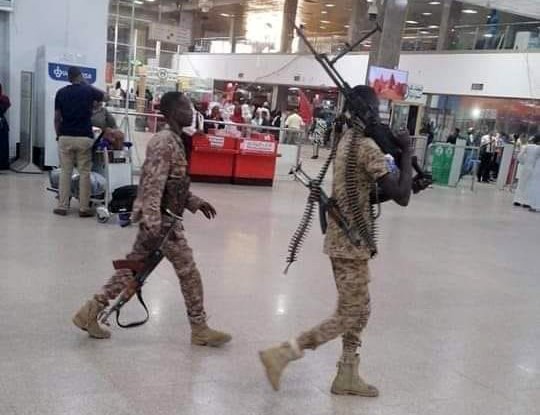
SAF Soldiers at Khartoum Airport (Dabanga)

Hemeti’s power and influence will disappear if the RSF comes under the command of the SAF’s Joint Chiefs of Staff. The RSF leader has thus demanded his paramilitary report directly to a civilian government. This essentially preserved the RSF’s autonomy while allowing Hemeti to maintain a major political role.

Al-Burhan dissolved the RSF on April 17 and labelled it a “rebel” movement, adding that the matter is an internal one that does not require interference from the international community. There are, however, questions regarding al-Burhan’s legal authority to dissolve the RSF (Radio Dabanga, April 18). As noted by Dr. Jebril El-Abidi, it was a mistake to try to integrate the RSF into the national military as a complete unit, encouraging continued loyalty to RSF leaders rather than the general command (Asharq al-Awsat, April 20).

When Gold Makes Things Worse

Sudan is now the third-largest gold producer in Africa. However, as much as 80 percent of production is smuggled out of the country, and much of it to Russia. This contributes nothing in the way to state revenues that are already badly diminished by the separation of oil-rich South Sudan.

Joining existing US sanctions, EU sanctions were imposed in March on M-Invest and its subsidiary Sudan Meroe Gold, mining companies tied to Russia’s Wagner Group, for illegally trading in gold “looted by force from local traders” (Sudan Tribune, March 2). In March 2022, an executive with a Sudanese gold mine informed The Telegraph that Russia was smuggling 30 tonnes of gold from Sudan every year to build its reserves and weaken the effects of sanctions imposed on Russia for its ongoing invasion of Ukraine. The gold is transported in small planes from military airports not subject to customs inspections (The Telegraph, March 3, 2022). Sudan’s Minerals Minister, an ally of the RSF, described the allegations as “baseless” (Sudan Tribune, March 11, 2022).

Remote mines operated by Meroe Gold were guarded by Wagner Group personnel who were also involved in training the RSF (Sudan Tribune, March 21, 2022). It is unclear if Wagner continues in these roles; Wagner Group owner Yevgeny Prigozhin insists there has been no Wagner presence in Sudan for two years. US authorities have claimed the Wagner Group is now providing weapons to the RSF through bases in Libya and the Central African Republic (CAR) (The New Arab, April 22).

Documents obtained by an anti-corruption NGO revealed the RSF has its own bank account in Abu Dhabi that it has used to obtain vehicles suitable for conversion to machine-gun mounted “technicals.” Financing comes from al-Junaid Gold Company, which is officially owned by ‘Abd al-Rahim Hamdan Daglo and his two sons (Global Witness, April 5, 2020). Al-Junaid has since diversified into numerous other economic activities, its revenues providing independence for the RSF.

In Darfur, gold was discovered in 2012 at Jabal Amer (northwest of Kabkabiya). In July 2015, Musa Hilal and his Mahamid followers took control of Jabal Amer after slaughtering hundreds of Bani Hussayn Arabs working the artisanal mines. This reaped enormous profits until Musa’s arrest in November 2017, at which point control of the mines was transferred to Hemeti and the RSF. The SAF in turn seized control of Jabal Amer in October 2020.

Smuggled gold is typically exported through the Wagner Group-occupied CAR or by air to the Russian base in Latakia, Syria. Wagner elements have been accused of attacks on artisanal gold miners close to the border with the CAR (Radio Dabanga, August 1, 2022). Moscow has little interest in a return to civilian rule in Sudan as one of the first tasks of a new government would be to take control of gold exports to ensure revenues wind up in the public treasury instead of private hands.

“Admiral Grigorovich” Frigate, Port Sudan, 2021 (al-Arabiya)

Beyond gold, a deal was reached in February between Russia and Sudan’s military rulers for the establishment of a Russian naval base on the Red Sea coast in return for arms and military equipment, although it awaits ratification by a new civilian government (al-Arabiya, February 11; Sudan Tribune, February 11). The 25-year deal, with automatic 10-year extensions if neither side objects, would allow a base of 300 Russian military personnel capable of accommodating four Russian ships at a time, including nuclear-powered vessels. [3] Egypt and Saudi Arabia are both unhappy about the deal, which would see a long-term Russian naval presence in the strategic Red Sea. French, American, British, and Norwegian diplomats have all expressed concerns about the growing involvement of Wagner Group companies and personnel in Sudan, much of it facilitated through the RSF. [4]

Islamism in the Regular Army

The RSF has accused the army’s “fascist military leaders” of “religious mania” (Facebook, April 17; Facebook, April 18). Many Islamist al-Bashir loyalists, known as keizan, are prominent in the high ranks of the army. Loyalists of al-Bashir and the banned Islamist National Congress Party (NCP, now operating under the name “Islamist Movement”) have stepped up activity in recent weeks, calling for the assassination of UN envoy Volker Perthes and attacking pro-democracy demonstrators in Khartoum North (Reuters, April 11). The Islamists describe pro-democracy activists as secularists intent on attacking Sudan’s traditional Islamic faith (Middle East Monitor, April 9, 2019).

Airstrike Damage, Khartoum (NBC)

Before the current fighting broke out, the FFC and its partners warned of NCP efforts to provoke a confrontation between the army and the RSF that would create conditions favorable to a return to Islamist rule. Leading Islamists and NCP members (including those held on human rights violations) began leaving detention facilities and returning to government posts (especially Military Intelligence and the Ministry of Foreign Affairs) after the 2021 military coup, while al-Burhan dissolved a committee looking into corrupt arrangements between the NCP government and the army. General Ahmad Ibrahim Mufaddal, an NCP loyalist, was appointed last November to lead the General Intelligence Service (GIS, or Jihaz al-Mukhabarat al-‘Amma), successor to the powerful NISS that held an iron grip on political dissent during the Bashir regime. The RSF, seen as traitors for their failure to prevent the overthrow of al-Bashir, is especially disliked by the Islamists.

In recent days, prisons across the country have been emptied of thousands of criminal and political inmates, either through release or escape. Among those to have walked out of the notorious Kober prison are Ahmad Haroun, who is wanted by the International Criminal Court, and leading Islamists of the al-Bashir regime, including former vice-president ‘Ali ‘Uthman Muhammad Taha, Awad al-Jaz, and Nafi al-Nafi. Both the FFC and the RSF allege an army plan to restore leading Islamists to power. Al-Bashir himself is still believed to be in a military prison hospital (Darfur 24, April 25; Darfur 24, April 26; Al Jazeera, April 26; Radio Dabanga, April 26).

Map produced by Thomas van Linge showing territory held by the Army (red), the RSF (mustard yellow) and rebel movements (green).

Conclusion

Fighting is underway in most parts of Sudan, but is especially intense in Darfur, the home of Hemeti’s power base but also the source of much of the SAF’s rank-and-file. Long-standing tribal clashes in West Darfur have intensified with the breakdown of security. Khartoum has experienced looting, street-fighting, and aerial bombing.

A SAF victory would likely allow an entrenchment of Islamist military rule, while an RSF victory might find room for a civilian government, but only under RSF influence. The paramilitary would still absorb the arms and facilities of the SAF and become the sole security organization in Sudan. The ambitious Hemeti is likely to seek a leading role in any new government, possibly as head of state.

Any war in Sudan has a high chance of spilling over into its unstable neighbors, such as Chad, the Central African Republic, Libya and South Sudan. The Wagner Group is already involved in the last three of these nations.

Hemeti is having trouble selling his new image as a champion of democracy as he attempts to portray al-Burhan as the figurehead of a radical Islamist movement and uses slogans like “power belongs to the people” and “what is happening now is the price of democracy.” Hemeti has even tried to claim the RSF are fighting al-Burhan “and his Islamist gang” (the keizan) within the SAF, and not the army itself (Radio Dabanga, April 17). Al-Burhan has similarly suggested he was prepared to negotiate only with “parties within the RSF” seeking dialogue, and not the current RSF leaders (Sudan Tribune, April 20).

If the Framework Agreement is signed and free elections follow, the Islamist faction will lose any chance of retaking control of Sudan, short of mounting yet another coup, one that, in the current environment, would meet with massive resistance in the streets as well as in the international arena. Despite their rhetoric, Hemeti and his private army will not provide a road to a democratic transition and civilian rule. For the Islamists, therefore, this may be their last chance to seize power.

Notes 

[1] See “Army for Sale: Sudan’s Rapid Support Forces and the Battle for Libya,” AIS Special Report, August 4, 2019.

[2] The northern Rizayqat Abbala (camel-breeding Arabs) include the Mahamid, Mahariya, and Irayqat groups. The core of the Janjaweed was from the Mahamid and Mahariya branches of the northern Rizayqat. The southern Baqqara Rizayqat (cattle-breeding Arabs), had little to do with the Janjaweed. The meaning of the term Janjaweed is disputed, but is commonly given as “Devils on Horseback.” The term was not used by the Arab militias themselves or by the government.

[3] For Russian mercenaries in Sudan and Moscow’s search for a naval base on the Sudanese Red Sea coast, see: “Russian Mercenaries and the Survival of the Sudanese Regime,” Eurasia Daily Monitor, February 6, 2019.

[4] For details, see “Putin’s New Russian Empire is Suddenly on the Rocks: How the War in Ukraine Threatens Russian Interests in Sudan,” AIS Special Report on Ukraine No.3, March 24, 2022.

This article first appeared in the April 28, 2023 issue of the Jamestown Foundation’s Terrorism Monitor, Washington, DC.

Continued Detention of Rebel POWs suggests Sudan’s military rulers are not ready to settle with the Armed Opposition

Andrew McGregor

AIS Special Report

May 31, 2019

Sudan Armed Forces and Rapid Support Forces Operation in South Kordofan (Reuters/Mohamed Nureldin Abdallah)

There was much joy in Sudan in the dying hours of the presidency of Omar al-Bashir when the dreaded National Intelligence and Security Service (NISS) announced they were releasing all political detainees in the country (SUNA, April 11, 2019). While there were many scenes of elated families greeting detained protesters and opposition figures after their release, some detainees never emerged from Sudan’s grim prisons. The absence of members of the armed opposition who were taken prisoner while fighting to overthrow the Bashir regime raises two important questions: Did the regime change, or only the head-of-state? And what approach will the new Transitional Military Council (TMC) use to deal with the well-armed opposition movements still in the field in Sudan’s western and southern regions?

Prisoners of War?

Only days after the military removed al-Bashir, the TMC chairman, General ‘Abd al-Fatah al-Burhan, was reminded by an opposition delegation that they were still awaiting the fulfillment of his promise to release members of the armed groups (Sudan Tribune, April 14, 2019). Most of these prisoners belong to the major Sudanese armed opposition groups:

  • The Justice and Equality Movement (JEM), a Darfur-based group led by Jibril Ibrahim seeking a more inclusive government that is not almost exclusively derived from the powerful Nile-based Arab tribal groups (the Ja’alin, the Danagla and the Sha’iqiya) that have dominated Sudanese politics since independence in 1956. JEM’s leadership and membership is largely but not exclusively drawn from the Zaghawa of northwestern Darfur. Due to the political protests across the country, JEM declined to resume talks planned talks with the Bashir regime in mid-January, declaring they could not “betray the revolution,” though they also feared the talks would be used as propaganda to preserve the regime (Sudan Tribune, January 13, 2019).
  • The Sudan Liberation Movement/Army – ‘Abd al-Wahid (SLM/A-AW), a group based in the Jabal Marra mountains of Darfur and led by the Paris-based ‘Abd al-Wahid al-Nur. The SLM/A-AW is largely Fur.
  • The Sudan Liberation Movement/Army – Minni Minnawi (SLM/A-MM), a Darfur-based group that has operated out of ungoverned southern Libya for several years as a result of military pressure from the Sudanese Armed Forces (SAF) and a government paramilitary initially formed from former Janjaweed members, the Rapid Support Forces (RSF). The leadership and membership is again largely Zaghawa.
  • The Sudan People’s Liberation Movement/Army – North (SPLM/A-N), based in the Nuba Hills of Southern Kordofan and Sudan’s Blue Nile State. Before South Sudan signed a peace agreement with Khartoum in 2005 that would eventually lead to independence in 2011, the SPLM/A as led by Colonel John Garang sought a unified “New Sudan” that would bring the non-Arab majority of Sudan into the central government. With Garang’s death in 2005, South Sudanese separatists gained political and ideological ascendancy, abandoning those parts of the movement still operating in South Kordofan and Blue Nile, both on the northern side of the new border. These parts of the SPLM/A reconstituted themselves as the SPLM/A-North. The movement split in 2017 over leadership differences between ‘Abd al-Aziz al-Hilu (South Kordofan faction) and two other leaders, Malik Agar (Blue Nile faction) and Yasir Arman (then SPLM/A-N secretary-general). Al-Hilu also felt the needs of the Nuba people (who form the majority of the South Kordofan fighters) were not being addressed by the larger leadership (Radio Dabanga, October 23, 2017). South Sudanese president Salva Kiir Mayardit, who continues to struggle to contain a rebellion in South Sudan’s Equatoria region, made efforts to reunite the two SPLM/A-N factions to better negotiate with the TMC after al-Bashir’s overthrow (East African [Nairobi], May 2, 2019). Agar and Arman were both sentenced to death by hanging in absentia along with 15 other members of the SPLM/A-N in March 2014.

The Sudan Revolutionary Front (SRF – a coalition bringing together Darfur’s JEM with the two factions of the SPLM/A-N) has declared that the civilian groups discussing the creation of a transitional government are not representative without including the armed opposition, noting the nation’s future security and democratic transition are at risk without their inclusion (Radio Dabanga, April 30, 2019). The armed opposition calls the detainees “prisoners-of-war” (a term never used by the Bashir regime), but admits that, after years of detention in some cases, it is unsure of the condition or whereabouts of many rebel prisoners (Sudan Tribune, April 16, 2019). Four days after Bashir’s overthrow, JEM demanded the immediate release of all “war-related detainees,” warning that their continued detention was “a call for the continuation of the war” that would delay the ability of the Sudanese to “reap the fruits of the revolution” (Radio Dabanga, April 15, 2019).

Last August, the SLM/A-MM complained that one of its leaders, “prisoner of war” ‘Abd al-Salam Muhammad Siddig, had died at Omdurman’s al-Huda prison after torture that resulted in two fractured legs and internal bleeding that proved fatal after medical treatment was withheld. The movement alleged that the prisoners were suffering a “slow death” in close confinement.  Accusing Khartoum of violating the Geneva Convention, the statement reminded authorities that “the right of the prisoners to receive medical treatment and follow-up… is a legal right and not a grant from anyone.” (Radio Dabanga, August 15, 2018).

The JEM Prisoners

The Bashir regime was shaken to its core when scores of JEM vehicles crossed the desert from Darfur to suddenly arrive on the outskirts of the national capital in May 2008. The army largely failed to appear in defense of the regime, and the raiders were engaged in running street battles in Omdurman with police and pro-Bashir paramilitaries. As JEM was finally driven out of the capital after a fierce struggle, some 70 JEM members were captured and sentenced to death. When JEM and several other rebel movements declined to sign the 2011 Doha Document for Peace in Darfur (DDPD), the prisoners were unable to avail themselves of Article 60, allowing for the release of prisoners of war (DDPD, p.63, Article 60, subsection 329, May 2011). Though the death sentences were not carried out, the prisoners are alleged to have endured a kind of living death of torture and abuse in cramped and squalid conditions (Radio Dabanga, August 15, 2013; Sudan Tribune, September 8, 2018).

According to JEM, many of the prisoners languished under sentences of death after their 2008 capture in tiny, vermin-ridden cells, with only a daily visit to the toilet and no access to bathing facilities. JEM has charged that the men are prisoners of war entitled to decent conditions by the Geneva Convention (Hudocentre.org, November 16, 2015).

When JEM detainees in North Khartoum’s Kober Prison went on a hunger strike in 2013 to protest their treatment, the Director General of Prisons arrived to deliver a little regime reality to the desperate prisoners: “We’ve got the power, wealth, aircraft, and vehicles that enable us to do whatever we want… It is our right to act any way we want against any person in all of Sudan… If I kill you all nobody would ask me why” (Radio Dabanga, September 1, 2013).

Kober Prison, North Khartoum (AFP)

Many JEM rebels were released from Kober and other Sudanese prisons after al-Bashir issued an edict on March 8, 2017. As well as those taken prisoner in Omdurman, there were others taken in later battles at Goz Dango, Fanaga, Donki Baashim and Kulbus (Radio Dabanga, March 9, 2017). A sentence of death was lifted from 66 detainees and another 193 granted amnesty. However, in October 2018, Khartoum admitted that seven JEM prisoners and 21 SPLM/A-N prisoners were still being held in Omdurman’s al-Huda prison despite the presidential amnesty of March 2017 (Radio Dabanga, October 11, 2018).

One of those released under the amnesty, JEM field commander ‘Abd al-Aziz Ousher, complained that a number of senior JEM commanders taken at Goz Dango in April 2015 had not been freed by the presidential amnesty (Radio Dabanga, March 9, 2017). Some 180 JEM prisoners taken at Goz Dango were transferred to al-Huda prison in Omdurman in January 2016. Unable to leave their cells, 23 contracted tuberculosis, which went untreated (Radio Dabanga, September 5, 2016).

President Omar al-Bashir Arrives in Goz Dango to Celebrate SAF/RSF Victory

A report released on May 30 by the Darfur Bar Association (DBA) says that 235 prisoners belonging to the SLM/A-MM and the SLM/A – Transitional Council (SLM/A-TC, a splinter group of the SLM/A-AW) remain inside al-Huda prison. These prisoners are alleged to have endured “cruel treatment and torture” as well as starvation rations and an absence of medical treatment for tuberculosis and injuries sustained in battle or through torture in captivity (Radio Dabanga, May 30, 2019). These fighters were taken prisoner in a series of running battles against the RSF and SAF in Darfur when the two rebel movements attempted to cross back into Sudan from their temporary bases in southern Libya.

Post-Coup Developments

Following the coup, the TMC quickly declared a ceasefire in the three conflict areas (Darfur, South Kordofan and Blue Nile State), where many rebel groups were already observing a unilateral ceasefire during the protests for fear the regime would make claims the spontaneous protests were actually planned and executed by the armed opposition. That was exactly the approach the regime took under advice from M-Invest, a Russian company with offices in Khartoum operated by Yevgeny Prigozhin, a close associate of Russian president Vladimir Putin and the Kremlin. Darfuri students in Khartoum were rounded up and tortured into confessions that they were provocateurs working for both Israel and the Wahid al-Nur’s SLM/A-AW (BBC, April 25, 2019; CNN, April 25, 2019). The regime, however, had scapegoated Darfuri students for all manner of anti-government sentiment for years, so the familiar accusations had little resonance in the streets.

Lieutenant General Muhammad Hamdan Daglo “Hemeti,” TMC deputy chairman and leader of the notorious RSF paramilitary, made the surprising move of thanking ‘Abd al-Aziz al-Hilu and the SPLM-N for extending their unilateral ceasefire, adding (after years of brutal repression by the RSF) that the armed opposition movements were a part of the larger movement responsible for deposing President al-Bashir. According to Daglo, the TMC has made contact with the armed movements, including Daglo’s bitter enemies in the Fur-dominated SPLM/A-AW (Radio Dabanga, May 1, 2019). The existence of such contacts has not been verified by the armed opposition and Daglo’s sudden respect for the rebel movements seems disingenuous.

Musa Hilal and Darfur’s Arab Rebels

Another group that has not benefitted from the general release is composed of former Janjaweed commander Musa Hilal and his relatives and followers who were arrested in November 2017. The nazir (chief) of the Mahamid Arabs of Darfur (a branch of the Northern Rizayqat), Hilal acted as a senior government advisor in Khartoum before a dispute with the regime led to his return to Darfur in 2014. Once home, he began to reorganize the Mahamid members of the Border Guard Force (BGF) into the Sudanese Revolutionary Awakening (Sahwa) Council (SRAC), an anti-regime vehicle for Hilal’s political ambitions. SRAC cleared out the outnumbered SAF garrisons in northwest Darfur and the Jabal Amer goldfields and began to establish its own administration in these areas.

This direct challenge to Khartoum’s authority demanded a response, which came in the form of a massive RSF assault on Hilal’s headquarters in Mistiriyha. Hilal, his sons, three brothers and some 50 supporters were arrested after violent clashes and sent to Khartoum as detainees. [1]

Hilal and a number of imprisoned supporters began a hunger strike on April 25 to protest their continued detention, which, despite the TMC’s commitment to release prisoners of the Bashir regime, has now lasted one and a half years without trial or contact with their families (Radio Dabanga, April 26, 2019). SRAC issued a statement on May 5 calling on the TMC to release all prisoners of war and political detainees in Darfur and Kordofan (Radio Dabanga, May 5, 2019).

Yasir Arman (in white) with SPLM/A-N Commanders (Radio Dabanga)

Yasir Arman Arrives in Khartoum

A “delegation of good intentions” from the SPLM-N Blue Nile faction arrived in Khartoum for talks with the TMC and protest leaders on May 11. SPLM-N Blue Nile deputy chairman Yasir Arman and movement secretary general Ismail Khamis arrived in Khartoum later on May 26 and did not experience any complications at the airport. Arman declared their goal was to “reach a just peace… [and] democracy and citizenship without discrimination and social justice,” while warning the SPLM/A-N would not accept a new military government (Radio Dabanga, May 28 2019). The SPLM/A-N ceasefire has been extended until July 31, unless the TMC chooses to go on the offensive in the meantime (RFI, April 17, 2019).

While waiting for an opportunity to meet TMC representatives, Arman met with US Chargé d’Affaires Steven Koutsis on May 28. This apparently angered the TMC, which ordered Arman to leave the country if he wished to avoid the implementation of his death sentence (Anadolu Agency, May 29, 2019). Arman said he had received no less than five letters from TMC deputy leader Muhammad Hamdan Daglo and one from TMC chairman ‘Abd al-Fatah Burhan demanding his immediate departure from Sudan. Insisting that he had no intention of leaving, Arman described the death sentence hovering over him as “a political ruling par excellence” (Radio Dabanga, May 30, 2019).

Conclusion

The TMC’s warning to Yasir Arman demonstrates that the military council is even less ready to work with the armed opposition than with civilian protest leaders. The plight of the non-Arab POWs who fought for years to remove Bashir is indicative of the enduring elitism of northern Sudan’s Arab population, especially the Nile-based Danagla, Sha’iqiya and Ja’alin tribes. The little-discussed truth of Sudan’s revolution is that many of the pro-democracy demonstrators in Khartoum, like the military, have little interest in the welfare of non-Arab rebels who fought and suffered for years to remove Bashir and the ruling clique. Their plight formed part of Yasir Arman’s agenda for talks in Khartoum, but the TMC’s continuing refusal to even meet with the armed opposition leader suggests the military has little intention of abandoning its anti-insurgency campaigns in Sudan, which provide it with wealth and power at the expense of Sudan’s political and economic development.

Note

[1] See: “Musa Hilal: Darfur’s Most Wanted Man Loses Game of Dare with Khartoum… For Now,” AIS Special Report, December 12, 2017, https://www.aberfoylesecurity.com/?p=4096


“Old Wine in Old Bottles?” A Security Q and A on Post-Coup Sudan

Andrew McGregor

April 19, 2019 Yasir Arman (Reuters)

Veteran opposition politician Yasir Arman called the April 11 military coup in Sudan nothing more than “old wine in old bottles.” Arman suggested it had preserved “the political and economic structures of the old system,” the military-Islamist alliance that has ruled Sudan since an Islamist-backed military coup brought Brigadier Omar al-Bashir to power in 1989 (Sudan Tribune, April 12). Al-Bashir’s regime was based on three pillars: Islamism, military governance and Arab supremacy.

Despite the coup, demonstrations and sit-ins continue at military facilities beyond the capital, in places such as Port Sudan, al-Gedaref, Kadugli, al-Obeid, and camps for the internally displaced in Darfur (Radio Dabanga, April 16).

Lieutenant General ‘Abd al-Fatah al-Burhan (Daily Nation)

The coup leaders have formed a Transitional Military Council (TMC) under Lieutenant General ‘Abd al-Fatah al-Burhan, who commanded Sudanese forces in Yemen, where he formed ties to the Saudi military and its Gulf allies. Most recently he was Inspector General of the Sudanese Army. Al-Burhan replaced the first leader of the TMC, Lieutenant General Muhammad Ahmad Awad ibn Awf, who lasted less than 24 hours. Ibn Awf is a prominent Islamist and al-Bashir loyalist who has worked closely with Darfur’s Janjaweed militias (al-Jazeera, April 20). Under U.S. sanctions for his activities in Darfur, Ibn Awf was unacceptable to both Washington and the protesters. The former chief of Sudan’s Joint Staff, Lieutenant General Kamal ‘Abd al-Maruf al-Mahi (a leading Islamist suspected of having political ambitions), was relieved of his post as deputy chief of the TMC at the same time General Ibn Awf was replaced. [1]

The Sudanese Professionals Association (SPA), a leading force in the demonstrations, is demanding nothing less than a civilian government (Asharq al-Aswat, April 13). The SPA is part of the Alliance for Freedom and Change, which includes the leftist National Consensus Forces and Nidea Sudan, a Paris-based group including opposition politicians and the leaders of armed movements (Middle East Online, April 16). The army is unlikely to clean house, which will continue to frustrate those demanding significant change.

What is al-Bashir’s fate?

Al-Bashir and his two brothers have been moved to the notorious Khobar Prison in Khartoum North (al-Jazeera, April 17). The military council has stated it will prosecute al-Bashir inside Sudan (APA News, April 12). The military has been repeatedly purged until the officer corps consists mostly of men whose fortunes and views are closely aligned with the ex-president’s. These officers may seek to send al-Bashir to a safe haven outside Sudan and avoid a nasty and public prosecution of regime misdoings. Uganda has said it is willing to consider offering asylum to al-Bashir (Monitor [Kampala], April 16).

Al-Bashir still faces two ICC arrest warrants for “massive human rights violations” including war crimes and genocide. However, the ICC lacks the means to detain the former president, and 33 nations (including China and Russia) have ignored the warrants by allowing al-Bashir to make visits to their countries. The ICC is demanding that the new government in Khartoum must surrender al-Bashir as well as four other individuals wanted on charges related to the Darfur conflict, including NCP leader Ahmad Muhammad Harun, Janjaweed leader ‘Ali Muhammad ‘Ali ‘Abd al-Rahman (aka ‘Ali Kushayb), former minister of defense Abd al-Rahim Muhammad Hussayn and Darfur rebel ‘Abdallah Banda Abakr Nourain (Al-Ahram [Cairo], April 12; for Harun, see AIS Special Report, March 3 ). The military council will not take action on these demands and it would require a massive and unprecedented power shift in Sudan for a future civilian government to surrender these individuals for ICC prosecutions.

What happens to the National Congress Party (NCP)?

Recognizing the hold the ruling NCP had over the Sudanese political system, the SPA has demanded its dissolution and the arrest of its leaders. The TMC has said NCP representatives will not be part of the transitional government (Sudan Tribune, April 15).

What happens to the Rapid Support Force (RSF)?

The RSF (Quwat al-Da’m al-Seri), was created by the NISS in 2013 to absorb Janjaweed gunmen into a more manageable unit with a central control (Terrorism Monitor, May 30 2014). The intent was to deploy the RSF as a counter-insurgency and counter-terrorism force composed mostly of Darfur Arabs. The unit is led by Muhammad Hamdan Daglo “Hemeti” a member of the Mahariya branch of the Northern Rizayqat Arabs of Darfur. Daglo is now the deputy chief of the TMC.

Ahmad al-Harun, Omar al-Bashir and Muhammad Daglo Hamdan

Though reviled by many Sudanese for its methods, the RSF has had some success in counter-insurgency operations in Darfur, South Kordofan and Blue Nile State. It operates in large numbers along the border with Libya, where it hunts Darfuri rebels and interrupts the flow of illegal migrants from east Africa through Sudan to Libya and on into Europe. It has also been deployed in the Saudi-led war in Yemen, where Daglo served under al-Burhan, who may now rely on the RSF’s support.

There have been calls in Sudan to disband the RSF since its creation and its use of violence in the streets of Khartoum to repress the anti-regime demonstrations has not made it any more popular.

The appointment of Hamdan as deputy leader of the TMC does not indicate major change in the power structure and will anger the Darfur rebel movements who accuse him of ordering atrocities. Nonetheless, Daglo has been meeting with US and UK diplomats as the TMC’s representative (Anadolou Agency [Ankara], April 14).

What happens to the National Intelligence and Security Service (NISS)?

The SPA and many demonstrators have called for the dissolution of the much-feared NISS (Jihaz al-Amn al-Watani wa’l-Mukhabarat) and the regime’s paramilitaries, such as the RSF, the Popular Defense Forces (PDF) and the Haras al-Hudud (Border Guards) (Reuters, April 16). NISS director Salah ‘Abdallah Muhammad Salah (Salah Gosh) resigned on April 13 but was not detained. He was replaced by Lieutenant General Abu Bakr Mustafa, putting the intelligence agency under military control for now. (Reuters, April 14; AFP/France24, April 14).

Ex-NISS Director Salah Gosh (al-Arabiya)

Gosh was NISS director from 2004 to 2009 but was suspected of plotting against al-Bashir in 2012. He was brought back into the fold in February 2018, when he was once again made chief of the NISS to subdue dissent. The NISS used rubber bullets, tear gas and live ammunition to disperse the demonstrators (Al-Jazeera, April 8). Roving squads of agents in pick-up trucks seized individuals and took them away to “ghost houses” where their unrecorded detention usually included torture. The NISS announced the release of all political prisoners on April 11, but there are reports that many protesters remain in detention (Radio Dabanga, April 16).

The snipers who continually took shots at demonstrators from buildings outside the army’s compound in Khartoum were believed to be NISS agents who defied the army by engaging in firefights with soldiers (Middle East Monitor, April 9). The clashes were indicative of the serious differences the NISS has with the military. The NISS was given extraordinary and extrajudicial powers to act as al-Bashir’s personal protection and enforcement unit. The opportunities for enrichment presented by NISS membership created a sore point with the poorly paid military.

There is no consensus in the opposition as to what should be done with the NISS. The Islamist Popular Congress Party (PCP), led by Dr. ‘Ali al-Haj, is calling for the dissolution of the NISS and the transfer of its responsibilities to the police (Radio Dabanga, April 16). However, the Umma Party of two-time Sudanese prime minister Sadiq al-Mahdi and the center-left Sudanese Congress Party (SCP) of Omar Yusuf al-Digair have called for only a change in the NISS leadership (Sudan Tribune, April 16).

The U.S. will watch Salah Gosh’s fate carefully – the notorious NISS director cooperated closely with the CIA on counter-terrorism issues and was even welcomed in Washington.

Will armed opposition continue?

Since independence, Sudan has been dominated by three powerful riverine tribes from Sudan’s north, the Ja’alin, Danagla and Sha’iqiya (al-Bashir is Ja’alin). This has created enormous internal tensions as Khartoum tries to control restive non-Arab ethnic groups in guerrilla-friendly regions such as Darfur, South Kordofan and Blue Nile State. While a host of armed opposition groups operate in Darfur, the armed opposition in Blue Nile State and South Kordofan consists of two factions of the Sudan People’s Liberation Movement-North (SPLM-N), led by Malik Agar and ‘Abd al- Aziz al-Hilu respectively (for al-Hilu, see MLM, July 2011).

Most of the major rebel movements have refused to engage with the regime for years and appear ready to wait for a new civilian government to renew negotiations, likely under AU mediation.

Malik Agar, leader of the rebellion in Blue Nile State (Sudan Tribune)

Al-Burhan’s appointment as head of the TMC has angered many in Darfur, who accuse him of being “the architect of the genocide” in Darfur and regard his new role as “a play of the Islamists to retain power” (Radio Dabanga, April 15). Burhan is well known in Darfur for his threats to exterminate the Fur people. A leading Darfur rebel, ‘Abd al-Wahid al-Nur (Fur), said that the Sudan “we dream of, cannot come through these racists like ‘Abd al-Fatah al-Burhan, Awad Ibn Awf, Omar al-Bashir and their ilk” (Sudan Tribune, April 16).

‘Abd al-Aziz al-Hilu, leader of the rebellion in South Kordofan (Nuba Reports)

The South Kordofan and Blue Nile factions of the SPLM/A-N declared a unilateral three-month ceasefire on April 17 to give the military “a chance for a peaceful and quick transfer of power to civilians” (al-Jazeera, April 17). Nonetheless, there are reports of escalating violence in Darfur, where hundreds of thousands of displaced indigenous Africans see an opportunity to take revenge on regime associates and reclaim land seized by the regime and given to Arab settlers, many from outside Sudan (al-Jazeera, April 17).

Darfur’s rebel Justice and Equality Movement (JEM) has demanded the release of all war-related detainees from Darfur, Kordofan and Blue Nile State, saying that a refusal to release them “Is a call for the continuation of the war” (Radio Dabanga, April 15).

What about the Army?

The Army has invited the opposition groups to nominate a new civilian prime minister, but the question is whether the PM would serve under or above the TMC, which is unlikely to relinquish control until arrangements have been made for leading military and security figures to make a post-coup “soft-landing.”

During the demonstrations outside military headquarters in Khartoum, low-ranking troops and junior officers emerged at times from the military headquarters to interact with the demonstrators or offer refuge from NISS snipers. Al-Burhan listened to the demonstrators, but he and other officers will view their ongoing role as preventing the disintegration of the country, by whatever means necessary.

The military says it is only interested in holding the defense and interior ministries, which could remove the security sector from civilian oversight and bring the police and intelligence services under military control (Africanews, April 15).

Can the Islamists use the coup to their advantage?

Much of the Islamist political elite has been put under arrest, including al-Bashir loyalist and former prime minister Muhammad Tahir Ayala, leading NCP member Awad al-Jaz and two former vice-presidents, Berri Hassan Saleh and ‘Ali ‘Uthman Muhammad Taha, the latter a powerful Islamist who can call on his own supporters for political muscle. It should be recalled, however, that such arrests are often for show – the Islamist behind al-Bashir’s 1989 coup, Dr. Hassan al-Turabi, was sent to prison for several months after al-Bashir’s coup 1989 to disguise the Islamist nature of the new regime.

‘Ali al-Hajj, leader of the Islamist Popular Congress Party (PCP) (Alleastafrica)

The military has excluded Islamist parties from talks on Sudan’s political future. Islamists and supporters of the old regime are painting the demonstrators as secularists intent on attacking Sudan’s traditional Islamic faith. (Middle East Monitor, April 9). The dissolution of the NCP would weaken the Islamist grip on Sudan, but the movement has proved to be highly resilient in the face of setbacks.

Besides hosting Osama bin Laden and his followers in the 1990s (they were eventually expelled), religious extremists outside of Khartoum’s control were kept largely in check through most of al-Bashir’s rule. Neighboring states fear a new regime might allow extremists to operate in Sudan, whether deliberately or through negligence. According to an Egyptian government source, Cairo “cannot afford a leadership emerging in Libya or Sudan that tolerates, or even worse condones, militant Islamic activity. This is why we… are keeping a close eye on any possible transition of power in Sudan” (Al-Ahram [Cairo], April 10).

What of the Economic Crisis?

The security situation in Sudan cannot be eased until the uncertainty created by the ongoing economic crisis is resolved. The problems are many, and include a declining currency, raging inflation, massive unemployment, inability to replace oil revenues lost with the separation of South Sudan and the cost of fighting endless rebellions in the provinces.

If the general staff possesses any economic skills, they have yet to be revealed. Unfortunately, most of the TMC’s attention will be drawn to carefully watching their colleagues and rivals for signs of a counter-coup, a persistent danger in these conditions. The generals will also be concerned for their own future; as indicated by their demand for the defense and interior ministry portfolios in a future civilian government, they will work hard to ease their own safe transition into a new regime.

Note

1.The TMC, as announced by General al-Burhan, consists of:

General ‘Abd al-Fatah al-Burhan, President

Lieutenant General Muhammad Hamdan Daglo “Hemeti,” Vice President

Lieutenant General Shams al-Din Kabbashi Ibrahim Shanto, member and spokesman

General Omar Zine al-‘Abdin Muhammad al-Shaykh, member

General Jalal al-Din al-Shaykh al-Tayib, member

General Mustafa Muhammad Mustafa Ahmad, member

General Yassir ‘Abd al-Rahman al-Atta, member

Airforce General Salah ‘Abd al-Khalig Said ‘Ali, member

Police General al-Tayib Babikir ‘Ali Fadl, memberRear

Admiral Engineer Ibrahim Jabir Ibrahim, member (Sudan Tribune, April 16).

This article first appeared in the April 22, 2019 issue of the Jamestown Foundation’s Terrorism Monitor.

Who is Ahmad Harun, the New Leader of Sudan’s Ruling Party?

Andrew McGregor

AIS Special Report, March 3, 2019

Sudan’s embattled president, Omar al-Bashir, appeared to take a small step back from his authoritarian rule of Sudan on February 28 when he resigned as leader of the ruling National Congress Party (NCP – al-Mu’tamar al-Watani). However, his newly-appointed successor, Ahmad Muhammad Harun, is a long-time Bashir loyalist who, like his patron, is wanted by the International Criminal Court (ICC) and therefore has little interest in any regime change that could lead to arrest.

Ahmad Muhammad Harun as Governor of South Kordofan

Harun, a 54-year-old trained as a lawyer, will serve as party chief on an interim basis until the next NCP convention. The promotion came only one week after Harun was appointed deputy chief of the party by al-Bashir and puts Harun in the unusual situation of automatically becoming the party’s next presidential candidate according to party rules (AFP, March 1, 2019). Of course Harun might be replaced at the party’s next convention, but the appointment signals that al-Bashir may be reconsidering his controversial bid to be re-elected president in 2020.

Harun’s promotion comes in the midst of a wave of administrative changes that accompanied the imposition of a state of emergency to deal with the continuing protests against the military-Islamist regime. All of the nation’s 18 provincial governors have been replaced by army officers or officials from the National Intelligence and Security Service (NISS).

Harun has long been the NCP’s point man on its most difficult files. His talent was spotted early, when he was made Sudan’s youngest minister of state (April 2003 – September 2005). His appointment as NCP chief shows the confidence al-Bashir has in Harun as someone who can keep a strong grip on the ruling party at a time when many members might be tempted to look at different political opportunities.

Harun first proved his usefulness to the regime in the 1990s, when he was involved in the organization and operations of the Murahileen, Arab militias living in the borderlands between north and south Sudan during the Second Sudanese Civil War (1983-2005). Harun and others were able to persuade Missiriya Arab tribesmen to raid and displace their long-time Ngok Dinka neighbors in an effort to control the massive oil reserves along the border between South Kordofan and Bahr al-Ghazal provinces. It was a blueprint that was later used in Darfur, where some Arab tribesmen were convinced by government agents that the looting and murder of their non-Arab Muslim neighbors was not only permissible but also well-rewarded.

The Darfur Security Desk was put under Harun’s control from April 2003 to September 2005, placing him in a command position over the activities of security services and pro-government militias. According to ICC chief prosecutor Luis Moreno Ocampo, it was during this time that Harun boasted he now had “all the power and authority to kill or forgive whoever in Darfur, for the sake of peace and security.” (Sudan Tribune, February 28, 2007). Harun later denied making the statement.

Janjaweed Gunmen in Darfur, 2008 (Andrew Carter)

According to Harun, the atrocities in Darfur were the work of rebel groups that had been unsuccessful in attempts to confront the Sudan Armed Forces (SAF) and its Janjaweed militias on the battlefield. In consequence, he alleged, the rebels targeted civilians while blaming the government for the atrocities in international forums and media: “They started putting pressure on civilians to move out of villages, they killed their children, women they abducted, they destroyed the infrastructure and means of people’s livelihood, and caused the mass migration of people into refugee camps” (Guardian, December 4, 2008).

ICC charges against Harun were first announced in February 2007 and an arrest warrant was issued in April of the same year. After the charges were laid, Harun made a public appearance to demand the ICC prosecutors first charge US President George W. Bush and former Israeli Prime Minister Ariel Sharon with war crimes (Sudan Tribune, February 28, 2007).

Charges were filed at the same time against former Harun associate and Janjaweed commander ‘Ali Kushayb (a.k.a. ‘Ali Muhammad ‘Ali). President al-Bashir was charged with war crimes and crimes against humanity in 2008.  Like the United States, Sudan is not a signatory to the ICC statutes and has refused all appeals to cooperate with the court.

Among the ICC charges were 51 counts of war crimes and crimes against humanity, including 14 counts of murder, ten counts of rape and the torture of 60 people (Telegraph, June 5, 2008). Most of the charges related to Khartoum’s ruthless counter-insurgency in Darfur during the period 2003 to 2005. Harun was Sudan’s interior minister at the time and responsible for internal security. In 2006, al-Bashir surprised many of those following the Darfur conflict by appointing Harun as Sudan’s new Minister of Humanitarian Affairs, putting Harun in charge of relief efforts for the hundreds of thousands displaced by his own activities in Darfur. In September 2007, Harun was placed in charge of an investigation of human rights abuses in Darfur.

Moreno Ocampo deplored Harun’s appointment to Minister of Humanitarian Affairs: “Formally, [Harun] shares responsibility for the safety and well-being of the displaced population. In reality, he joins in constant abuses against them” (IPSNews, February 6, 2009).

Commander ‘Abd al-Aziz al-Hilu (Paulo Nunes dos Santos/Polaris)

In May 2009, Harun was given a more familiar role as governor of South Kordofan province, where a rebellion was raging. Anti-government guerrilla actions were (and continue to be) led by the mainly Nuba fighters of the Sudan People’s Liberation Movement/Army – North (SPLM/A-N, which split-off from South Sudan’s SPLM/A when the south gained independence in July 2011). The movement is led by veteran opposition leader ‘Abd al-Aziz al-Hilu, who lost the May 2011 gubernatorial election to Harun (the NCP candidate) in a contest that was transparently rigged in the last hours when it appeared ‘Abd al-Aziz would be the certain winner. Another division of the SPLM/A-N operates in Blue Nile province; both sections are allied to the main rebel movements in Darfur.

A spokesman for Darfur’s rebel Justice and Equality Movement (JEM) was unsurprised at the time that Harun had been appointed governor of South Kordofan: “Having orchestrated the Darfur genocide, Harun is the right choice for the Government of Sudan to complete the unfinished job to ethnically cleanse the Nuba People and bring in Arabs to occupy their lands” (Sudan Tribune, June 21, 2011).

In April 2012, al-Jazeera obtained footage of Harun encouraging SAF troops in Southern Kordofan to take no prisoners during an offensive into rebel-held territory: “You must hand over the place clean. Swept, rubbed, crushed. Don’t bring them back alive. We have no space for them” (Al-Jazeera, April 1 2012).

For the moment, the rebel movements of Darfur, South Kordofan and Blue Nile state have extended a unilateral ceasefire, attempting to allow a popular uprising to continue without providing the regime with an opportunity to claim the protests are the work of rebel infiltrators (something security authorities have already done).

Harun maintains that everything he did in Darfur to preserve the regime and the state was his legal duty (Guardian, December 4, 2008). It is an approach al-Bashir will expect as the regime struggles to right itself in the midst of a popular uprising that threatens the president’s three-decade old rule.

Russian Mercenaries and the Survival of the Sudanese Regime

Andrew McGregor

February 6, 2019

Less noticed but no less important than the reported arrival of Russian mercenaries in Venezuela has been the influx of Russia Wagner Group “private military contractors” (PMC) in Khartoum to help local security forces shore up the embattled regime of Sudanese President Omar al-Bashir. The leader of this northeast African state is clinging to power in the face of nation-wide protests against his rule.

Russian Mercenaries in Syria

The demonstrations started on December 19, 2018, over a three-fold increase in bread prices after a shortage of foreign currency forced the government to cancel foreign wheat purchases. Accusations are rampant that some of the hundreds of arrested protesters have been tortured and compelled to confess membership in terrorist groups (Middle East Monitor, January 14; Sudan Tribune, February 3).

Over forty protesters have been killed in the demonstrations, with the president blaming the deaths on “infiltrators” from the Sudan Liberation Movement of ‘Abd al-Wahid al-Nur (SLM/A-AW), a Darfur rebel movement active since 2003. National Intelligence and Security Service (NISS) chief General Salah ‘Abdallah Gosh accused Israel of recruiting the Darfuris to disrupt the Sudanese state (Sudan Tribune, January 21).

Al-Bashir is wanted by the International Criminal Court (ICC) on charges of genocide, war crimes and crimes against humanity related to his repression of the revolt in Darfur. Russia was a signatory to the treaty that created the ICC but never ratified the agreement. In November 2016, Russia withdrew its signature, ending its involvement with the court (TASS, November 16, 2016). Ignoring the ICC travel ban on al-Bashir, Russia has hosted the Sudanese head of state twice: once in November 2017 and again in July 2018. When al-Bashir made an unannounced visit to Damascus last December, he travelled by a Russian military aircraft (RT—Arabic service, December 18, 2018). Russia is interested in the oil, mineral and financial sectors of the Sudanese economy and the establishment of a naval facility on Sudan’s Red Sea coast (see EDM, December 6, 2017).

Photos of alleged Russian mercenaries in Khartoum (The Times)

In January 2019, The Times published photos of men alleged to be Russian mercenaries being transported through Khartoum in a Ural-4320 utility truck, widely used by the Russian military and Russian PMCs. The report also cited witnesses who claimed Russians forcibly dispersed protesters (The Times, Newsru.com, January 10). Local sources state that the Russian contractors are training the special operations forces of the NISS, Sudan’s powerful secret police organization (Sudan Tribune, January 8).

Vasyl Hrytsak, the chief of the Security Service of Ukraine (SSU), claimed that his agency had obtained the travel documents and passport data of 149 Wagner Group personnel who “directly partook in suppressing democratic protests in Sudan in early 2019.” The SSU alleged that Wagner mercenaries had been transported to Sudan on Tu-154M airliners belonging to the Russian Ministry of Defense (Unian.info, Gordonua.com, January 28). The deployment was arranged by Yevgeny Prigozhin’s M Invest LLC, which obtained gold mining concessions in Sudan during al-Bashir’s 2017 visit to Sochi (Government.ru, November 24, 2017; The National, December 17, 2018).

A spokesperson from the Russian embassy in Khartoum declared that the Russian “experts from non-government structures” were not involved in suppressing the protests, adding that reports to the contrary in Western media were “outright fakes seeking to demonize our country and its foreign policies” (Reuters, January 15).

Russia’s Ministry of Foreign Affairs confirmed, on January 23, that Russian military contractors “who have nothing to do with Russian state bodies” were operating in Sudan. According to the foreign ministry, their work was confined to “training staff for the military and law enforcement agencies of the Republic of Sudan” (Reuters, January 23). The statement contradicted an earlier one by Sudanese Interior Minister Ahmad Bilal Osman, who described reports of Russian mercenaries in Khartoum as “completely false… a mere fabrication intended to offend the government” (Middle East Monitor, January 14).

In late July 2018, there were reports of a group of 500 Russian mercenaries operating in a camp some 15 kilometers south of the Darfur town of Um Dafug, close to the border with the Central African Republic (CAR) (Radio Dabanga, July 31, 2018). Russian mercenaries were reported to have spent five months in the area training both Muslim Séléka rebels from the CAR and Sudanese troops. The bulk of these forces were said to have departed from the region in late July 2018 (Radio Dabanga, August 1, 2018).

‘Abd al-Wahid al-Nur (BBC)

‘Abd al-Wahid al-Nur, the veteran leader of Darfur’s SLM/A-AW, expressed his concern with the Donald Trump administration’s “decoupling” of human rights issues from foreign policy and the opening this is providing to Russia in Sudan at the expense of the United States:

What is most astonishing in the context of the Kremlin’s hostile action against the U.S. and deliberate sabotage of your electoral process… is the soft pedaling towards al-Bashir’s overtures to Moscow… When Russian mercenaries fresh from Syria and Ukraine now have a foothold in both Darfur and the Central African Republic, with a mission agenda entirely contrary to that of U.S. Africa Command… your ill-considered policy towards Sudan is self-evidently not serving you well (Sudanjem.com, December 19, 2018).

Major General Al-Hadi Adam Musa, the head of Sudan’s parliamentary defense committee, said that a draft military agreement made with Russia in early January “will pave the way for more agreements and greater cooperation… possibly a Russian base on the Red Sea” (Sputnik, January 12; Sudan Tribune, January 13). The general noted that Russian naval visits could provide the sailors of Sudan’s tiny navy of Iranian and Yugoslavian-built patrol boats with training and “first-hand experience of Russia’s cutting-edge military equipment…” The agreement will allow for shore leave by unarmed naval personnel, but it forbids visits by ships carrying nuclear fuel, radioactive substances, toxic material, drugs, biological weapons or weapons of mass destruction (Sputnik, January 12).

Since its 1971 show trial of German mercenary Rolf Steiner, Sudan has maintained strong opposition to the presence of European mercenaries in Africa. While al-Bashir appears to have reversed Sudan’s position, it seems unlikely that the regime would squander what is left of its political capital by deploying white mercenaries against unarmed Sudanese on the streets of Khartoum. Such direct intervention could set back Moscow’s growing role in Africa, though Russia will likely do all it can behind the scenes to preserve a regime that has proved highly accommodating to Russian interests.

This article was first published in the February 6, 2019 issue of the Jamestown Foundation’s Eurasia Daily Monitor.

Salafists, Mercenaries and Body Snatchers: The War for Libya’s South

Andrew McGregor

April 6, 2018

Renewed fighting in southern Libya around the Kufra and Sabha oases demonstrates the difficulty of reaching anything more substantial than temporary and fragile political agreements in the region. The parties to the seemingly intractable conflict in the south include a range of legitimate and semi-legitimate actors – forces allied to Libya’s rival governments, self-appointed police and border security services – and illegitimate actors, such as foreign mercenaries, bandits, jihadists and traffickers.

Tubu Tribesmen in Sabha, southern Libya (Libyan Express)

The fact that membership of these groups often overlaps leads to heated clashes over turf and privileges that endanger the civilian population while inhibiting sorely-needed development initiatives. On March 13, the United Nations Support Mission in Libya (UNSMIL) warned that the build-up of armed forces in the south “risks further escalation” of the ongoing violence. [1] Tensions are so high at present that even the body of the 19th century head of the Sanusi order has been pulled into the struggle for the resource-rich deserts of southern Libya.

The Madkhali Infiltration

The Saudi-backed Madkhalist religious sect is the most prominent player in the Kufra and Sabha violence. A basic tenet of Madkhalism is respect for legitimate authority, the wali-al-amr.  This Salafist movement was first introduced to Libya by Mu’ammar Qaddafi to counter Libya’s more revolutionary Salafist groups. Madkhalist militias in Libya typically seek to control local policing duties, providing them a degree of immunity while enforcing Salafist interpretations of Shari’a that have little in common with traditional Libyan Islamic practice.

Rabi bin Hadi al-Madkhali

Although Saudi sect leader Rabi bin Hadi al-Madkhali issued a surprising declaration of support in 2016 for General Khalifa Haftar’s Libyan National Army (LNA) in its fight against “the Muslim Brotherhood” (ie the Tripoli-based government), Libya’s Madkhalis do not appear to have a preferred allegiance in the rivalry between Tripoli’s Presidency Council/Government of National Accord (PC/GNA) and Haftar’s military coalition (Arabi21.com, September 21, 2016). Indeed, they appear to be covering their bases by supporting both rivals without coming into direct conflict with either.

The Madkhalis in Tripoli are represented by the Rada Special Deterence Force, led by Abd al-Rauf al-Kara. Nominally loyal to the PC/GNA but operating largely independently of government control, they act as a self-appointed police force complete with private jails reputed to be dens of torture (Middleeasteye.net, January 15).

Meanwhile the growing Madkhali armed presence in Benghazi appears to be meeting resistance. The January 25 twin car-bombing that killed 41 people in Benghazi, including LNA commander Ahmad al-Fitouri, appears to have targeted the Baya’at al-Radwan mosque frequented by Madkhalist militia members (Libya Herald, January 23). The Madkhalists also dominate the 604th Infantry Battalion in Misrata (Libya Tribune, November 4, 2017).

Body-Snatching at Kufra Oasis

A combination of fresh water and nearly impassable desert depressions on three sides makes southeast Libya’s remote Kufra Oasis an inevitable stop for cross desert convoys or caravans. Some 1,500 km from the Libyan coast, Kufra is now a major stop for the flow of illegal migrants that Kufra mayor Muftah Khalil says is overwhelming local security services (Libya Observer, March 5). Since the 2011 Libyan Revolution, Kufra has several times erupted in tribal violence, usually pitting the Zuwaya Arabs against indigenous black semi-nomadic Tubu tribesmen, whose homeland stretches across southern Libya, northern Chad, northwestern Sudan and northeastern Niger. There is long-standing friction between the two communities – the Zuwaya were only able to take possession of Kufra in 1840 by driving out the Tubu.

Sayyid Muhammad al-Mahdi al-Sanusi

Things have been heating up in the Kufra region in recent months, as Sudanese mercenaries clash with LNA forces and Subul al-Salam, a local Madkahlist militia affiliated with the LNA.  In the last days of 2017, Subul al-Salam attacked al-Taj (“The Crown”), a height overlooking the Kufra Oasis, destroying the funerary shrine of Sayyid Muhammad al-Mahdi al-Sanusi, who built a proto-Islamic state in the Sahara and Sahel from 1859 until his death in 1902, and stealing his body.

The emptied tomb of Sayyid Muhammad al-Mahdi al-Sanusi (Libya Observer)

A former representative for Kufra, al-Tawati al-Ayda, insisted that the vehicles used in the attack bore the insignia of the LNA. He also suggested the attack was inspired by the arrival in Kufra of Tripoli Madkhalist preacher Majdi Hafala (Libya Observer, January 2).

The Sanusi are a conservative Sufi religious order that grew into a powerful political and military organization in the 19th and early 20th centuries, resisting invasion by the French and later the Italians. Founded in Mecca by Muhammad al-Mahdi’s Algerian father in 1837, the order’s rapid growth after moving to Libya in 1843 attracted the attention of the Ottoman rulers of Libya and the movement moved south, out of Ottoman control, to the oasis of Jaghbub in 1856.

The conservative asceticism at the core of the movement had wide appeal in the desert communities and tribes. This was especially true in the southern oasis of Kufra, to which al-Mahdi moved the Sanusi headquarters in 1895. Using the trade routes that ran through Kufra, al-Mahdi introduced the commerce-friendly Sanusi brand of Islam to the Saharan and sub-Saharan interior of Africa. The Zuwaya Arabs of Kufra became adherents to the Sanusi tariqa, or path, and defenders of the Sanusi family. Today, the Zuwaya form the core of the Subul al-Salam militia responsible for the assault on al-Taj.

While they enjoyed more influence in Cyrenaïca than Tripolitania, the Sanusis eventually formed Libya’s post-Second World War pro-Western monarchy between 1951 and 1969.  There is some support in Cyrenaïca for the restoration of the exiled royals as a means of bringing rival government factions together. The current heir to the Libyan throne is Muhammad al-Sanusi, who has not pursued a claim to a revived Sanusi constitutional monarchy, but equally has done nothing to discourage discussions about it within Libya.

After overthrowing the Sanusi monarchy in 1969, Qaddafi began a campaign to malign the Sanusis as the embodiment of the inequities of the old regime and a challenge to the peculiar blend of socialism and Islam he propagated in his Green Book. Attitudes shaped by Qaddafist propaganda against the Sanusis still color the way the order is regarded by many modern Libyans.

The desecration at al-Taj was quickly denounced by the Presidency Council in Tripoli. The Dar al-Ifta (Fatwa House) run by Grand Mufti Sadiq al-Ghariani blamed the imported Madkhalilst trend: “Madkhalists are being sent to Libya by Saudi Arabia in order to destabilize the country and abort the revolution. These are all loyalists of Khalifa Haftar and his self-styled army in eastern Libya” (Libyan Express, January 2). Dar al-Ifta also used the incident to launch a broader attack on Libya’s Madkhalists, which it accused of detaining, torturing and murdering Islamic scholars and clerics who failed to fall into line with the Salafists sect (Libya Observer, January 2). The Madkhalis in turn accuse al-Ghariani of association with the Libyan Muslim Brotherhood, and hence a follower of the late revolutionary Egyptian Muslim Brotherhood leader Sayyid Qutb (executed in Egypt in 1966), the Madkhalis’ ideological arch-enemy.

Surprisingly, this is not the first time al-Mahdi’s corpse has gone missing – it was disinterred by unknown individuals in 2012 and reburied in a nearby cemetery, before relatives recovered it and returned it to the shrine at al-Taj (Libya Observer, December 30, 2017).

Operation Desert Rage

Chadian and Sudanese rebels driven from their homelands have turned mercenary in Libya to secure funding and build their arsenals. [2] Grand Mufti al-Ghariani has accused Saudi Arabia and the United Arab Emirates (UAE) of funding the recruitment of African mercenaries to occupy southern Libya on behalf of Haftar’s LNA (Libya Observer, March 13). In practice, the rebels have found employment from both the LNA and the PC/GNA government in Tripoli.

Sudanese fighters of Darfur’s Justice and Equality Movement (JEM) killed six members of the LNA’s 106 and 501 Brigades engaged in border security near Jaghbub Oasis on January 15. A seventh LNA soldier was abducted. The area was the site of an earlier clash in October 2016 between JEM and Kufra’s Subul al-Salam militia in which 13 JEM fighters were killed (Libya Herald, October 20, 2016).

Sudanese Forces at Jabal ‘Uwaynat (Libya Observer)

The LNA responded to the death of the border guards with “Operation Desert Rage,” which opened with January 20 airstrikes against what the LNA alleged were Sudanese and Chadian rebels near Rabyana Oasis, 150 km west of Kufra. Possibly involving Egyptian aircraft, the strikes caused “heavy losses” to a 15-vehicle convoy of “terrorists” (TchadConvergence, January 22). The Sudanese and Chadians had been prospecting for gold in the newly discovered deposits near Jabal ‘Uwaynat, the remote meeting point of Egypt, Libya and Sudan (Egypt Today, January 23). The commander of the LNA’s Kufra military zone, al-Mabruk al-Ghazwi, said patrols had been sent in every direction to prevent JEM fighters from escaping (Libya Observer, January 20).

Sudan Armed Forces (SAF) spokesman Brigadier Ahmad al-Shami confirmed the presence of Darfuri rebels working as mercenaries in Libya last summer, noting their greatest concentrations were at the oases of Kufra and Rabyana as well as the city of Zintan in Libya’s northwest (Libya Observer, July 20, 2017).

The ‘Invasion’ of Sabha

The Tubu, Awlad Sulayman Arabs and African mercenaries are also engaged in a new round of post-revolutionary fighting in Sabha, capital of Libya’s southwestern Fezzan region.

Following the 2011 revolution, the Awlad Sulayman took advantage of shifts in the local tribal power structure to take over Sabha’s security services and regional trafficking activities. This brought the Arab group into conflict with the Tubu and Tuareg, who traditionally controlled the cross-border smuggling routes. The result was open warfare in Sabha in 2012 and 2014. One of the leading Awlad Sulayman commanders at the time was Ahmad al-Utaybi, now commander of the Awlad Sulayman-dominated 6th Infantry Brigade.

In mid-February, Haftar announced his decision to join the 6th Brigade with the LNA, but al-Utaybi quickly declared his Brigade’s loyalty was to the defense ministry of the GNA government in Tripoli. Following al-Utaybi’s refusal to commit his forces to the LNA, Haftar announced his replacement as commander of the 6th Infantry Brigade with Brigadier Khalifa Abdul Hafiz Khalifa on February 25, though Khalifa has been unable to assume command (Al-Sharq al-Aswat, February 27). At the same time, the 6th Brigade came under heavy attack from alleged Chadian and Sudanese mercenaries working for Haftar. According to al-Utaybi: “The militias who attacked our locations wanted to take control of it and then seize the entire southern region because the fall of the Brigade means the fall of the security of the south” (Libya Observer, February 24).

Al-Utaybi claims that the fighting is not tribal-based, but is rather a clash between the 6th Brigade and groups loyal to Haftar, consisting largely of Tubu mercenaries from Chad, Niger and Sudan (Libyan Express, March 1; Libya Observer, March 2). [3] There are also claims that the conflict has much to do with the collapse of the Italian agreement with the southern tribes providing them with funding and development in return for suppression of migrant flows through Libya to Europe (Eyesonlibya.com, February 27).

Damage to Sabha Castle from shelling (Libya Observer)

The 6th Brigade was forced to withdraw into Sabha’s Italian colonial-era fortress. The historic building has been heavily damaged in this round of fighting, with the Libyan Antiquities Authority protesting that: “Those who do not wish us well are seeking to obliterate Libyan history and civilization” (Libya Observer, March 5). The fighting consists largely of artillery attacks on the fortress and ethnic neighborhoods, as well as sniping, assassinations and drive-by killings.

Sabha’s mayor, Hamid al-Khayali, insists that well-armed Chadian and Sudanese mercenaries flying the flags of “African countries” were taking advantage of the region’s insecurity: “This is an occupation of Libyan land. This is on the shoulders of all Libyans. The south is half-occupied and some Sabha areas are occupied by foreign forces from Sudan, Chad and other countries; why is the Libyan army silent about this?” (Libya Observer, February 25; Libyan Express, February 27).

The long-standing Arab suspicion of the Tubu was reflected in a Presidency Council statement in late February praising the 6th Brigade’s defense of Sabha against “mercenaries” intent on changing the south’s demographic structure from Arab-dominant to Tubu-dominant (Libya Observer, February 27).

Roadblock to Political Resolution

The abduction of Muhammad al-Mahdi’s body was, like earlier Salafist demolitions of Sufi shrines in coastal Libya, both a demonstration of Madkhali determination to reform Libya’s religious landscape and a provocation designed to reveal what real resistance, if any, exists to prevent further Madkhalist encroachments on Libyan society.

For now the Madkhalists are in ascendance and have made important, even unique, inroads in assuming control of various security services across the country, regardless of which political factions are locally dominant. Reliable salaries, superior weapons and a degree of legal immunity ensure a steady supply of recruits to the Madkhali militias.

However, the Madkhali rejection of democracy, and their indulgence in extra-judicial law enforcement and theological disputes with nearly every other form of Islamic observance, ensures their growing strength will inhibit any attempt to arrive at a democracy-based political solution in Libya.

Notes

[1] “UNSMIL statement on the ongoing violence in Sabha,” March 13, 2018, https://unsmil.unmissions.org/unsmil-statement-ongoing-violence-sabha

[2] The Chadian groups include the Front pour l’alternance et la concorde au Tchad (FACT), the Conseil du commandement militaire pour le salut de la République (CCMSR) and the Rassemblement des forces pour le changement (RFC). The Sudanese groups are all from Darfur, and include the Justice and Equality Movement (JEM), the Sudan Liberation Movement – Unity (SLM-Unity) and the Sudan Liberation Movement/Army – Minni Minnawi (SLM/A-MM). The latter two attempted to return to Darfur in 2017 but were badly defeated by units of the Sudan Armed Forces (SAF) and the paramilitary Rapid Support Forces (RSF).

[3] Libyan Arabs commonly describe the Libyan Tubu as “foreigners” and “illegal immigrants” despite their historic presence in the region.

This article first appeared in the April 6, 2018 issue of the Jamestown Foundation’s Terrorism Monitor.