Turks Suspect Israeli Role in PKK Attack on Naval Base at Iskenderun

Andrew McGregor

June 12, 2010

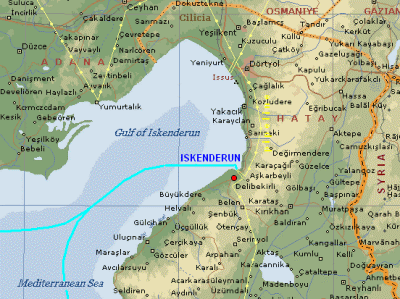
Hours before the deadly Israeli raid on the Mavi Marmara and other ships carrying humanitarian aid to Gaza, an assault on Turkey’s Iskenderun Naval Base left seven servicemen killed and six injured (Firat, May 31; Today’s Zaman, June 6). Though earlier reports indicated the attack was on the naval installation, Hatay Governor Mehmet Celalettin Lekesiz said later that PKK members fired on a military vehicle carrying troops to sentry posts with RPG-7 grenade launchers and “long-range weapons” (TurkishPress.com, May 31). Iskenderun Naval Base is located in the Hatay province of southern Turkey on the northeast coast of the Mediterranean Sea. The base hosts the largest of Turkey’s three naval training centers. Iskenderun is well outside the usual range of PKK military attacks, though the group has carried out terrorist bombings throughout Turkey.

IskenderunThe deadly attack at Iskenderun came shortly after midnight, on the morning of May 31. A few hours later, Israeli commandos boarded six ships carrying humanitarian aid for Gaza in international waters, killing nine and injuring dozens more. All of the casualties were Turks, and the news of the event sparked large protests throughout the nation. Inevitably, news of the fatal attack on Iskenderun looked to many Turks like two sides of the same coin. The feeling was reflected at top levels across the political board; AKP Deputy Chairman Huseyin Celik remarked, “We do not think that it is a coincidence that these two attacks took place at the same time” (Today’s Zaman, June 2). After expressing regret over the losses at Iskenderun, CHP leader Kemal Kilicdaroglu stated, “At a time when the Israeli army continues military operations, it is meaningful that such an incident took place in Turkey” (Today’s Zaman, June 2). Turkish intelligence agencies are reported to be investigating any links between the raid on the flotilla and the attack on the naval base (Today’s Zaman, June 6). Funerals of the dead servicemen across Turkey were attended by prominent government officials and large numbers of mourners carrying flags and shouting slogans (Hurriyet, June 1).

Turkey’s top military, intelligence and counterterrorism officials met with Prime Minister Recep Tayyip Erdogan on June 2 to discuss the two incidents. Following the meeting, Interior Minister Besir Atalay was cautious in his remarks, remarking, “I don’t want to say [these incidents] are related. Such investigations require close attention and we want to refrain from careless statements lacking tangibility… These subjects are delicate, especially when they have international dimensions” (Hurriyet, June 2; Today’s Zaman, June 3).

Many in Turkey’s government and military recall revelations of former Israeli commandos training Kurdish airport security and members of the Kurdish peshmerga militia prior to 2005, when political questions over their apparently illegal status in northern Iraq forced them to withdraw (Yedioth Ahronoth, December 1, 2005; Ynet, December 1, 2005). The men were employed by Kudo, a private security company run by Shlomi Michaels, a business associate of former Mossad chief and previous Kudo partner Danny Yatom. In recent months there have been reports that the Israeli military trainers have returned and resumed training of elite Kurdish military forces (Arutz Sheva, February 5; Today’s Zaman, June 9).

Sedat Laciner, head of the Ankara-based International Strategic Research Organization and a prominent commentator on Turkish security issues, noted that the Iskenderun attack was not typical of PKK operations. He suggested the PKK was acting as a “subcontractor” to Israel and was supported by ex-members of Mossad or the Israeli military. “It is normal that the PKK is trying to ally with Turkey’s enemies at this level… Israel also wants to show the ruling party of Turkey as something equal to Hamas. Israel wants to create such a bias in minds” (Journal of the Turkish Weekly, May 31). Other analysts pointed out that the apparent vulnerability of the Iskenderun region was of concern, given the concentration of new coal-fired and natural gas power plants in the area (Journal of the Turkish Weekly, June 5).

In Jerusalem, Mossad Chief Meir Dagan told the Knesset that Turkey was forming a new anti-Israel coalition with Syria and Iran as part of the AKP’s aim of restoring Turkish power in the Middle East. Dagan said President Erdogan has “a dream of returning Turkey’s dominance through going down the Islamic hall. He believes that through Hamas and Palestinians, additional doors will be opened for him in the Arab street” (Jerusalem Post, June 2).

Though the rhetoric on both sides is heated, there are signs that pragmatism will win the day. Turkey canceled three joint military exercises with Israel after the flotilla attack, but Defense Minister Vecdi Gonul said Turkey still expects delivery of four Israeli-made Heron unmanned aerial vehicles, part of a $190 million purchase of ten Heron UAVs. Other ongoing defense programs worth hundreds of millions of dollars are expected to continue (Hurriyet, June 3; World Tribune, June 2). Meanwhile, Turkish troops are reported to have taken losses in firefights with PKK fighters in southeastern Turkey’s Hakkari and Siirt provinces as the Kurdish rebel movement ends its ceasefire (Anatolia, June 1).


Courtroom Theater Ends as Mauritania Condemns al-Qaeda Cell to Death

Andrew McGregor
June 10, 2010

Following a short but dramatic trial, three self-proclaimed al-Qaeda members have been sentenced to death in Mauritania for their role in the murder of four French tourists in December 2007. The attack became known in Mauritania as “the Aleg case,” named after the small town near the murder site, about 250 km southwest of the capital of Nouakchott (see Terrorism Focus, January 9, 2008).

Mauritania Sidi Ould SidnaSidi Ould Sidna on Trial (center)

A total of twelve men were tried for the murders; four in absentia, with the other eight kept within a wooden cage in the Nouakchott courtroom. Only three were accused of the actual murders; the others were charged with complicity. Spectators attending the trial had to pick their way through a phalanx of riot police deployed on the court steps, submit to three separate body searches and give up any bags or cell phones before entry. Women wearing veils were prevented from entering. Foreign reporters, however, were encouraged to attend and report the proceedings. The charges faced by the main accused, Maarouf Ould Haiba, Sida Ould Sidna and Mohamed Ould Chabarnou, included terrorism, premeditated murder and rebellion against the state. After the murders, Sidna and Chabarnou fled to Guinea-Bissau, where they were tracked and arrested by local police with the assistance of French intelligence services. Haiba was arrested soon afterwards in Nouakchott (Ennahar [Algiers], May 23, 2010).

Though the three principal suspects (aged 22 to 29) insisted they were not responsible for the murders, they loudly proclaimed their membership in al-Qaeda, admitted their participation in al-Qaeda training camps and insisted their confessions had been extracted through torture. By demanding the death sentence, the prosecution put its own case in jeopardy. Important ballistics evidence obtained by French experts could not be used when Paris invoked its policy of refusing to allow experts to give evidence in capital cases. Other than that, there were no witnesses and few substantial exhibits in the three-day trial (al-Arabiya, May 25, 2010; Jeune Afrique, June 5, 2010; AFP, May 26, 2010).

In court, the three accused taunted the judges with accusations of apostasy and proclaimed that it would have been a great honor to have killed the victims – if they had done it. Charbarnou even sang the Muezzin’s call to prayer during the proceedings (AFP, May 24, 2010; Walf Fadjiri [Dakar], May 26, 2010; Jeune Afrique, June 5, 2010). The accused said they were “Soldiers of Allah,” and were determined to continue their war against France, the United States and their acolytes (Casafree.com [Morocco], June 5, 2010). Sidi Ould Sidna said he was unconcerned about his fate. “The court is only applying criminal law, not Islamic law. That’s why we’re not concerned by these decisions” (AP, May 25, 2010).

The sentences came down on May 25. The three principals in the case received the death sentences sought by the prosecutor, while the others received acquittals or short sentences ranging from six months to three years. After the death sentences had been issued, the condemned men continued their political theater, beginning with Maarouf Ould Haiba, who shouted at the judge, “God is Great! You’ll see, dog, we’ll go to paradise!” Haiba then held up a black cloth inscribed with the Muslim profession of faith in white letters – “There is no God but God and Muhammad is his Messenger.” Sidi Ould Sidna turned to the five French citizens in attendance and drew his fingers across his throat in the universal slaughtering gesture while Mohamed Ould Chabarnou shouted, “Between us and the France of Sarkozy is the sword!” (Dawn [Karachi], May 26, 2010; Jeune Afrique, June 5, 2010).

The death sentence was last applied in Mauritania in 1987, when three Black African officers were executed for planning a coup against the Bidan Moor-dominated government. While Mauritania has been considering abolition of the death penalty, death by both hanging and firing squad remain legal methods of execution (Le Quotidien de Nouackchott, May 26, 2010). All death sentences since 1987 have been commuted to life imprisonment, but there are indications the government may press for capital penalties in this case. The murders resulted in significant economic damage to Mauritania when the Paris-Dakar rally was canceled as a result of the attack. The country’s important tourism sector collapsed soon after. France, the former colonial power, also remains an important economic and political partner of Mauritania. Lawyers for the defendants filed an appeal the day after sentencing, citing the prosecution’s description of the ballistics evidence during the trial without having this evidence formally entered into the record (APA, May 26, 2010; AFP, May 26, 2010).

This article first appeared in the June 10, 2010 issue of the Jamestown Foundation’s Terrorism Monitor.

Tajik-Uzbek Railway Dispute Underlines Fragility of NATO’s Afghan Supply Lines

Andrew McGregor

June 4, 2010

Developing supply lines to NATO forces in land-locked Afghanistan has required both logistical and diplomatic creativity. The shortest and technically easiest supply line runs from the port of Karachi through the Khyber Pass, but this is also the most insecure. One of several supply lines currently in use brings supplies by rail through Uzbekistan and Tajikistan into Afghanistan.

Tajik-Uzbek
According to the deputy head of Tajik Railways, over 300 rail cars containing aviation fuel, oil and lubricants destined for NATO forces are parked on sidings in Uzbekistan (Eurasianet.org, May 26; Central Asia Online, May 26). They are among some 2,200 to 2,500 freight cars bound for Tajikistan that are being held on Uzbek territory (RFE/RL, May 26; Ferghana.ru, May 25). Tajik Railways say the delays began in February and are now preventing Tajikistan from exporting its fruit and vegetables (Daily Times [Lahore], May 26).

Unlike other disruptions to NATO’s Afghanistan supply lines, this latest difficulty has little to do with militant attacks or political disapproval of the NATO or American mission in Afghanistan. The basis of the current dispute is Tajikistan’s plans to construct a major hydroelectric power plant in Roghun, a measure that Uzbekistan claims would worsen regional water shortages. Many of the rail cars being held in Uzbekistan hold construction supplies for the power plant. Others hold much-needed reconstruction materials destined for Khatlon Province, which suffered heavy floods in early May. Rail wagons headed for Khatlon have been held up since May 18 (Ferghana.ru, May 25). Uzbekistan has said only that the delays are “technical.”

On May 7, Uzbekistan imposed temporary restrictions on passenger and cargo transport to Tajikistan due to an outbreak of polio in Tajikistan (RFE/RL Tajik, May 25).  In addition, floods along the Uzbekistan line to Termiz (the Uzbek rail terminus at the Afghan border where NATO supplies are offloaded for road transport into Afghanistan) were reported to have wiped out 11 kilometers of track. Uzbekistan says it does not have sufficient funds for repairs but has refused Tajik Railroad offers to rebuild that section at its own expense (RFE/RL Tajik, May 25).

Lieutenant-Colonel Goetz Hasske, a spokesman for the International Security Assistance Force (ISAF) brushed off the impact of the delay, saying it was “not affecting logistics in the area. We have several border crossing points that we can use and we may have to reroute some shipments” (Moscow Times, May 26).

Fuel is the most vital of the NATO supplies being shipped into Afghanistan. As such, fuel tankers are the most targeted vehicles crossing into Afghanistan. Units of the Tehrik-e-Taliban Pakistan (TTP) conduct regular attacks on tankers passing through Pakistan. While NATO is downplaying the impact of the supply obstruction in Uzbekistan, the delays raise further questions as to the reliability of Uzbekistan as a supply-chain partner beyond the immediate problem of replacing 300 tankers of fuel. On the bright side, the expected September completion of a connection between Afghanistan’s limited rail network at Marzar-i-Sharif and the Uzbek line at the border town of Termiz will enable some shipments to bypass Tajikistan (AFP, May 29).

This article first appeared in the June 4, 2010 issue of the Jamestown Foundation’s Terrorism Monitor

AFRICOM’s Operation Flintlock: New Partners and New Questions

Andrew McGregor

June 4, 2010

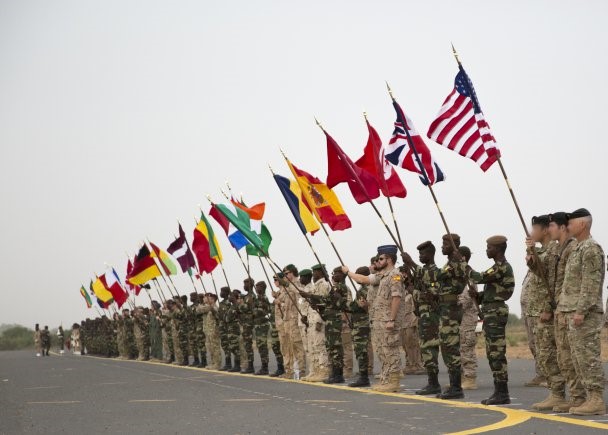
In the midst of a major drive to increase security in Africa’s Saharan and Sahel nations, American, African and European military forces have just concluded the latest version of Operation Flintlock (May 2-23), one in a series of multinational military exercises designed to foster and development international security cooperation in North and West Africa. The latest exercises came at a time of growing concerns over large-scale drug trafficking in the region and kidnappings carried out by elements of al-Qaeda in the Islamic Maghreb (AQIM). The maneuvers are conducted as part of the Trans-Sahara Counter Terrorism Partnership (TSCTP).

Operation Flintlock
1200 soldiers participated in the latest maneuvers, including 600 U.S. Marines and Special Forces, units from France and Britain and smaller European contingents from Germany, Spain and the Netherlands (L’Essor [Bamako], May 5). African countries with military representation included Mali, Algeria, Burkina Faso, Niger, Mauritania, Nigeria, Chad, Senegal, Tunisia and Morocco. The exercises were headquartered out of a Multinational Coordination Center set up at Camp Baangre in the Burkina Faso capital of Ouagadougou. Malian Special Forces received training in responding to hostage-taking operations (as carried out by AQIM). Many of the Malian participants were veterans of fighting Tuareg rebels in northern Mali.

The new participant in these exercises was Spain, once a formidable colonial power in Africa. Though the Flintlock command center in 2008 was at the Spanish-American joint use naval base at Rota, this was the first time Spanish troops joined the exercises. There were suggestions in 2008 from AFRICOM leader General William Ward that Rota might make a suitable permanent headquarters for AFRICOM—whose HQ is currently based in Stuttgart, Germany—as no African nation appears prepared to host it on the continent (El Pais, April 16). Other than the Spanish garrisons in the tiny coastal colonies of Ceuta and Melilla, it has been 16 years since the Spanish ended their military presence in Africa by withdrawing an air detachment in Equatorial Guinea (El Pais, May 24). The Spanish Defense Ministry withheld details on its participation for fear the mission might be mistaken for a rescue team going after two Spanish citizens currently being held hostage by AQIM (El Pais, May 24).

Senegal was another new participant, sending 38 Special Forces soldiers.  Their commander, Major Cheikhna Dieng, said their presence was part of Sengal’s preparations for al-Qaeda infiltration efforts (Agence de presse Sénéglaise, May 11). Senegal is over 90% Muslim. Despite the stated objective, there were apparently some concerns that the Senegalese Special Forces trained in Operation Flintlock might be deployed against separatists in southern Senegal’s Casamance region, where elements of the Mouvement des forces démocratiques de Casamance (MFDC) have been engaged in a low-level conflict with the government since the 1980s (Agence de presse Sénéglaise, May 11).

Despite having the largest and most effective military in the Sahara region, Algeria has always been a small player in the exercises. Despite its efforts to draw Algeria into coordinated counterterrorism efforts, Washington’s reluctance to provide Algeria advanced military equipment due to Israeli objections has caused dissatisfaction in Algiers, which is now looking to its old Cold War supplier, Russia, for sophisticated military supplies it cannot obtain from the United States (El Khabar [Algiers], May 24; Khaleej Times [Dubai], May 4).

The exercises began a week after Algeria, Mali, Mauritania, Chad and Burkina Faso, and Niger established a “Joint Operational Military Committee” at Tamanrasset on April 20, tasked with improving regional security and military cooperation. Libya initially signaled it would join, but later withdrew.

This article first appeared in the June 4, 2010 issue of the Jamestown Foundation’s Terrorism Monitor

Spokesman of the Army of Islam Describes Salafist Struggle for Gaza

Andrew McGregor

May 28, 2010

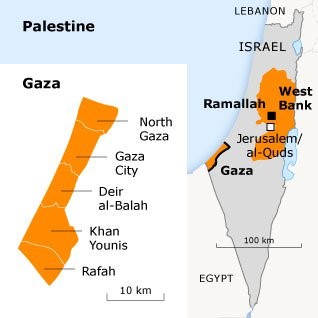
Despite their insistence that there is only one type of Islam, Gaza’s Salafists continue to operate as a number of separate groups and organizations with few apparent connections. One of the most militant of these groups is the Jaysh al-Islam (Army of Islam), known for its role in the 2006 Kerem Shalom attack that resulted in the abduction of Israeli soldier Gilad Shalit and the 2007 kidnapping of BBC reporter Alan Johnston. Jaysh al-Islam is also believed to have carried out a number of bombings against targets such as internet cafés and has engaged in serious clashes with Hamas, the governing body in Gaza. Jaysh al-Islam (a.k.a. Katbiyan Tawhid wa’l-Jihad) is dominated by the powerful Dughmush clan of Gaza City.

Gaza MapIn a recent interview with the Palestinian Ma’an News Agency, Jaysh al-Islam spokesman Abu Umar al-Ansari described the ideological approach of the Salafist movement in Gaza, focusing in particular on Jaysh al-Islam’s relations with al-Qaeda, Hamas and Gaza’s Christian minority (Ma’an News Agency, May 19).

Abu Umar began by defining Jaysh al-Islam as an Islamic group opposed to Jews, Christians, Shiites and Sufis. The movement espouses tawhid (monotheism), opposes polytheism and practices takfir (the act of declaring a group or individual to be infidel); all these traits are typical of militant Salafist groups.

Though Jaysh al-Islam has been frequently cited by Israeli sources as an arm of al-Qaeda, Abu Umar did not acknowledge any such relationship, suggesting instead that, since the Muslim community was united in their fight against the enemies of Islam, formal alliances between Salafist groups added “little in terms of support and advice,” noting, “The Army of Islam has its own path and mechanism to achieve its goals, just as the al-Qaeda organization has its own vision and policy on jihadist issues in general and the Palestinian issue in particular.”

Despite commenting that “Islam does not accept division,” Abu Umar addressed the proliferation of armed Salafist groups in Gaza and their apparent lack of coordination by saying each Salafist group saw reality in a different way and had their own path to follow. He rejected the division of Muslims into “moderates and radicals,” claiming that those Muslims who were “obsessed with Western civilization, democracy and freedom” were “semi-infidels” and “pseudo-Muslims.” According to Abu Islam, “Either [Islam] is completely correct or it is complete darkness born from the ideas and concepts of humans. Leaving Islam and joining modernity does not necessarily mean progress.”

The absence of respected Islamic scholars in the Jaysh al-Islam leadership was of little consequence, as “the Salafist method does not depend on human concepts,” relying instead on textual and traditional sources such as the Koran and Sunnah. In any case, most Salafist scholars have been killed or detained. “The prisons of the tyrants are full of them because they speak the truth.”

Abu Omar has little respect for other Palestinian organizations, describing them as failures that “should be consigned to the garbage heap of history.” He dismisses the concept of “resistance” [to Israel] as being tied to geographical locations and thus without foundation in Islam, which endorses jihad for much larger purposes. Resistance “is not Islam, but endorsement of the Sykes-Picot agreement [the 1916 secret agreement that divided the Middle East into colonial spheres of influence] and recognition of borders. Islam does not recognize borders.”

Though Jaysh al-Islam has been accused of bombing internet cafes, schools and hair-dressing salons, Abu Omar suggested the blame for these attacks lies with those who seek to create a state of emergency to eliminate the Salafist movement. The bombings also serve to create the perception of “violent Salafists” pitted against “moderate and centrist” Muslims.

The Jaysh al-Islam spokesman divides Gaza’s Christians into two groups: those “who are good” and cause no problems for Muslims, and those who are treasonous, hostile to Muslims and spreaders of “vice, infidelity and atheism.” The latter group “serves foreign agendas” and “spoils the relationship between Christians and Muslims.” Abu Omar goes on to accuse the Red Cross of killing Muslims on the orders of Christian clergymen and claims “thousands of Muslim women are raped inside Christian churches.”

Abu Omar claims Hamas has done great harm to the Palestinians by falling into reliance on the established political system of international relations, Arab initiatives and U.N. resolutions. Their advocacy of democracy and modernity has created a gulf between them and the mujahideen. Hamas has prevented jihadis from “fighting the Jews,” while peaceful demonstrations organized by Hamas have only “deceived the masses.” In the view of Jaysh al-Islam, governments derive their authority from the Shari’a, “not from popular elections.”

This article first appeared in the May 28, 2010 issue of the Jamestown Foundation’s Terrorism Monitor

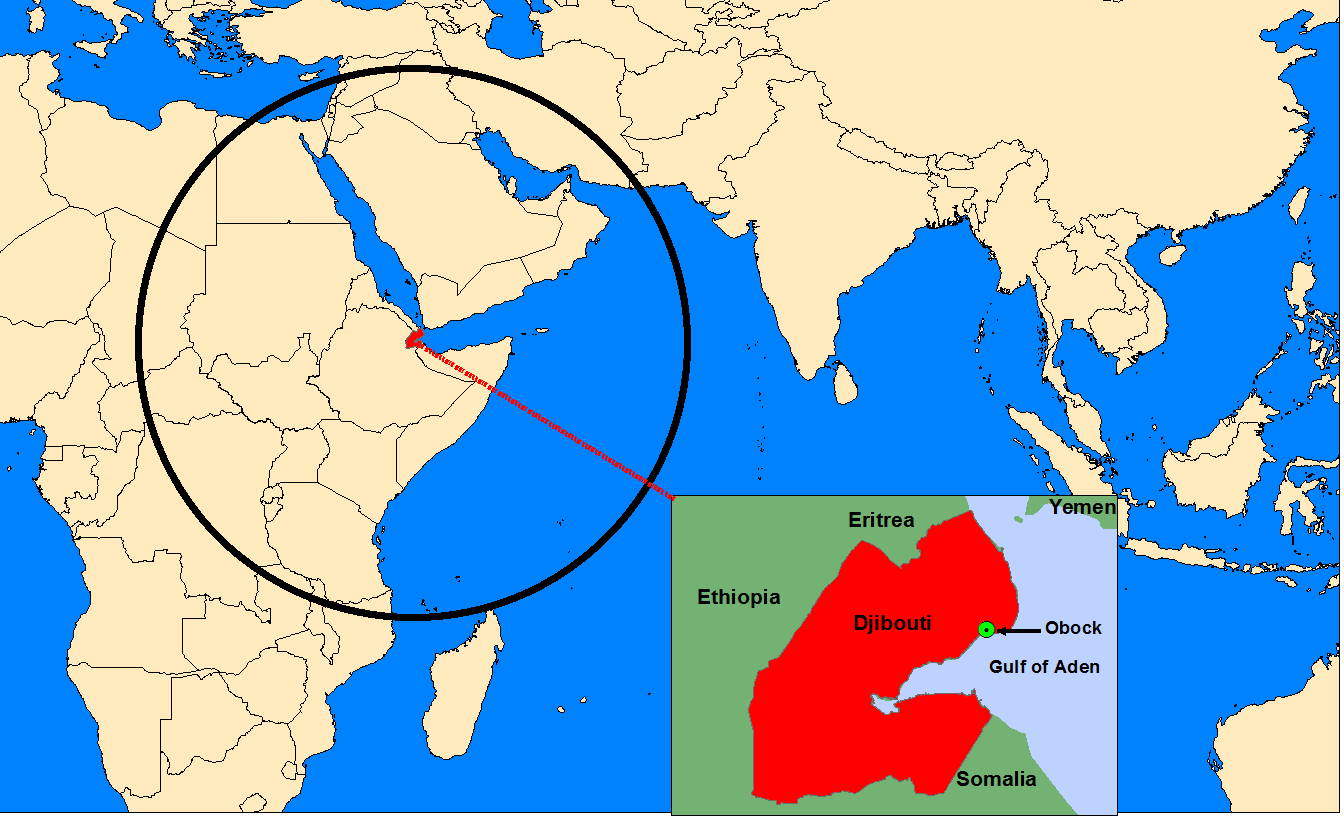
Russian Navy to Use Port in Djibouti for Anti-Piracy Operations

Andrew McGregor

May 28, 2010

News that the Russian Navy will begin using port facilities in Djibouti is further proof that the small, resource poor nation intends to take full advantage of its strategic location in the Horn of Africa (Shabelle Media Network, May 17; Interfax, May 17). The former French colony is already host to French and American military bases, with a base for Japan’s Maritime Self Defense Force (JMSDF) currently under construction.

Russia Djibouti 1The Russian Destroyer Marshal Shaposhnikov

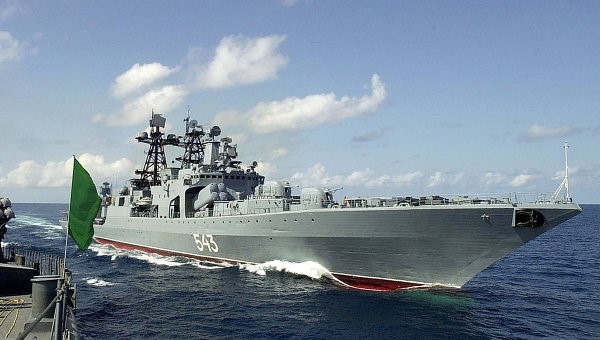
Hard on the heels of a successful anti-piracy operation in the Gulf of Aden by the Marshal Shaposhnikov came an announcement that the government of Djibouti and the command of the Djibouti Navy (which consists primarily of five U.S. donated patrol boats) had approved Russian use of port facilities. However, both Russian Navy officials and the Russian Embassy in Djibouti emphasize that the new agreement with Djibouti does not provide for the establishment of a land forces base or permanent Russian naval facilities like those being built for ships of the Russian Black Sea Fleet at Tartus in Syria. Work on the Tartus base is expected to be complete in 2011 (Vzglyad Online, May 18).

According to a Russian Naval staff spokesman, “[The Djibouti port] is located quite close to the area where our combat objective is being carried out, it is convenient and cost-effective to use if staying long in the region. With the use of the port of Djibouti, it is no longer necessary to send support ships to the region alongside our warships… As regards the creation of a base facility for ships of the [Russian] Navy in Djibouti, as is now the case with Tartus, it is too early to speak of that at this stage. The issue is not being discussed right now” (Itar-Tass, May 17, May 19). Though French and American authorities have not commented publicly on the Djibouti government’s decision, it seems unlikely that it could have been made without the approval of both of these parties.

Currently the flagship of the Russian Pacific Fleet, the Marshal Shaposhnikov is a 1980s vintage Udaloy class destroyer designed for anti-submarine warfare. With a crew of 300 men, the ship is armed with anti-submarine missiles, surface-to-air missiles, torpedoes, two 100 mm guns and two Kamov Ka-27 helicopters.

Russia Djibouti 2In a May 6 operation using helicopters and Russian Marines borne on small assault craft launched from the Marshal Shaposhnikov, Russian naval forces succeeded in rescuing the MV Moscow University, a Russian oil tanker seized by pirates in the Gulf of Aden (Zvezda TV, May 10). After a short firefight, one hijacker was killed and ten others captured, some of them wounded. The MV Moscow University is a Liberian-flagged tanker capable of carrying 86,000 tons of crude oil. At the time it was taken by pirates it was shipping oil from Sudan to China (Itar-Tass, May 10).

After initial reports the pirates were to be taken to Moscow for trial, they were instead set free on one of their own boats. According to Captain Ildar Akhmerov, “We gave to the pirates in the boat water, food and the remnants of the junk that was with them, except for the weapons, boarding ladders and navigation devices that we had seized” (Interfax, May 10). The pirates are not believed to have survived the 350 mile trip back to shore – as one Russian media outlet said, “It seems that what happened to them afterwards does not interest anyone in either Russia or Somalia” (NTV, May 10). Nevertheless, Moscow has proposed the creation of international tribunals at the U.N. to deal with the jurisdictional problem of pirates captured on the high seas (Itar-Tass, May 13).

A Russian Navy spokesman said the Marshal Shaposhnikov had been “overwhelmed” by applications from foreign merchant vessels asking to be escorted by the Russian destroyer (ITAR-TASS, May 10). After a short stay in Djibouti on May 16-17, the Marshal Shaposhnikov began preparations for escorting a convoy of commercial ships through the Gulf of Aden on May 18 (Interfax-AVN Online, May 19). The passage typically takes four days.

This article first appeared in the May 28, 2010 issue of the Jamestown Foundation’s Terrorism Monitor

Admiral of the Desert – Muhammad Omar Osman and the Ogadeni Rebellion

Andrew McGregor

May 28, 2010

The ongoing destruction of Somalia by clan warfare, sectarian conflict and foreign intervention continues to dominate international headlines; yet across Somalia’s border with Ethiopia there is an ongoing conflict involving ethnic Somalis in a remote and inhospitable region that has had a negligible amount of media coverage. The decades-old struggle between the Ethiopian government and the Somalis of Ethiopia’s Somali Region (known as Haraghe Province until the administrative reforms of 1995) is one of brutal attacks and retaliations conducted out of sight of foreign media, which is banned from the region. Though it is best known as the Ogaden conflict, after the ethnic-Somali Ogadeni clan that leads the rebellion, ethnic-Somalis actually fight on both sides of the dispute.
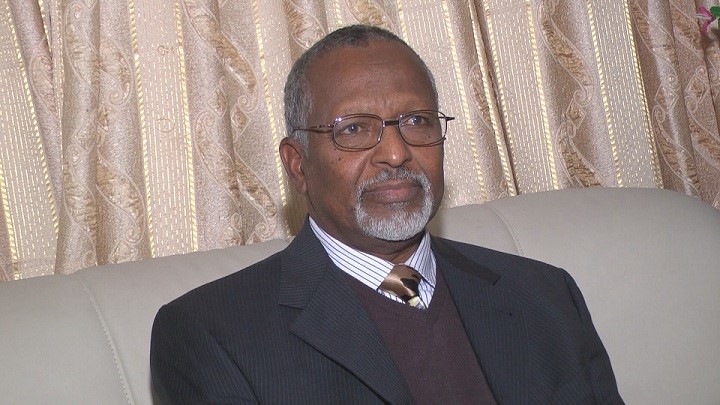
Ogaden Rebellion 1Muhammad Omar Osman

The Somali Region is the second largest of Ethiopia’s nine regions and is home to over four million people. Since its conquest by imperial Ethiopia in the nineteenth century, the region has experienced very little in the way of development or improvement. In addition, it has remained the focus of Somali nationalists who seek the creation of a “Greater Somalia” incorporating Somalia, Somaliland, Djibouti, the Somali Region of Ethiopia and the ethnic-Somali northeastern districts of Kenya. Pursuit of this goal led to the Ogaden War of 1977-78, when Somali dictator Siad Barre committed four mechanized brigades to support armed Somali separatists in the region. The conflict quickly grew out of hand, with airlifts of Soviet military equipment and 10,000 Cuban regulars tipping the scales in favor of the Marxist Derg regime (1975-1987) in Addis Ababa. Though Ethiopia eventually inflicted a devastating defeat on the Somali military, the dominant theme in its policy in the Somali Region and towards Somalia proper has been the avoidance of any repetition of such a costly and threatening episode. Since the 1991 overthrow of the Derg, Ethiopia has been ruled by the Ethiopian Peoples’ Revolutionary Democratic Front (EPRDF), an umbrella group dominated by the Tigray People’s Liberation Front (TPLF) under Prime Minister Meles Zenawi.

Even the name of Ethiopia’s Somali region is in dispute – Ethiopia’s official name is “the Somali Region,” though it also calls it the “Fifth Region”; Ogadeni clan Somalis call it “the Ogaden region” (a name rejected by the non-Ogadeni Somali clans of the region); and the pre-revolution Somali government referred to it as “Western Somalia.” The leader of the Ogaden National Liberation Front (ONLF), Admiral Muhammad Omar Osman, rejects the idea that the name “Ogaden” implies the superiority of that clan; “This is the internationally recognized name, which is shown on world maps. The Front sees no use in creating a new name for the region and then introducing it to the world anew. The former Somali government called the region Western Somalia, but few people in the region know this name.” Nonetheless, Osman says it is possible the name might still be changed “after liberation” (Asharq al-Awsat, October 12, 2009).

From Desert Tribesman to Somali Admiral

Now 70-years-old, Muhammad Omar Osman has led the ONLF since his appointment at a party congress in 1998. As a member of the Ogadeni clan, he was born within the borders of Ethiopia, but by the time he was a teenager he was attending school in the Somali capital, Mogadishu. Osman turned to a military career and pursued military studies in Egypt and the Soviet Union. As an officer of Somalia’s armed forces, Osman assumed a position within Siad Barre’s Somali Revolutionary Socialist Party, the Soviet-inspired Marxist-Leninist political wing of Barre’s military regime. Founded in 1976, the party’s leadership was dominated by military officers and Osman eventually rose to a prominent position in the party’s five-member Politburo (Bartamaha, October 12, 2009). Loyalty to the Siad Barre regime resulted in Osman’s appointment to Admiral of Somalia’s tiny navy of Soviet-built fast-attack craft. After the overthrow of the Siad Barre regime, Osman returned to his homeland, where he joined the ONLF.

Clan Militia or National Liberation Movement?

The ONLF was formed in 1984 after the collapse of the separatist Western Somali Liberation Front (WSLF). The movement entered into politics in 1991 with some initial success, though the rise of the rival and more broadly-based Ethiopian-Somali Democratic League (later the Somali People’s Democratic Party) and the ONLF’s open policy of secession created strong opposition from Addis Ababa and drew support away from the ONLF, which then began a program of armed resistance to the Ethiopian state in 1994. Besides attacks on Ethiopian troops, the movement has been blamed for a series of bombings in Addis Ababa and the regional capital of Jijiga, leading the central government to designate the ONLF as a terrorist organization with alleged (but so far unsubstantiated) ties to al-Qaeda. Despite Ethiopia’s role as an American military ally, the Ethiopian regime’s characterization of the ONLF and its activities as “terrorism” has failed to bring about a U.S. or EU designation of the ONLF as a terrorist organization.

Unlike the region’s Islamic Nasrullah resistance movement of the 1960s, the ONLF is notably secular and nationalist in orientation, though there remains a subtext of tension between the Christian rulers of Ethiopia and the Muslim clans of the Ogaden region. Some reports maintain that the ONLF portrays itself as a secular movement for external consumption, but increasingly relies on an emphasis on Muslim identity and calls for jihad in its recruiting. [1] In discussions with the Arab press, Osman has not hesitated to describe the Ogaden issue as “an Arab-Islamic cause because the Ogaden people are an Arab Muslim people” (Asharq al-Awsat, October 12, 2009).

Osman calls for a “free referendum” on independence, consolidation with Somalia or a continued presence within Ethiopia for the Somali Region, though he says negotiations with the Ethiopian government are possible, so long as they take place in the presence of a neutral third party in a neutral location (Asharq al-Awsat, October 12, 2009).

Despite being personally based in Eritrea amidst widespread allegations of Eritrean military training and support for the ONLF, Osman denies any suggestion that his movement acts as a proxy in the ongoing rivalry between the leaders of Eritrea and Ethiopia; “The Ogaden Region and Eritrea were under Ethiopian occupation, and we began the war before Eritrea was liberated and also before the Eritrean-Ethiopian conflict. There is no connection between this conflict and the ONLF struggle” (Asharq al-Awsat, October 12, 2009).

Many local Somalis not belonging to the Ogaden clan (a sub-clan of the Darod) reject the ONLF as an attempt to enforce Ogadeni rule in the region. Pro-government clan militias have been formed by the government (sometimes through coercion) from members of the Isaaq, Dir and non-Ogadeni Darod clans to combat the ONLF. There were reports of heavy fighting between the ONLF and clan militias supported by government troops in late April (Jimma Times, April 30; Ogaden Online, April 24). The poorly trained and equipped clan militias typically take heavy casualties in clashes with the ONLF.

Without outside observers it is extremely difficult to assess the accuracy of battle reports from either side. For example, ONLF forces claimed a major success last year in capturing the town of Mustahil, killing 100 government soldiers while capturing another 50. A government spokesman termed the claim “absolutely false” and maintained ONLF forces were on the run (Shabelle Media Networks, March 8, 2009; Garowe Online, March 9, 2009; Somaliweyn, March 10, 2009). Only rarely do accounts bear any similarity to each other; more often one side will claim victory and the infliction of great losses on the enemy while the other side will respond with a statement saying they know nothing of any such encounter.

The ONLF frequently refers to military actions undertaken by its “Special Forces” units, such as the Dufaan commando or the Gorgor (Eagle) unit (Mareeg Online, March 7, 2009). The latter was reported to have captured the Malqaqa garrison along the road between Jijiga and Harar in mid-May, killing 94 soldiers, freeing 50 civilian detainees and seizing 192 light and heavy machine guns (Ogaden Online, May 17). As usual, these figures are impossible to verify.

Resource Exploration Intensifies the Conflict

Though the arid expanses of Ethiopia’s Somali Region offer little more economic activity than herding and other agricultural pursuits, there has been a great deal of recent speculation regarding potentially exploitable mineral deposits and oil and gas reserves. Chinese, Malaysian, Indian, Canadian and Swedish exploration companies have all become active in the region under government protection after concluding deals in Addis Ababa without local consultation. The ONLF has advised foreign exploration companies that the government does not control the region and their security guarantees are worthless (Afrol News, November 14, 2006). The movement backed up these warnings with a major attack on a Chinese-managed oil exploration site at Obala in the northern Ogaden region in April 2007 that killed 65 Ethiopian soldiers and nine Chinese oil workers. It also resulted in the short-term abduction of seven Chinese oil workers (BBC, April 14, 2007; ONLF Communiqué, April 24, 2007). The scale of the attack led to speculation that Eritrean advisors and weapons had been part of the operation. According to Osman; “If the occupation authorities exploit these resources, they will not use them to develop the region. Rather, they will use them to destroy the region and repress the people” (Asharq al-Awsat, October 12, 2009). Further warnings to foreign companies were issued last month (Shabelle Media Network, April 25).

Though the Obala operation finally gained the movement international attention, it served to justify an extremely severe crackdown on the region by Ethiopian National Defense Force (ENDF) troops operating under the concept of collective punishment. Though outside observers were banned during the operation, refugees and local informants of human rights organizations reported summary executions of civilians, destruction of villages, torture and blockades of food and humanitarian aid. In what is clearly a “dirty war,” ONLF forces have been accused of similar human rights abuses in dealing with the civilian population.

Leadership Disputes within the ONLF

Internal disputes within the party came to a head with the January 2009 killing of the head of the ONLF’s Planning and Research Department, Dr. Muhammad Sirad Dolal. A committee of ONLF members produced a report on Muhammad Sirad Dolal’s murder in March. The report suggested that cronyism and tribal favoritism began to permeate the movement’s leadership after Muhammad Omar Osman became ONLF Chairman in 1998. Differences arose between the party leader and Muhammad Sirad Dolal after the latter opposed the Chairman’s attempt to remove Muhammad Abdi Yasin from his post as Liason for the Diaspora Community, allegedly for reasons based on tribal animosity.
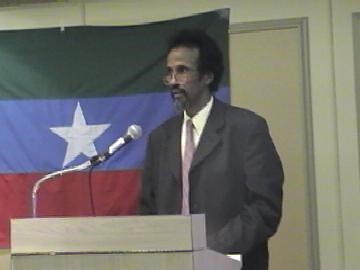
Ogaden Rebellion 2Dr. Muhammad Sirad Dolal

In 2005 Osman claimed Dr. Dolal was preparing to defect to the Ethiopian government and issued orders that he was to be killed, orders that were subsequently ignored by fighters who did not believe the Chairman’s allegations. As the party began to split over the growing animosity between the two, Osman dismissed Dr. Dolal from the movement’s leadership. An unsuccessful assassination attempt on Dr. Dolal followed at an ONLF-dominated refugee camp in Kenya in 2008. Between November 2008 and January 2009 there were a number of clashes between the Chairman’s supporters and supporters of Dr. Dolal. Eventually Osman sent three commando teams to kill Dr. Dolal after informing them Dolal was an Ethiopian agent. After the successful conclusion of their mission on January 17, 2009 it was decided to let local government security forces take credit for the killing (Raxanreeb.com, March 23; Sudan Tribune, March 16, 2009). Dr. Dolal’s daughter has openly accused Muhammad Omar Osman and party leaders Abdirahman Mahdi Madayi, Muhammad Ismail and Adani Hiromooge of organizing his death (Raxanreeb.com, January 11). While it appears Osman’s supporters had little input to this report, it nevertheless provides background for the subsequent split in the movement.

Regardless of who was responsible, the death of Muhammad Sirad Dolal divided the ONLF. A senior movement member, Abdiwali Hussein Gas, announced the appointment of a new ONLF chairman, Salahudin Ma’ow, with the promise that the new leader would bring Osman to account for breaking up the ONLF (Jimma Times, March 3, 2009). For his part, Osman denies that any split has taken place in the movement, suggesting those who mention it are those who would like to see such a split occur (Asharq al-Awsat, October 12, 2009).

A smaller Somali movement, the United Western Somali Liberation Front (UWSLF, a local successor group to al-Itihad al-Islami) has finally capitulated to the Ethiopian government after 18 years of sporadic armed struggle (Reuters, April 9; Raxanreeb.com, May 7). Under its leader, Shaykh Ibrahim Muhammad Dheere, the UWSLF will now operate as a peaceful political movement within the terms of the Ethiopian constitution (Walta Information Center, May 6). The ONLF has criticized Ethiopian attempts to represent this event as the end of hostilities in the region (Jimma Times, May 7).

Conclusion

Amidst rumors of new challenges to his leadership from within the ONLF, Muhammad Omar Osman, the Admiral turned rebel leader, faces major difficulties in sustaining his movement’s struggle in the face of a deeply divided membership, local opposition, an unsympathetic public image, unrestrained retribution from the Ethiopian military, a lack of foreign support from any quarter other than Eritrea and general international opposition to violent movements even rumored to be linked to radical Islamists.

Note

  1. See Mohammed Mealin Seid, “The Role of Religion in the Ogaden Conflict,” SSRC, January 26, 2009, http://hornofafrica.ssrc.org/mealin/printable.html

This article first appeared in the May 28, 2010 issue of the Jamestown Foundation’s Militant Leadership Monitor

With Elections Over, Khartoum Goes on the Offensive in Darfur

Andrew McGregor

May 20, 2010

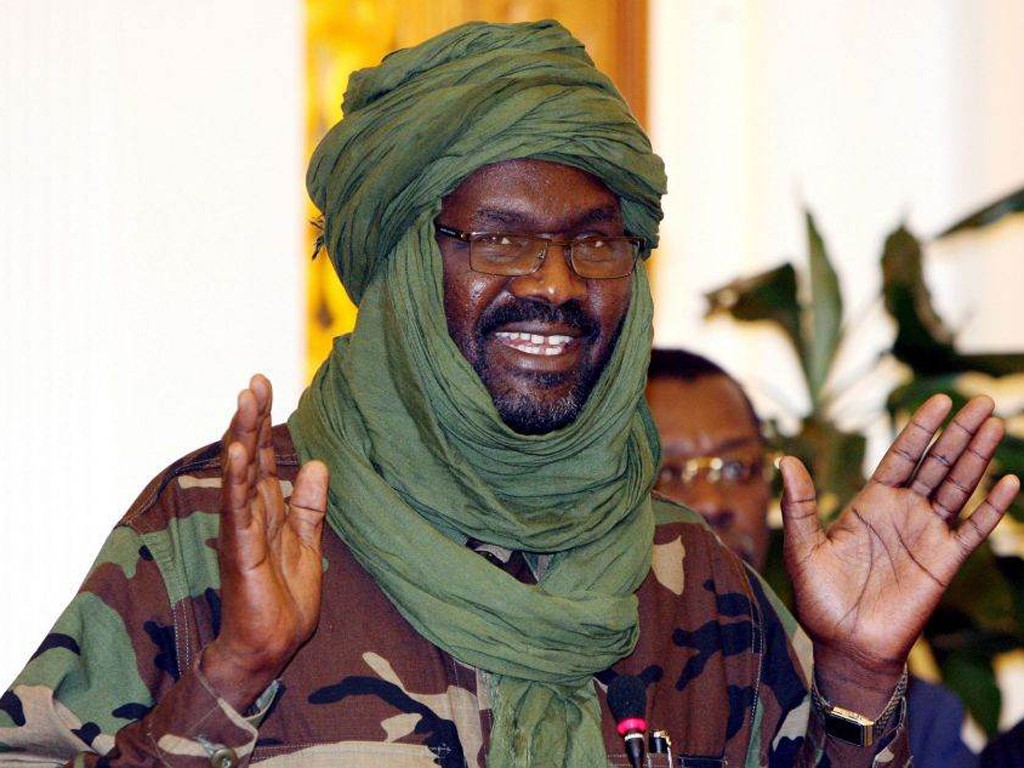
The leader of Darfur’s most effective rebel movement, the Justice and Equality Movement (JEM), was recently in Cairo seeking greater Egyptian participation in negotiations between JEM and Sudan’s ruling National Congress Party (NCP). Dr. Khalil Ibrahim accuses the Qatar government of showing favoritism to Khartoum in its role as mediator in the on again, off again Doha negotiations.

Khalil IbrahimJEM Leader Dr. Khalil Ibrahim

While Khalil Ibrahim was in Cairo, the Sudan government sought to embarrass his hosts by making a public request for Interpol to arrest the Egyptian government’s guest. Sudanese Justice Minister Abdul Bassit Sabdarat announced he had asked Interpol to “arrest” Ibrahim “wherever he is located,” although the Justice Minister must have been aware that Interpol facilitates international law enforcement cooperation but does not make arrests (Sudanese Media Center, May 10). The statement was designed solely to express Khartoum’s displeasure with Khalil’s presence in Cairo; Khartoum had previously requested Interpol’s assistance in detaining the JEM leader in 2006 and 2008 (Sudan Tribune, June 11, 2008). Khalil Ibrahim is also already on Interpol’s list of fugitives wanted on charges of terrorism laid by the Sudan government. [1] The JEM leader mocked the arrest request in an interview with a pan-Arab daily, asking why Sudanese police don’t arrest him while he is in Sudan (Al-Sharq al-Awsat, May 13).

In a Cairo interview, the JEM leader suggested that the latest rapprochement between Chad and Sudan would have little effect on his movement, which has used bases in Chad in the past but is now largely based in Darfur. He also recalled the May 2008 JEM raid on Omdurman, describing the operation as one “worthy of being taught in the military academies… We moved the war from Darfur to the heart of Khartoum and we asserted our power on the ground” (Al-Sharq al-Awsat, May 13).

Khalil described the recent elections as rigged, pointing to the results in Darfur as proof. “What is comic is that all those that won in Darfur are members of the [ruling] National Congress. We know that these were not elected by the Darfur masses; the fraud was shameless.” Nevertheless, he urged the leaders of South Sudan to postpone the upcoming referendum on independence in hope of a last minute deal to ensure the unity of Sudan. The JEM leader claimed his movement did not seek political power in Sudan, but was only “looking for a formula to solve Sudan’s problems in general” (Al-Sharq al-Awsat, May 13).

After the Egyptian Army invaded the region in 1916, Egypt co-ruled Darfur with Great Britain until Sudanese independence in 1956. In the interests of securing stability on its southern borders, Egypt has become more involved in seeking a solution to the Darfur crisis, including the return of Egyptian troops to Darfur as part of the UNAMID peacekeeping force. Two Egyptian peacekeepers were killed and three wounded earlier this month when a small Egyptian military convoy was ambushed in South Darfur by unidentified attackers (MENA Online, May 7; PANA Online, May 8; al-Jumhuriyah [Cairo], May 11). The men were buried at a mass funeral in Lower Egypt’s al-Dakhalia governate (MENA Online, May 5).

In the wake of the Egyptian deaths, Rwanda’s Lieutenant General Patrick Nyamyumba, the UNAMID land forces commander, promised a more vigorous response to attacks on peacekeepers. “Self defense is an inherent right that should be exercised without a doubt” (New Times [Kigali], May 13).

Sudan’s president, Omar al-Bashir, is reported to have become angry over Khalil Ibrahim’s reception in Cairo during a meeting in Khartoum with Egypt’s Foreign Minister Ahmad Abu al-Ghayt and Intelligence Director Omar Sulayman. The president sent two of his closest aides to Cairo on May 15 to resolve what is being described as a “silent crisis” over the JEM leader’s visit to Egypt (al-Hayat, May 14).

With the ceasefire between JEM and Khartoum in a near state of collapse, Khartoum went on the offensive on May 15, seizing the longtime JEM stronghold at Jabal Moun near the Chad border after several days of shelling. A Sudan Armed Forces spokesman claimed 108 JEM fighters had been killed and another 61 taken prisoner, though JEM claims to have carried out a successful withdrawal. There was also heavy fighting between JEM and the SAF reported near the South Darfur capital of Nyala, with both sides claiming victory (Sudan Tribune, May 16; AFP, May 15; Reuters, May 15).

1. See Interpol’s wanted list: www.interpol.int/public/Data/Wanted/Notices/Data/2006/45/2006_37945.asp

This article first appeared in the May 20, 2010 issue of the Jamestown Foundation’s Terrorism Monitor

Renegade Generals Threaten Unity of South Sudan’s SPLA as Independence Referendum Approaches

Andrew McGregor

May 20, 2010

As the January 2011 referendum on independence for oil-rich South Sudan approaches, ongoing mutinies and indiscipline within the South’s military may create conditions of insecurity that threaten to delay the long-awaited plebiscite. Khartoum has little interest in seeing its main source of revenue separate and the central government’s hand is seen by many in the South as being behind the mutiny of General George Athor Deng in the road-less but resource-rich Jonglei Province.

The border region between North and South Sudan is extremely tense; recent Sudan Armed Forces (SAF) troop movements in Blue Nile Province and South Darfur provoked a letter of complaint to President Omar Bashir from the leader of the Government of South Sudan (GoSS), Salva Kiir Mayardit (al-Sharq al-Awsat, May 3; AFP, May 1). Both the SAF and the Sudan People’s Liberation Army (SPLA) have been steadily rearming with oil revenues since the implementation of the 2005 Comprehensive Peace Agreement (CPA) (see Terrorism Focus, October 30, 2008).

George AthorGeneral George Athor Deng

General Athor’s Mutiny

In 2009, SPLA commander George Athor Deng (a Dinka tribesman) was promoted to Lieutenant General and placed in charge of SPLA political and moral orientation.  Athor failed to receive the Sudan People’s Liberation Movement (SPLM – the political wing of the SPLA) nomination for governor of Jonglei state in April’s elections, which went instead to Lieutenant General Kuol Manyang. Like a number of would-be SPLM candidates who failed to get the nod from the party as its representative, Athor ran as an independent, finishing well behind Kuol Manyang. Unhappy with the results, Athor appears to have orchestrated a deadly attack on the Doleib Hills SPLA base (near Malakal) on April 30. The Doleib Hills area is contested between the Dinka Luac and the Shilluk of Upper Nile State. The night attack left twelve SPLA soldiers dead. Five prisoners from the attacking force claimed the order to attack had come from General Athor (Sudan Tribune, May 1). Athor appears to have been testing the waters at first, refusing to accept responsibility but admitting that the attackers “fought in my name.”  Athor suggested most of the casualties were the result of an ethnically-divided SPLA force shooting at each other (Sudan Tribune, May 2). It was later confirmed that anti-aircraft weapons, three anti-tank guns and a number of machine-guns were taken from the garrison’s arsenal (Sudan Radio Service, May 3).

Further clashes between Athor’s men and SPLA forces occurred on May 7 (Athor claimed 50 SPLA were killed to three of his men) and May 10 (Athor claimed 36 SPLA dead to the loss of seven dead and three wounded on his side) in a skirmish 188 miles north of the Jonglei capital of Bor (Reuters, May 7; May 11). Athor’s followers clashed with SPLA forces for the third time in a week on May 12. While Athor continued his improbable claims by saying his men killed 83 SPLA soldiers, an SPLA spokesman described the action as a skirmish that erupted when an 11 man SPLA reconnaissance team stumbled on Athor’s hideout in the thick forests of northwestern Jonglei, with two killed from their side and none from Athor’s group (Reuters, May 12). On the same day, General Athor announced that other armed groups were preparing to converge with his forces to attack the Jonglei capital of Bor (Sudan Tribune, May 12). Athor also boasted that he had sufficient forces to take the town of Malakal, capital of Wilayah (Unity) State (Reuters, May 3). On May 14, the mutineers mounted an unsuccessful ambush of a SPLA truck in northern Jonglei that left five attackers dead.

General Athor has since issued a number of demands, including the resignation of Kuol Manyang, cancellation of all election results, dissolution of the GoSS and an amnesty for his followers (Miraya FM [Juba], May 13). After the fourth attack, SPLM Secretary General Pagan Amum said their intelligence section had “credible information” that the NCP was behind General Athor’s revolt, though Athor had already denied any connection to the ruling party in Khartoum (Sudan Tribune, May 17; al-Hayat, May 14). Though Athor has threatened to invade the provincial capitals of Bor and Malakal, SPLA authorities insist Athor is still south of al-Subat with a force of less than 100 men and only three vehicles, including Athor’s personal car (al-Hayat, May 14). However, SPLA spokesman Kuol Diem Kuol said there were signs some police and a number of South Sudan’s armed wildlife rangers (mostly former SPLA fighters) had joined Athor’s mutineers (Reuters, May 14).

Salva Kiir, whose authority is being challenged soon after a dominant election victory, appears to be losing patience with his renegade general, making a negotiated settlement increasingly unlikely (Sudan Tribune, May 17). In the meantime, the continuing insecurity in Jonglei has resulted in a lack of cultivation, threatening famine in the area (Miraya FM [Juba], May 14; Sudan Tribune, May 4).

General Dau Aturjong Nyuol, who had similarly and unsuccessfully contested the election for governor of Northern Bahr al-Ghazal state, was briefly the subject of reports tying him to General Athor’s revolt through an unnamed Brigadier working under his command (Sudan Tribune, May 5). The Brigadier later turned out to be John Jok Gai, who had passed close to Doleib Hills on his way to Malakal without an awareness of the events transpiring there. A political rival alleged that John Jok, an SPLA member since 1983, was on his way to defect to General Athor, a charge denied vigorously by the Brigadier (Sudan Tribune, May 3; May 4; May 5; May 9).

“New Sudan” vs. “South Sudan”

Despite growing support for the independence option, there are still a few flickers of life left in the “New Sudan” unity program that was official SPLM policy under the movement’s late leader, Dr. John Garang. On May 8, SPLM Secretary for North Sudan Yasir Sa’id Arman called on Northern opposition parties belonging to the anti-NCP Juba Alliance (including Sadiq al-Mahdi’s Umma Party, Hassan al-Turabi’s Popular Congress Party, the Sudanese Communist Party and the Khatmiyya Sufi dominated Democratic Unionist Party) to join with the SPLM in creating “the New Sudan.” Garang’s vision of a federal system that would reform Sudan’s highly centralized power structure that maintains power in the hands of three small Arab tribes in North Sudan largely expired when he died in a controversial helicopter crash near the Ugandan border in 2005. Garang was willing to use force if necessary to keep his concept of a unified Sudan alive, but Salva Kiir, like most SPLM/A leaders, is believed to prefer the secession option.

American Interests in Jonglei and the South

While France’s Total holds the largest concessions in Jonglei, Malaysian, Moldovan and British companies have also been carrying out oil exploration operations in Jonglei. The American Marathon Oil Corporation was forced to withdraw from the region after the imposition of U.S. sanctions on the Sudan. Jonglei Governor Kuol Manyang Juuk visited oil company executives in Houston last July, where he urged investors to set up refineries in Jonglei (Houston Chronicle, July 25, 2009). With an exception now being made to the sanctions for South Sudan, American energy interests can now return to the southern provinces. The United States is providing assistance in preparing the referendum, though U.S. envoy to Sudan Scott Gration recently told a Senate committee that “we can’t waste another minute” in preparing for the vote (AFP, May 13).

A Sudanese daily recently reported that the SPLM had prepared a document for presentation to a visiting American diplomat in which the SPLM/A offered to provide regional security and counter-terrorism forces in cooperation with AFRICOM in return for logistical support, military training and funds for weapons purchases. The newspaper said the document was prepared by a committee of senior SPLA officers headed by the Minister of SPLA Affairs, Lt. General Nhial Deng Nhial (Dinka). The plan was endorsed at a meeting headed by General Salva Kiir in the presence of Deng Alor (Dinka), the second vice-president of South Sudan, and Yasir Sa’id Arman (Ja’aliyin Arab), the leader of the SPLM’s northern branch.

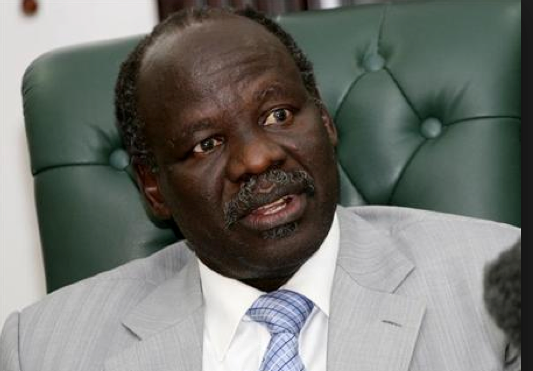
Lam AkolDr. Lam Akol Ajawin

New Trouble on the Horizon?

Pan-Arab daily al-Hayat reported that an alliance was being formed in Khartoum between militia leader Gabriel Tanginya (or Tang), former Foreign Minister Lam Akol and General George Athor with the intention of challenging the authority of Salva Kiir Mayardit and derailing the 2011 independence referendum (al-Hayat, May 14). Dr. Lam Akol is the leader of SPLM for Democratic Change (SPLM – DC), an SPLM breakaway party created in June 2009. Lam Akol challenged for president of South Sudan in April’s elections as head of a broad coalition of opposition parties, but gathered only 7% of the vote compared to Salva Kiir’s 93%. The failed candidate maintains the voting was rigged and has the support of veteran Southern politicians such as Bona Malwal and General Joseph Lagu (Sudan Tribune, April 27). Major General Gabriel Tanginya (a.k.a. Gabriel Gatwech Chan) led a pro-government militia in the 1983-2005 North-South Civil War. After clashes with the SPLA in 2006, Tanginya withdrew his forces to Khartoum, where he and his forces were integrated into the Sudan Armed Forces (SAF). A surprise return to the southern city of Malakal in February, 2009 resulted in further clashes with the SPLA before Tanginya withdrew once more (see Terrorism Monitor, March 13, 2009). The existence of this alliance cannot yet be confirmed, but it is almost certain that General Athor’s mutiny will not be the last violent confrontation with the SPLM/A.

SPLA spokesman Major General Kuol Dim Kuol claims great progress has been made in the professionalization of the SPLA:  “The SPLA has formed a nucleus air force and navy. Our pilots and engineers have been trained and local support and administrative units will follow suit” (Afrik.com, May 18). Nevertheless, the transformation of the SPLA from a guerrilla force to a regular army has been beset by problems related to the integration or demobilization of rival Southern guerrilla forces, incidents of indiscipline, delays in salaries and desertions. In April, three soldiers unwilling to transfer to Jonglei province were killed by SPLA military police after they looted and stole a supply truck in Bahr al-Ghazal. A month earlier, a large force of SPLA troops left for Wau rather than report to a training center near Bor (Sudan Tribune, April 19).  Despite these problems, the SPLA continues to make progress in developing a trained and unified fighting force, though there seems little chance the transformation will be completed before next January’s independence referendum.

Conclusion

Though not all elements in the trend can be confirmed, it appears that the SPLM is considering adopting a role as a U.S. client state in Africa in exchange for U.S. military aid or protection in the event of a renewed civil war with the North following the independence referendum. The GoSS is nearly completely reliant on oil revenues, but Khartoum will be reluctant to allow the immense petroleum reserves of southern states like Jonglei to slip from its hands. Khartoum currently collects 50% of Southern oil revenues. There are many political and tribal elements in South Sudan that have little interest in reconciliation with the Dinka-dominated SPLM/A. In the past these have been assisted by the central government’s intelligence agencies in the interest of disrupting the SPLM/A. Military mutinies are particularly unsettling in South Sudan, where they have a long history of marking the beginning of major conflicts.

AIS Update: General George Athor was reported killed in a clash with South Sudanese border guards in Morobo County in Equatoria State in early December, 2011.

This article first appeared in the May 20, 2010 issue of the Jamestown Foundation’s Terrorism Monitor.

New Book by Late al-Qaeda in Iraq War Leader Analyzes Military Lessons of the Prophet

Andrew McGregor

May 20, 2010

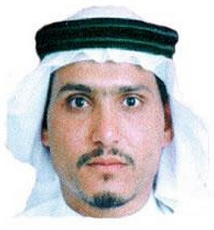
Less than a month after his death in an attack by U.S. and Iraqi forces, a book by al-Qaeda in Iraq’s late War Minister, Abu Hamza al-Muhajir (a.k.a. Abu Ayub al-Masri) has been released for publication on jihadi websites (al-Fajr Media Center, May 10). The work, entitled The Prophet Leader, examines the tactics and military lessons to be learned from the 7th century campaigns of the Prophet Muhammad. The 436 page book was published under the Egyptian al-Qaeda leader’s real name, Abd al-Mun’im bin Izz al-Din al-Badawi.

Abu Hamza al-MuhajirAbu Hamza al-Muhajir

In the introduction to this work, the authenticity of which is uncertain given that the operational demands on al-Muhajir’s time may have interfered with the detailed research necessary to produce this lengthy work, the author provides his justification in returning to ground well covered by earlier scholars:

Why write about this topic when others before me wrote about it? I say: There are many reasons; most importantly, we in the Islamic State of Iraq assume that we are proceeding from the same starting point of the prophetic state, and that we lived and live in an environment that is almost identical to it, whether in its internal or external situation, or what is today called the regional situation.

Al-Muhajir says it is important to review the campaigns of the Prophet “so that it will not be stated that we innovated something strange.”  Al-Muhajir refers here to charges from other Sunnis in Iraq that ISI/al-Qaeda had transgressed the Islamic prohibition on bid’ah (innovation) in their tactical methods, which are heavily reliant on assassinations, suicide attacks and the targeting of civilians in mass-casualty bombings. It was Sunni revulsion with these methods that led to the development of the anti-al-Qaeda Sahwah militias, a major setback for the ISI.

In recent days the Islamic State of Iraq [the political structure of al-Qaeda in Iraq] named its new War Minister as al-Nasser Lideen Illah Abu Sulayman. Though the name is almost certainly a pseudonym, the new War Minister announced the start of a new military campaign as a reminder that ISI is not finished as a jihadi movement after the death of its two top leaders.  In the meantime, quotes from al-Muhajir’s speeches and statements have begun to appear on jihadist websites in an apparent attempt to posthumously shape al-Muhajir as a notable practitioner of jihad in both action and theory.

This article first appeared in the May 20, 2010 issue of the Jamestown Foundation’s Terrorism Monitor