Tribal Resistance and al-Qaeda: Suspected U.S. Airstrike Ignites Tribes in Yemen’s Ma’rib Governorate

Andrew McGregor

July 15, 2010

A small governorate of roughly 150,000 people, Ma’rib was once the heart of the great Sabaean civilization of pre-Islamic times, a land made prosperous by the construction of great irrigation works. Its wealth figured in the legends surrounding reputed rulers like Queen Sheba. When the Great Dam of Ma’rib collapsed in the 6th century, many of its people spread across North Africa and the region entered a long decline, enjoying a slight revival with the discovery of oil in the mid-1980s and the construction of a new dam funded by the late ruler of Abu Dhabi, Sheikh Zayed Bin Sultan al-Nahyan. Political violence entered the region, however, and the ruined Awam (Moon) temple of Ma’rib became the scene of an al-Qaeda suicide bombing in 2007 that killed eight Spanish tourists and two Yemenis (France 24, June 7).
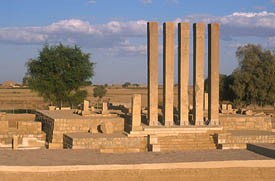
maribAwam Temple in Ma’rib

Though Yemen’s reserves of oil (never substantial by Arabian Peninsula standards) are quickly diminishing, al-Marib remains home to vast oil and gas reserves, making it a hub for the regional energy industry that provides 90% of government revenues, with vulnerable pipelines connecting the region to export terminals on the southern coast. These pipelines were cut by attacks 60 times last year (Elaph, June 13).

Like most of Yemen, the population of Ma’rib is largely tribal-based with a certain degree of de-facto independence from the state. Government is as much tolerated as respected. Most notable among the Ma’rib tribes are the Abidah, the Murad, the Jahm, the Jad’an and the Ashraf Ma’rib.

The Killing of Jabir Ali al-Shabwani

On May 24, what appears to have been an American unmanned aerial vehicle (UAV) fired a missile at a home in Ma’rib’s Wadi Abieda area (Yemen Post, June 19; Al-Quds al-Arabi, June 27). The home belonged to a wanted al-Qaeda operative, Muhammad Sa’id bin Jardane, who was wounded in the strike but managed to escape. However, the strike did not miss Ma’rib Deputy Governor Jabir al-Shabwani and his four bodyguards, who were all killed. Al-Shabwani had been negotiating Bin Jardane’s surrender for a week and had gone to his farm to finalize the terms (AFP, May 25).

Outraged by what they believed was a plot to kill a notable tribal leader, tribesmen of the Shabwani clan and the larger Abidah tribe began attacks on government facilities and military outposts. Tribesmen destroyed parts of the Ma’rib city center, even attacking the city’s air defense camp (Yemen Observer, May 29). A targeted assassination of a senior military officer carried out in Ma’rib several days later by members of al-Qaeda in the Arabian Peninsula (AQAP) further inflamed the region as a military offensive sought revenge.

Al-Qaeda Activity in Ma’rib

According to security authorities, in the last three years al-Qaeda has killed 37 military and government officials in Ma’rib from a list of 40 targets. A new list has allegedly been compiled by the militants (Saba, June 13). AQAP leaders Nasser al-Wuhayshi, Sa’id al-Shihri and Qasim al-Raimi were reported to be in Ma’rib in June. Authorities speculated they were fleeing a government offensive in the Abidah region of Ma’rib (Yemen Observer, June 17). Later there were unconfirmed reports that AQAP leader Ali Sa’id bin Jameel was killed by a military bombardment (Okaz.com, July 4; Saudi Gazette, July 4).
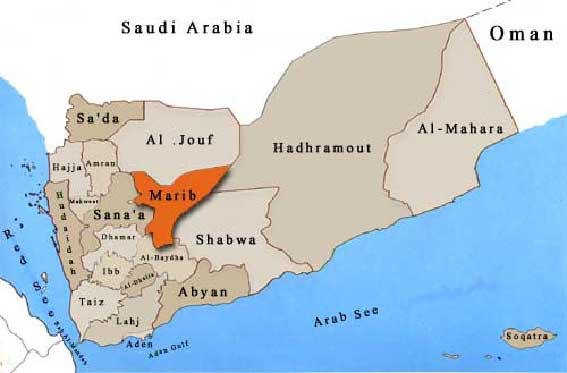
Marib MapAQAP is believed responsible for the June 5 ambush and killing in Ma’rib of General Muhammad Salih al-Sha’if (commander of the 315 Brigade), though an AQAP statement denied responsibility, saying the murder was a government ploy to legitimize attacks on the local tribes (Marebpress.net; June 5; Yemen Post, June 19). Vowing revenge, government forces concentrated their search for suspects in the Abidah region of Ma’rib, focusing on Hassan Aridan and 28-year-old Hasan Abdullah Saleh al-Aqili, described as an al-Qaeda commmander in Ma’rib.

Twelve security men and 11 tribesmen were injured during a June 9 shootout with Abidah tribesmen at al-Aqili’s home in Ma’rib’s al-Madina district, but the militant and his followers escaped (Yemen Observer, June 9).  The fighting began after soldiers destroyed the homes of several al-Qaeda suspects and then began shelling the entire area, according to a local official (Xinhua, June 9).

Resorting to Traditional Mediation

At this point both sides resorted to the traditional Yemeni mediation methods that forever keep Yemen at the brink of disaster rather than falling off the precipice. Unable to allow Ma’rib’s energy industry to slip from its control, Yemeni authorities issued an apology for the airstrike and President Saleh formed a special president’s committee including leaders of the Abidah tribe to investigate (al-Hayat, June 9).

Eventually the Yemeni press published a statement from the late deputy governor’s father, Shaykh Naji al-Shabwani, apologizing for the Abidah tribe’s “moment of anger” following his son’s “assassination.” The elder Shabwani was invited to a personal meeting with the president and agreed to accept tribal mediation, thus helping defuse open rebellion in the region over the killing of his son. Addressing the belief in the Abidah tribe that Jabir Ali al-Shabwani was the victim of a plot at the highest levels, the shaykh added, “If the president was behind the killing of my son, then he should confess and I, on my part, will forgive him” (al-Masdar, June 6; al-Quds al-Arabi, May 31). Confessions, however, were not forthcoming, and there were reports that other Abidah shaykhs had rejected the arbitration. Even as progress was made on defusing this issue the government’s broad hunt for the killers of General Muhammad Salih was intensifying the violence in the region.

A Ma’rib arbitration committee decided to take sworn oaths from Yemen’s leaders testifying that they had no prior knowledge of the airstrike that killed al-Shabwani. The state additionally agreed to pay blood money in the amount of one billion riyals (approximately 4.5 million dollars) (Al-Quds al-Arabi, June 27). The procedure effectively removed all responsibility from the Yemen government and left the United States solely to blame for the attack. Locally this also had the effect of relieving Yemeni officials of any personal responsibility, with all the consequences of tribal vendetta that would follow (al-Quds al-Arabi, May 31).
The Counterterrorist Offensive Meets Tribal Resistance

A leading member of the local tribal structure, Alawi al-Basha bin Zaba, secretary-general of the Alliance Council of the Ma’rib and al-Jawf tribes (al-Jawf is a neighboring governorate) told a London-based Saudi daily that the military operations in Ma’rib and their resulting collateral damage threatened to turn Ma’rib into “another Sa’dah,” referring to the simmering rebellion in north Yemen that has posed one of the Yemeni state’s most serious challenges. The operations in Ma’rib “will pull the tribes into confrontation with the state. We have warned of such a situation and said that it must be handled in a completely different way. ” Of particular offense was the practice of demolishing the homes of al-Qaeda suspects by firing mortars and Katyusha rockets from a range of some kilometers, inevitably destroying the homes of people with no relation to the militants. Bin Zaba saw a darker purpose behind such tactics; “Some officials might be seeking to push the tribes towards allying with al-Qaeda… Some officials and shaykhs are benefiting from keeping the situation as is,” he said (Elaph, June 13). The tribal leader suggests official reports regarding the presence of al-Qaeda in Ma’rib are exaggerated and designed to increase foreign aid to the state.

Fighting threatened to grow out of control as Yemeni armor began to roll into Ma’rib and tribal allies of the Abidah and the Shabwani clan began to pour into the region from neighboring governorates. Attacks were made against the local Republican Palace, military outposts and power stations. Pylons carrying electric power to Sana’a were brought down and al-Jad’an tribesmen blocked the road between Sana’a and Ma’rib. Gas pipelines were destroyed and technicians prevented from making repairs. When planes of the Yemeni Air Force began flying over the region the Abidah tribesmen responded by firing antiaircraft weapons. The Alliance Council of the Ma’rib and al-Jawf tribes described the government offensive as “terrorist acts” and warned that if political intervention was not forthcoming, “the tribes will abandon their responsibilities and allow al-Qaeda to take control of Ma’rib Governorate” (Ma’rib Press, June 11).

A June 12 meeting between shaykhs of the Abida tribe and Interior Minister Major General Mutahar Rashad al-Masri produced an agreement in which the tribe vowed to stop harboring al-Qaeda suspects, condemned sabotage and agreed to dismantle roadblocks and allow repairs to the pipeline (AFP, June 13). Al-Qaeda had different plans, however. In mid-June, AQAP released a statement in response to what it described as attacks on “women, children and brothers” in the Wadi Abidah region of Ma’rib. The group appealed to the shaykhs of Abidah and the shaykhs of Ma’rib to distance themselves from the “Crusader campaign” and President Ali Abdullah Saleh stated, “With permission from God, [we will] set the ground alight under the feet of the tyrant infidels from the regime of Ali [Abdullah] Saleh and his aides – the agents of America” (al-Jazeera, June 19). There has been speculation that the devastating June 19 AQAP attack on the Aden offices of the Political Security Organization (PSO) was intended as revenge for the assault on the Abidah region and was part of an effort to ingratiate themselves with tribal leaders who had agreed to expel al-Qaeda elements from their territories (Al-Ahali, June 22).

Destroying Ma’rib’s Main Pipeline

On June 12, a bulldozer was used to destroy the main pipeline carrying oil to the Hodeida governorate port of Ras Issa, the third attack on the pipeline in less than a month. Ministry of the Interior sources said the attack was the work of the Hatik sub-tribe of the Abidah, angered by the military offensive. Ministry of Defense sources claimed that the attack had actually been the work of Saudi AQAP deputy leader Sa’id al-Shihri (26sep.net, June 14; Okaz, June 16; Yemen Post, June 28). Al-Hatik leaders denied any participation in the attempt to break the pipeline (al-Taghyir [Sana’a], June 17).

Local sources told a pan-Arab daily that those who attacked the pipeline were tribesmen with no ties to al-Qaeda seeking revenge for an entire family that was killed by army shelling during operations in the Abidah region. The tribesmen were also angered by an attempt to arrest Shaykh Nasir Qammad bin Durham, who was accused of harboring al-Qaeda operatives. The shaykh evaded security authorities but his home was destroyed by artillery. The bulldozer attack on the pipeline was said to have created a huge fire with a smoke column that could be seen 40 km away (al-Hayat, June 13).

More violence broke out in Ma’rib as tribes began fighting over control of the local oil fields. Government forces did not intervene in recent clashes between the Abidah and the Bal-Harith that killed 18 during fighting over an oil field near the border with Shabwa governorate (Yemen Post, June 24; al-Tagheer, June 24).

Conclusion

A recent study of the political role of Yemen’s tribes stated that the often abrasive relations between the tribes and central government had been tempered by President Saleh’s attempts to improve the relationship. The tribes now dominate both parliament and the Shura Council, resulting in some tribal conventions being integrated into national legislation. However, the hereditary nature of tribal authority and the dominance of tribal chiefs have led to the exclusion of tribesmen from political involvement. An estimated 85% of Yemenis belong to tribes, most of which are well-armed. [1]

Despite evidence to the contrary, Ma’rib Governor Naji Bin Ali al-Zaidi prefers to maintain that al-Qaeda members in Ma’rib are not natives of the area, but are rather “strangers who are exploiting the hospitality of the Ma’rib people to hide and plan for their terrorist operations.” The governor points to the wild terrain and nomadic nature of the local people as draws for a terrorist group seeking safe havens. Al-Zaidi warns that al-Qaeda “are targeting the whole world through our province, because Yemen, several Arab and foreign countries all have interests in this province” (Yemen Observer, March 9). Regardless of the governor’s claims, there appears to be continued sympathy for local al-Qaeda members in the region. Recently two AQAP members wanted for attacks on military and security forces, Mansur Saleh Dalil (a.k.a. Salel Salim Dalil) and Mubarak al-Shabwani, surrendered to authorities in Ma’rib.  Attacks on security checkpoints quickly followed the death penalties handed down to the men on July 7 (Saba, June 15, July 11; Yemen Post, June 15).

By accommodating American requests for direct strikes against al-Qaeda suspects in Yemen, government authorities are left to deal with consequences that can quickly spin out of control in a highly volatile environment. There are estimates that the cost of lost oil revenues, repairs to the power supply and compensation to the tribes in Ma’rib will exceed the annual amount of U.S. aid to Yemen. The military response to the assassination of senior officers seemed to invoke the tribal principle of collective responsibility, with the counterterrorist offensive in Ma’rib making little differentiation between the guilty and the innocent. Coming at the same time as the airstrike that killed a noted Abidah leader, the rapid escalation in violence and its potential to spill into neighboring governorates provided a warning that some areas of Yemen are perilously close to breaking with the government and accepting an al-Qaeda presence. The heavy-handed military tactics that helped break the Houthi rebellion (at least temporarily) during “Operation Scorched Earth” will not necessarily work in other regions. Traditional mediation efforts appear to have subdued the violence, but the risk remains that in the current environment apologies, compensation and mediation may not be effective next time, particularly if the tribes are convinced to accept al-Qaeda operatives (their relatives and fellow tribesmen) as their protectors and avengers against a state they perceive as working for foreign interests.
Note

1. See Adel al-Sharbaji et al., Palace and the Divan, the Political Role of Tribes in Yemen, Observatory for Human Rights/International Development Research Center. For a summary, see Yemen Times Online, April 7, 2010.

This article first appeared in the July 15, 2010 issue of the Jamestown Foundation’s Terrorism Monitor


Calls for Resignation Follow General Basbug’s Public Discussion of Turkish Counter-Terrorism Strategy

Andrew McGregor

July 15, 2010

In a July 5 interview on Turkey’s Star TV, Chief of the Turkish General Staff Ilker Basbug made a number of controversial remarks regarding Turkey’s counter-terrorism strategy that have led to calls for his resignation, public criticism from the Turkish president and even a criminal complaint.

Basbug 1Chief of the Turkish General Staff Ilker Basbug

During the interview, General Basbug pointed out that the PKK has suffered enormous losses over the years from Turkish military counter-measures. Despite this, the movement still has about 4,000 active fighters. Basbug explains this by suggesting the PKK has benefitted from international political developments that have saved the movement each time it was on the verge of collapse. More important, however, is Turkey’s failure to properly assess the PKK’s resilience; “When incidents of terrorism subside or vanish in Turkey – we do not perceive this correctly. [We assume that] the terrorist organization is finished or that it has disbanded. In reality, the mountain cadres of the terrorist organization remained intact” (Anatolia, July 7; Milliyet, July 12).

The General outlined three essentials necessary for the continued operations of the PKK:

•    Human Resources – Recruits must be prevented from joining the terrorists, otherwise the constant attrition of PKK numbers will have little real effect.

•    Financial Resources – Basbug identified three main sources of PKK funding: the narcotics trade, human trafficking and extortion. All three sources are based on activities in Europe, leading Basbug to ask, “Is it not our right to ask these countries to take serious steps to control and to cut off the financing sources of the organization and to produce results?”

•    Safe Havens – The PKK continues to find secure spaces within Turkey as well as in neighboring countries like Iraq. Basbug complained that “powerful entities” in northern Iraq [i.e. the Kurdistan Regional Government] are not playing a part in eliminating the terrorists. He also pointed out that the PKK continues to receive logistical support in this region, making his boldest comments of the interview, “We are at a point where the time for talking is over. Turkey lost so many martyrs in the last two months. This causes heartaches to all of us. It is time – and getting late – for individuals, institutions, states, and entities in northern Iraq to fulfill the responsibilities incumbent upon them.”

Basbug also warned of deeper implications for international relations, even with its American NATO ally. He stated, “The PKK presence in northern Iraq may have a negative influence on Turkish-Iraqi relations in the coming period. To some extent, it may also have a negative effect on Turkish-US relations.” There is speculation within Turkey that the United States has cut back on its sharing of actionable intelligence with the Turkish military after Turkey voted against new sanctions on Iran in the UN Security Council. Allegedly, this has contributed to the success of several recent large-scale PKK attacks, but a spokesperson for the American embassy in Ankara denied any cutbacks in intelligence sharing (Hurriyet, June 20).

Also in the General’s sights were parliamentary deputies of the pro-Kurdish Peace and Democracy Party (Baris ve Demokrasi Partisi – BDP). According to Basbug, “They took an oath on the Constitution as deputies in Parliament, but then attended the funerals of terrorists… Either abandon your position as a deputy and go to the mountains [to join the PKK] or fulfill the responsibilities that stem from your oath in Parliament.”  BDP co-chair Selahattin Demirtas responded, “The Chief of General Staff is not in the position to give us orders. He committed a crime and should be deposed from office… Starting from now, Gen. Basbug is responsible for any possible undesirable incidents that may happen to BDP deputies” (Bianet, July 8; Today’s Zaman, July 7). One independent Turkish daily criticized the General’s remarks, saying, “While others are struggling to make the people come down from the mountains, the Chief of the General Staff takes efforts to direct the parliamentarians towards the mountains” (Taraf, July 8).

Basbug 2Gendarmerie Colonel Cemal Temizoz

Turkish jurists took offense at the General’s defense of Ergenekon suspects, including Gendarmerie Colonel Cemal Temizoz, who has been accused of leading a secret Gendarmerie formation in southeastern Turkey specializing in the torture and extrajudicial killing of Kurdish nationalists. According to Basbug, “Unjust accusations against officers, generals and non-commissioned officers disturbed me greatly. They are accused of membership in a terrorist organization. Colonel Temizoz is such an example” (Today’s Zaman, July 7). The remarks were interpreted as an attempt to put pressure on the judiciary in an ongoing investigation. Colonel Temizoz faces nine life sentences without the possibility of parole.  The Turkish Human Rights Association (Insan Haklari Dernegi – IHD) said the General’s comments should be interpreted as support for crime and criminals. In cooperation with a number of lawyers from southeastern Anatolia, the IHD filed a criminal complaint accusing Basbug of spreading hatred (Today’s Zaman, July 11).

President Abdullah Gul joined in the condemnations of Basbug’s statements, particularly his decision to reveal details of Turkey’s counter-terrorism strategy previously discussed at classified meetings of the National Security Council (Milli Guvenlik Kurulu – MGK). Gul stated, “There is already an ongoing counterterrorism program. Talking about this does not bring any benefit” (Today’s Zaman, July 9).

General Basbug has also come under fire for publishing a speech on terrorism in the official Israeli Defense Forces (IDF) magazine Maarachot. The article underwent final editing after the IDF’s disastrous May 31 raid on a Turkish humanitarian aid ship in international waters that left nine Turks dead (Haaretz, July 5). Basbug is scheduled to complete his term as chief-of-staff on August 30.


This article first appeared in the July 16, 2010 issue of the Jamestown Foundation’s Terrorism Monitor
Defiant AQIM Challenges New Regional Counter-terrorist Command with Deadly Cross-Border Raid

Andrew McGregor

July 8, 2010

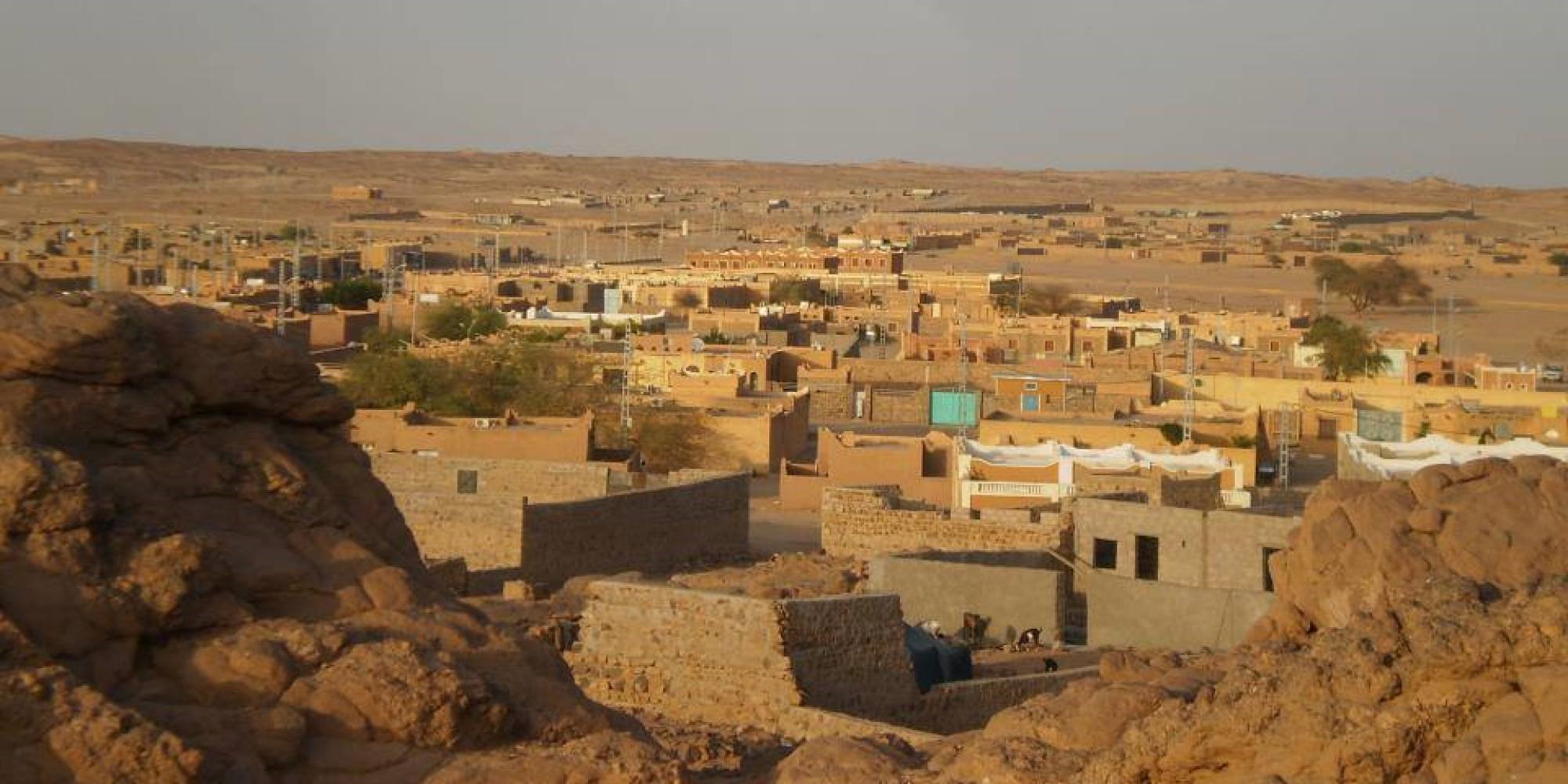
Al-Qaeda in the Islamic Maghreb (AQIM) answered the formation of a multinational counterterrorism center in the southern Algerian town of Tamanrasset by ambushing a patrol of Algerian border gendarmes close to Tin Zaouatine, roughly 40 km from the border with Mali and 2000 km south of Algiers (El Watan [Algiers], July 1). At least 13 gendarmes were killed in the June 30 ambush, the worst Islamist violence in Algeria since the July 29, 2009 attack by militants belonging to the Protectors of the Islamist Call that killed up to 14 soldiers in the Mediterranean town of Tipaza (El Khabar [Algiers], July 30; El Watan, July 30).

South Algeria 1Tin Zaouatine

Security officials in the Malian capital of Bamako said two gendarmes were taken prisoner, one of whom was released to describe the fate of his comrades (al-Jazeera, July 1). AQIM followed up by releasing leaflets in the border region claiming responsibility for the ambush (Ennahar [Algiers], July 3). The leaflets said the attack was designed to mark AQIM’s “determination to fight against the regime of Algiers” and promised the movement would continue attacks “until final victory.” Only a day before the attack, Major-General Ahmad Gaid Salah, chief-of-staff of Algeria’s Armée Nationale Populaire (ANP), announced that the militants could surrender under the terms of the 2005 reconciliation accord or await their “certain death” (AFP, June 30).

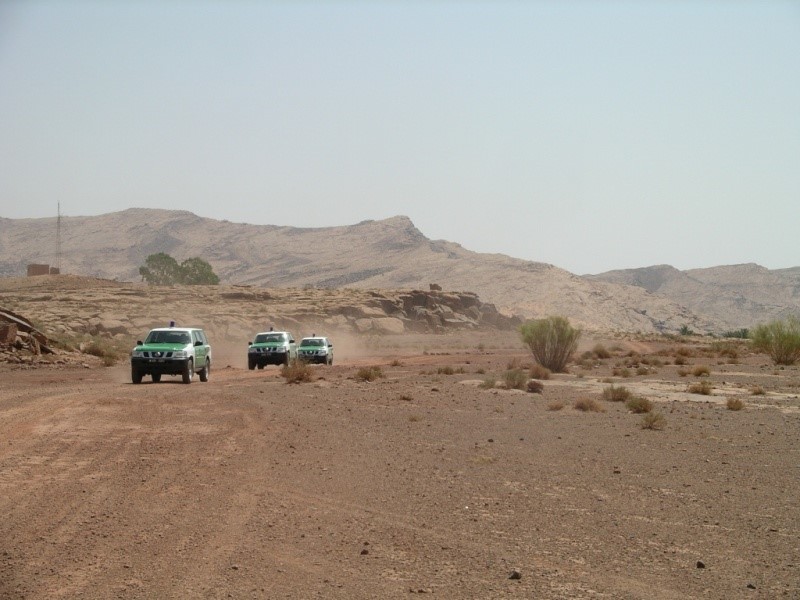
South Algeria 2Groupement des Gardes Frontières Patrol in Southern Algeria

The ill-fated patrol was composed of members of the Groupement des Gardes Frontières (GGF). The GGF fall under the command of the ANP and have been recently outfitted with new all-terrain vehicles and sophisticated monitoring and surveillance equipment. Though quantities of arms and ammunition were removed by the attackers, the two armored 4×4 GGF vehicles were surprisingly burned rather than taken away. The attackers are believed to have slipped back across the border into northern Mali.

In a first sign of the regional cooperation promised by Algeria, Mali, Niger and Mauritania through the April formation of a Tamanrasset-based Joint Operational Military Committee, designed to provide a joint response to border security and terrorism issues, there are reports Mali has invited Algerian forces to pursue the militants on Malian territory (Reuters, July 1; see Terrorism Monitor, April 23). The cross-border AQIM attack seems intended, at least in part, to test the political resolve of the new joint operations mechanism. Algeria’s President Abd al-Aziz Bouteflika recently took Mali to task at the G-8 summit in Huntsville, Canada for breaching an agreement not to exchange imprisoned terrorists for hostages, as Bamako did last February to free a French hostage. Bouteflika described the exchange as “direct support of terrorism” (Echorouk, June 26; al-Jazeera, March 2).

The dawn ambush is believed to have been the work of Abu Zaïd, a militant AQIM commander sent south by AQIM Amir Abd al-Musab Abd al-Wadoud to reinvigorate the Southern Command, which appeared for a while to be devoting more effort to cigarette smuggling than jihad.

This article first appeared in the July 8, 2010 issue of the Jamestown Foundation’s Terrorism Monitor
Separatists Say Yemeni Regime Will Destroy South Yemen to Maintain National Unity

Andrew McGregor

July 8, 2010

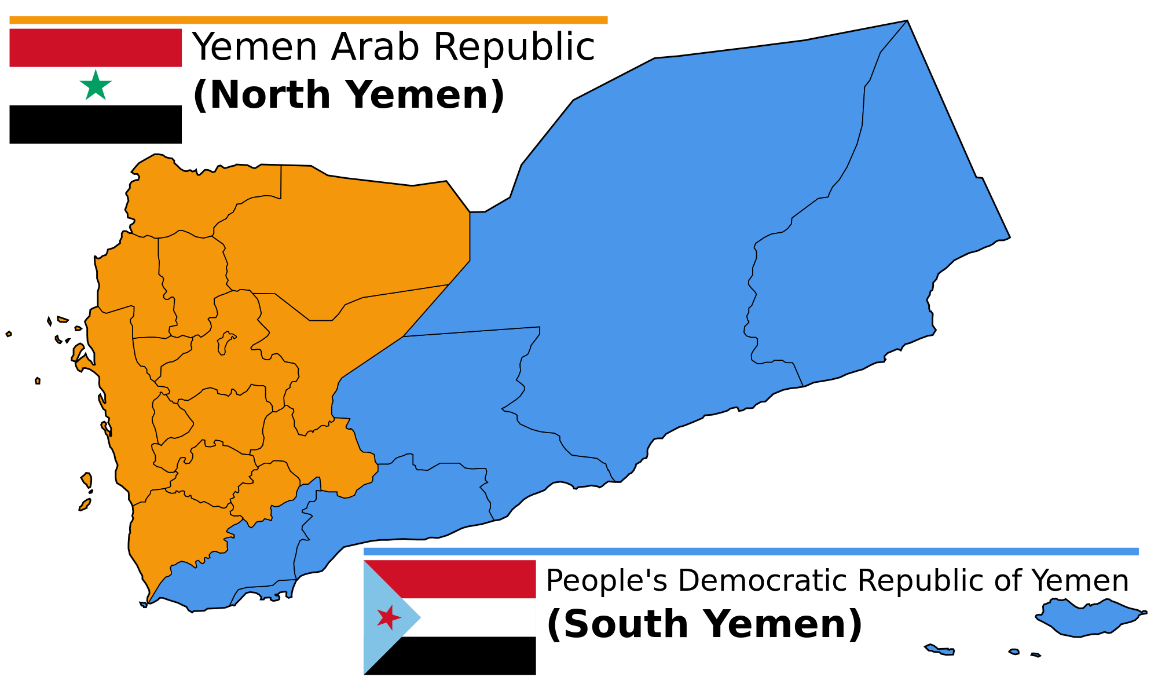
A series of interviews conducted by the pan-Arab newspaper Asharq al-Awsat have revealed a number of perspectives from leaders of the South Yemen separatist movement. One such was provided by Abd al-Hamid Talib, a member of the Central Committee of the Yemeni Socialist Party (YSP – al-Hizb al-Ishtiraki al-Yamani). The YSP was founded in 1978 as an umbrella group for an array of various southern political parties and movements and formed the ruling party in South Yemen before unification in 1990. The party has struggled since the central government emerged victorious from the 1994 civil war, confiscating the party’s facilities and resources. In opposition, the party has adhered to its platform of secular socialism and pan-Arab nationalism.

South Yemen MapPre-Unification Yemen

Contrasting the current breakdown of law and order in Yemen with the rule of law that existed in South Yemen prior to unification, Abd al-Hamid says Yemen could be described as a “failed unity state,” except that “Yemen is not a state, as this concept [in Yemen] usually means but a gang ruling Yemen, with the full meaning of the word ‘gang’” (Asharq al-Awsat, June 21).

Abd al-Hamid traces most of the South’s misfortunes to its loss in the 1994 Civil War. Of particular importance was the decision to disband the Southern Army rather than integrate it with national forces, leading to wide unemployment and dissatisfaction with the regime:

They [the regime] could have, for instance, reinstated the army of the Democratic People’s Republic of Yemen to military service. In one of his interviews, the brother president [i.e. President Ali Abdullah Saleh] gracefully called for Saddam’s army to be reinstated to military service following the U.S. invasion of Iraq. For that matter, he should have reinstated the army of the Democratic People’s Republic of Yemen to service following his invasion of the South! Moreover, as he advised the Palestinians to open the door for dialogue between Palestinian factions, he should have engaged in a dialogue with the southerners, specifically with the YSP (Asharq al-Awsat, June 21).

The YSP leader claims the regime is doing everything in its power, including infiltration, to draw the YSP into an armed conflict, knowing its superiority in arms and numbers will allow it to destroy the movement; “They are prepared to destroy the South completely to remain in power” (Asharq al-Awsat, June 21). Yet Abd al-Hamid believes that time is on the side of the secessionists, as the power of the authorities will inevitably deteriorate as the beleaguered economy begins to collapse. While international support for the separatist movement has yet to materialize, the international community is still able to see that there is no progress being made by Saleh’s government to stabilize the domestic situation in Yemen.

Abd al-Hamid was recently released from detention after having been charged with supporting the Southern Mobility Movement (SMM), a new separatist umbrella group that appears to have supplanted the YSP as the leading separatist movement. However, Abd al-Hamid suggests the party is as relevant as ever, claiming more than 80% of the members of the SMM were originally in the YSP.

Though clashes have occurred between pro-independence protesters and security forces at several rallies in the South, the SMM maintains it is a peaceful rather than armed political movement. Authorities routinely describe the SMM as a “terrorist militia” in the pro-regime press and accuse it of armed attacks on government institutions and military facilities (Naba News Online, June 21; June 22). Many SMM activists are demobilized members of the former army of the Democratic People’s Republic of Yemen [i.e. the old socialist regime in the South]. The movement is strongest in the governorates of al-Lahij, al-Dali and Abyan, while support in the largest urban center, Aden, has diminished due to the more cosmopolitan makeup of the population in the port city (Asharq al-Awsat, July 2).

This article first appeared in the July 8, 2010 issue of the Jamestown Foundation’s Terrorism Monitor
 

Algeria Introduces New Counter-Terrorism Measures in Operation Ennasr

Andrew McGregor

July 1, 2010

At a meeting in Oran attended by the Algerian military’s top commanders and leaders of Algeria’s National Gendarmerie, Armed Forces chief-of-staff Major-General Ahmad Gaid Salah explained the next phase of Operation Ennasr (“Victory”), a nation-wide counterterrorist offensive.

Gaid SalahMajor-General Ahmad Gaid Salah

Commanders of various military sectors were ordered to pursue terrorists belonging to al-Qaeda in the Islamic Maghreb (AQIM) directly into their well-concealed camps. Saying, “We are determined to put an end to the terrorist groups via the mobilization of all legal means,” the General demanded greater cooperation between the various geographically-based military commands of Algeria’s Armée Nationale Populaire (ANP) and improved coordination with national intelligence services (La Liberté [Algiers], June 24). Since Operation Ennasr began, a large number of AQIM commanders have been captured or surrendered, with Algerian intelligence already benefitting from information gleaned from interrogations.

Though AQIM has experienced difficulty recruiting suicide bombers, Algeria’s security forces are determined to prevent a repeat of the devastating suicide bombings that struck Algiers in 2007. One of the AQIM commanders seized in Boumerdès revealed the existence of a plot to carry out a suicide bombing in Algiers on June 17 or 18, but was unable to name the would-be bomber or the exact site of the bombing – under AQIM protocol, these details would be known only to the bomber and his handler. Drivers entering Algiers were subjected to extensive searches and examinations of papers at two separate roadblocks on roads entering the city – the first run by the Gendarmerie and the second run by the local police. Surveillance cameras, sniffer dogs and explosives detectors were all deployed at the checkpoints, which subjected commuters to hours-long traffic jams (El Watan [Algiers], June 21).

The Ministry of Defense has also announced a significant expansion of the National Gendarmerie (al-Dark al-Watani), which plays an important role in finding and eliminating terrorist cells in rural areas. Before the end of the year, 9,000 new gendarmes of various ranks and academic backgrounds will be added to the present 60,000 man paramilitary. A new security communications network called Ronital is being introduced to Algiers, Blida Province and the Tizi Ouzou region of the Kabyle Mountains, areas where counterterrorism efforts are most active. The unified network will ensure effective transfers of sound, images and electronic messages with the central command even in difficult conditions and terrain (El-Khabar [Algiers], June 24).

This article first appeared in the July 1, 2010 issue of the Jamestown Foundation’s Terrorism Monitor
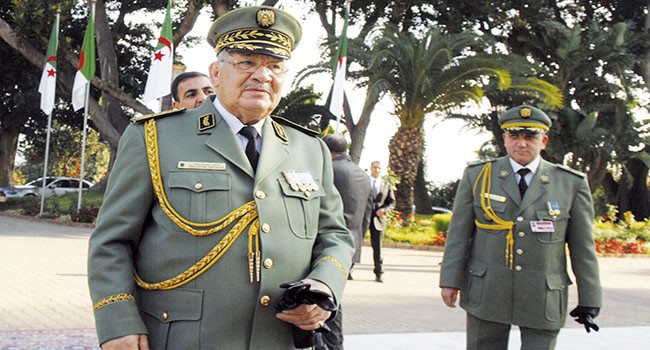
Former Taliban Commander Alleges UK Supports Taliban, Regrets Joining Government

Andrew McGregor

July 1, 2010

A former Taliban commander who, after his defection, was appointed Governor of the Musa Qala district of Helmand Province told an independent Afghan TV station that he now regrets his choice and foresees at least another five years of warfare in Afghanistan (Tolo TV, June 22). Mullah Abdul Salam Hanafi, a chieftain in the Alizai tribe, has been speaking openly lately of his distaste for the Karzai government and his conviction that the UK is behind all the problems experienced by the people of Helmand Province. Since his defection to the government, Mullah Abdul Salam has survived several assassination attempts, including a concentrated attack on his house and a rocket fired at a British Chinook helicopter in which he was flying (The Nation [Islamabad], May 18, 2006).

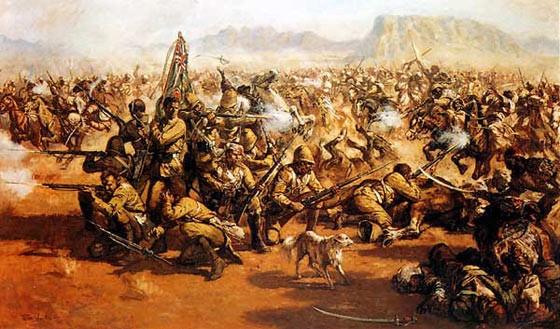
MaiwandBattle of Maiwand, 1880

Last March, Abdul Salam complained that UK troops had urged Afghan police to abandon their post in the Mullah’s nearby hometown of Shah Karez during a battle with the Taliban rather than come to their aid (Afghan Islamic Press, March 17; Geo TV, March 17). The 50 officers, mostly drawn from the Mullah’s private militia, were eventually forced to withdraw from their post with losses (The Scotsman, March 24, 2010). In his latest interview, the Mullah now claims that British forces landed helicopters with Taliban troops and provided military support to the Taliban during the battle.

Mullah Abdul Salam cites several reasons for “British duplicity” in Helmand Province:

•    The British are seeking revenge for their defeat at the 1880 Battle of Maiwand during the Second Afghan War. The 66th Berkshire Regiment and a number of Indian native regiments were virtually destroyed in a Pashtun victory that also cost thousands of Afghan lives.
•    The British are “probably involved” in opium production, based on what the Mullah describes as UK opposition to his attempts to eradicate the drug trade and insistence that drug producers be released after having been arrested by the Mullah. He says he has heard that opium is being flown out of the military airport.
•    The British are also interested in possessing potential mineral riches in the province.

The Mullah’s relations with Britain appear to have declined rapidly during the posting of the 5th Battalion (Argyll and Sutherland Highlanders) of the Royal Regiment of Scotland in Musa Qala. He was gravely offended by the arrest of his 15-year-old son (one of 27 children by five wives) by a Scottish officer in July 2008 and also complained loudly that the British had failed to fill his “war chest,” intended, he says, to be used for bribing Taliban commanders. In turn, British forces have accused the Mullah of taxing opium producers and permitting his militia to be engaged in criminal activities (Sunday Times, July 9, 2008; Independent, November 12, 2008).

Mullah Abdul Salam mocked ISAF efforts to take control of the Marjah district of Helmand in a large offensive involving 15,000 troops last February, saying that the Afghan troops left there were surrounded in the bazaar (see Terrorism Monitor, June 17). “If they give me 600 policemen today, I will capture Kajaki District in Helmand and ensure security there immediately.”

The Mullah also had harsh words for Pakistani authorities, claiming they are the Taliban’s “main support” in what he alleges is a larger plan to “kill Pashtuns.” The Mullah says that all insurgent operations in Afghanistan are organized and authorized by the movement’s Quetta-based leadership, adding that Pakistani intelligence devises the plans and implements them through Mullah Omar in Quetta. He describes Mullah Omar as being like a “prisoner of the intelligence networks in Pakistan.” Since Islamabad believes Afghan president Hamid Karzai is close to India, Mullah Abdul Salam predicts at least another five years of warfare.

At almost the same time as the Mullah made his statement, Iran’s Foreign Ministry said they have observed British security services cooperating with terrorist groups in Afghanistan (Islamic Republic of Iran News Network, June 22). Taliban spokesman Qari Yusuf Ahmad also suggested that the heroism of British troops in Afghanistan has not benefitted their country and that the UK should expect more casualties as it marks the death of 300 troops in Afghanistan (Afghan Islamic Press, June 21).


This article first appeared in the July 1, 2010 issue of the Jamestown Foundation’s Terrorism Monitor
 

U.S. Diplomat’s Assassins Escape from Notorious Sudanese Prison

Andrew McGregor

June 24, 2010

The four condemned killers of both American USAID officer John Granville and his driver Abdel Rahman Abbas shocked most Sudanese when they made a dramatic escape from North Khartoum’s Khober Prison, the first escape since the notorious prison’s construction by British imperialists in the late 19th century.

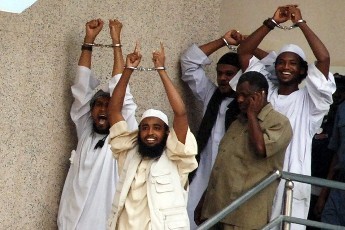
Kober AssassinsGranville’s Assassins Celebrate Their Conviction

The four escapees, who were awaiting execution, were supposedly shackled hand and foot (as are all condemned men in the prison), but nonetheless escaped through a sewage pipe leading to a main street. The men were then picked up by a Toyota Land Cruiser which fled with the fugitives. When the vehicle reached a police checkpoint on the northern outskirts of Omdurman the fugitives opened fire, killing one police officer. A second police car tried to follow the Land Cruiser at high speed, but rolled off the road. The Land Cruiser was later recovered with four flat tires, deflated by police bullets (Sudan Tribune, June 12; June 13). The driver of the car was reported to have been arrested, but the four escapees managed to flee on foot (Reuters, June 11). Though the search has focused locally on the Abu Halif area southwest of Omdurman, Sudanese authorities have also asked Interpol for assistance, suggesting investigators may believe the men have left the country (Sudan Tribune, June 13).

Granville and Abbas were killed while returning from a Khartoum New Year’s Party in the early hours of January 1, 2008. The attack on Granville came only one day after then U.S. President George Bush signed the “Sudan Accountability and Divestment Act,” a bill drafted in response to Khartoum’s alleged genocide in Darfur. The Granville family’s Sudanese lawyer, Taha Ibrahim, claimed the escape was a “political partnership that took place from inside and outside Sudan” and suggested the four fugitives might be headed for lawless Somalia (Asharq al-Awsat, June 12). The condemned men had the opportunity under Islamic law of having the death penalty waived if the consent of the aggrieved families could be obtained. While the Abbas family consented, the Granville family did not, saying that Sudanese law did not provide the alternative of a life sentence and was thus unable to ensure the men would not kill again.

The exact allegiance of the fugitives (if any) has never been determined. In the days after the dual murders, claims of responsibility were issued by both Ansar al-Tawhid (Supporters of Monotheism) and the previously unknown al-Qaeda in the Land of the Two Niles (AFP, January 4, 2008; Asharq al-Awsat, October 12, 2008). The government disputed the existence of both organizations and the suspects were never charged with belonging to either one during the trial (see Terrorism Focus, February 6, 2009). One of the fugitives, Abdul Raouf Abu Zaid Muhammad, is the son of the leader of Sudan’s Ansar al-Sunna al-Muhammadiya, a Salafist religious group whose mosques have been the target of bloody assaults by rival Islamists. The movement has difficulties with the regime, but is largely non-political and was not implicated in the murders.

After the escape, a joint investigation committee was formed between officials of the Ministry of the Interior and the Ministry of Justice and there are reports that the investigation is now focusing on the warden of Kober Prison (al-Ayyam [Khartoum], June 15). Few in Khartoum believe an escape from Kober Prison could be managed without some type of inside cooperation. Though the brick-built prison by the Blue Nile is well-known in Sudan for its executions and amputations, the staff is generally regarded as professional. Despite overcrowding and infernal summer heat in the cells, the prison is still considered a safe alternative to the regime’s infamous “ghost houses”– off-the-books detention centers with no accountability for the treatment or even survival of their inmates.

A wing of Kober Prison is dedicated to high-profile political prisoners who are better treated and separated from criminal inmates by a wall. Some of the nation’s most famous politicians have spent time in Kober, including Islamist Hassan al-Turabi, current vice-president Ali Osman Muhammad Taha, Umma Party leader and former president Sadiq al-Mahdi and Democratic Unionist Party leader Muhammad Osman al-Mirghani. Roughly 100 members of Darfur’s Justice and Equality Movement (JEM) are in Kober Prison awaiting execution for their role in the 2008 raid on Omdurman.

This article first appeared in the June 24, 2010 issue of the Jamestown Foundation’s Terrorism Monitor
Will al-Qaeda Survive the Loss of its Leadership?

Andrew McGregor

June 24, 2010

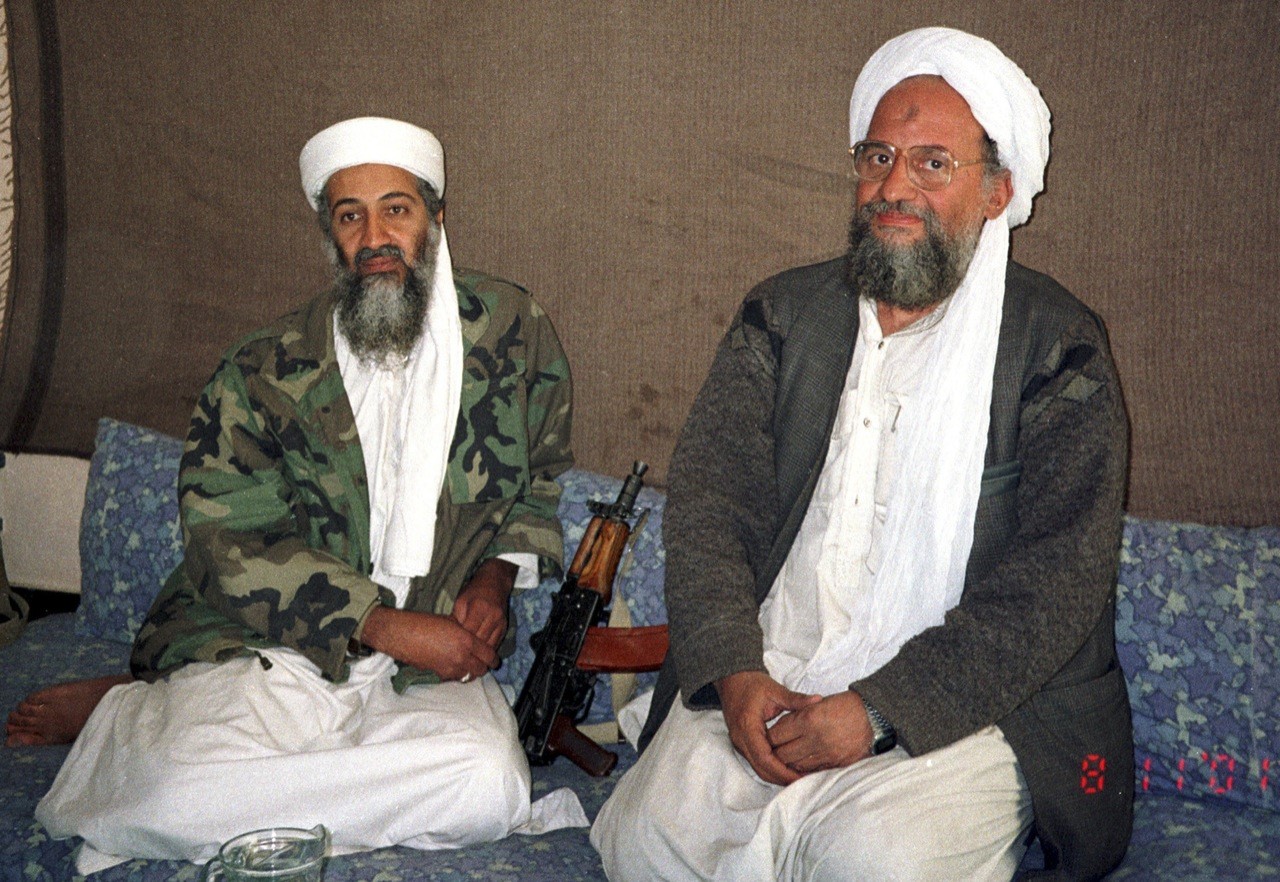
With rumors emerging once again of the death of Osama bin Laden, it seems like an appropriate time to examine the future of al-Qaeda in the event of the elimination of Bin Laden and his Egyptian second-in-command, Dr. Ayman al-Zawahiri. Both Bin Laden and al-Zawahiri have been rumored to be dead before, but with the American drone campaign continuing to take out high level al-Qaeda personnel on the Afghan-Pakistan frontier, there is every possibility that we might soon wake up to a world without Bin Laden or his Egyptian deputy and be faced with the question of just what that means for global security.

al-Qaeda LeadershipOsama bin Laden and Dr. Ayman al-Zawahiri, November 2001

How Important is Bin Laden Anyway?

Bin Laden is not a religious scholar; he is not a military planner; he is not even a politician. He will, however, always be the man who brought down the twin towers and struck the Pentagon itself. Beside that, he is a Saudi. This is an important consideration in a movement that has always lacked qualified or inspiring religious scholars in its leadership – at least having a Saudi from the Land of the Two Holy Places (Mecca and Medina) at the top of the al-Qaeda totem pole gives some veneer of respectability to the organization. In the event of his demise, the calculating and ruthless al-Zawahiri appears to be an uninspiring choice for leader, despite his importance in day to day operations. Beyond al-Zawahiri there is little evidence of a plan of succession, and as notable figures in the movement continue to be reaped by the American drone campaign the number of well-known possibilities continues to shrink.

As we approach the tenth anniversary of the 9/11 attacks, al-Qaeda still has nothing resembling a coherent political program other than promises of some ill-defined Caliphate. In this sense they have been far outstripped by Islamist movements like Egypt’s Muslim Brothers, who have passed through violent radicalism into grass-roots political development based on thoroughly planned communications, education and recruitment programs (see ikhwanweb.com). The Brotherhood has so efficiently monopolized Islamist politics in Egypt that al-Qaeda has made few inroads into the Arab world’s largest nation since al-Zawahiri and several of his colleagues fled Egypt for Afghanistan in 1998. Sudan, a country where the local Muslim Brothers share power with the military, is similarly free of al-Qaeda activity since the departure of Bin Laden in the mid-1990s. Hizb ut-Tahrir, strong in Asia and the UK, is another international Islamist movement that will probably outlast al-Qaeda as a political force. Much of HuT’s success in Central and South Asia has been gained through pamphleteering rather than terrorism. Large-scale and well-funded conservative missionary movements like the Tablighi Jamaat, though not specifically political in nature, will continue to create conditions abroad that will foster the growth of political Islam. While Bin Laden’s bombs and audiotapes dominate the headlines, more thoughtful organizations are steadily advancing the Islamist project without him, and in some cases, despite him.

Break with the Taliban

For some years now, the Taliban have been practically synonymous with al-Qaeda – indeed, some media operations find it difficult (or possess an unwillingness) to distinguish between the two. The reality, however, is that the Taliban is a well developed ethnic-political-religious movement that ruled a nation (however crudely) when al-Qaeda was little more than a group of fugitives seeking refuge at their gate.

There is little question today that the Taliban’s relationship with Pakistan’s Inter-Services Intelligence (ISI) is more important to it than its relationship with al-Qaeda, which cannot offer anything comparable in terms of intelligence and political and financial support. Taliban strategists have already realized that continued association with al-Qaeda complicates the possibility of a negotiated settlement with Kabul that would receive international approval, a necessary first step in returning to power. Considering what the Taliban has so far invested in its defense of al-Qaeda leaders and its own Pashtunwali code, it is difficult for the movement to renounce al-Qaeda altogether. The Taliban leadership has, however, begun distancing itself from al-Qaeda (Afghan Islamic Press, April 21, 2009). Many Taliban leaders have long resented the loss of Taliban-ruled Afghanistan due to the arrogance of Bin Laden and his Arab entourage. The elimination of Bin Laden and al-Zawahiri would certainly create conditions for the Taliban to cut itself loose from the rest of al-Qaeda, which represents little more than a political weight to the movement.

Otherwise, the Taliban will continue to pursue a dual strategy of making the foreign occupation forces as uncomfortable as possible while demonstrating to the Karzai government that it cannot rule a post-occupation Afghanistan without bringing the Taliban into the government. Across the border, the Tehrik-e-Taliban Pakistan (TTP) may make respectful noises about Bin Laden and his exiled comrades, but in reality the movement already looks to their fellow Pashtun tribesmen, Mullah Omar and the leadership of the “Islamic Emirate (of Afghanistan),” for guidance, mediation and inspiration.

How Much Operational Control Does al-Qaeda Central Exercise?

Regional commands appear to have replaced a centralized command structure in al-Qaeda. In practice, however, this is more like issuing charters than opening chapters. The most important of these are regional commands like al-Qaeda in the Arabian Peninsula (AQAP), al-Qaeda in the Islamic Maghreb (AQIM) and al-Qaeda in Iraq (AQI). The financial strength of Bin Laden is largely overrated – there has been little evidence of core al-Qaeda’s ability to fund anyone for some years now. This may be through difficulties in transferring funds under new financial regulations or because Bin Laden has largely exhausted his funds, or some measure of both factors. Militant funding is now done through internal networks and is no longer directed from the center.

There appears to be little operational cooperation or coordination between the regional commands. To some degree, the possibility of infiltration by intelligence or security agencies precludes cooperation with individuals not personally known to al-Qaeda operatives. Combined with expanding communications surveillance, this makes coordination or central direction extremely difficult. Al-Zawahiri’s criticism of Abu Musab al-Zarqawi’s brutal pursuit of sectarian violence as leader of al-Qaeda in Iraq demonstrates a lack of effective central control of one of the movement’s largest commands.

Perhaps predictably, AQAP has proven the most receptive to tactical advice from al-Qaeda central, but otherwise the movement is very much under the command of experienced local jihad leaders like Nasir al-Wuhayshi (a.k.a. Abu Basir) (al-Jazeera, May 16). Of the three major al-Qaeda commands, AQAP may be the most likely to make a continued go of it on its own while still adhering to the basic al-Qaeda ideology should the core leadership collapse.

In North Africa, however, AQIM, appears to be steadily sliding into criminality rather than political/religious insurgency – the lure of kidnapping ransoms and the financial rewards of drug trafficking seem to be turning AQIM into the North African version of the Philippines’ Abu Sayyaf movement, a criminal organization which uses the rhetoric of Islamism to justify its otherwise indefensible behavior. Infiltration, suspicion and rivalry all sap AQIM’s effectiveness as a jihad movement.

Somalia’s al-Shabaab movement has made numerous declarations of loyalty to Bin Laden but has yet to be granted distinction as the Somali arm of al-Qaeda, indicating that al-Qaeda, in the minds of the leadership, remains primarily an Arab movement (Reuters, February 1; Kuwait Times, February 2). Non-Arab Muslims remain useful to al-Qaeda, but will never be granted their own franchise. Nevertheless, non-Arab radical Islamist movements such as Kashmir’s Lashkar-e-Taiba (LeT) have demonstrated through the 2008 Mumbai assault that al-Qaeda direction, planning or funding is not necessary to carry out well-organized mass casualty terrorist attacks. The elimination of al-Qaeda’s core leadership will result in the inevitable localization of the “global jihad”; or in jihadist terms, a refocus on the “Near Enemy” over the “Far Enemy.”

Religious Limitations of al-Qaeda

The radical Salafism espoused by al-Qaeda has benefited enormously from Saudi Arabia’s continuing use of its oil wealth to promulgate Saudi-style Wahhabism throughout the Islamic world. Nevertheless, there is resistance from other well-established forms of Islam to the austere measures of the Salafists. Al-Qaeda opposition to Sufism, Shi’ism and virtually every form of Islam except their own vision of Salafi-Jihadism will always limit the growth of the movement. With Saudi money and the active missionary work of religiously conservative groups such as the Tablighi Jamaat, Salafism will continue to grow, but the question is whether al-Qaeda will continue to grow in parallel with it.

Though there has always been an attraction in Salafist Islam to takfir (the practice of declaring Muslims apostate and hence eligible for execution), for al-Qaeda the practice of takfir has almost become a new pillar of Islam. In the hands of scholars like the 14th century’s Ibn Taymiyya, takfir was a means of preserving the Islamic community from the nominally Muslim Mongol hordes. In al-Qaeda’s unskillful hands, takfir has caused dissension throughout the Islamic community and caused the deaths of thousands of Muslims. Al-Qaeda would have difficulty finding responsible Islamic scholars who would support the idea that deciding which Muslims are or are not apostate should be placed in the hands of gunmen.

Sectarianism of the type practiced by al-Qaeda in Iraq and al-Qaeda’s would-be franchise in Somalia has resulted in backlashes that threaten their very existence. AQI’s preoccupation with establishing Sunni dominance over Iraq’s Shi’a majority only strengthened Shi’a military and political capabilities and prevented the establishment of a national resistance capable of ending the occupation. Even anti-occupation Sunni insurgents in Iraq were easily recruited into the militias of the anti-al-Qaeda “Awakening Councils” in Iraq after experiencing al-Qaeda’s tactics first-hand. AQI never recovered from these developments and it now seems apparent that Iraq’s political future will not lay with the establishment of al-Qaeda’s “Islamic State of Iraq.”

In Somalia, al-Shabaab diverted its energy from pursuing its assault on Mogadishu to open a new campaign against Sufism, even though most Somalis are associated with one of the traditional Somali Sufi orders. Sufi shrines and tombs of notable Sufis were smashed with hammers and their contents strewn through the desert (Raxanreeb.com, March 24). Unsurprisingly, this did not result in a military or religious triumph for al-Shabaab; to the contrary, this campaign inspired the development of a new and powerful Sufi militia (al-Sunnah wa’l-Jama’a) that has propped up the tottering Transitional Federal Government by offering determined resistance to al-Shabaab’s efforts at expansion.

Both AQI and al-Shabaab took their cues from the sectarian, takfiri rhetoric of core al-Qaeda. In the first case it resulted in a nearly insurmountable setback; in the second it placed a formidable roadblock to further success. If there is central planning at work here, it is clearly not reality-based.

Conclusion

Al-Qaeda central command will inevitably move from northwest Pakistan if the current leadership is eliminated. Bin Laden and al-Zawahiri’s presence there is enforced. While inaccessibility has advantages for a fugitive, it has little to recommend it to the self-styled leader of a global jihad.

The survival of Bin Laden and al-Zawahiri to this point seems rather remarkable, particularly if this has been achieved without the intervention of some external agency or facilitator. Will their successors be as fortunate, or will their own deaths follow in quick succession? More likely, we will be looking at the end of “al-Qaeda Central”, already a largely symbolic institution.

Jihad is not a new concept; what is new is al-Qaeda’s attempt to impose a cookie-cutter Salafist interpretation of jihad that focuses on terrorism rather than military resistance. The very nature of this phenomenon precludes its success, something that has become apparent to many disenchanted jihadis, some of whom have issued “Revisions” questioning the legitimacy of al-Qaeda’s relentless pursuit of violence as a religious and political measure. While some of these individuals have renounced violence, others will continue jihad under their own terms and without spiritual or strategic direction from “core al-Qaeda.” Sooner or later, the future of the global jihad will be in their hands.

This article first appeared in the June 24, 2010 issue of the Jamestown Foundation’s Terrorism Monitor
Will India Deploy Its Army against Maoist Terrorists?

Andrew McGregor

June 17, 2010

India is considering a large-scale redeployment of specialized counterterrorist commandos based in Kashmir-Jammu and a paramilitary force based in Northeast India to combat a growing Naxalite (Maoist) insurgency in East India. With nearly 300 deaths attributable to Naxalite violence since April, there is concern that existing security forces are losing their grip over the region.  The deliberate May 28 derailment of the Jnaneswari Express that killed 150 people appears to have convinced the Home Ministry that new measures were needed to deal with the Maoists (Telegraph [Kolkota], June 8; The Hindu, June 12).

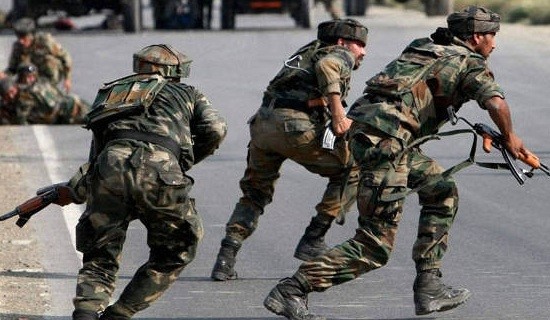
Assam RiflesThe Assam Rifles

The new plan calls for the redeployment of roughly 10,000 men in 10 battalions drawn from the Rashtriya Rifles and the Assam Rifles. The force would operate across four states, Jharkhand, Bengal, Orissa and Chhattisgarh, to aid the existing state police and federal paramilitary forces. The heartland of the insurgency is in the thick forests of Dantewada in Chattisgarh state. The Home Ministry is also calling for the Armed Forces Special Powers Act to be imposed on the region in order to give the military a freer hand in conducting operations.

A June 10 Meeting of the Cabinet Committee on Security (CCS) led by Prime Minister Manmohan Singh failed to come to a decision about the redeployment. Home Minister P. Chidambaram’s requests for Army support in the Eastern states were rebuffed by Defense Minister A.K. Antony, who opposes weakening forces currently deployed near the borders with China and Pakistan (Times of India, June 11). Chidambaram’s presentation may have been better received by the Prime Minister, who recently identified the Naxalites as the greatest internal threat to India’s security.. It is expected the CCS will meet again soon on the issue.

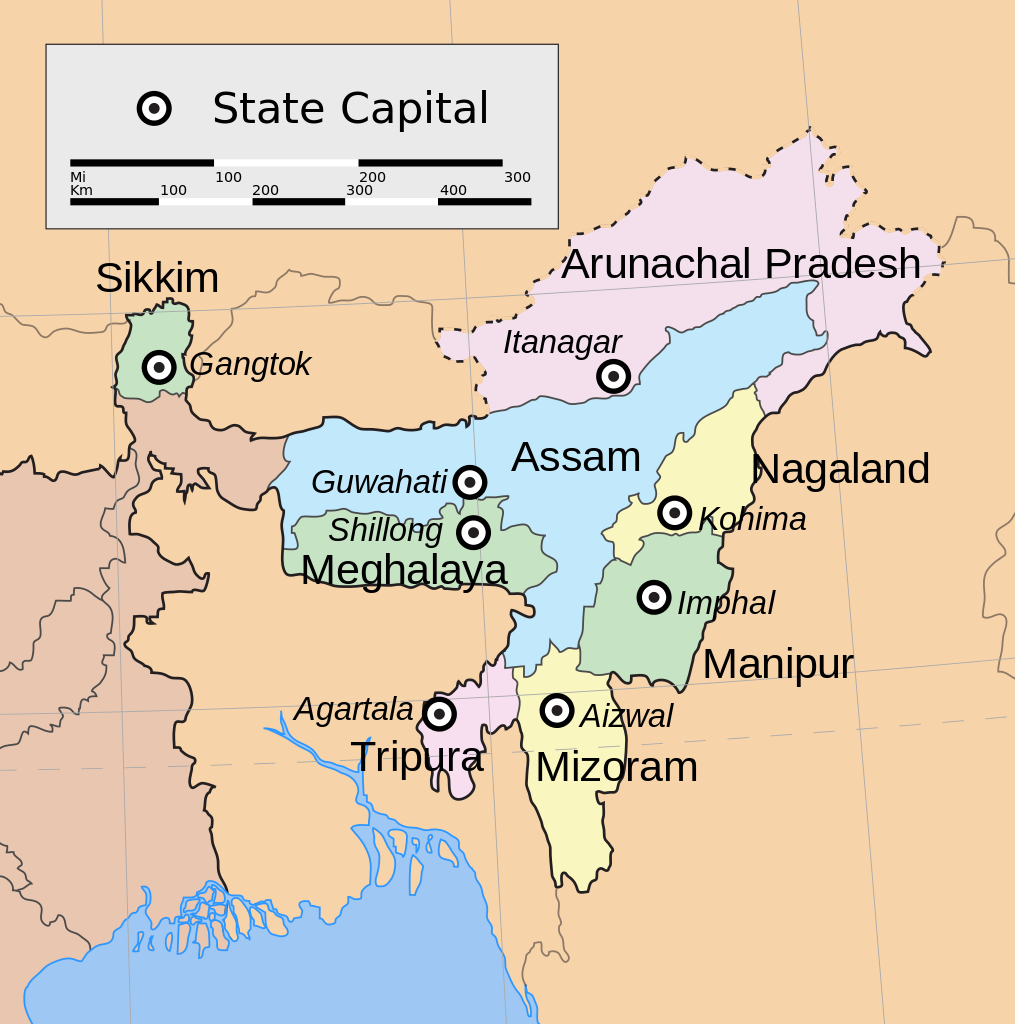
East IndiaNortheast India

More specifically, the Army turned down calls for mine-clearing teams to operate in the region, saying such teams could not operate without the prior establishment of intelligence networks and control of the region by infantry forces. Similarly, the use of Special Forces could not happen until the infantry had already taken control on the ground. The Special Forces could not be asked to hold ground, only carry out targeted operations (Chandigarh Tribune, June 1; Times of India, June 11).

The Assam Rifles is a paramilitary organization with 46 battalions reporting to the Home Ministry but operating under the administrative and operational control of the Indian Army. The unit was originally raised as the Cachar Levy by the British in 1835 for use as a police force against the tribes of the Northeast. Their mission expanded during World War One, when they served in Europe and the Middle East as part of Britain’s Gurkha regiments. In World War Two they served closer to home against the Japanese in Burma. The Rifles also fought a successful delaying action against the Chinese in the high-altitude Sino-Indian War of 1962.

These days the Assam Rifles are occupied with small operations against Northeastern insurgent groups such as the People’s Revolutionary Party of Kangleipak (PREPAK), the tribal Zou People’s Army (ZPA), the United National Liberation Front (UNLF – seeking independence for Manipur state) and the National Socialist Council of Nagaland (NSCN) (Sangai Express, June 9; Nagaland Post, June 1; Hueiyen News Service, June 7; Imphal Free Press, June 6). Eighty-five percent of the Assam Rifles is officered by regular army officers on three year assignments and recruiting is now carried out across India (IndiaDefence.com, June 19, 2007).

The much newer Rashtriya Rifles consists of 40,000 men organized in five Counter Insurgency Forces (CIF) named Delta, Kilo, Romeo, Uniform and Victor.  The Rashtriya Rifles is an elite counterterrorism unit first raised in 1990 to exclusively tackle terrorists and insurgents active in India’s Jammu-Kashmir region. The force is lightly armed but has established a reputation for effectiveness. Personnel are drawn from all Army services and earn additional pay and benefits while serving in the counterterrorist force.  Men and officers usually spend four to five years in the unit before returning to the regular army (India Today, June 2).

The Indian Air Force (IAF) will also be asked to do more. At present, the IAF has four helicopters on rescue and evacuation duties in the region, but will land only when a site has been completely secured, even if the mission calls for the evacuation of wounded troops (Telegraph [Calcutta], June 8). The Home Ministry is looking for Russian-built Mi-17 helicopters to help ground forces with transport, surveillance and evacuation (Chandigarh Tribune, June 10; India Today, June 2). Unmanned Aerial Vehicles (UAVs) have been offered instead.

If a decision to redeploy is not made soon, the onset of the June-September Indian monsoon season may postpone any mass movement of troops and equipment. There are also signs that the Maoists may make a transfer of the Assam Rifles difficult by intensifying insurgent activities in Northeast India (Asian Age [Mumbai], June 8).

Clashes with SPLA Rebels Move into Sudan’s Oil-Rich Unity State

Andrew McGregor

June 17, 2010

The Government of South Sudan (GoSS) continues to struggle with renegades who have broken away from GoSS security forces after losing in local elections in April to official candidates of the Sudan Peoples Liberation Movement (SPLM).

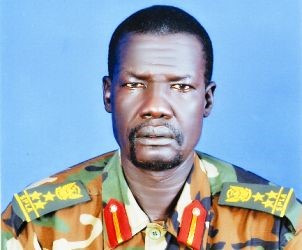
Gatluak GaiColonel Gatluak Gai (SMC)

The latest commander to take up arms against the Sudan People’s Liberation Army (SPLA – the armed wing of the SPLM) is police Colonel Gatluak Gai (a.k.a. Galwak Gai), who called a Khartoum daily to announce his men had taken 27 machine guns with the intention of joining the forces of another renegade, Lieutenant General George Athor Deng (Al-Ra’y al-Amm [Khartoum], May 29). SPLA spokesman General Kuol Diem Kuol claims that Colonel Gai is working to further the interests of the ruling National Congress Party (NCP) in Khartoum and to “disturb security” in Unity State (Sudan Tribune, May 29).  On June 2, Colonel Gai’s loyalists engaged in a firefight with SPLA troops, with a combined loss of nine lives. One of the captured Gai loyalists was reported by the SPLA to be a member of the Sudanese Armed Forces (SAF) (AFP, June 2).

Colonel Gai’s followers were later defeated in a clash with the SPLA in Unity State’s Mayom County on June 7, in which 21 of his men were killed and 32 others captured. The SPLA reported Colonel Gai and an estimated 50 men had fled by night into a region of thick bush controlled by the Joint Integrated Units (JIU), forces composed of fighters drawn from both the SPLA and the SAF (Sudan Tribune, June 8). Colonel Gai and his fighters were last seen headed for the important Heglig oil field, a territory still disputed by Khartoum and the GoSS (Reuters, June 9).

General George Athor Deng, another defeated candidate who is leading a rebellion in similarly oil-rich Jonglei State, announced on June 2 that he was coordinating operations with Colonel Gai and another failed electoral candidate, David Yauyau, also of Jonglei State (Reuters, June 1; June 9).  Yauyau is a SPLA veteran who ran as the candidate of the United Democratic Front (UDF), a pro-independence Southern political party.

Containing some of the largest oil reserves in Sudan, Unity (Wahda) State was part of the South’s Upper Nile Province until boundaries were reorganized in 1994. The state has been repeatedly ravaged by government troops, militias and tribal clashes since 1997, resulting in a massive displacement of the local population (Business Daily Africa, June 16). Exact boundaries between North and South in the area have yet to be determined with the Southern referendum on independence now just a year away. Unity State is a potential flashpoint that could reignite the civil war between North and South Sudan.

The SPLM also faces dissension from a breakaway group, SPLM-Democratic Change (SPLM-DC). Elements of this group are believed responsible for the assassination of the paramount Shilluk chief, Peter Oyath, on May 22. SPLA forces reported clashing with SPLM-DC forces near Malakal international airport on June 6 (Sudan Tribune, June 8; June 10). However, SPLA spokesman General Kuol Diem Kuol has denied reports that SPLA forces entered Malakal (under JIU authority) to kidnap SPLM-DC politicians, including MP Mustafa Gai (Sudan Tribune, June 6).